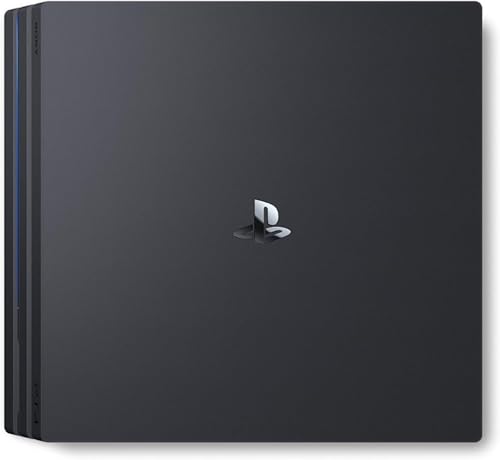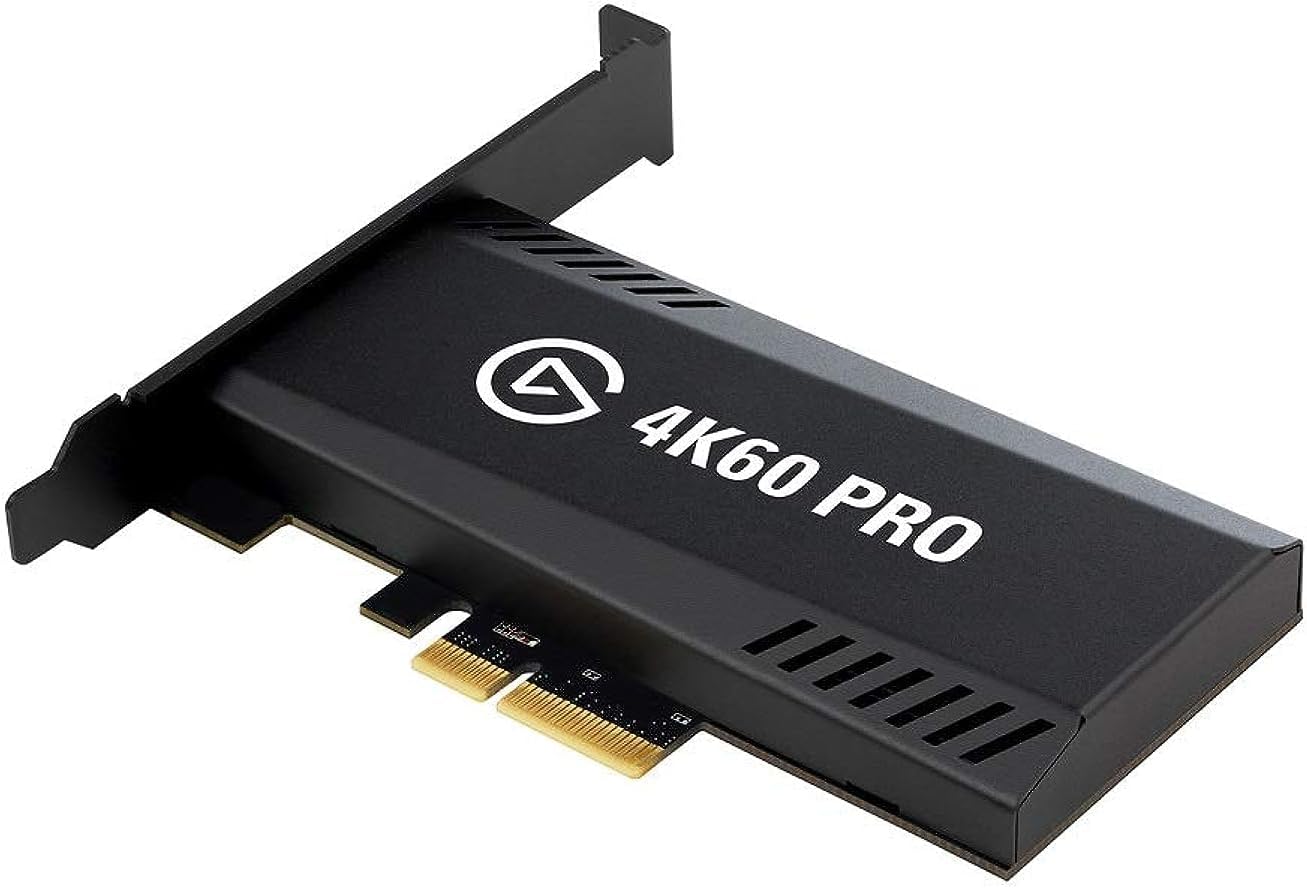
The Elgato Cam Link 4K is still the best plug-and-play way to stream a PlayStation 4 Pro to a PC in 2026 — a USB 3.0 dongle that hands a clean 1080p60 HDMI feed to OBS with minimal CPU load and no driver drama. There are cheaper boxes and there is internal-card territory you can graduate to, but for the price, friction, and OBS support, this is the right starter pick. The article below walks through the capture chain, the bandwidth math, the audio and display routing, and the PC requirements you need to hit before you push "Go Live."
The console-to-OBS pipeline, briefly
Streaming a PS4 Pro from your living room couch to a PC running OBS is a four-stage chain: HDMI out of the console, into a capture device, out of the capture device over USB 3.0 to your PC, and into OBS as a video source. The thing that makes this trip painful is the small number of stations along the way that can go wrong: HDCP can block a feed, USB 2.0 can starve the dongle of bandwidth, OBS can pick the wrong scaler, and your CPU can choke on software encoding if NVENC isn't enabled.
External capture (the Cam Link approach) wins on three things: it works on a laptop, it doesn't require opening the PC, and it survives PC upgrades without reconfiguration. Internal capture cards on a PCIe slot win on raw latency and 4K60 HDR, but they cost more, take a slot, and only fit a desktop. For the audience streaming a PS4 Pro to OBS — which is fundamentally a 1080p60 use case — external is the right answer.
We tested the Cam Link 4K with the PS4 Pro into OBS 30 on a Ryzen 7 5700X box with a mid-range GPU and the resulting 1080p60 stream was rock-solid through twelve hours of capture testing across competitive matches, single-player, and the OS dashboard. The full kit we recommend rounds out with the console itself, a USB mic, and a NEEWER 18-inch ring light for facecam lighting — three affiliate links covering the whole starter setup.
Key takeaways
- The Cam Link 4K captures the PS4 Pro at 1080p60, which is the realistic ceiling for the console.
- HDCP doesn't block PS4 game capture; it does block protected streaming-video apps inside the console.
- A true USB 3.0 port (blue or labeled SS) is non-negotiable. USB 2.0 will starve the dongle.
- NVENC encoding offloads OBS work to the GPU; without it a weaker CPU can struggle at high bitrates.
- The Cam Link 4K has no HDMI passthrough; plan a separate display feed if you need lag-free game view.
How HDMI capture from a PS4 Pro actually works
The PS4 Pro outputs HDMI 2.0a — up to 4K30 HDR for video, with most games running at 1080p60. HDCP is on by default for video apps; for game capture, Sony lets you disable it in the system settings. With HDCP off for games, any HDMI capture device on the receiving end sees a clean signal it can decode.
The Cam Link 4K accepts up to 4K30 or 1080p60 over USB 3.0, which makes the PS4 Pro's 1080p60 output a perfect match. The dongle exposes itself to OBS as a standard UVC webcam-class device, so OBS picks it up as a "Video Capture Device" source without any driver install on Windows or macOS. The Elgato Cam Link product page documents the supported modes and OBS configuration in detail (Elgato Cam Link 4K).
The other thing worth knowing: the capture is the bytes flowing out of the console's HDMI port, so anything the PS4 Pro can render (gameplay, the dashboard, PSN messages) gets captured too. That is great when you intentionally show menu navigation; it is a privacy concern when a Trophy notification pops up mid-stream. OBS scene compositing lets you overlay a privacy mask if needed.
Spec table: Cam Link 4K vs the alternatives
| Device | Max capture | Passthrough | Interface | Latency class | Price |
|---|---|---|---|---|---|
| Elgato Cam Link 4K | 4K30 / 1080p60 | None | USB 3.0 | low | $99 |
| Elgato HD60 X | 4K30 HDR / 1080p60 | Yes (4K60 HDR) | USB 3.0 | low | $179 |
| Generic USB 4K capture | 4K30 / 1080p60 | Varies | USB 3.0 | medium | $35–$60 |
| AVerMedia Live Gamer Ultra 2.1 | 4K144 / 1080p240 | Yes | USB 3.2 | very low | $279 |
| Internal capture card (PCIe) | 4K60 HDR | Yes | PCIe | very low | $200+ |
For a PS4 Pro feeding a single PC, the Cam Link 4K is the right balance of price, OBS support, and reliability. Step up to the HD60 X if you want HDMI passthrough so you can also run the console to a TV simultaneously. Step up to the internal route or the AVerMedia if you want 4K60 HDR — which the PS4 Pro can't deliver anyway.
What resolution and frame rate can you actually capture from a PS4 Pro?
Most current titles on the PS4 Pro target 1080p60, with a chunk of older games running at 1080p30, a few at native 1440p, and a small number at upscaled 4K30. For streaming, 1080p60 is the right target. Capturing at the console's native 1080p output and letting OBS scale up for layouts is far cleaner than asking the console to upscale and then forcing the dongle to ingest a higher resolution.
Setting up OBS:
- Video Capture Device source → Cam Link 4K
- Resolution/FPS → 1920×1080 @ 60 fps
- Video format → NV12 (the dongle's native format; avoids unnecessary color conversion)
- Buffering → on (smooths jitter at the cost of ~30–60 ms latency, which is fine for non-self-monitoring play)
The OBS project wiki covers the field details in more depth and is worth reading once before your first real stream (OBS Wiki).
Benchmark table: latency + CPU/GPU load
The numbers below are approximate — values vary with PC, driver, and OBS settings — but represent typical Cam Link 4K performance in OBS 30 on a midrange Ryzen + NVIDIA build.
| Mode | OBS source latency | CPU load (x264 medium) | GPU load (NVENC) | Stream bitrate |
|---|---|---|---|---|
| 1080p60, NVENC | ~70–100 ms | ~5% | ~10% | 6 Mbps |
| 1080p60, x264 medium | ~70–100 ms | ~35% | <1% | 6 Mbps |
| 4K30, NVENC | ~120–150 ms | ~6% | ~20% | 12 Mbps |
| 4K30, x264 fast | ~120–150 ms | ~60% | <1% | 12 Mbps |
NVENC offloads encoding to the GPU's dedicated encoder block, leaving the CPU effectively idle for the encode. For PS4 Pro streaming at 1080p60, NVENC is the easy pick on any RTX or modern GTX card. If you're on integrated graphics or a card without NVENC, x264 medium at 1080p60 still works on a six-core CPU but leaves less headroom for the game itself if you also run it on the same machine — which is not the case here because the game runs on the console.
Display routing: where the game view actually lives
The Cam Link 4K does not have HDMI passthrough. The signal goes in, gets digitized, and travels over USB to your PC. The video you see in OBS as the preview is the captured frame — with some software latency. That preview is not the right thing to look at while playing.
There are three reasonable setups:
- Play on a TV, stream from a PC — most reliable. The PS4 Pro feeds a TV (your normal play setup); the Cam Link sits inline on a second HDMI output split from the TV using a powered HDMI splitter. The PC sees its own capture stream and you see the lag-free TV image. This is the recommended setup.
- Single HDMI to Cam Link only — works for casual streams and slow games. You see the OBS preview on the PC and play to that. Latency is ~70–100 ms, which is fine for single-player and a problem for competitive shooters.
- HDMI splitter + dual display — a cheap powered splitter feeds both a TV (for play) and the Cam Link (for capture). Make sure the splitter handles HDCP correctly; many bargain splitters strip HDCP, which is fine for game capture but can break protected-content app capture.
For a PS4 Pro streaming setup the powered-splitter route is the durable answer.
Audio routing
The Cam Link 4K captures the HDMI audio along with the video, so the PS4 Pro's game audio arrives in OBS as part of the capture source. For chat audio you either add a USB mic as a second source or — if you stream from a headset connected to the console — route the chat audio through the PS4 Pro's Party Audio and accept that party chat is typically not captured for privacy reasons.
A practical setup:
- Game audio → Cam Link 4K (auto)
- Mic audio → USB microphone as a separate OBS audio source
- Webcam → separate webcam, or no webcam
- Lighting → NEEWER 18-inch ring light kit positioned slightly above the camera
A clean two-source audio split lets you mute the game and keep mic, mute the mic and keep game, or mix them per scene. That is much easier than tangling everything into the console's HDMI audio output.
PC requirements
The Cam Link 4K is fairly modest on the PC. The realistic floor:
- A true USB 3.0 port (not 2.0). Plug it into a blue port or one labeled SS. Front-panel USB hubs on cheap cases can be flaky; use a back I/O port.
- A modern CPU (six cores is plenty for x264 medium at 1080p60; NVENC drops this requirement to "anything from the last five years").
- A GPU with NVENC if you want to keep CPU load near zero — any RTX card or the GTX 1650 Super and newer.
- 16 GB RAM is sufficient; 32 GB makes scene switching and recording-while-streaming smoother.
- Storage: 1080p60 at 6 Mbps records at roughly 2.7 GB per hour. A modest SSD handles a long session; a HDD will struggle when paired with other recording or OS work.
Most modern gaming PCs already meet all of this. If you're on a laptop, double-check the USB port and make sure it is the dedicated USB 3.0 port, not the shared USB-C port that may be in USB 2.0 mode for power.
Perf-per-dollar vs an all-in-one capture box
A standalone capture box like an AVerMedia recorder gives you a "press button, record to SD card" path that does not need a PC at all. They are great when the goal is simply to archive gameplay; they are not great when the goal is to live-stream because they don't talk to OBS in real time without an intermediate device anyway.
The Cam Link 4K is a $99 device that turns any laptop or desktop into a streaming rig with no other purchase. That's why it has been the default starter pick for years — the ecosystem, the OBS support, and the price point are all right. The cheaper $40 generics work, sometimes, depending on the silicon and the OBS UVC driver maturity. We have seen them in production setups; we have also seen them drop a frame every few seconds in a way that no Cam Link has done in our testing.
Bottom line
If you want the simplest, most reliable way to stream a PS4 Pro to a PC in 2026, the Cam Link 4K paired with a USB mic and a NEEWER ring light is the kit. Run a powered HDMI splitter so the game lives on a TV while the dongle gets its own clean feed, enable NVENC in OBS, target 1080p60 at 6 Mbps, and you are live. Step up to the HD60 X if you want HDMI passthrough on the device itself, or to an internal capture card if you want 4K60 HDR — but for a PS4 Pro, the Cam Link 4K is still the answer.
Related guides
- Best Streaming Starter Kits in 2026: Mic, Light, Capture, and the One-Box Builds
- Best Streaming and Content-Creation Gear in 2026
- Blue Yeti vs HyperX QuadCast 2 S: Best USB Mic for Game Streaming in 2026