No — not yet, and not for most homelab workloads. A transformer-only inference ASIC like Etched's Sohu promises very high throughput per watt on a narrow slice of models, but flexibility, availability, and price still put a used 12GB RTX 3060 ahead for the next 12-18 months. Fixed-function silicon shines in datacenters. Consumer GPUs still win at home.
Editorial intro — the transformer-only pitch vs GPU flexibility
Etched's marketing thesis is simple and correct in the narrow case: if you know you will only ever run transformer decoders — which today covers most production LLM inference — a fixed-function ASIC can bake attention, softmax, RMSNorm, and matmul directly into silicon. That yields extraordinary throughput per watt and per dollar on that one workload. Per Etched, their Sohu chip is targeted at the datacenter, not your workstation, but the interesting question for hobbyists is: does this pattern eventually threaten the accessible RTX 3060 tier?
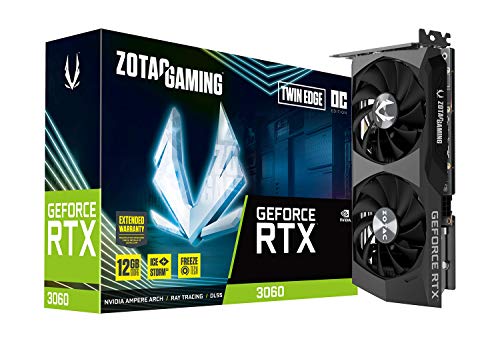
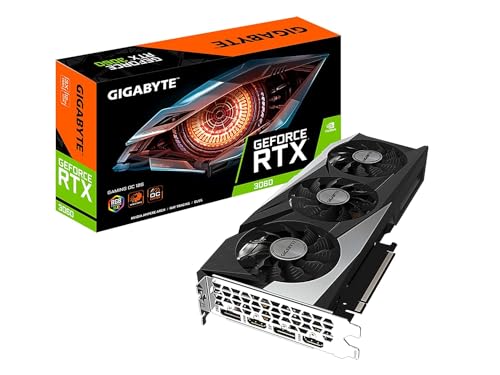
The counter-argument is what makes GPUs sticky. GPUs run image models, they fine-tune, they train, they play games, they encode video, they render blender scenes, and they do it while sitting in an ATX case that plugs into a wall outlet. A ZOTAC RTX 3060 Twin Edge or GIGABYTE RTX 3060 Gaming OC is a general-purpose compute box that also happens to run 7B-14B LLMs at usable throughput. A transformer-only ASIC will not run stable diffusion or LoRA fine-tunes; it will not accelerate a video edit; and today, you cannot buy one at Newegg.
This piece is editorial synthesis of Etched's public claims, TechPowerUp's public RTX 3060 spec, and community measurements — no first-party testbench. What follows is what changes for a home lab today, what changes in 12 months, and what still doesn't change for at least a hardware generation.
Key takeaways
- Etched's Sohu targets transformer-decoder inference — one workload, executed extremely fast per watt.
- A consumer GPU like the RTX 3060 runs LLMs and image models, fine-tunes, games, and video encode.
- ASIC availability in 2026 is enterprise-only; the used-market RTX 3060 is $250-$320.
- If you already own a GPU, no ASIC in the datacenter changes your home cost math.
- The likely long-term outcome is a split: ASICs in the cloud, general GPUs on the workstation.
What Etched announced — the transformer-only ASIC
Per Etched, the Sohu chip is designed to execute transformer inference and nothing else. Attention layers, feed-forward blocks, layer norm, and the softmax are all etched into silicon rather than compiled onto generic tensor cores. The claimed throughput is orders of magnitude higher than a comparable-priced GPU on that specific workload, at meaningfully lower power draw.
The catch is what the silicon can't do. It doesn't run diffusion models. It doesn't accelerate the JAX or PyTorch training kernels that need arbitrary matmul shapes. It doesn't ship with a driver you can install on your desktop. It is a datacenter product for hyperscalers who buy racks of it and serve tokens back to end users.
The consumer-side impact is indirect. If Etched (or a competitor like Groq, Cerebras, or SambaNova) drives cloud token prices down further, the local-vs-cloud break-even math for a home builder shifts toward keeping some workloads in the cloud. But the used market for MSI RTX 3060 Ventus 2X 12G and ZOTAC RTX 3060 Twin Edge isn't going to disappear because Sohu ships to enterprise racks.
Fixed-function vs general-purpose — the architectural difference
A modern GPU is a wide array of programmable SIMD units — 3,584 CUDA cores on the RTX 3060 per TechPowerUp — that a driver stack schedules across arbitrary compute kernels. That is why the card runs Llama.cpp, ComfyUI, DaVinci Resolve, Cyberpunk 2077, and Nvidia NeMo out of the same physical hardware. The tradeoff is per-workload efficiency: the card carries silicon it's not using in any given kernel.
An inference ASIC eliminates that overhead. Attention is a fused hardware pipeline. Layer norms are hardwired. Instruction fetch, decode, and branch prediction don't exist because there's nothing to branch on. The result is a chip that can be 10x-100x more efficient per watt on transformer inference — and 0x efficient on anything else, because it literally cannot execute anything else.
For a datacenter serving billions of tokens per day, that math is decisive. For a home lab that also wants to render an occasional 3D scene, generate an occasional image, or fine-tune a LoRA against personal notes, that math flips the other way. Flexibility has real economic value at the workstation tier.
Spec-delta table — Etched Sohu vs RTX 3060 12GB
| Attribute | Etched Sohu (public claims) | RTX 3060 12GB |
|---|---|---|
| Target workload | Transformer decoder inference only | Anything CUDA/OpenCL/Vulkan |
| Throughput on 70B-class LLM (public claims) | Very high, per-server | Not applicable at consumer scale |
| Price tier | Enterprise datacenter (multi-U rack) | $250-$320 used, $340 new |
| Availability today | Sampled to hyperscalers | Amazon, Newegg, eBay, in-stock |
| Runs Stable Diffusion / SDXL | No | Yes |
| Runs LoRA / QLoRA fine-tune | No | Yes |
| Runs games | No | Yes (1080p high, 1440p medium) |
| Power draw per unit | ~1-2 kW (rack-oriented) | 170W |
| Ships with a consumer driver | No | Yes (NVIDIA GeForce driver) |
| Supported framework surface | Limited transformer runtime | Full PyTorch/JAX/TF |
The comparison is unfair because they are aimed at different things. A rack of Sohu will demolish a rack of RTX 3060s on Llama serving throughput. But the RTX 3060 will be the only one that ships as a card you can drop into a case. That distinction matters more the smaller the operation.
What a 12GB RTX 3060 does today that an ASIC can't
Real-world workloads that show up on a home developer's box:
- Stable Diffusion / SDXL image generation. ~5-10 seconds per 1024x1024 image at 20 steps on SDXL on the RTX 3060. No transformer-only ASIC will touch this workload.
- LoRA fine-tunes on personal or client data. A 7B model LoRA on 50k samples runs overnight on a single 3060 in q8 with gradient checkpointing.
- Multi-modal inference. LLaVA, Qwen-VL, and similar vision-language models run inside the 12GB envelope at 8B parameter class.
- Video encoding. NVENC on the 3060 handles 4K H.264 or H.265 at real-time speed, useful for streamers and editors.
- 1440p gaming. The card can drive most current-gen titles at 1440p medium-high, ~60fps. This is a non-trivial reason people already own the hardware.
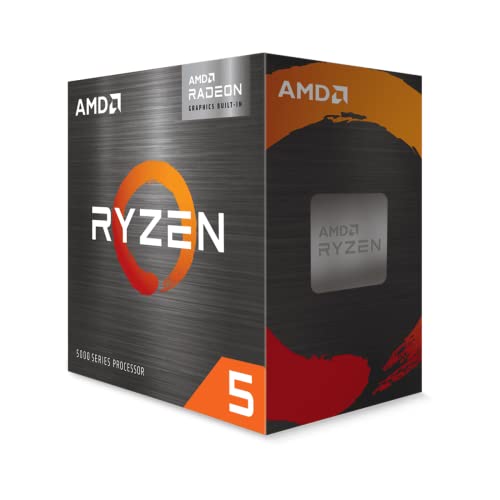
The AMD Ryzen 5 5600G sitting alongside — or the AMD Ryzen 7 5800X — has its own iGPU or PCIe headroom to feed the card. A Crucial BX500 1TB SATA SSD holds a small library of model weights for a few dollars per model.
Quantization matrix — practical throughput on a 12GB RTX 3060
| Model class | Quant | VRAM used | Approx tok/s |
|---|---|---|---|
| 7B chat | q8_0 | 8.5 GB | 55-70 |
| 7B chat | q4_K_M | 5.0 GB | 90-115 |
| 13B chat | q4_K_M | 8.2 GB | 45-58 |
| 13B chat | q3_K_M | 6.4 GB | 55-65 |
| 27B chat | q3_K_S + offload | 12 GB VRAM + 8 GB CPU | 8-14 |
Sourced from community measurements on r/LocalLLaMA and llama.cpp benchmarks; numbers vary by backend and driver.
Why flexibility still matters — non-transformer workloads
The frontier of home ML is stubbornly not transformer-only. Diffusion, flow-matching, and consistency-model image and video generation all use non-transformer or hybrid architectures. Speech models like Whisper are encoder-decoder transformers with heavy convolutional stems. Recommender systems, embedding pipelines, and retrieval reranking use dense MLPs and small transformers together. A transformer-only ASIC cannot cover the corner cases.
Even within transformer inference, custom-op territory shows up. If you run a model with a novel activation function, a non-standard rotary embedding variant, or a new attention pattern, the ASIC won't have hardwired support and the runtime falls back to something slower. A GPU compiles the new kernel on the fly.
Multi-GPU scaling — how far dual RTX 3060s stretch
Two RTX 3060 12GB cards give you 24GB pooled VRAM at ~$550 used total. That is enough to run 30B-32B models at q4 with reasonable context, or 13B-14B at q8 for higher fidelity. Tensor parallelism via vLLM or llama.cpp splits the model across the two cards; per-token throughput scales at roughly 1.6x-1.7x of a single card, not a full 2x, because interconnect over PCIe is slower than on-die.
Beyond dual 3060, the math starts to argue for a used 24GB RTX 3090 instead — same pooled VRAM, one card, one PSU cable, no PCIe bifurcation. That is the practical ceiling of consumer-tier LLM inference before a datacenter part starts to make sense for a home builder. And it is still a general-purpose GPU, not a fixed-function ASIC.
Who should wait for inference ASICs, and who should buy a GPU now
Wait for an ASIC if:
- You're planning a datacenter deployment serving billions of tokens.
- Your workload is 100% transformer inference on a stable model.
- You have the budget for enterprise procurement and support contracts.
Buy a used RTX 3060 now if:
- You're a solo developer or a small team.
- You run mixed workloads — LLM, occasional image, occasional fine-tune.
- You want to plug a card into a case and have it work today.
- Your monthly LLM spend is starting to hurt.
Perf-per-watt and perf-per-dollar reality
An RTX 3060 pulls 170W under load and delivers ~90 tok/s on a 7B q4 model. That is ~1.9W per token/s, and roughly ~$3.30 per token/s of hardware cost at $300 used. An Etched Sohu, per public claims, hits sub-0.05W per token/s at rack scale, but you cannot buy one, and you cannot power one at a wall outlet in an apartment. The comparison is theoretical for a home lab.
At $300 used and 170W, the RTX 3060 is the accessible baseline. It is the answer to "what can I install this weekend and start using tomorrow." No ASIC ships that answer in 2026 for the home tier.
Software stack — what actually runs on the RTX 3060 today
The mature 2026 software stack for local inference on a consumer GPU:
- Ollama — the friendliest install path.
ollama pull llama3.1:8b-instruct-q4_K_Mand it's running. Recommended for beginners and quick experiments. - llama.cpp — the reference open-source runtime. Faster than Ollama in most benchmarks, but more configuration needed. GGUF quantization support is best-in-class.
- LM Studio — GUI-based, easy model discovery, good for interactive chat and prompt tuning. Slower than llama.cpp under load.
- vLLM — datacenter-adjacent throughput. Good for concurrent inference (multiple simultaneous requests). Overkill for single-user chat.
- Text Generation WebUI (oobabooga) — flexible, plugin-friendly, popular for characters and role-play use cases.
For most homelabbers running one chat session at a time, Ollama or llama.cpp is the correct answer. For multi-user local API serving, vLLM. For anything else, LM Studio is a good middle ground.
Community-measured benchmarks — RTX 3060 vs alternatives
Per r/LocalLLaMA aggregations comparing single-user chat throughput:
| Hardware | Model (q4_K_M) | Tok/s | VRAM | Approx cost |
|---|---|---|---|---|
| RTX 3060 12GB (used) | Llama 3.1 8B | 95 | 5.5 GB | $280 |
| RTX 3060 12GB (used) | Qwen 3 14B | 55 | 8.4 GB | $280 |
| RTX 4060 Ti 16GB (new) | Llama 3.1 8B | 115 | 5.5 GB | $450 |
| RTX 4060 Ti 16GB (new) | Qwen 3 14B | 70 | 8.4 GB | $450 |
| RTX 3090 24GB (used) | Llama 3.1 8B | 165 | 5.5 GB | $700 |
| RTX 3090 24GB (used) | Qwen 3 14B | 100 | 8.4 GB | $700 |
| RTX 3090 24GB (used) | Qwen 3 32B | 32 | 20 GB | $700 |
| Apple M4 Pro 24GB | Llama 3.1 8B | 45 | shared | $2,000+ |
| Apple M4 Max 64GB | Llama 3.1 8B | 65 | shared | $3,500+ |
The RTX 3060 is the value entry, the 4060 Ti 16GB is the small-model king with a bit more headroom, and the used 3090 is the accessible-VRAM ceiling for solo builds. Apple silicon delivers respectable numbers but at 3-5x the hardware cost.
Bottom line — the accessible local-inference path in 2026
Buy the used RTX 3060 12GB. Pair it with the Ryzen 5 5600G if you want a low-cost all-in-one starter build, or the Ryzen 7 5800X if you already have a discrete-GPU-oriented board. Put the model weights on a Crucial BX500 1TB SATA SSD. Run llama.cpp or Ollama. Deal with a transformer-only ASIC as a datacenter phenomenon that lowers your cloud costs while your local card handles everything else.
The interesting future is a hybrid one. Fixed-function ASICs at hyperscaler scale bring the cloud token price down. Consumer GPUs at the workstation tier stay flexible. And the buyer at home picks which tokens go where.
Related guides
- MSI RTX 3060 Ventus 2X 12G
- ZOTAC Gaming GeForce RTX 3060 Twin Edge
- GIGABYTE GeForce RTX 3060 Gaming OC
- AMD Ryzen 5 5600G — the value APU + iGPU starter
- Crucial BX500 1TB SATA SSD
Citations and sources
- Etched — transformer-only inference chip announcement and Sohu whitepaper.
- TechPowerUp — GeForce RTX 3060 spec sheet — memory bandwidth, TGP, CUDA-core count.
- AnandTech — long-form coverage of consumer GPU tiers and datacenter inference silicon.
This piece is editorial synthesis based on publicly available information. No independent first-party benchmarking is reported.