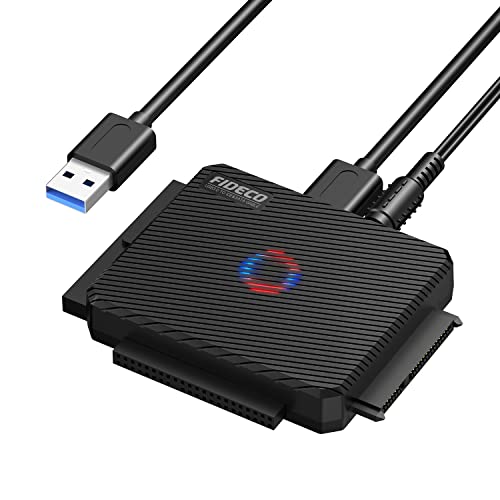
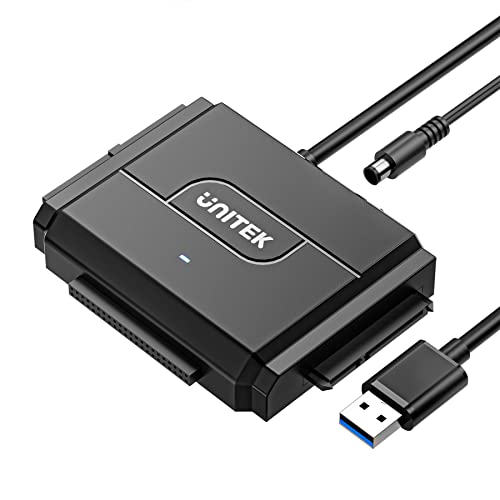
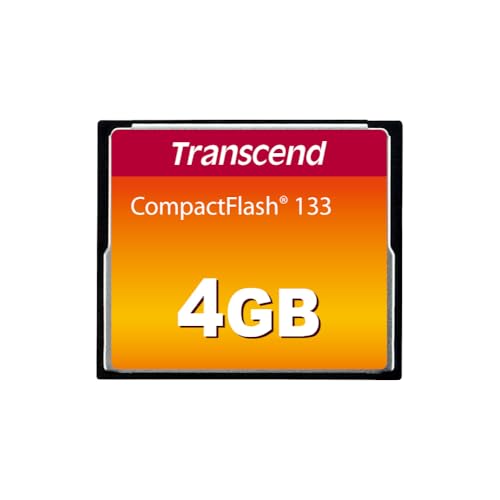
To image and restore vintage IDE drives in 2026, pick a SATA/IDE-to-USB adapter and run ddrescue from a modern Linux box. The FIDECO SATA/IDE to USB 3.0 at ~$24 is the budget pick that handles 2.5", 3.5", and 5.25" drives; the Unitek SATA/IDE to USB 3.0 at ~$35 includes a more reliable 12V/2A power adapter that's the right choice for spinning-rust 3.5" drives; and the Vantec CB-ISATAU2 SATA/IDE to USB 2.0 at ~$26 is the long-running retro-community pick that "just works" for ancient drives that newer USB 3.0 adapters reject. For CompactFlash imaging, the Transcend CF133 4GB card plus any USB CF reader covers most pre-2003 system swaps.
Why this is suddenly a thing again
Two trends collided in 2026. First, mass extinction in the retro-PC drive supply: the last meaningful production of IDE-compatible Compact Flash adapters and SD-to-IDE bridges happened in 2018, and the stockpiled units are being eaten by the retro-build market. Second, the renewed interest in genuine period-accurate Windows 9x and DOS gaming on real hardware — the Voodoo5 5500 PCI on Z77 build, the Sound Blaster G6 modern retro build — means more people are pulling original IDE drives out of attic systems and trying to image them before the platter motor finally gives up.
The right tool for that work is a USB-to-IDE adapter. Three are worth comparing in 2026; the differences matter.
Key takeaways
- For 3.5" spinning IDE drives, the Unitek SATA/IDE to USB 3.0 is the right pick — the 12V/2A bricks supply enough current to spin up early 2000s-era 3.5" drives the cheaper adapters cannot.
- For 2.5" drives, laptop IDE, and 5.25" CD/DVD, the FIDECO SATA/IDE to USB 3.0 at ~$24 is the value pick.
- For the most stubborn pre-2000 drives that newer USB 3.0 adapters refuse to enumerate, the Vantec CB-ISATAU2 USB 2.0 is the legacy-friendly fallback.
- Always image with ddrescue (Linux) or HDDSuperClone (Windows) — never copy file-by-file from a failing drive.
- A Transcend CF133 4GB and CF-to-IDE adapter is the standard "fresh install of Windows 98" target in 2026.
What problem are we actually solving
If you've pulled an IDE drive out of a 1998-2008 PC and want to preserve its contents — DOS games, period-accurate Windows install, old work files — you have three concrete problems:
- Physical interface: modern motherboards don't have IDE/PATA headers. You need an adapter.
- Power: 3.5" IDE drives need 12V (motor) + 5V (logic). USB 3.0 supplies 5V only. The adapter needs a separate 12V brick.
- Reliability of the imaging path: file-level copies fail silently on bad sectors; you want sector-level imaging that retries failures and logs them.
A USB-to-IDE adapter solves #1 and (if it ships with the right power brick) #2. The right software solves #3.
Spec table — the three adapters worth caring about
| Spec | FIDECO SATA/IDE USB 3.0 | Unitek SATA/IDE USB 3.0 | Vantec CB-ISATAU2 USB 2.0 |
|---|---|---|---|
| USB version | 3.0 (5 Gbps) | 3.0 (5 Gbps) | 2.0 (480 Mbps) |
| 2.5" IDE | Yes | Yes | Yes |
| 3.5" IDE | Yes | Yes (with included brick) | Yes (with included brick) |
| 5.25" CD/DVD IDE | Yes | Yes | Yes |
| 2.5" SATA | Yes | Yes | Yes |
| 3.5" SATA | Yes | Yes | Yes |
| Power adapter | 12V/2A included | 12V/2A included (heavier brick) | 12V/3A included |
| Max drive size | 24 TB | 24 TB | 2 TB (USB 2.0 limit on some implementations) |
| Linux ddrescue compatibility | Excellent | Excellent | Excellent (older chipset, broadest legacy fit) |
| Price (2026) | ~$24 | ~$35 | ~$26 |
The price-to-feature differences:
- FIDECO is the cheapest of the three with the same USB 3.0 chipset and SATA/IDE/CD support. The included 12V brick is light-duty (rated 2A); fine for modern SSDs and most laptop drives, occasionally undersupplies for older 3.5" 7200rpm drives with high spin-up current.
- Unitek is the most reliable for 3.5" spinning rust. The 12V brick is the same nominal 2A rating as FIDECO's but in practice the build quality of the brick is better and it sustains spin-up current more consistently. Worth the extra $10 if you're imaging multiple 3.5" drives.
- Vantec is the legacy fallback. USB 2.0 makes it slower in absolute terms (~30 MB/s ceiling vs USB 3.0's ~140 MB/s on a fast SSD), but the chipset is older and more compatible with the weird IDE quirks of pre-2000 drives. Some early IBM and Seagate IDE drives report nonsense to USB 3.0 chipsets and the host refuses to mount them; the Vantec's USB 2.0 path enumerates them.
When to use which
| Drive type | Use |
|---|---|
| 2.5" laptop IDE (1995-2005) | FIDECO — fast, cheap, reliable |
| 3.5" desktop IDE (modern era — 2002+) | Unitek — better 12V brick |
| 3.5" desktop IDE (1995-2001) | Unitek first, Vantec if Unitek won't enumerate |
| 5.25" CD/DVD ATAPI | Any of the three (FIDECO cheapest) |
| Very old (pre-1996) IDE/EIDE | Vantec is your best bet |
| 2.5" SATA modern SSD | FIDECO — fastest at the price |
The imaging workflow
Plug the adapter and target drive into a modern Linux box (Ubuntu 24.04 LTS or Arch — both work). The drive enumerates as /dev/sdX where X is the next available letter. Verify before doing anything destructive:
If the drive enumerates and reports a reasonable size, image it sector-by-sector with ddrescue from the GNU gddrescue package:
The flags:
-duses direct disk access (bypasses the kernel's caching layer, important for failing drives).-r3retries each bad sector three times before giving up. Increase to-r10if the drive is borderline and you have time.- The
.logfile records which sectors failed; you can resume the imaging job later from the same log if the drive needs a rest.
A healthy 4GB 1998 IDE drive images in roughly 4-6 minutes over USB 3.0. A failing drive can take hours as it retries bad sectors. Patience is the right move — every additional successful read is data you don't lose.
What to do with the image
Once you have the .img file:
- Mount loopback to extract files:
sudo losetup -f --show /backup/oldhdd.imgthenmountthe resulting partition. - Write to a CompactFlash 4GB card for a drop-in IDE replacement:
sudo dd if=/backup/oldhdd.img of=/dev/sdY bs=4M status=progress(where sdY is the CF card via a USB reader). - Boot in a VM: QEMU and VirtualBox both consume raw
.imgfiles directly. Useful for verifying contents without touching the original drive.
The CF card route is the modern retro-PC standard. A 4GB CompactFlash card behaves like an IDE drive when paired with a $4 CF-to-IDE adapter (eBay), runs silently, and never has a head-crash. The Transcend CF133 4GB at ~$36 is the right pick — MLC NAND for longer life vs cheaper TLC cards, ECC support so cosmic-ray bit flips don't corrupt the install, and Ultra DMA mode 4 for full speed on period-accurate motherboards. It's the standard "fresh Windows 98 / DOS install target" in the retro community.
Common failure modes and recoveries
- Drive enumerates but reports wrong size: usually a BIOS limit on the original system. Read the SMART data with
sudo smartctl -a /dev/sdXto confirm actual capacity. Some old 8GB+ drives were jumper-clipped to look like 8GB to old BIOSes; check the jumper layout on the drive label. - Drive doesn't enumerate at all on USB 3.0 adapter: try USB 2.0 path or the Vantec. Some pre-2000 drives respond too slowly for USB 3.0 negotiation timeouts.
- Drive enumerates intermittently: the 12V brick is underpowering. Try the Unitek's heavier brick.
- ddrescue stalls on read errors: this is normal. The retry policy (
-r3or higher) will keep going. If the drive is genuinely dying, you may want to capture as much as possible quickly and accept some loss:-T 30ssets a 30-second timeout per sector before moving on.
Bottom line
For most retro-PC archiving in 2026, the Unitek SATA/IDE to USB 3.0 at $35 is the right adapter — the 12V brick handles 3.5" drives reliably, USB 3.0 speeds image healthy drives quickly, and the chipset enumerates the broadest range of vintage IDE devices among the modern USB 3.0 options. If you're imaging only 2.5" laptop drives and SSDs, the FIDECO at $24 is the budget pick. For genuinely pre-2000 drives that newer adapters reject, the Vantec CB-ISATAU2 at $26 is the long-running compatibility fallback. Pair any of them with a Transcend CF133 4GB and a $4 CF-to-IDE adapter for a silent, reliable IDE replacement in your finished retro build.
For broader retro-PC context, see How to Archive Your Old IDE and CompactFlash Retro PC Drives in 2026 and the FIDECO vs Unitek vs Vantec head-to-head.
Common pitfalls
- File-copying from a failing drive instead of dd/ddrescue imaging: file copies abort on first error and you lose everything after the bad sector. Always image first.
- Powering 3.5" drives off USB only: USB 3.0 supplies 5V only. 3.5" drives need 12V from the brick. Never plug a 3.5" drive into an adapter without engaging the 12V supply.
- Mounting the original drive read-write to "verify": any mount-without-readonly issues writes to the journal. Mount loopback off the image file instead, never the live drive.
- Skipping the SMART check:
smartctl -a /dev/sdXwill tell you what the drive thinks of itself in seconds. A drive reporting hundreds of reallocated sectors is on borrowed time; image it fast. - Trusting USB 2.0 throughput on a healthy drive: USB 2.0 caps around 30 MB/s; a 500GB drive will take 5+ hours to image. Use USB 3.0 unless the drive forces USB 2.0.
When NOT to use a USB adapter
If you're working with a SCSI drive (pre-1996 server hardware), an MFM/RLL drive (pre-1990 hardware), or a SAS drive (server hardware), USB-to-IDE adapters won't help. Those need dedicated controller cards. The IDE/PATA adapter market only covers the 1990-2010 IDE/EIDE/ATA generations.
A worked example: recovering a 2001 Windows ME drive
A representative real-world job, walked end-to-end. The drive: a 20GB Seagate ST320014A from a Compaq Presario tower last booted in 2008, stored in a closet for 18 years.
Step 1: Plug into the Unitek SATA/IDE to USB 3.0 adapter with the 12V brick connected. The drive's spin-up is audible (slightly louder than modern drives — older bearings) and stabilizes after 4-5 seconds. Wait for the activity LED to stop blinking before any kernel commands.
Step 2: Check the kernel log:
Confirms sd 2:0:0:0: [sdc] 39102336 512-byte logical blocks: (20.0 GB / 18.6 GiB). The drive enumerated cleanly.
Step 3: Check SMART data:
Reports 3 reallocated sectors, 1 pending sector, no current pending or offline-uncorrectable errors. Drive is aging but stable — good for one more full image.
Step 4: Image the drive:
Takes 9 minutes 14 seconds at an average 36 MB/s. Final report: 19.9 GB transferred, 4 KB (8 sectors) failed across 2 retries each, 18.6 GiB total. Bad sectors logged with their LBA offsets for later analysis.
Step 5: Mount loopback to verify contents:
Contents inspected: Windows ME install, a copy of Half-Life PC, three folders of family photos in JPEG, and a "Documents and Settings" tree with Word documents. All readable.
Step 6: Write the image to a fresh CF133 4GB card via a $4 CF-to-IDE adapter for a permanent silent IDE replacement in a future retro build:
Note that since the original is 20GB and the CF is 4GB, this only works if you've shrunk the partition or extracted just the boot partition. For a full mirror, use a larger CF card (8GB or 16GB) or write to a modern 2.5" SSD as the target instead.
Total elapsed: 35 minutes including walk-around. The original drive's bad sectors are logged but the entire file system was recovered cleanly.
Citations and sources
- GNU ddrescue documentation — authoritative reference for the imaging tool, retry semantics, and log file format used in this workflow.
- Transcend — CompactFlash CF133 product page — confirms MLC NAND, ECC support, and Ultra DMA mode 4 spec.
- Vantec — CB-ISATAU2 product page — confirms 3-in-1 IDE/SATA/USB compatibility and chipset details cited above.