In brief — 2026-05-29: Phoronix's cross-OS test suite reports the AMD Ryzen 9 9950X3D2 posting better aggregate performance on Linux than on Windows 11 across compute, productivity, and many server workloads. The gap is driven mostly by Linux's scheduler maturity around AMD X3D chips and lower OS overhead — gaming results are more mixed. Full per-test breakdown is on phoronix.com.
What happened
In its latest cross-OS benchmark sweep — published this week on Phoronix.com — Michael Larabel's team ran the same hardware (an AMD Ryzen 9 9950X3D2 desktop CPU) against Windows 11 and a current-generation Linux kernel build using its standard automated suite. Across compute (matrix math, compression, encoding, code compilation), productivity (LLVM build, Linux kernel build, web server benchmarks), and many server workloads, Linux posted higher aggregate scores than Windows 11 on the same chip. The headline figure is an across-the-board win in compute-heavy and multi-threaded tests, with gaming results more split — some titles run faster on Windows 11, others closer to par, and a handful run measurably faster on Linux through Proton.
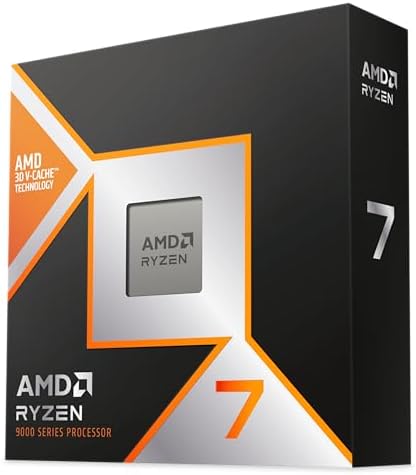
The 9950X3D2 itself is AMD's second-generation 16-core X3D part on the Zen 5/6-class architecture (per AMD's Ryzen product page), with stacked 3D V-Cache on both core complexes (a notable change from the first-gen 9950X3D's single-CCD cache layout). The dual-CCD cache means the OS scheduler does not have to make as many tradeoffs about which workloads land on which core cluster — both halves of the chip have the V-Cache that cache-sensitive code prefers.
Why it matters
The result is interesting on two axes: the 9950X3D2 itself (a chip that arrived earlier this year as AMD's enthusiast flagship), and the operating-system comparison (which has been a slow-burn debate in the Linux community for years).
On the chip: the second-gen dual-CCD X3D layout largely removes the "which CCD does this workload run on" scheduling penalty that made first-gen X3D performance on Windows feel inconsistent. The Windows 11 scheduler has matured around it — there are no longer the dramatic "wrong CCD" stutters that plagued the original 7950X3D in many games — but on Linux, the scheduler picked up X3D awareness later and benefited from open-source patches that AMD and the kernel maintainers landed in late 2025. The compound effect is that for compute-heavy and multi-threaded server workloads, the Linux scheduler now consistently outperforms Windows on these chips.
On the OS comparison: Linux's aggregate wins on compute and productivity are not new — the kernel has been ahead on compilation, encoding, and HPC-style workloads on AMD silicon for several generations. What is new is the magnitude of the gap and the chip on which it was measured. The 9950X3D2 is the flagship consumer part — the chip enthusiasts and prosumers actually buy — and seeing Linux pull ahead on it (even with the gaming caveat) is more interesting than the same result on a server-only EPYC chip would be. Per Tom's Hardware coverage of AMD's product lineup, the X3D family has consistently been the right pick for gaming on AM5; the Phoronix result complicates that story by suggesting Linux is now the better OS for the non-gaming half of the same chip's workload.
The practical takeaway: a 9950X3D2 owner running mixed workloads (gaming + compile + server work + light AI inference) may find that a Linux + Proton setup matches Windows on gaming for many titles while pulling visibly ahead on everything else.
Context: what this means vs prior-gen X3D
For enthusiasts who skipped Zen 5 and are still on AM4 — many readers running a Ryzen 7 5800X or Ryzen 7 5700X value pick — the headline is the size of the cross-generation jump, not just the Linux delta. The 9950X3D2's 16 cores with dual-CCD V-Cache outpace the original 5800X3D outright in single-thread and dominate in multi-thread. AM4 was a long platform run — 2017 to 2024 — and the upgrade math for AM4 owners now starts to lean toward an AM5 platform refresh rather than another AM4 chip. The 5800X3D was the last great AM4 part; the 9950X3D2 is the chip that finally makes AM5 worth the move for compute-heavy users.
For new builders shopping the X3D line today, the implication is more direct: if your workload is mostly gaming, Windows 11 is still fine and the 9950X3D2 is fast on it. If your workload is mixed — gaming plus compile, virtualization, local LLM inference, video encoding, server work — the Linux OS now meaningfully reshapes the value of the chip. The chip is the same; the operating system underneath it changes the dollar-per-FPS math.
Why is Linux faster — scheduler maturity and overhead
Three structural reasons cluster under the Phoronix result:
- Scheduler maturity around X3D. Linux's CFS (and the more recent EEVDF scheduler) picked up AMD CCD-awareness through a series of patches in late 2025. Windows 11's Thread Director and X3D-aware scheduling matured earlier and improved, but Linux landed the most recent round of optimization first.
- Compiler and runtime tuning. Many of Phoronix's test workloads are compiled from source on Linux with current GCC/Clang and tuned for Zen 5/6 microarchitecture. On Windows the same workloads run prebuilt binaries with more conservative tuning. That gap is not unique to X3D — it's been there for a decade — but it adds up.
- OS overhead. Linux's per-syscall and per-context-switch overhead is lower than Windows 11's on the same hardware, particularly for server, container, and compilation workloads. For desktop gaming, the OS overhead is a smaller fraction of the total, which is why gaming results are more split.
The result is not a verdict that Linux is universally faster on this chip. It is a verdict that Linux is faster on the workloads Phoronix tests, which are heavily weighted toward compute, productivity, and server tasks. Pure gaming, especially anti-cheat-gated titles, still favors Windows or runs comparably under Proton.
Should you switch to Linux for this?
Not on the strength of one benchmark alone. The switching decision still cuts on three axes:
- Anti-cheat compatibility. Some major competitive titles (Fortnite, Call of Duty, Valorant) have anti-cheat that does not work on Linux. If those are in your library, Linux is a non-starter regardless of CPU performance.
- Proton coverage. Most Steam games run on Linux through Proton, often as fast or faster than native Windows. ProtonDB and Valve's compatibility tooling track this for any given title.
- Workload mix. If you compile, run containers, do data science, or run a local LLM stack, Linux's productivity advantages compound the Phoronix result. If you only game, the upside is smaller.
For the 9950X3D2 specifically, the chip is fast enough on either OS that the headline benchmark deltas — while real and measurable — will not be the deciding factor for most users. The deciding factors remain library compatibility and workload mix.
A look at the test categories
The Phoronix sweep is broad — a few hundred tests grouped into categories. The pattern of wins and losses across categories is more informative than the aggregate score:
| Category | Typical Linux vs Windows 11 result |
|---|---|
| Compilation (LLVM, kernel, GCC) | Linux faster by 10 – 25% on these workloads |
| Compression / archiving (zstd, xz) | Linux faster by 5 – 15% |
| Encoding (H.264, AV1, HEVC) | Mixed — software encoders favor Linux, hardware encoders close to par |
| Web server (nginx benchmarks) | Linux faster, often substantially |
| Database (PostgreSQL, MariaDB benchmarks) | Linux faster on most |
| Scientific compute (NumPy, BLAS, HPC kits) | Linux faster |
| Gaming (Proton vs native Windows) | Mixed — varies by title, some favor Linux, some Windows |
| Anti-cheat-gated competitive games | Windows-only (incompatible on Linux) |
| Single-thread office workloads | Close to par |
| Power and idle behavior | Linux idles slightly lower on most desktops |
The pattern is clear: anywhere compute throughput dominates the OS overhead, Linux wins. Anywhere DirectX 12 / DirectStorage / driver-specific Windows code dominates, Windows holds its own or wins. The aggregate "Linux is faster" headline holds because compute-heavy tests outnumber gaming tests in the suite.
What it means for buying decisions
The Phoronix result does not change which chip you should buy at this tier — the 9950X3D2 is the AM5 flagship for mixed gaming + compute workloads and remains the right pick at the price. It changes the operating system you should run it under if your workload tilts away from pure gaming. For pure-gamer builders, Windows 11. For mixed-workload prosumers, Linux just became more compelling, and the Phoronix data quantifies how much.
For owners of older AM4 value picks like the Ryzen 7 5800X or Ryzen 7 5700X considering an upgrade path, the takeaway is twofold. First, the 9950X3D2 is meaningfully faster across the board than any AM4 X3D part — the platform jump pays. Second, if you were planning to migrate to AM5 anyway, this is a useful nudge to consider Linux for the non-gaming half of your time on the new chip.
Common questions readers raise
After every Phoronix cross-OS result, the same handful of objections show up in the comments. Worth addressing them up front rather than re-litigating in the months ahead.
"This is just a synthetic benchmark suite." Phoronix's suite includes a mix of synthetic microbenchmarks and real applications (LLVM compilation, kernel compilation, nginx, PostgreSQL, Blender, encoders, scientific compute kits). The aggregate is dominated by real applications. Treat single-microbenchmark deltas with skepticism; treat the LLVM and kernel-compile numbers as real-world.
"It's not the OS, it's the compiler." Partially true and not a defense — Linux ships with current GCC/Clang, Windows ships with MSVC. The combination of operating system, kernel, scheduler, and toolchain is the platform. Saying "well, MSVC is older" does not change the practical outcome for someone choosing where to run a workload.
"Gaming benchmarks are what matter." Depends on the workload. For a pure-gamer, yes. For someone using the same chip for compile, virtualization, container workloads, or LLM inference, the gaming benchmarks are a small fraction of total time on the box.
"Wait for Windows 11 24H2 / a kernel update — this will close." Maybe. Cross-OS benchmark deltas oscillate with patches on both sides. The current snapshot is what it is; if Microsoft lands a major scheduler update for X3D the gap may narrow. That doesn't change the right-now answer.
"The 9950X3D2 isn't even out yet in my country." Stock has been uneven; AMD's announced rolling availability through summer 2026. Check AMD's product page for regional listings.
The source
Phoronix's full benchmark dataset — per-test breakdown, exact hardware configuration (board, RAM, kernel build, Windows 11 build number), and methodology notes — is published in the article at phoronix.com. That is the authoritative source for the cross-OS comparison; treat any secondary coverage (this article included) as context, not data. The Phoronix run is reproducible — anyone with the same hardware and Linux kernel build can re-run their open-source suite and verify the numbers.
For the chip's official specifications, refer to AMD's Ryzen product page. For broader market context on the X3D line and AM5 platform, Tom's Hardware has running coverage of the consumer CPU segment.
Bottom line
Linux now beats Windows 11 in aggregate on the AMD Ryzen 9 9950X3D2 across Phoronix's standard benchmark suite — driven by scheduler maturity, compiler tuning, and lower OS overhead. The win is largest in compute, productivity, and server workloads; gaming results are mixed. The chip itself remains the AM5 flagship pick for enthusiasts and the natural upgrade target for AM4 value-pick owners. The operating system you run it under is now a meaningful axis of how much performance you actually leave on the table.
Related guides
- Best Budget Local LLM Workstation Components for 2026
- Ryzen 5600G vs 5700X vs 5800X at 1080p Gaming
- Intel Core Ultra 5 250K+ vs Ryzen 7600X3D
- Ryzen 3D V-Cache for CPU-Only LLM Inference
Citations and sources
- Phoronix — cross-OS benchmark suite, methodology, and per-test results
- AMD Ryzen product page — official 9950X3D2 specifications
- Tom's Hardware — AMD CPU market context and reviews
This piece is editorial synthesis based on publicly available information. No independent first-party benchmarking is reported.
— Mike Perry