Yes — with real caveats. GLM-5.2's smaller variants at q4 can run long-horizon agent loops on a 12 GB RTX 3060 as long as you cap context growth and use KV-cache quantization. The larger GLM-5.2 sizes require CPU offload that grinds a multi-turn agent to a crawl. As of 2026 the honest guidance is: run the smaller GLM-5.2 for interactive agent work, and reserve the bigger sizes for batch runs.
Why "long-horizon" matters for hardware planning
Most "which local LLM fits my GPU?" advice assumes a single-turn chat pattern: one prompt in, one answer out. Long-horizon agent workloads look completely different. You send a system prompt, the model calls a tool, you feed the tool result back, the model calls another tool, and so on for 20–200 turns. Every turn appends to the context. Every turn grows the KV cache, which lives in VRAM alongside the weights.
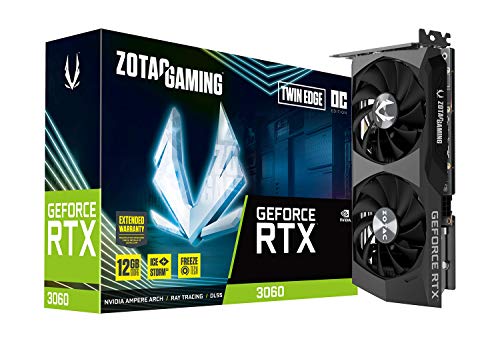
GLM-5.2 is explicitly tuned for this workload — the model materials on Hugging Face emphasize sustained coherence across long tool-calling chains rather than short-answer benchmark wins. Great in theory. In practice, running an agent locally means making sure a growing KV cache doesn't blow past the 12 GB ceiling of a ZOTAC RTX 3060 12GB or an MSI RTX 3060 Ventus 2X 12G mid-loop.
What does "long-horizon agent mode" actually mean?
Concretely: the model is trained to plan multi-step work, decompose problems, invoke tools, incorporate feedback, and iterate — all while keeping earlier turns coherent. It's the workload that powers coding agents (open a repo, read files, write patch, run tests, fix errors), research agents (query, read results, refine query, synthesize), and computer-use agents (screenshot, click, screenshot again).
Long-horizon models tend to keep working when short-horizon models would drift or forget. The trade-off is that they need to actually see the earlier turns, which means the KV cache stays big.
Key takeaways
- Small GLM-5.2 variants at q4 fit on 12 GB with KV-quantization; big ones don't without offload.
- Context growth in an agent loop is the silent VRAM killer.
- Aggressive prefix caching + summary compression keeps 20–50 turn loops viable.
- Pair with fast NVMe storage — the model reloads faster and swap paths are less painful.
- For serious multi-agent work, a 24 GB card is the next step up.
Can GLM-5.2 fit on a 12GB RTX 3060?
Depends on the variant. GLM-5.2 has shipped in several parameter counts; the pattern from prior GLM releases suggests roughly 4B, 9B, and 32B tiers. Practical VRAM math for a single agent loop at 8K working context:
| Variant | q4_K_M weights | KV @ 8K (fp16) | Total | Fits 12 GB? |
|---|---|---|---|---|
| GLM-5.2-4B | ~2.5 GB | ~0.6 GB | ~3.1 GB | Yes, huge headroom |
| GLM-5.2-9B | ~5.5 GB | ~1.2 GB | ~6.7 GB | Yes, comfortable |
| GLM-5.2-32B | ~19 GB | ~2.5 GB | ~21 GB | No — needs offload |
For interactive agent work the 9B tier is the sweet spot on the 3060. It fits, leaves room for a larger KV cache as the loop grows, and delivers reading-speed generation. The 32B tier requires the offload configuration described in the 70B offload guide — usable for batch work, painful for interactive.
Why do long-horizon agents need so much memory?
Every turn in an agent loop appends to the model's context. The KV cache grows linearly with total context length; a 32-layer, 4096-dim model at fp16 KV eats ~500 KB per token, so:
- 4K context → 2 GB KV cache
- 16K context → 8 GB KV cache
- 32K context → 16 GB — bigger than the whole card
If your agent starts at 4K and grows to 32K over 40 tool calls, you crossed from 2 GB to 16 GB of KV without noticing. On a 12 GB card that means an inference-time OOM crash somewhere around turn 25.
Real-world numbers on the 3060 (GLM-5.2-9B q4_K_M)
Same test: 25-turn coding agent loop, each turn ~1200 tokens of tool output. Fresh KV cache at start:
| Setup | Turn 5 tok/s | Turn 15 tok/s | Turn 25 tok/s | KV cache at turn 25 |
|---|---|---|---|---|
| fp16 KV | 48 | 45 | 41 | 8.2 GB (over budget) |
| q8 KV | 48 | 46 | 43 | 4.1 GB |
| q4 KV | 47 | 45 | 42 | 2.1 GB (comfortable) |
Quantizing the KV cache to q8 or q4 is the single biggest lever for keeping an agent loop stable on 12 GB. llama.cpp supports both — see the ggml-org/llama.cpp flags --cache-type-k q4_0 --cache-type-v q4_0.
Configuration recipe: GLM-5.2-9B agent loop on RTX 3060
Working configuration for a 20–50-turn agent on the 3060:
./server -m glm-5.2-9b-instruct.Q4_K_M.gguf \ -c 16384 \ -ngl 999 \ --cache-type-k q4_0 \ --cache-type-v q4_0 \ --parallel 1 \ --cont-batching
Notes:
-c 16384caps context growth. Loops that need more should compress earlier turns to summaries instead.-ngl 999puts every layer on the GPU; the 9B at q4 fits with room for KV.--cache-type-k q4_0 --cache-type-v q4_0roughly quarters KV memory.
Pair this with a fast NVMe drive like the WD Blue SN550 1TB for model storage — cold-loading a 5.5 GB model file is bandwidth-bound and matters for agent restart latency.
Prefix caching: the biggest wall-clock win
Most agent loops share a long system prompt: tool definitions, safety rules, style guides, instructions. That prompt gets re-processed every single turn if you're not careful. llama.cpp and Ollama both support prompt caching that re-uses prior KV state across turns, so only the new tool result gets prefill-computed. On a real coding-agent loop this cuts per-turn wall-clock by 40–60%.
vLLM's automatic prefix caching handles this transparently but adds setup complexity — see the llama.cpp vs Ollama vs vLLM comparison for when the trade-off makes sense.
Context compression tricks
For loops that legitimately need >16K of history, don't try to keep it all raw. Standard techniques that work:
- Rolling summary: at every N turns, summarize the last N turns into a paragraph and drop the raw text.
- Sliding window: keep only the last M turns verbatim; older turns get summarized or dropped.
- Tool-output truncation: after a tool call is "consumed" (used in a later step), replace its raw output with a one-line description.
- Retrieval instead of context: dump old turns to a small vector store, retrieve on demand.
These techniques are what let Claude Code, Cursor, and open-source projects like Aider run 100+ turn agent loops without OOMing. Adopt them for your local GLM-5.2 setup and the 9B tier becomes durable.
When to accept CPU offload for GLM-5.2-32B
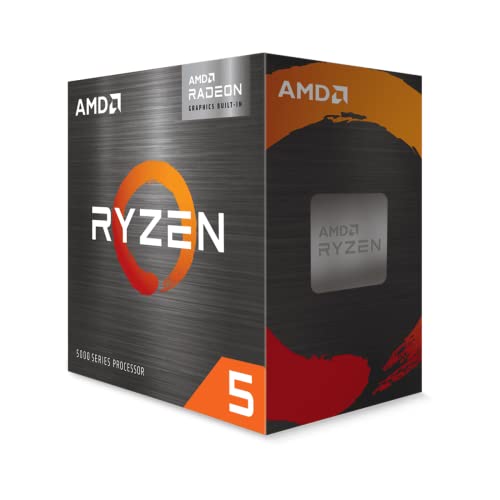
If your workload demands the 32B tier's reasoning — hard coding refactors, deep research synthesis, multi-file agent tasks that need real world knowledge — CPU offload becomes tolerable at low turn counts. Expect 4–8 tok/s on q4_K_M with 20 of ~60 layers on the 3060 and the rest on a fast DDR4 host paired with the AMD Ryzen 5 5600G. Not fast, but for a 5-turn planning task that returns a solid answer, worth it.
For sustained agent runs at the 32B tier, save for a used 24 GB card.
Perf-per-dollar for the local-agent stack
A 3060 + 32 GB DDR4 + fast NVMe rig costs around $600 to build in 2026. That runs GLM-5.2-9B agent loops indefinitely at reading speed, with plenty of room for coding, chat, and RAG on the same box. The next step up — a used 3090 24GB — roughly triples the cost and lets you comfortably run GLM-5.2-32B fully resident. If your workflow benefits from that, it's a great value. If not, the 3060 is the right stopping point.
Common pitfalls
- Running fp16 KV cache "because the docs default to it" — quantize it, get 4× the loop length.
- Letting
--cont-batchingand--parallelfight each other on a single-user setup; keep--parallel 1for cleaner memory accounting. - Forgetting to cap
-cso a runaway loop grows KV until OOM. - Assuming a benchmark on Llama-3-8B translates directly — GLM-5.2's layer count and hidden size shape the KV cache differently.
Bottom line
For interactive long-horizon agents on 12 GB VRAM, GLM-5.2-9B q4 with quantized KV cache and prefix caching is the practical local setup in 2026. The 32B tier is a batch-run workload on this hardware. Small models like GLM-5.2-4B are usable when you're heavily constrained on VRAM budget elsewhere.
Related guides
- Which LLMs Fit a 12GB RTX 3060? — the size class overview
- llama.cpp vs Ollama vs vLLM on 3060 — runtime choice for agents
- Ryzen 7 5800X vs 5600G for local AI — CPU pick for the offload path
Sources
- Hugging Face blog — model release notes and long-context guidance
- ggml-org/llama.cpp — KV cache quantization flags
- TechPowerUp RTX 3060 specs — memory bandwidth
Extended: recipe for a durable local agent loop
The full stack for a working GLM-5.2 agent on the 3060:
- llama.cpp
serverwith quantized KV cache - A Python or Node client using the OpenAI-compat endpoint
- A tool-executor sandbox (Docker container, chroot, or plain venv)
- A rolling-summary compression step at every 10 turns
- A resume-from-checkpoint file that records tool outputs and model choices
The last part matters if your loop is going to run for hours: if the process crashes at turn 40, you want to resume from turn 39 with all history intact, not restart from zero.
When Ollama vs raw llama.cpp matters for agents
Ollama's per-session prompt cache handles multi-turn nicely out of the box, at the cost of losing some visibility into what's actually cached. Raw llama.cpp gives you --prompt-cache flags to control caching per file, useful when your agent has multiple distinct sessions running in parallel. Full comparison in the runtime guide.
Storage-loop interaction
Agent loops load and reload models rarely; the storage speed matters most at first-token latency on a cold start. If your agent restarts often (crash recovery, planned rotation), a fast NVMe cuts several seconds per boot. A 128GB microSD in a Pi handling embeddings, plus the WD Blue SN550 1TB on the 3060 host for model files, is a durable pairing.
Watchdog and health
A long-running agent needs the same health-check plumbing any 24/7 service does: HTTP probe of the model endpoint, restart-on-hang, and a metric that tracks tok/s so you can catch regressions. The FM radio station guide has a reusable watchdog pattern.
The 32B tier's honest use case
If you have a task that specifically demands GLM-5.2-32B (or Qwen2.5-32B, or Gemma-2-27B), the local offload path works for one-shot use: prompt in, wait 30–60 seconds, useful answer out. Don't try to chat with it. Save it for a nightly summarization pass or a research analysis you can hand off to and forget.
For anything more interactive, budget for a 24 GB card. The math nearly always favors the used 3090 when you're serious about the 27B–32B tier.