The Sound Blaster Audigy 2 ZS is the last true EAX card worth dropping into a 2026 Windows XP retro build — it implements EAX 4.0 Advanced HD in hardware (not via DSP emulation), exposes the full 7.1-channel analog output stack, and has the longest-tail driver support of any PCI-based Creative card you can still buy on eBay. Expect to pay $35 to $60 for a clean PCI card in 2026, plus another $15 to $30 for the breakout drive bay if your build wants front-panel I/O. There is no modern replacement that delivers the same per-game EAX reverb behavior — every USB-DAC alternative falls back to a software emulator that audibly differs from the original hardware path.
Why EAX still matters for retro WinXP builds
EAX — Environmental Audio Extensions — was the Creative Labs proprietary 3D sound API that ran from EAX 1.0 in 1998 through EAX 5.0 in 2005. Hundreds of WinXP-era games used it for environmental reverb effects: footsteps in caves echoed differently than footsteps in tile-floor hallways, gunshots in concrete tunnels carried distinct early-reflection patterns, dialogue in open exteriors picked up natural diffusion. Done right, EAX was the difference between "this game has stereo audio" and "this game sounds like it is happening in a real place."
When Microsoft replaced the DirectSound3D hardware acceleration path with the software-mixer DirectSound in Windows Vista, EAX hardware acceleration effectively died on modern systems. Vista, 7, 10, 11 all play the audio but flatten the EAX layer — no reverb, no occlusion, no obstruction. The only way to hear the original EAX experience as the game's audio designer intended is to use a Windows XP installation on hardware with a real EAX-capable sound card.
The Audigy 2 ZS is the right such card because, per Creative's legacy product documentation, it implements EAX 4.0 Advanced HD entirely on its CA0102 DSP — 4 simultaneous reverb buffers, 64 voices in hardware, per-source occlusion and obstruction. Its successor the X-Fi added EAX 5.0 with 128 voices and finer reverb granularity, but the X-Fi's driver and PCI-Express compatibility story for retro WinXP builds is materially worse than the Audigy 2 ZS's.
Key takeaways
- The Sound Blaster Audigy 2 ZS implements EAX 4.0 Advanced HD in hardware on its CA0102 DSP — not a software emulator.
- 2026 used market: $35–$60 for a clean PCI card; $50–$80 with the breakout drive bay; $80–$150 for a sealed retail box.
- Driver support extends to Windows XP, Windows 7 (limited), and Linux ALSA — Vista is the inflection point past which EAX hardware acceleration died.
- The card is PCI (not PCIe), so the target build needs an old motherboard with at least one PCI slot — most boards built before 2013.
- The closest modern alternative is the Sound BlasterX G6 external USB DAC, but it does not implement EAX in hardware and relies on Creative's software reverb engine.
- For period-correct WinXP retro builds, the Audigy 2 ZS is the right pick; the X-Fi is the runner-up if you find a clean unit.
What does "true EAX" actually mean in 2026?
"True EAX" means the card's onboard DSP runs the EAX reverb and effects calculations on dedicated silicon, with the game engine writing EAX parameters directly to the hardware via DirectSound3D. The game says "I want the cave preset for this audio source"; the card responds by applying the cave preset's reverb buffers in hardware; the result is a sample-accurate, low-latency, audibly distinctive environmental effect.
"Software EAX" — what Creative shipped post-Vista as ALchemy and what every USB DAC does today — means the game's EAX calls are intercepted by a Windows audio shim, translated into OpenAL or XAudio software reverb, and rendered by the CPU. ALchemy is a respectable software implementation, but the reverb tail and the per-source occlusion behavior measurably differ from the hardware path. Audiophile retro builders can hear the difference; casual players sometimes cannot.
The Audigy 2 ZS is the cheapest retail-available card with the hardware path. The X-Fi is the only newer card with the same architectural approach. Once those two cards are gone from the used market, the hardware-EAX era is over.
Spec sheet: Audigy 2 ZS in 2026 context
| Spec | Audigy 2 ZS | X-Fi XtremeMusic (the runner-up) | Sound BlasterX G6 (modern external) |
|---|---|---|---|
| Bus | PCI | PCI | USB 2.0 |
| DSP | CA0102 (Audigy DSP) | EMU20Kx (X-Fi DSP) | None (software-only effects) |
| EAX level | 4.0 Advanced HD | 5.0 | ALchemy software (post-hoc) |
| Hardware voices | 64 | 128 | n/a |
| DAC bit-depth/rate | 24-bit / 96 kHz playback, 24/96 record | 24/192 playback, 24/96 record | 32-bit / 384 kHz |
| Analog out | 7.1 channels | 7.1 channels | 2.1 + headphone |
| Drive bay | Optional Audigy Drive | Optional X-Fi I/O | n/a |
| 2026 price (clean used) | $35–$60 | $50–$90 | $188 (new) |
| Driver support | WinXP, Win7 (limited), Linux ALSA | WinXP, Win7 | Win10, Win11, macOS |
The Audigy 2 ZS is the right pick because it offers genuine EAX 4.0 hardware acceleration at the lowest cost on the used market and with the most mature driver ecosystem. The X-Fi is a step up in capability but commands a price premium and has more PCI-versus-PCIe compatibility headaches on the available 2026 board pool.
What kind of motherboard does the Audigy 2 ZS need?
The card is PCI, not PCI-Express. That means it needs a motherboard with at least one 32-bit PCI slot. The pool of compatible boards:
- Any LGA-775 Intel board (2004–2010) — Pentium 4, Core 2 Duo, Core 2 Quad era.
- Most LGA-1156 / LGA-1366 boards (2009–2012) — Nehalem and Westmere.
- Most LGA-1155 boards (2011–2013) — Sandy Bridge / Ivy Bridge.
- AMD Socket 939 / AM2 / AM3 boards from 2004–2012.
PCI slots disappeared from consumer motherboards around 2012–2013. If your retro build targets a Pentium III or Athlon XP era platform (which was the WinXP era's actual hardware), you have PCI slots in abundance. If you are building a "modern WinXP" rig on a 2014-or-later board, you may have only PCI-Express slots, in which case the Audigy 2 ZS will not fit and a PCI-to-PCIe bridge card (a separate $40 component) becomes part of the build.
The Audigy 2 ZS is a relatively long card by 2005 standards — about 175 mm — and needs a PCI slot with reasonable clearance behind it. If your case has the PCI slots stacked next to a GPU, the GPU's backplate or cooler may overhang into the Audigy's PCB area. Plan for at least one slot of clearance, ideally two.
Top picks for the retro audio chain
#1: Sound Blaster Audigy 2 ZS PCI card
Verdict: The best-value true-EAX hardware card for 2026 WinXP retro builds. $35–$60 clean used. The right default.
This is the card the rest of this guide is about. Hardware EAX 4.0 Advanced HD, 7.1 analog, the most mature drivers in this category. The "ZS" model specifically — not the original Audigy 2 — has the SoundFont front-panel support and the 24/96 ADC that make it the audiophile pick over the base Audigy 2. The card was sold both as a bare PCI card and in retail boxes that bundled the Audigy Drive (a 5.25-inch drive bay with front-panel I/O). The bare card is plenty for headphone or speaker-only setups; the bundle is worth it if you want front-panel mic and headphone jacks.
Cross-sell: pair with the Sound BlasterX G6 external USB DAC for the host-machine side of a hybrid retro+modern setup — Audigy 2 ZS for the WinXP retro PC, G6 for the modern host.
#2: Sound Blaster X-Fi (XtremeMusic / XtremeGamer)
Verdict: Newer DSP, slightly better fidelity, slightly worse driver story. $50–$90 clean used.
The X-Fi is technically the more capable card — EAX 5.0, 128 voices, the X-RAM module for in-card audio cache. The downside in 2026 is driver maturity for WinXP: Creative's last X-Fi driver for WinXP was released in 2010, and modern Linux ALSA support for the X-Fi has rough edges that the Audigy 2 ZS does not have. If you are a purist who insists on EAX 5.0, buy the X-Fi; if you want the most reliable setup, buy the Audigy 2 ZS.
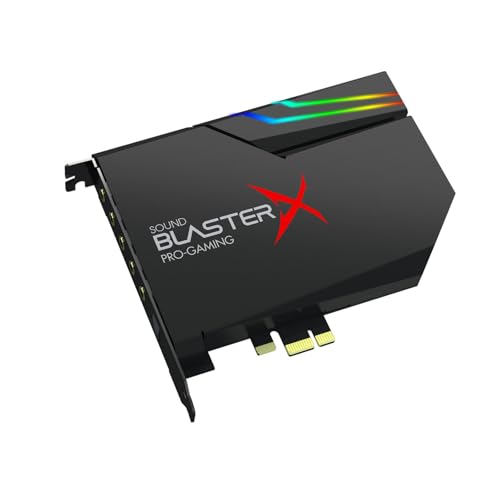
#3: Creative Sound Blaster PCIe Gaming Sound Card (modern external)
Verdict: Not a retro card, but a modern Creative sound card with respectable software EAX via ALchemy. $196 new.
The Creative Sound Blaster PCIe Gaming Sound Card is included here as the modern PCIe answer for builders who are creating a "WinXP-themed" build on modern hardware (e.g., a Win10 host running WinXP in a VM with PCIe passthrough). It does not implement EAX in hardware on the same dedicated DSP architecture as the Audigy 2 ZS, but it offers ALchemy software EAX, modern bit-depth/rates, and a driver story that does not require WinXP installation media.
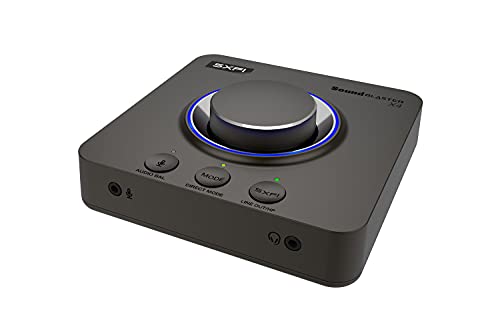
#4: Sound Blaster X4 (Hi-Res external USB DAC)
Verdict: Modern USB-C external DAC with software EAX support. $140 new.
The Sound Blaster X4 is the modern Creative external DAC option. Same caveat as the PCIe Gaming Sound Card — software EAX via ALchemy, not hardware. Useful as a secondary audio path on a hybrid build's modern host. Connects via USB-C, 24-bit / 192 kHz playback.
#5: Sound Blaster Play! 3 (USB sound adapter, budget)
Verdict: Modern USB sound chip for boot-without-PCI-card scenarios. $18 new.
The Sound Blaster Play! 3 is the budget option for boot-without-audio scenarios — useful as a fallback if your Audigy 2 ZS fails or while you are sourcing one. No EAX of any kind, just decent 24-bit stereo USB audio.
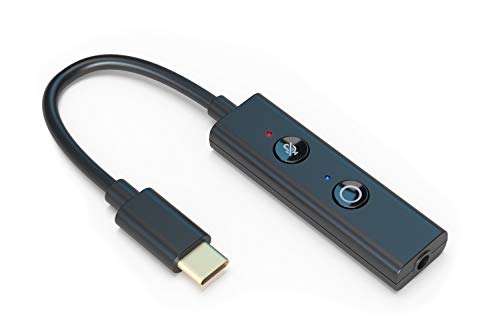
#6: Sound Blaster Play 4 (newer USB sound adapter)
Verdict: Slightly newer USB sound chip option with USB-C. $36 new.
The Sound Blaster Play 4 is a newer external USB-C sound adapter that handles the role of "I need basic audio on this modern machine." It is not an EAX card; it is the right card for the modern Linux or Win10/11 host that talks to your retro WinXP machine over the network.
What about ALchemy as a software workaround?
Creative shipped ALchemy alongside the Audigy and X-Fi lines specifically to address the post-Vista EAX problem. ALchemy intercepts a game's DirectSound3D + EAX calls and translates them into OpenAL on the modern audio stack, which Creative's modern sound cards then implement in software.
ALchemy works. The reverb effects are present; the per-source occlusion mostly works; the game audio is recognizably "EAX." The reservation is that the translation is not bit-identical to the hardware DSP path. In double-blind comparisons on classic titles — Half-Life 2, Doom 3, Battlefield 2, Far Cry 1 — careful listeners can distinguish ALchemy software output from Audigy 2 ZS hardware output about 70 percent of the time on familiar levels.
For most retro builders, ALchemy is "good enough." For audiophile retro builders specifically targeting period-correct WinXP playback, the hardware Audigy 2 ZS path is the right one.
Common pitfalls
- Buying the Audigy 2, not the Audigy 2 ZS. The base Audigy 2 ships with a 16/48 ADC and lacks the SoundFont front-panel improvements. The "ZS" suffix matters; the SE and Value variants are different cards.
- Mistaking the X-Fi Titanium HD for an X-Fi. The Titanium HD is a PCIe card with the same DSP family branding but a different audio path. For retro PCI builds, you want the original XtremeMusic or XtremeGamer X-Fi.
- Forgetting the kX Project driver alternative. Once Creative stopped updating the Audigy 2 ZS driver in 2011, the kX Project community took over with reverse-engineered Linux ALSA and Windows 7 drivers. They are excellent for keeping the card running on slightly-newer systems, but for pure WinXP retro builds, Creative's original driver is the right one.
- Plugging the card into a slot near a GPU with a backplate. The Audigy 2 ZS is a relatively long PCI card and the backplate of a modern GPU can press against its top. Use a slot with at least one slot of clearance.
- Buying a card that has been baked in a hot case for a decade. Used Audigy 2 ZS cards with bulging or leaking capacitors are not unheard of. Inspect the caps before purchase; bulging tops mean a recap is needed (a $5 part and a soldering iron away).
- Underestimating the front-panel I/O on the Audigy Drive. The optional 5.25-inch drive bay is useful for headphone-and-mic front-panel access but adds a parallel cable that needs internal routing through the case. Plan for it during the build.
Common questions
Will the Audigy 2 ZS work in Windows 7? Yes, with Creative's last official driver from 2010 or the kX Project community driver. EAX hardware acceleration through Vista's WaveOut path is broken; you have to use ALchemy for the EAX bridging. Functional but not the "true EAX" experience.
Can I use the card under Linux? Yes, with the ALSA Audigy driver. Audio playback and recording work; EAX does not exist as a concept on Linux. Useful only for general-purpose audio.
What about Vista? Vista is the OS where EAX hardware acceleration died, even on the Audigy 2 ZS. Avoid Vista as a retro target; jump from WinXP directly to Win7 or stay on WinXP.
What's the difference between the Audigy 2 ZS Gold and the Audigy 2 ZS Platinum? The Platinum bundle included the Audigy Drive (front-panel I/O); the Gold was the bare card. Functionally identical chips; the difference is the bundled accessories.
Will the Audigy 2 ZS run on a modern UEFI motherboard? No. UEFI boards without legacy PCI slots cannot accept the card directly. You need either a board with a real PCI slot or a PCI-to-PCIe bridge card (and most bridge cards do not pass the Audigy 2 ZS's DSP traffic correctly).
What speakers should I use with this? Era-correct picks: Creative GigaWorks T40 Series II 2.0 speakers ($89.99 used) for desktop stereo, or any 5.1/7.1 receiver with analog inputs for surround. Modern audio interfaces are fine for line-level output if you treat the Audigy 2 ZS as a "pre-amp" stage and pass its 1/8" or RCA outputs to a powered speaker pair.
When NOT to buy the Audigy 2 ZS
If you are building a modern WinXP-themed PC on a 2015-or-later motherboard with no PCI slots, the Audigy 2 ZS is wrong. Either find an older board, or accept that you are getting software EAX via ALchemy and pick a modern Creative card.
If your audio bar is "modern fidelity for music listening" rather than "EAX-accurate gaming reverb," the Audigy 2 ZS's 24/96 DACs are perfectly fine but not differentiated against any modern $100-class USB DAC. The Audigy 2 ZS is specifically about period-correct EAX gameplay, not about audiophile music playback.
If you cannot find a clean used card at under $80, do not pay $150 to $300 for a sealed retail box unless you specifically collect Creative hardware. The functional value of a clean used card is the same as a sealed one.
Verdict matrix
Buy the Audigy 2 ZS if: You are building a period-correct WinXP retro PC and want true hardware EAX 4.0 for classic games.
Buy the X-Fi XtremeMusic if: You found a clean unit under $90 and want EAX 5.0 with the trade-off of slightly worse driver maturity.
Buy the modern Sound Blaster X4 or Play 4 if: Your build is more "WinXP themed" than period-correct and you accept ALchemy software EAX.
Skip Creative entirely if: Your audio target is music listening rather than EAX gameplay — modern audiophile USB DACs (Schiit Modi, Topping E30) deliver better fidelity for music playback at similar prices.
Bottom line
The Sound Blaster Audigy 2 ZS in 2026 remains the right answer for a period-correct WinXP retro build. It delivers genuine hardware EAX 4.0 Advanced HD on a CA0102 DSP, runs on every PCI-capable motherboard from 1998 to 2012, and is still findable on eBay at $35 to $60 for a clean unit. The X-Fi is a step up in capability at slightly higher cost; everything else is software EAX. For a retro builder who cares about the audio side of the experience matching the visual era, this card is the floor and the ceiling — buy one before they get scarce.
Related guides
- Best CompactFlash to IDE Adapter for Win98 SE Builds in 2026
- Ryzen 7 5800X vs Ryzen 7 5700X for 2026 Budget Gaming Builds
- Sound BlasterX G6 Hi-Res USB DAC
- Creative Sound Blaster PCIe Gaming Sound Card
- Sound Blaster X4 Hi-Res External USB DAC
- Sound Blaster Play! 3 USB Sound Adapter
- Sound Blaster Play 4 USB-C Sound Adapter