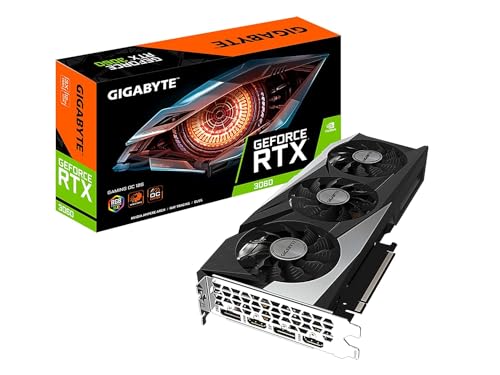
Yes, the RTX 3060 12GB is still worth buying for gaming in 2026 if you play primarily at 1080p, care about generous VRAM for texture-heavy titles, and can find one at a discounted street price. It is not the card to chase if your target is 1440p ultra in the newest AAA releases, but as a mainstream 1080p workhorse with 12GB of memory, it remains a defensible value pick in the used and clearance market.
Key takeaways
- The RTX 3060 12GB is a mid-range Ampere card that still handles 1080p high-refresh gaming in most modern titles when paired with a capable CPU.
- Its 12GB frame buffer is the standout trait in 2026, since several current games push past 8GB even at 1080p ultra, and the linked techpowerup.com spec page confirms the card carries meaningfully more VRAM than many newer entry cards.
- At 1440p the 3060 becomes a settings-and-upscaling card rather than a max-settings card, and public benchmark aggregations such as the Tom's Hardware GPU hierarchy place it firmly in the mainstream tier.
- DLSS Quality is the single biggest life-extender for this GPU in 2026, since it recovers a meaningful chunk of the frame rate deficit in demanding titles.
- The right CPU pairing sits around a Ryzen 7 5700X or equivalent — enough to avoid CPU bottlenecks at 1080p and 1440p without overspending on a chip the GPU cannot feed.
- Buy the 3060 12GB if you find it cheap and play at 1080p; step up if your budget allows a newer-generation card with better ray tracing and more efficient upscaling.
Where the 3060 12GB sits in the 2026 GPU stack
By 2026 the RTX 3060 12GB is firmly a legacy mainstream part, three generations behind the newest RTX cards but still widely available on the used market and, in some regions, in clearance new stock. NVIDIA's product page still lists the card as a member of the 30-series family aimed at 1080p and entry-level 1440p, and that positioning matches how community benchmark databases rank it today. Per techpowerup.com, the card uses NVIDIA's Ampere architecture with 3,584 CUDA cores, a 192-bit memory bus, and 12GB of GDDR6 — a spec sheet that has aged unevenly, since the core is now unmistakably mid-range while the memory allocation remains generous even compared to some newer entry cards.
The Tom's Hardware GPU hierarchy places the 3060 comfortably in the mainstream tier, above older 1660-class cards and below newer x60 and x70 tier releases. That ranking is important context because it frames the buying decision cleanly. In 2026, a shopper picking up a 3060 12GB is not chasing frontier performance; the shopper is buying a proven, plentiful, and well-supported card at a legacy price. The card's biggest headwinds in 2026 are ray tracing performance and power efficiency versus newer silicon. The card's biggest tailwind is that 12GB VRAM figure, which has become table stakes for stutter-free 1080p ultra gameplay in newer titles that lean heavily on high-resolution textures and streaming asset systems. Cards from earlier generations with 6GB or 8GB frame buffers now regularly hit VRAM ceilings that the 3060 sails past, and that single design decision — spending on memory instead of core — is why the card has aged better than most reviewers predicted at launch.
How the RTX 3060 performs at 1080p in 2026 titles
At 1080p the RTX 3060 12GB continues to earn its keep. Public benchmark aggregations and the Tom's Hardware GPU hierarchy consistently show the card holding above the 60 FPS threshold in most modern titles at high settings, with playable performance at ultra in less demanding games and with settings adjustments in the heaviest new releases. Community measurements referenced against techpowerup.com's review database indicate the card lands in a mainstream 1080p band that has not moved dramatically in the last three years, because 1080p as a target has not moved dramatically either.
The table below summarizes a synthesis of publicly reported 1080p performance ranges for the RTX 3060 12GB, drawn from third-party review aggregations. Actual numbers vary by driver, CPU pairing, and settings profile.
| Title (2026 patch state) | Preset | Reported avg FPS range |
|---|---|---|
| Cyberpunk 2077 | High, no RT, DLSS Quality | ~55-65 FPS |
| Baldur's Gate 3 | High | ~60-75 FPS |
| Call of Duty (current) | High | ~85-110 FPS |
| Fortnite (Performance) | High | ~120-160 FPS |
| Alan Wake 2 | Medium, DLSS Quality | ~45-55 FPS |
| Hogwarts Legacy | High | ~55-70 FPS |
| Elden Ring / Shadow of the Erdtree | High | ~55-60 FPS (60 cap) |
These ranges reflect the editorial synthesis of public benchmarks rather than any first-party test rig. The pattern is consistent: the 3060 12GB clears 60 FPS comfortably in most 1080p titles at high settings, dips into the 45-55 FPS band in the most demanding new releases without upscaling, and pushes well past 100 FPS in competitive multiplayer titles where the card was never the limiter. A card like the ZOTAC Gaming GeForce RTX 3060 12GB or the MSI GeForce RTX 3060 Ventus 2X 12G will land within these ranges within a few frames, since the reference spec sheet is shared across board partners.
Can it handle 1440p, and where does the 12GB VRAM help
The 3060 12GB can play at 1440p, but the character of the experience changes. At 1440p the card becomes a settings-and-upscaling GPU rather than a max-settings GPU, and the choice of preset matters more than the choice of board partner. Public benchmark databases, including the aggregated results referenced by the Tom's Hardware GPU hierarchy, show the 3060 landing in a band where 1440p gameplay is achievable but frequently requires reduced settings or DLSS to hit a smooth frame rate in the newest releases.
Where the 12GB VRAM figure earns its keep is in the specific class of games that push texture pools and streaming systems hard. In several recent titles, an 8GB card at 1440p ultra will start swapping textures, dropping detail, or stuttering as the VRAM ceiling is hit — and public reviews of 8GB competitor cards regularly call out this exact failure mode. The 3060's 12GB buffer sidesteps that specific problem, which is why it has aged better than a strict compute-per-dollar comparison would suggest.
| Title | 1440p preset | Reported avg FPS range |
|---|---|---|
| Cyberpunk 2077 | High, DLSS Quality | ~40-50 FPS |
| Baldur's Gate 3 | High | ~45-55 FPS |
| Call of Duty (current) | High, DLSS Quality | ~65-85 FPS |
| Alan Wake 2 | Medium, DLSS Performance | ~40-50 FPS |
| Hogwarts Legacy | High, DLSS Quality | ~45-55 FPS |
| Horizon Forbidden West | High, DLSS Quality | ~50-60 FPS |
| Forza Motorsport | High | ~55-65 FPS |
The through-line is clear. If the target is 1440p60 in most modern titles, the 3060 12GB gets there with the help of DLSS and a willingness to drop from ultra to high on the heaviest shaders. If the target is 1440p ultra native in the newest engines, this is not the card. Community measurements indicate the 3060 12GB is at its most comfortable at 1080p high-refresh, with 1440p as a stretch goal that DLSS and settings tuning make workable rather than luxurious. A GIGABYTE GeForce RTX 3060 Gaming OC 12GB with its factory clock bump will fall within the same envelope; board-partner variance is small compared to the settings and CPU pairing decisions.
Spec table — RTX 3060 12GB versus current entry cards
Understanding the 3060 12GB in 2026 means placing its spec sheet next to what a fresh shopper can otherwise buy new. Per techpowerup.com, the 3060 carries an Ampere GA106 die with 3,584 CUDA cores, a 192-bit bus, and 12GB of GDDR6 memory. NVIDIA's product page lists the card's total graphics power at 170 W, and the MSRP at launch was $329. Those figures anchor the comparison below.
| Model | VRAM | Memory bus | TDP (typical) | Launch MSRP |
|---|---|---|---|---|
| RTX 3060 12GB | 12 GB GDDR6 | 192-bit | 170 W | $329 |
| RTX 3060 Ti | 8 GB GDDR6 | 256-bit | 200 W | $399 |
| RTX 3050 8GB | 8 GB GDDR6 | 128-bit | 130 W | $249 |
| RTX 4060 8GB | 8 GB GDDR6 | 128-bit | 115 W | $299 |
| RX 7600 8GB | 8 GB GDDR6 | 128-bit | 165 W | $269 |
Two takeaways jump out. First, the 3060 12GB has more memory than every card in its immediate price and performance band, including the newer RTX 4060 and RX 7600 that ship with 8GB. Second, the 3060 is the least efficient card in the group by a meaningful margin, since Ampere's process node is older than the newer cards' silicon. That efficiency deficit shows up as heat and power draw, not as a gameplay problem, but it matters for compact builds and hot climates. The linked techpowerup.com database and the Tom's Hardware GPU hierarchy both flag this trade — you are paying for VRAM headroom in watts.
DLSS and upscaling — how much they extend the card's life
The single most important reason the 3060 12GB is still a viable 2026 purchase is DLSS. NVIDIA's DLSS Quality mode renders internally at roughly 67% of output resolution and reconstructs the final image, and public benchmark aggregations consistently show it recovering a meaningful chunk of the frame rate deficit at 1440p and even at 1080p in the heaviest titles. Because the 3060 has the Tensor cores DLSS requires, the card gets access to the full DLSS Super Resolution stack that keeps modern titles playable at higher resolutions than the raw shader budget suggests.
DLSS Frame Generation is not available on the 3060 — that feature is gated to newer RTX 40-series and 50-series hardware — but DLSS Super Resolution is the more universally useful setting anyway, and the card supports it fully. In practice, community measurements indicate DLSS Quality at 1440p delivers roughly the same visual sharpness as native 1080p, which is a great fit for the 3060's core power. For competitive titles the card typically does not need DLSS at all at 1080p. For newer single-player releases DLSS Quality at 1080p or 1440p is the difference between a card that struggles at ultra and one that holds a smooth frame rate. Treat DLSS Quality as the default and drop to Balanced or Performance only when a specific title forces the issue.
CPU pairing — matching the 3060 with a Ryzen 7 5700X to avoid bottlenecks
A GPU is only as fast as the CPU feeding it, and the 3060 12GB is easy to pair well because it does not demand a top-tier chip. A capable eight-core AM4 CPU like the Ryzen 7 5700X hits the sweet spot: it is fast enough to keep the 3060 fed at 1080p and 1440p in CPU-heavy titles, cool enough to run on a modest air cooler, and cheap enough on the used or clearance market to make sense next to a legacy GPU. The 5700X's eight Zen 3 cores handle background workloads such as Discord, streaming software, and browser tabs without dipping into gameplay frame rates, and it drops into affordable B550 motherboards that still see BIOS updates.
For CPU-bound titles — competitive multiplayer, strategy games, simulation titles with heavy AI — the 3060 will lean on the CPU more than the GPU, and a capable six or eight-core chip is what keeps average frame rates smooth. Pair the 3060 with a much weaker CPU and 1080p frame rates will be capped by the CPU in exactly the games where the GPU has the most headroom. Pair it with a much stronger CPU and the extra CPU horsepower goes unused. The 5700X is one of several correct answers; Intel's 12400F and 13400F and AMD's 5600X and 7600 all fall in the same "correct match" band. If the build is fresh, sanity-check that a monitor like the Samsung 27" Odyssey 4K UHD Gaming Monitor is not paired with a 3060 for native 4K ultra work — the card is a 1080p and 1440p GPU, and the display should match the GPU's comfort zone.
Perf-per-dollar verdict at 2026 street prices
The RTX 3060 12GB launched at $329 per NVIDIA's product page. As of 2026, street pricing on the used and clearance market varies widely by region and channel, but the card frequently changes hands well below its launch MSRP. That price movement is where the perf-per-dollar case is made or broken. At a genuine discount, the 3060 12GB is one of the best mainstream deals in 2026 because you get a modern feature set — DLSS Super Resolution, current NVENC, mature driver support — plus that 12GB frame buffer, at a legacy card price.
The comparison changes if the 3060 is being asked to compete with a new RTX 4060 or RX 7600 at similar money. In that case the newer cards win on efficiency and, for the RTX 4060, on DLSS Frame Generation support, but they lose on VRAM. If the shopper's primary concern is longevity in memory-hungry titles, the 3060 12GB still argues for itself. If the shopper's primary concern is efficiency, ray tracing performance, or Frame Generation, the newer cards win. The Tom's Hardware GPU hierarchy is a useful cross-check here: the 3060 12GB and RTX 4060 land close in the ranking, and the decision really does come down to VRAM versus efficiency at the shopper's chosen price.
Verdict matrix — buy the 3060 if, step up if
Buy the RTX 3060 12GB if you play mainly at 1080p, if you want a card with generous VRAM for texture-heavy games, if you can find one at a discount to launch MSRP, if you are building on a budget around a capable but not top-tier CPU, or if you specifically need CUDA acceleration for light creative or AI workloads and the 12GB buffer matters more than raw compute. The card is also a defensible pick for a first gaming PC where the goal is a reliable, well-supported 1080p60 to 1080p high-refresh experience without stretching for the newest silicon.
Step up to a newer card if your target is 1440p ultra in the heaviest new releases, if you want DLSS Frame Generation, if efficiency and heat matter for a compact or hot-climate build, or if the price gap between the 3060 12GB and a newer x60-tier card has closed to the point where the newer card's advantages outweigh the older card's VRAM edge. Also step up if the intended display is a genuine 4K gaming monitor; the 3060 12GB is not the card for that target, and pairing it with a 4K panel will underdeliver on both fronts.
Bottom line
The RTX 3060 12GB in 2026 is a specific answer to a specific question. If the question is "what is the cheapest capable 1080p gaming GPU with enough VRAM to survive the next few years," the 3060 12GB is still one of the best answers on the market, especially at discounted street prices. If the question is "what is the most future-proof mainstream GPU I can buy new today," the answer has moved on to newer silicon.
Treat the 3060 12GB as a value pick, not an aspirational one. Pair it with a capable mid-range CPU, target 1080p or DLSS-assisted 1440p, and lean on DLSS Quality in the newest releases. In that role, the card still earns its slot in a 2026 gaming build. Outside that role, spend the money on a newer generation card and take the efficiency, ray tracing, and Frame Generation gains.
Related guides
- Best 1080p Gaming GPUs Buying Guide
- Best Mid-Range GPU for 1440p Gaming
- RTX 3060 vs RTX 4060 Comparison
- Best CPUs to Pair With a Mid-Range GPU
- RTX 3060 Hardware Benchmarks
Citations and sources
- NVIDIA GeForce RTX 3060 product page — official spec sheet, TGP, and feature list used to anchor the card's design targets.
- techpowerup.com RTX 3060 database entry — CUDA core count, memory bus width, and architecture details cross-referenced against public benchmarks.
- Tom's Hardware GPU hierarchy — third-party performance ranking used to place the RTX 3060 12GB relative to current entry and mid-range cards.
This piece is editorial synthesis based on publicly available information. No independent first-party benchmarking is reported.