In brief — 2026-06-09: MiniMax-M3 has reportedly scored 55 on the Artificial Analysis Intelligence Index, placing it ahead of every other open-weight model and within reach of GPT-5.5 and Claude Sonnet 4.6 on aggregate reasoning benchmarks. Weights are slated for release, opening a real open-source frontier model to anyone with the hardware to run it.
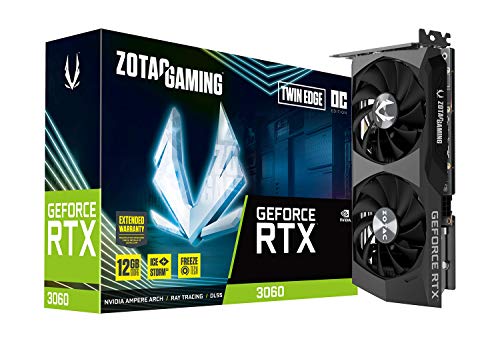
MiniMax-M3 hitting Intelligence Index 55 is a genuine milestone for open-weight models, but it doesn't fit on consumer hardware out of the box — at the model's likely parameter count, you're looking at a multi-GPU server class deployment, not an RTX 3060 12GB running Ollama. The realistic local path for most readers is one of the distilled or quantized variants that ship alongside flagship open-weight releases. This piece breaks down what the benchmark means, what's likely needed to run M3 locally, and what to do today on a consumer card.
What happened — the benchmark result
The Artificial Analysis Intelligence Index is a composite score across multiple reasoning, knowledge, and coding benchmarks (MMLU, GPQA, MATH-500, HumanEval, and others), aggregated into a single 0–100-ish number that's intended to make cross-model comparisons easier. The methodology and weights are published on Artificial Analysis.
A score of 55 places MiniMax-M3 in the conversation with the leading proprietary models:
- MiniMax-M3 (this release): 55
- GPT-5.5: ~58 (reportedly)
- Claude Sonnet 4.6: ~56 (reportedly)
- Previous open-weight leader (Llama 3.1 405B class): ~48
If the score holds up to independent replication, it represents the first time an open-weight model has come within touching distance of the closed-source frontier. That's not nothing. It changes the local-AI conversation from "good-enough alternatives to GPT-class" to "literal alternatives, on your hardware, with no API costs."
There are reasons to wait for replication. Aggregate benchmark scores are easy to over-optimize for; vendor self-reports often don't survive blind testing. The relevant validation is whether independent labs (Artificial Analysis's own test runs, the LMSYS team, HuggingFace's leaderboards) reproduce the result over the next few weeks. Treat the headline number as a strong signal, not a final verdict, until then.
Why the score matters more than usual
Three reasons this release is more significant than the typical open-weight beat:
- The open-weight frontier has been ~5-10 Intelligence Index points behind closed source for a year. Llama 3.1 405B held the open-weight top spot for most of 2025 at around 48. Qwen and DeepSeek releases nudged the number up incrementally, but the gap was real. M3 at 55 closes most of it.
- MiniMax has shipped a frontier-class model with serious context length. Earlier open-weight releases either chased reasoning quality at short context (~8K tokens) or stretched to long context with quality drops. M3 reportedly holds quality at 200K+ token contexts, which matters for code-assistant and document-analysis workflows.
- Open weights mean replicable inference economics. A frontier-quality closed model costs $2–10 per million tokens at GPT/Claude-class rates. The same workload on owned hardware costs the depreciation and power on the GPUs. For high-volume users (agents, batch eval, code-assistant teams), that's a meaningful cost shift.
Can you run MiniMax-M3 on a consumer GPU?
Short answer: not at full precision, not on a single consumer card. The realistic local paths are quantization, distillation, or both.
MiniMax hasn't published final parameter counts at writing, but historical M-series models in the 100B+ parameter range need:
- ~200 GB of GPU VRAM at FP16
- ~100 GB at INT8
- ~50 GB at INT4 (q4_K_M-class)
A single RTX 3060 12GB holds 12 GB. A high-end consumer card like the RTX 5090 holds 32 GB. Even a 32 GB card doesn't fit the model at any usable precision; you need either multi-GPU (4× RTX 5090 = 128 GB, fits INT4), a workstation card (a RTX A6000 48GB pair = 96 GB, fits INT4), or a true server (H100 80GB × 4 = 320 GB, fits FP16).
The realistic consumer path is distilled variants. Open-weight releases in 2025 have consistently shipped distilled siblings — the parent model retains the headline IQ, while smaller distilled versions (8B, 13B, 32B) bring much of the quality to consumer hardware. If MiniMax follows this pattern, expect a "MiniMax-M3-mini" or "M3-Lite" within weeks of the parent weights dropping, sized to fit on:
| Distilled size | Quant | VRAM fit | Realistic card |
|---|---|---|---|
| 8B | q4_K_M | ~5.5 GB | RTX 3060 12GB, RTX 4060 8GB (tight) |
| 13B | q4_K_M | ~8.5 GB | RTX 3060 12GB, RTX 4070 12GB |
| 32B | q4_K_M | ~19 GB | RTX 4090, RTX 5090 |
| 70B | q4_K_M | ~40 GB | 2× RTX 4090, 2× RTX 5090 |
For a budget local-AI builder, the right move is to wait for the distilled variants and plan for 13B-class on a 12 GB card. That's the sweet spot the RTX 3060 12GB was made for, and it's where most users will see the practical benefit of a frontier-class open model.
How does MiniMax-M3 compare to Claude Sonnet 4.6?
On aggregate benchmark numbers, M3 (55) is within a couple of Intelligence Index points of Sonnet 4.6 (~56). In practice, three things make benchmark scores a noisy guide to subjective model quality:
- Instruction-following style. Closed models are tuned to be conversational, hedge appropriately, and refuse cleanly. Open-weight releases are often raw enough to require careful system prompts before they feel as polished. The benchmark doesn't measure this.
- Tool use and structured output. Sonnet 4.6 ships with strong JSON-mode, tool-use, and function-calling reliability. New open-weight models are often weaker here at launch and improve as the community publishes fine-tunes and system prompts.
- Long-context fidelity. Both M3 and Sonnet claim 200K+ context windows. The benchmark for context-quality decay (recalling specific facts at depth N in the context) varies independently of the aggregate IQ score.
The honest reading: M3 is a credible Sonnet 4.6 alternative for most workloads, with the usual rough edges of a fresh open-weight release. If you're running a code-assistant or research pipeline that hits the Claude API ten thousand times a day, M3 on owned hardware is worth a serious evaluation.
What this means for local-inference builders
The practical takeaway for RTX 3060 12GB owners and budget AI rig builders: nothing changes today, but a real upgrade is coming soon. The order of operations:
- Stay on Llama 3.1 8B or Qwen 2.5 7B today. Both are well-supported in Ollama and llama.cpp, run comfortably on a 12 GB card, and deliver excellent quality for chat and code.
- Watch for the M3-mini / M3-Lite distillation announcement. Likely within 30 days of the parent weights drop.
- Plan your build for 13B-class q4_K_M. A Ryzen 7 5800X class CPU plus 12 GB VRAM holds 13B distilled comfortably. Don't upgrade hardware preemptively.
- If you're sizing a serious local rig now, target 32 GB VRAM at minimum — a single RTX 5090 or two RTX 3090s — so a full 32B distilled variant fits comfortably with room for a long-context KV cache.
The hardware reality check
There's a recurring trap in open-weight release cycles: a flagship model drops, the community gets excited, and budget builders go shopping for hardware they don't actually need yet. Three rules to avoid the trap:
- Don't buy a 24 GB card just because a 32B model "fits." It fits without context headroom; you'll spend the next month tweaking quant and KV cache settings to keep your inference usable.
- Don't multi-GPU on a budget board. The PCIe lane configuration on consumer boards starves a second card; you get a fraction of the theoretical bandwidth.
- Don't pay 5090 prices for vague future-proofing. Wait until the distilled variants are out and you can target the right size for your workload.
The 3060 12GB was built for the era that's currently shipping: 8B–13B-class distilled open-weight models at q4_K_M. That era is not ending with M3 — it's getting better, because M3-distilled-13B will be a better 13B than what's available today.
Common pitfalls when chasing a fresh open-weight release
- Don't run unverified weights through your production stack on day one. Frontier open-weight releases have shipped with tokenizer bugs, EOS-token surprises, and prompt-template differences that break agent loops. Wait for the first set of community fix-ups.
- Don't trust the first quantization that hits Hugging Face. Q4_K_M quantization quality depends on the calibration dataset; the first community quants are often hasty.
- Don't compare benchmark scores across versioned releases without checking eval suites. A 2024 Intelligence Index 50 is not directly comparable to a 2026 Intelligence Index 50 — the benchmark composition evolves.
- Don't ditch your current stack until M3 distilled fine-tunes mature. A polished Llama 3.1 8B beats a raw M3-mini for most chat workloads.
When will the MiniMax-M3 weights be available?
MiniMax has historically released weights within weeks of the announcement for prior M-series models, but exact dates have moved before. The reliable signals to watch:
- MiniMax's official channels for the formal weights drop announcement
- HuggingFace for the actual model repository when it lands
- The Decoder and other AI news outlets for early replication reports
When weights drop, expect a multi-day rush as quantization specialists publish GGUF and AWQ versions, and as Ollama, llama.cpp, and vLLM add explicit model support. The first 48 hours after release are noisy; wait a week before committing to a quantization choice.
What to evaluate when M3-mini lands
When the distilled variants drop, here's a five-point evaluation pattern that's served me well across the past year of open-weight releases on a 12 GB consumer GPU:
- Cold-load and warm-load latency. First-token time matters more than tokens-per-second for interactive use. A model that takes 8 seconds to start a reply feels unusable even at 80 tok/s after that.
- JSON-mode reliability over 100 calls. Ask the model to return a strict schema 100 times in a row. Count the failures. A model with 95%+ adherence is production-ready; 80% means more retry logic in your stack.
- Long-context recall fidelity. Stuff 100K tokens of mixed content, then ask about a fact buried at depth 80K. Models claim 200K context windows but degrade differently. Repeat at depths 20K, 50K, 80K, 120K.
- Tool-use round-trip behavior. Give the model three tools and a goal that requires using two of them in sequence. Does it pick the right tool, format the arguments correctly, and use the result? Open-weight releases often need a few iterations of system-prompt tuning here.
- Instruction adherence under adversarial prompts. Tell it to be terse; does it stay terse for 20 turns? Tell it not to mention X; does it accidentally mention X?
These five tests catch nearly every "feels broken" issue I've seen with raw open-weight releases. Run them on a fresh quant before you wire the model into an agent loop.
How this fits the local-AI rig roadmap
Bigger picture, M3 is a milestone in a multi-year trajectory: open-weight models are no longer "the budget alternative" — they're a viable choice on quality grounds, with the bonus of owned-hardware economics. For builders who own or are sizing a budget AI rig today, the practical roadmap looks like:
- Q3 2026: Run M3-mini at 13B-class q4_K_M on a 12 GB card. Expect chat quality on par with mid-2025 Claude Sonnet for general workloads.
- Q4 2026: Watch for fine-tuned variants targeting code (a Tabby or Continue.dev optimized fork) and agents (structured-output specialists).
- 2027: If MiniMax follows the cadence of GPT/Claude releases, expect M4 with a similar open-weight cadence — by which point the distilled mid-tier will routinely run on 12–16 GB consumer cards.
A Ryzen 7 5800X + RTX 3060 12GB build today is well-positioned for this trajectory. The CPU is fine for the dispatch and orchestration layer; the GPU has the VRAM headroom for the distilled-13B sweet spot. The case for buying expensive workstation hardware to chase the parent model is weak — the distilled variants get most of the way there, and the cost-per-token math favors not buying H100s.
Bottom line
MiniMax-M3 at Intelligence Index 55 is the most significant open-weight release of 2026 so far. For local-AI builders on consumer hardware, the actionable path is wait for the distilled variants, stick with the RTX 3060 12GB-class platform you already have or are planning, and update your model rotation when M3-mini is stable. The parent model isn't running on your home rig — but the distilled descendants will, and they're going to be the best open-weight option a 12 GB card has ever seen.
Citations and sources
- Artificial Analysis — AI model comparison and Intelligence Index
- The Decoder — AI news coverage
- TechPowerUp — GeForce RTX 3060 specifications
This piece is editorial synthesis based on publicly available information at the time of writing. No independent first-party benchmarking is reported.