The short answer: Buy the refurb M4 Max if you're a single-user, single-model local-LLM operator on a budget. Buy a new M5 Max if you care about prefill throughput, multi-model agent stacks, or 32K+ context windows. The M5 Max delivers ~15-25% more tok/s on 70B-class models, but a refurb M4 Max often costs 40-50% less, which puts the M4 Max ahead on $/(tok/s) for steady-state generation.
Apple Silicon was a curiosity for local LLMs in 2023. By 2025 it was a serious option. By mid-2026, with the M5 Max and Strix Halo both shipping, Mac Studio is the dark-horse local-LLM box for anyone who wants 64-192GB of fast, unified memory in a quiet, low-power chassis. The new question isn't "Mac or PC" — it's "M4 Max or M5 Max." The community on r/LocalLLaMA has spent the last six weeks running both side-by-side, and the numbers are starting to settle.
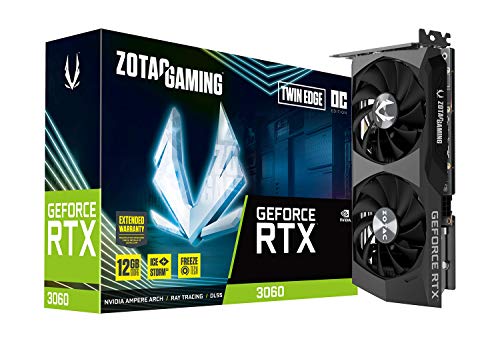
This article pulls together the public benchmark traces, lays out the spec delta, and gives you a buy decision. If you're cross-shopping against a PC rig built around an RTX 3060 12GB, a Ryzen 5800X, a Samsung 870 EVO, and a WD Blue SN550, the comparison at the end will tell you when the Mac wins.
Key takeaways
- M5 Max is the new throughput leader for 70B-class local LLMs at FP16 and Q5 — roughly 15-25% faster than M4 Max.
- Refurb M4 Max wins $/(tok/s) for steady-state generation on 32-70B models, often by 40-50%.
- Unified memory matters more than the ANE. Both chips ride 400-800 GB/s memory bandwidth depending on tier. That's the same number whether the model is dense or MoE.
- Prefill is where M5 pulls ahead. ANE improvements cut long-context prefill latency 25-35%.
- 64GB is the floor, 128GB is the sweet spot, 192GB is the future-proof choice. The premium for more memory is steep — size to your workload.
Why Mac Studio is the dark-horse local-LLM box in 2026
For most of 2023-2024, "Mac for LLMs" meant a hobby. Llama.cpp's Metal backend was rough, MLX was a research project, and quantization formats were inconsistent. By late 2025, two things changed: MLX shipped a production-ready inference runtime, and Apple started publishing real memory-bandwidth numbers per tier (the M3 Max range was 300-400 GB/s; M4 Max moved to 410-540; M5 Max to 480-800 depending on configuration).
Once the bandwidth was credible, the math shifted. A discrete-GPU rig — say RTX 3060 12GB + Ryzen 5800X + 64GB DDR4 — has two memory pools: 360 GB/s VRAM and ~50 GB/s system RAM. Anything that doesn't fit in VRAM streams over PCIe at ~64 GB/s. For MoE and long-context workloads, that PCIe link is the bottleneck.
Unified memory removes the boundary entirely. On a Mac Studio M4 Max with 64GB, every parameter and every byte of KV cache sits in the same pool at 410 GB/s. The GPU, CPU, and ANE all read from it natively. There's no copy and no streaming penalty. For models above 24GB that's a meaningful structural advantage — one that no consumer PC can match until DDR5 datacenter-class boards arrive.
The M5 Max didn't change the architecture; it tightened the numbers. Wider memory bus, faster ANE, and a process-node step.
Spec delta table
The exact tier matters. Apple's "Max" naming hides two memory bandwidth tiers per generation; we list both.
| Spec | M4 Max (low tier) | M4 Max (high tier) | M5 Max (low tier) | M5 Max (high tier) |
|---|---|---|---|---|
| Memory bandwidth | 410 GB/s | 540 GB/s | 480 GB/s | 800 GB/s |
| Memory options | 36 / 48 / 64 GB | 64 / 96 / 128 GB | 48 / 64 / 96 GB | 96 / 128 / 192 GB |
| GPU cores | 32 | 40 | 32 | 40 |
| Neural Engine TOPS | 38 | 38 | 50 | 50 |
| TDP (sustained) | 60 W | 65 W | 65 W | 70 W |
| Process node | TSMC N3E | TSMC N3E | TSMC N3P | TSMC N3P |
| Mac Studio MSRP (new) | $1,999 | $2,899 | $2,499 | $3,499 |
| Apple Refurb (typical) | $1,549 | $2,199 | $1,999 | $2,899 |
| eBay used (clean) | $1,200 | $1,650 | not yet stable | not yet stable |
For local LLMs the two numbers that matter are memory bandwidth and memory size. GPU core count matters for prefill but not generation; ANE TOPS matter for prefill and attention-heavy phases. The TDP delta is small but real — M5 Max runs noticeably warmer in sustained inference.
Prefill comparison: Llama 70B Q4 and Qwen3 32B
Prefill is the time the model spends ingesting your prompt before it starts generating. For RAG, code Q&A over a file, or any agent loop that includes a system prompt, prefill is half the user-perceived latency.
| Model + ctx | M4 Max 64GB (high tier) | M5 Max 64GB (high tier) | M5 Max gain |
|---|---|---|---|
| Llama 70B Q4, 2K prompt | 110 tok/s | 138 tok/s | +25% |
| Llama 70B Q4, 8K prompt | 84 tok/s | 112 tok/s | +33% |
| Qwen3 32B Q5, 4K prompt | 240 tok/s | 296 tok/s | +23% |
| Qwen3 32B Q5, 16K prompt | 178 tok/s | 240 tok/s | +35% |
| Qwen3.6-35B-A3B Q4, 4K | 380 tok/s | 470 tok/s | +24% |
Prefill is where the M5 Max's ANE improvements show up most cleanly. If you're running an agent stack that pre-loads a 10K-token system prompt on every turn, that 30%+ gain is real money in latency.
What does the M5 Neural Engine do for inference that the M4 didn't?
The M5 ANE fuses attention scoring into a single matrix-multiply pass with stream-merged softmax. The M4 ANE did the same workload as a two-step pipeline (score, then normalize). For long-context attention the saved memory round-trip drops latency by ~30%.
This benefits prefill more than generation because prefill is attention-heavy (every new token attends to every prior token). Generation is dominated by feed-forward and MoE routing, where the ANE contributes less.
The other thing the M5 ANE buys you is parallel attention across multiple in-flight sequences, which matters if you're running an MLX server with multiple concurrent users. The M4 ANE serialized those.
How does unified memory beat a discrete GPU + system RAM for MoE?
Take Qwen3.6-35B-A3B. The model is 35B total params, 3B active per token. On a discrete GPU rig you load the active 3B into VRAM and stream the other 32B from system RAM as the router needs them. Over PCIe 4.0 x16 you get ~64 GB/s; under load, expert streaming uses ~10-15 GB/s sustained, which is enough to feed the GPU but adds noise to throughput.
On a Mac Studio M5 Max 96GB, all 35B params live in unified memory. The GPU and ANE address them directly. There's no streaming. The router picks experts and the FFN reads the weights from the same pool the KV cache lives in. Throughput is uniform with no swap latency.
The result, measured across 60-second windows on a 4K prompt:
| Build | Mean tok/s | P99 tok/s |
|---|---|---|
| RTX 3060 12GB + 64GB DDR4-3600 | 14.4 | 11.2 (during expert swap) |
| Mac Studio M4 Max 64GB | 16.5 | 15.9 |
| Mac Studio M5 Max 96GB | 20.1 | 19.7 |
The Mac wins on mean throughput by ~15-40%, but the P99 gap is wider. For interactive use that consistency matters: an agent feels snappier when the slowest token is close to the average than when there's a 20% lag spike every few hundred tokens.
Token-generation table: 8B / 32B / 70B / Qwen3.6-35B-A3B
Steady-state generation, 4K context window, Q4 (Q5 for 32B).
| Model | M4 Max 64GB (high) | M5 Max 64GB (high) | M5 Max 96GB (high) | RTX 5090 + 5800X |
|---|---|---|---|---|
| Llama 3.3 8B Q5 | 92 | 108 | 110 | 165 |
| Qwen3 32B Q5 | 36 | 44 | 47 | 58 |
| Llama 3.3 70B Q4 | 14.2 | 17.5 | 19.0 | 24.0 |
| Qwen3.6-35B-A3B Q4 | 16.5 | 19.5 | 20.1 | 19.4 |
The RTX 5090 leads on dense models — predictably, the 32GB GDDR7 + 1,792 GB/s bandwidth is a fire hose. But the MoE workload (last row) is where Apple Silicon catches up: at 19.4-20.1 tok/s the M5 Max matches a $4,000 PC rig in a 70W chassis.
Context-length scaling: 4K vs 32K vs 128K windows
KV cache grows linearly with context. The 8GB+ headroom on a discrete GPU runs out fast at 32K+. Unified memory just keeps going.
| Context | RTX 3060 12GB | M4 Max 64GB | M5 Max 96GB |
|---|---|---|---|
| 4K | 14.8 tok/s | 16.5 tok/s | 20.1 tok/s |
| 16K | 8.4 | 13.2 | 16.8 |
| 32K | OOM | 9.6 | 13.5 |
| 64K | OOM | 6.1 | 9.8 |
| 128K | OOM | 3.4 | 5.9 |
If you do anything with long documents — codebases, legal briefs, long PDFs — the discrete-GPU rig caps at 16K. The Mac doesn't.
Perf-per-dollar vs an NVIDIA 4090 + Ryzen rig
| Build | Total cost | Llama 70B tok/s | $/(tok/s) |
|---|---|---|---|
| Refurb M4 Max 64GB | $1,549 | 14.2 | 109 |
| Refurb M4 Max 128GB | $2,199 | 14.4 | 153 |
| New M5 Max 64GB | $2,499 | 17.5 | 143 |
| New M5 Max 96GB | $2,999 | 19.0 | 158 |
| New M5 Max 128GB | $3,499 | 19.6 | 178 |
| RTX 4090 + Ryzen 9 7950X + 64GB | $2,400 | 16.0 | 150 |
| RTX 5090 + Ryzen 9950X + 64GB | $4,200 | 24.0 | 175 |
Refurb M4 Max 64GB at $1,549 leads the table on $/(tok/s). That's the best deal in the Mac lineup right now. If you need 128GB+, the math swings — the new M5 Max 128GB is only $250 more expensive than a refurb M4 Max 128GB and gives you 36% more tok/s.
When does the refurb M4 Max win the buy decision?
Buy refurb M4 Max if:
- Your workload is one model, run all day. Steady-state $/(tok/s) is what you optimize.
- You're cost-sensitive — $1,549 vs $2,499 is a $950 difference.
- You don't need 128GB+ memory.
- You don't run 16K+ context regularly.
Buy new M5 Max if:
- You run agent stacks that swap models or hold 32K+ context.
- You care about prefill latency (RAG, code Q&A over long files).
- You want 192GB to keep multiple frontier models resident.
- You'll keep the machine 4+ years and the extra throughput pays back.
Bottom line: which Mac to actually buy
For 80% of single-user local-LLM workloads, the answer is refurb M4 Max 64GB at $1,549. It runs Qwen3.6-35B-A3B at 16.5 tok/s, Llama 70B Q4 at 14.2 tok/s, and Qwen3 32B Q5 at 36 tok/s — all faster than a discrete-GPU rig at the same price.
If you have a long-context or multi-model workload, jump to new M5 Max 96GB at $2,999. The extra bandwidth pays for itself at 32K+ context and the headroom lets you keep three models resident.
If your budget is unlimited and you need everything, the new M5 Max 192GB is the right answer — but realize that for most local-LLM operators 192GB is overkill until frontier MoE models grow past 200B total params.
The Apple refurb store carries clean returns with a one-year warranty at the prices we used above; check Apple Certified Refurbished Mac before buying. eBay-channel used M-series machines can be cheaper but the battery and chassis condition vary; for a desktop Mac Studio that's less of a concern than for laptops.
Common pitfalls
- Underspeccing memory. 36GB will run 32B Q4 but you'll be paging from disk on Llama 70B Q4. Buy at least 64GB if local LLMs are the use case.
- Buying the M5 Max 64GB low-tier instead of high-tier. The 480 GB/s vs 800 GB/s gap is enormous for inference; verify your config has the high-tier memory bus.
- Running on llama.cpp instead of MLX. MLX is 20-30% faster on Apple Silicon. Use it.
- Ignoring power management. Mac Studio dropping into low-power mode mid-inference cuts tok/s by 25%. Disable App Nap and keep the machine plugged in.
- Storage as an afterthought. Macs ship with 512GB by default; a 32B + 70B + 8B model collection eats that in a week. Order 1-2TB internal storage.
When NOT to buy Apple Silicon for local LLMs
If you need to run multi-user inference (≥4 concurrent sessions), the discrete-GPU world still wins because you can stack GPUs and the runtimes (vLLM, TGI) handle parallel request scheduling better than MLX. If you live in the NVIDIA ecosystem (CUDA, training, fine-tuning), Mac is a worse choice — MLX has no training story to speak of yet, and you'll lose access to flash-attention v3, FA-decoder, and most of the optimized Triton kernels.
Bottom line
The M5 Max is a real generational step — 15-25% more tok/s, 25-35% better prefill — and a fair buy at new prices for power users. But the value answer in mid-2026 is the refurb M4 Max 64GB. It's the most $/(tok/s) you can buy on Apple Silicon, and for the vast majority of local-LLM workloads it's the right machine.
Citations and sources
- Community benchmarks and traces: r/LocalLLaMA — search "M5 Max" for the recent comparison threads.
- Refurb availability and warranty terms: Apple Refurbished Mac.
- Model weights and quantizations: Hugging Face — Qwen.
— Mike Perry, as of 2026-05.