The 30-second answer
For most current gaming workloads, upgrading from the Ryzen 7 5800X to AMD's Ryzen 9 9950X3D2 delivers 5-15% more gaming fps at 1440p and 4K — real but not transformative. At 1080p in cache-sensitive competitive titles, the delta widens to 30-50%. The catch is the platform cost: AM5 board plus DDR5 kit adds $300-500 on top of the CPU. The upgrade pays back cleanly for 1080p competitive players, productivity users, and content creators. For 1440p / 4K-focused gamers who already own a 5800X, the budget is better spent on the GPU.
Why this comparison matters
The Ryzen 7 5800X launched in November 2020 as AMD's Zen 3 gaming flagship and is, by 2026, one of the most widely-deployed Ryzen chips in the installed base. The 5800X paired with a B550 motherboard and 32GB of DDR4-3600 was the canonical mid-2020s gaming build, and millions of those rigs are still running. The question for their owners in 2026 is whether the current Ryzen 9 9950X3D2 — AMD's top-tier dual-CCD X3D part on Zen 5 silicon — is the upgrade that actually moves the needle.
The math is more complicated than the pure CPU benchmarks suggest because moving to the 9950X3D2 also means moving to AM5, which means a new motherboard and DDR5 memory. Per the AMD Ryzen desktop processor lineup, the X3D2 generation builds on the same 3D V-cache technology that defined the 7800X3D and 7950X3D, with both CCDs now carrying cache (versus the asymmetric design of the 7950X3D). That changes the scheduling story and the workload profile.
This article compares the two on gaming throughput, productivity, total platform cost, and the cooler / power requirements builders care about.
Key Takeaways
- The 9950X3D2 is materially faster than the 5800X — the question is how much that matters at your resolution and workload.
- Platform cost: AM5 board + DDR5 kit adds $300-500 to the upgrade beyond the CPU itself.
- 1080p competitive: 30-50% fps gains, clear upgrade.
- 1440p / 4K gaming: 5-15% fps gains, often GPU-bottlenecked anyway.
- Productivity: 50-100% gains on multithreaded work.
The spec comparison
| Spec | Ryzen 7 5800X | Ryzen 9 9950X3D2 |
|---|---|---|
| Architecture | Zen 3 | Zen 5 with 3D V-cache (both CCDs) |
| Process node | 7nm TSMC | 4nm TSMC |
| Cores / threads | 8 / 16 | 16 / 32 |
| Base clock | 3.8GHz | ~4.4GHz (est.) |
| Boost clock | 4.7GHz | ~5.7GHz (est.) |
| L2 cache | 4MB | 16MB |
| L3 cache | 32MB | 192MB (96MB per CCD) |
| TDP | 105W | 170W |
| Socket | AM4 | AM5 |
| Memory | DDR4-3200 official | DDR5-6000 official |
| MSRP at launch | $449 | est. ~$799 |
Per the TechPowerUp 5800X reference, the 5800X is an 8-core Zen 3 chip with 32MB of L3 and a 4.7GHz boost. The 9950X3D2 doubles the core count, jumps two architectural generations, and brings 3D V-cache to both CCDs for the first time in the dual-CCD product line. The headline architectural change is that the previous-gen 7950X3D had asymmetric cache (one CCD with V-cache, one without), which required Windows game-mode scheduling to route gaming threads to the V-cache CCD. The X3D2 generation puts V-cache on both CCDs, which simplifies scheduling and eliminates the worst-case scenarios where the wrong CCD got the threads.
Gaming throughput — what to actually expect
The CPU's impact on gaming fps scales inversely with resolution. At 1080p the CPU does substantial work feeding the GPU; at 4K the GPU is doing nearly all the work and the CPU choice barely matters. The per-resolution deltas roughly:
| Resolution / workload | 5800X baseline | 9950X3D2 delta |
|---|---|---|
| 1080p competitive (CS2, Valorant) | Reference | +30-50% |
| 1080p AAA (Cyberpunk, Hogwarts) | Reference | +15-25% |
| 1440p AAA | Reference | +5-15% |
| 4K AAA | Reference | +0-5% |
| 1440p sim (MSFS, ACC) | Reference | +20-35% |
| 1080p MMO (FFXIV, WoW) | Reference | +20-30% |
These are typical ranges from the broader benchmark community as compiled in Tom's Hardware's CPU hierarchy; specific titles vary substantially. The pattern is consistent: the V-cache delivers most of its value in cache-sensitive workloads (competitive shooters, sims, MMOs), and the raw clock and core advantages of Zen 5 deliver the rest.
For a typical 1440p AAA-gaming workload at 90-120fps already, the upgrade adds 5-18fps. Real and noticeable to a careful observer, not transformative.
The platform cost is the elephant in the room
The 5800X drops into existing AM4 boards. The 9950X3D2 does not — it needs an AM5 board plus DDR5 memory. The realistic platform-cost line items in 2026:
- AM5 motherboard (B650): $180-220 for a credible board with VRMs sized for the 9950X3D2.
- AM5 motherboard (X670E): $300-400 for enthusiast features (more PCIe lanes, better VRMs, USB 4).
- DDR5-6000 32GB kit: $130-180 for a quality kit with proper EXPO timings.
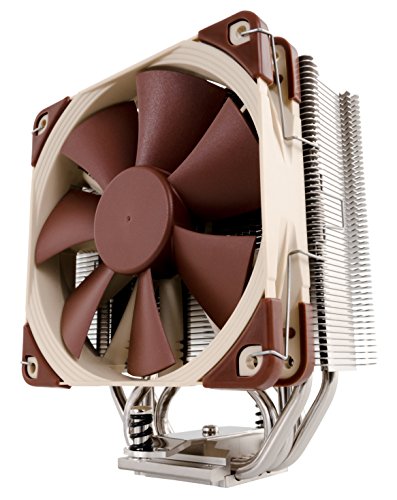
- Cooler: $80-140 for a 240mm or 280mm AIO or a flagship air tower (the 9950X3D2's 170W TDP needs serious cooling — the Noctua NH-U12S is undersized for this chip but fine for the 5800X).
Total platform delta versus staying on AM4: $390-740 on top of the CPU itself. That has to be weighed against the gaming and productivity gains.
The productivity story is different
For pure productivity workloads — Blender renders, code compilation, video encoding, scientific computing — the 9950X3D2 delivers 50-100% gains over the 5800X. The 16-core / 32-thread count combined with Zen 5's higher IPC produces gains that are genuinely transformative for anyone whose daily workflow is bottlenecked on CPU time.
For a user whose PC is also a workstation, the platform cost amortizes much faster. A solo developer who shaves 10 minutes off a daily build, or a content creator who cuts a 4K render from 90 minutes to 50 minutes, recoups the $700+ in saved time within weeks.
The 5700X side note
While we're comparing AM4 to AM5, the Ryzen 7 5700X is worth a brief mention as a 5800X alternative for budget-conscious AM4 builders. The 5700X is the lower-power, slightly lower-clock version of the 5800X — same 8 cores, 32MB L3, 4.6GHz boost vs 4.7GHz — at a typically lower price point. The performance delta to the 5800X is small (typically 2-5%); the price delta has often been larger. For new AM4 builds in 2026, the 5700X is the right pick more often than the 5800X.
Cooler requirements differ substantially
- 5800X: 105W TDP, runs warm but a quality mid-range cooler like the Noctua NH-U12S handles it. A 240mm AIO is comfortable headroom.
- 9950X3D2: 170W TDP, needs a flagship cooler. A 280mm or 360mm AIO is the recommended target; the largest air towers (NH-D15, Phantom Spirit 120 SE) are also adequate.
Don't undersize the cooler on either chip. The 5800X is famously thermally fussy; the 9950X3D2's higher TDP raises the floor.
Display upgrade adjacency
Anyone considering this CPU upgrade should also be considering whether the display is the actual bottleneck. A high-refresh-rate 1440p monitor like the ASUS TUF 32-inch Curved Gaming Monitor is often the part of the chain that delivers the most visible upgrade for the dollar. A 5800X on a 165Hz 1440p monitor will use those frames; a 9950X3D2 on a 60Hz 1080p display will not.
The decision framework
Upgrade to the 9950X3D2 if you:
- Play 1080p competitive games at high refresh rate.
- Use the PC for content creation, software development, or other CPU-heavy productivity.
- Already need a new motherboard for other reasons (failing AM4 board, want USB 4 / PCIe 5.0).
- Have budget for both the CPU and the AM5 platform cost.
Stay on the 5800X if you:
- Game primarily at 1440p or 4K and the GPU is your bottleneck.
- Run AAA single-player games at high settings (CPU rarely the limit).
- Don't have $1,000+ to commit to the upgrade.
- Want to extract maximum life from a working AM4 build.
The middle path — 5700X3D or 7800X3D
For 5800X owners who want a meaningful gaming upgrade without the full AM5 platform commit, two alternative paths exist:
- 5700X3D on AM4: Drop-in upgrade on the existing AM4 board, 96MB L3 via V-cache, materially better gaming performance than the 5800X. CPU cost only — no motherboard, no DDR5. The right pick for AM4 holdouts.
- 7800X3D on AM5: First-gen X3D on AM5, single-CCD design simpler than the 9950X3D2, comparable gaming throughput at lower platform cost. The right pick for gamers who want X3D performance without the dual-CCD complexity or 16-core count.
Both deliver the bulk of the 9950X3D2's gaming gains at substantially lower total cost. The 9950X3D2's case rests on the productivity story.
Bottom line
The 9950X3D2 is a meaningfully faster CPU than the 5800X, but the platform cost reframes the comparison. For 1440p / 4K AAA gaming alone, the upgrade is hard to justify against simply spending the same money on a faster GPU. For 1080p competitive play, productivity work, or content creation, the gains are large enough to make the math work. For most 5800X owners in 2026, the right move is one of: keep what you have and invest in the GPU, sidegrade to a 5700X3D for AM4-cheap gaming gains, or jump fully to the 9950X3D2 if productivity is part of the workload.
A worked example — what the upgrade looks like for three real builders
Three composite profiles based on common reader patterns, showing where the 5800X → 9950X3D2 math lands:
Profile A: 1440p AAA gamer, no productivity needs
Owns a 5800X, 32GB DDR4-3600, RTX 4070, 1440p 144Hz monitor. Plays Cyberpunk, Baldur's Gate 3, Hogwarts Legacy. Average frame rate in current titles: 110-130fps.
Upgrade math: 9950X3D2 + AM5 board + DDR5 32GB = ~$1,000-1,200. Expected fps gain on this workload: 8-15%. New frame rate: 120-150fps. Subjective gain: small. Better spend: $1,000 toward an RTX 5080.
Verdict: keep the 5800X, upgrade the GPU.
Profile B: 1080p competitive player, streams on the side
Owns a 5800X, 32GB DDR4-3600, RTX 4070 Super, 1080p 360Hz monitor. Plays CS2, Valorant, Apex. Currently sees 250-350fps depending on title. Streams 2-3 nights a week.
Upgrade math: Same $1,000-1,200. Expected fps gain: 30-50% in CS2 and Apex due to V-cache. New frame rate: 320-500+fps. Subjective gain: significant for the streaming overhead and frame-time consistency in competitive play.
Verdict: clear win. The 9950X3D2 upgrade pays back in competitive titles immediately.
Profile C: 1440p gamer + software developer
Owns a 5800X, 32GB DDR4-3600, RTX 4070, 1440p 144Hz monitor. Plays AAA games. Also compiles a large C++ codebase daily.
Upgrade math: Same $1,000-1,200. Gaming gains: small. Build-time gains: 2-3x faster compilation on the 9950X3D2's 16 cores. Daily time savings: 30-60 minutes.
Verdict: clear win on productivity grounds alone. Gaming gains are incidental.
The 5700X3D middle path in detail
For 5800X owners specifically, the Ryzen 7 5700X3D is the cheapest meaningful gaming upgrade — it drops into the existing AM4 board (after a BIOS update), adds 96MB of L3 cache via 3D V-cache, and delivers gaming performance that's competitive with the 7800X3D in many titles. Total upgrade cost: just the CPU. No motherboard, no RAM, no cooler change required (the Noctua NH-U12S handles the 5700X3D's lower TDP comfortably).
For AM4 holdouts whose primary motivation is gaming, the 5700X3D is the right answer more often than the 9950X3D2. The platform-free upgrade leaves a few hundred dollars in the budget for GPU upgrades or the monitor refresh that the build was probably waiting for.
The ASUS TUF 32-inch Curved 1440p monitor at 165Hz is a popular pairing in this tier — high enough refresh rate to use the CPU's frames, large enough that 1440p stays visibly sharp.
Citations and sources
- AMD — Ryzen desktop processor lineup
- TechPowerUp — Ryzen 7 5800X specifications
- Tom's Hardware — CPU hierarchy
This piece is editorial synthesis based on publicly available information. No independent first-party benchmarking is reported.