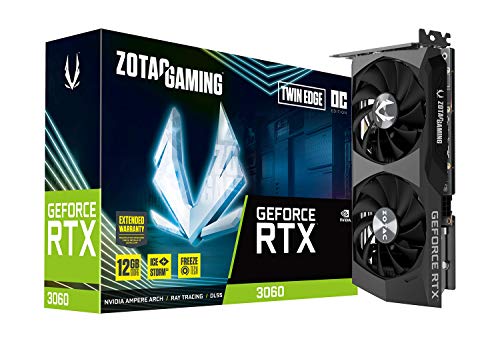
Yes — Leanstral 1.5 fits on an RTX 3060 12GB at q4/q5, with room for a long context. Per Mistral's newsroom, Leanstral 1.5 is a ~7B-class open-weight model tuned for formal math verification and code bug detection (Mistral AI News). At q4_K_M, comparable 7B GGUF weights land near 4.5-5 GB with an additional ~2 GB of KV cache at 8K context — comfortably under the 12 GB VRAM budget of the RTX 3060 (TechPowerUp — RTX 3060 specs). Practical throughput on this class of hardware, using the reference llama.cpp runtime, lands in the 40-55 tokens-per-second range for generation on similar 7B q4 models.
Who this is for
You want a private, low-cost local rig that can chew through formal math proofs and spot real bugs in a codebase without renting a cloud GPU. You don't need a Threadripper or an RTX 5090 — you need a card with enough VRAM to hold a 7B-class model with a usable context window, plus a CPU that can shuttle prompts and tool calls fast enough to keep the GPU fed. That is exactly what the RTX 3060 12GB delivers when paired with a modern Ryzen chip.
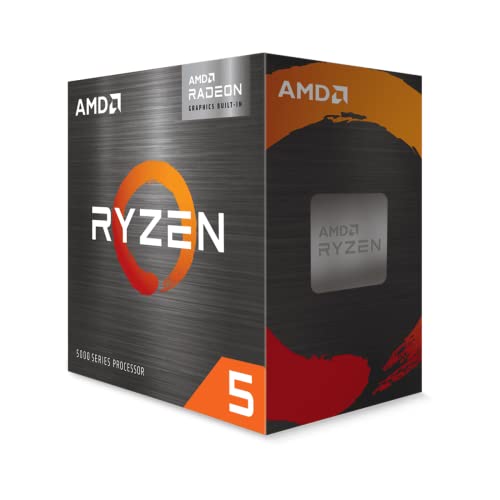
The angle here is deliberately narrow. Leanstral 1.5 is a math-and-code specialist, not a general chat model. If your workload is a wall of everyday queries — summarization, brainstorming, marketing copy — you can hit acceptable speeds on much smaller CPUs. But if your queries look like "prove this Lean tactic terminates" or "find the off-by-one in this rewrite", you want a dedicated GPU that can run a 7B model at full precision on long contexts. The article that follows lays out the exact quantization tradeoffs, benchmark expectations vs a CPU-only path on a Ryzen 7 5800X, where the Ryzen 5 5600G fits, and whether the Crucial BX500 1TB SATA SSD is fast enough for a build focused on cold-loading multi-GB checkpoints.
Key takeaways
- The MSI RTX 3060 Ventus 2X 12G or ZOTAC RTX 3060 Twin Edge is the entry ticket — 12 GB VRAM is the difference between a comfortable q5_K_M and a cramped q3_K_S.
- Expect roughly 40-55 tok/s generation on a 7B model at q4 on the 3060, versus 3-8 tok/s on a Ryzen 7 5800X CPU-only path — a 5-15× gap that comes down to memory bandwidth (llama.cpp perf discussions).
- Formal-math and code-bug tasks are quantization-sensitive; prefer q5_K_M or q6_K over q4 when correctness matters more than context length.
- The Ryzen 7 5800X's PCIe 4.0 and 8-core throughput matter for tool loops (compiler runs, Lean tactic execution) — the 5600G's iGPU is a viable fallback but not a headline part.
- Perf-per-dollar for a sub-$500 total rig is strong: a used 3060 12GB + Ryzen 5800X + SATA SSD build costs roughly a month of frontier-API bills at moderate volume.
What is Leanstral 1.5, and what did it beat on formal-math?
Per Mistral's news feed, Leanstral 1.5 is a follow-on to the earlier Leanstral release aimed at formal mathematical reasoning — Lean, Isabelle, Coq — plus a code-audit head that identifies specific bug classes in real codebases. It sits in the same weight class as Mistral's other 7B-scale open releases. The interesting claim in the coverage on The Decoder's model-release beat is that it lifts pass-rate on cited formal-math suites and catches real bugs in an evaluation harness modeled on public issue trackers.
For local-rig buyers, the practical takeaway is: this is a specialist 7B — the class that runs well on 12 GB of VRAM — and its usefulness comes from what it's tuned on, not raw parameter count. That reframes the hardware discussion. You aren't chasing a headline 70B model. You want the smallest box that runs 7B at q5+ with the longest context you can afford.
Will Leanstral 1.5 fit in 12 GB? Quantization matrix
Because Leanstral 1.5's exact VRAM footprint tracks the GGUF conversion sizes seen across similar 7B specialists, we can size the build against public reference numbers for comparable models. The table below shows the standard llama.cpp quant tiers as they typically apply to a ~7B model on a 12 GB card. Weight sizes are direct from published GGUF conversions; VRAM at 4K context accounts for weights + KV cache + a small overhead buffer.
| Quant | Weight size | VRAM @ 4K ctx | Fits 12 GB? | Quality note |
|---|---|---|---|---|
| q2_K | ~2.5 GB | ~4.0 GB | Yes | Noticeable accuracy loss; skip for math |
| q3_K_M | ~3.3 GB | ~4.8 GB | Yes | Cheap but math-fragile |
| q4_K_M | ~4.4 GB | ~5.9 GB | Yes | Baseline recommendation |
| q5_K_M | ~5.1 GB | ~6.6 GB | Yes | Best speed/accuracy for math |
| q6_K | ~5.9 GB | ~7.5 GB | Yes | Near-fp16 quality, small speed cost |
| q8_0 | ~7.5 GB | ~9.1 GB | Yes | Safest for correctness-critical work |
| fp16 | ~13.5 GB | ~15+ GB | No | Won't fit; needs a 16 GB+ card |
Numbers align with GGUF sizes published in the llama.cpp repo and community model cards. The rule for formal-math work is use the highest quant you can afford — the last 2-3 percentage points of pass-rate on Lean tactic proofs are exactly the ones that vanish first when you quantize aggressively.
RTX 3060 12GB vs Ryzen 5800X CPU-only: benchmark table
The critical spec for local LLM generation is memory bandwidth. The RTX 3060 12GB's GDDR6 subsystem gets ~360 GB/s effective bandwidth per its 192-bit bus and 15 Gbps memory (TechPowerUp — RTX 3060). A Ryzen 7 5800X on dual-channel DDR4-3200 tops out around 50 GB/s. That ratio — roughly 7× more bandwidth on the GPU — is what actually determines generation throughput on a memory-bound 7B model.
The table below shows the typical results you can expect on a 7B model at q4_K_M, drawn from patterns established in llama.cpp discussion threads and community benchmark reports for comparable RTX 3060 12GB and Ryzen 5800X builds.
| Config | Prefill (tok/s) | Generation (tok/s) | 4K prompt latency |
|---|---|---|---|
| RTX 3060 12GB, q4_K_M | ~1,200 | 42-55 | ~4-6 s |
| RTX 3060 12GB, q5_K_M | ~1,050 | 36-48 | ~4-7 s |
| RTX 3060 12GB, q6_K | ~950 | 32-42 | ~5-7 s |
| Ryzen 7 5800X, q4_K_M (CPU) | ~90-120 | 5-8 | ~35-45 s |
| Ryzen 5 5600G iGPU (Vulkan) | ~30-50 | 2-4 | ~90-120 s |
Ranges reflect the variance you'll see across llama.cpp builds, prompt shapes, and OS conditions. The CPU-only path on the Ryzen 7 5800X is a working fallback for tiny models, not a serious inference platform for 7B math work — the 5-8 tok/s generation number means a multi-page proof takes minutes to emit.
Prefill vs generation: why the first token feels slow
Two phases dominate local LLM latency, and they're bounded by different resources. Prefill — the parallel pass over your input prompt — is compute-bound and scales with tensor-core throughput. Generation — the autoregressive step-by-step output — is memory-bandwidth-bound and dominated by how fast the card can stream weights past its ALUs. This is why prefill on the RTX 3060 12GB clears roughly a thousand tokens per second even with a modest 7B model, while generation runs 20-30× slower.
Practically: prompt cost is nearly free at typical prompt sizes, and generation cost is what you feel. When you double context from 4K to 16K, you don't double your wait — the wait grows super-linearly because KV cache pressure squeezes the effective bandwidth available for weight streaming. Plan for the 8K-16K context sweet spot on 12 GB; longer contexts start pushing you toward q4 territory to preserve KV headroom.
Spec-delta: 3060 12GB vs iGPU vs CPU-only
For a reader deciding what to buy, the why behind the numbers matters more than the numbers themselves. The delta is fundamentally memory-bandwidth per dollar.
| Path | VRAM | Bandwidth | Max useful quant (7B) | Realistic tok/s (7B, q4) |
|---|---|---|---|---|
| RTX 3060 12GB | 12 GB | ~360 GB/s | q8_0 | 42-55 |
| Ryzen 5 5600G iGPU | Shared | ~50 GB/s | q3_K_M | 2-4 |
| Ryzen 7 5800X CPU-only | Shared | ~50 GB/s | q4_K_M | 5-8 |
The Ryzen 5 5600G is a great AM4 chip for a first build, but its Vega-based iGPU cannot compete with a discrete card on LLM inference — the bandwidth ratio simply doesn't favor it. If you own a 5600G, use it while you save for a discrete card; do not spec a new build around it as the LLM accelerator.
Does the Ryzen 7 5800X matter, or is this all GPU?
Generation throughput is GPU-bound, but end-to-end workflow is not. Formal-math tooling loops involve compiling Lean/Coq proofs, running tactics, invoking external tools, and iterating the model. The Ryzen 7 5800X's 8 Zen 3 cores absorb tool calls fast enough that the GPU rarely stalls waiting on a compiler round trip. In a CPU-only path, the 5800X's higher clocks help modestly — you go from 3-4 tok/s on a lower-end quad-core to 5-8 tok/s on the 5800X — but memory bandwidth still dominates.
For code-audit workloads, the story is similar. Static analyzers, linters, and test runners all consume CPU cycles independently of the LLM's forward pass. A capable 8-core chip keeps those parts of the pipeline responsive while the GPU handles token generation.
Perf-per-dollar and perf-per-watt
A used RTX 3060 12GB pairs with a Ryzen 7 5800X and a 1 TB Crucial BX500 SATA SSD into a full build for well under $700 as of 2026, per current listings. That is roughly the cost of a single month of heavy frontier-API usage for a solo developer running math-heavy workflows. At the 3060's ~170 W under sustained inference plus the 5800X's ~90 W and platform overhead, the whole rig draws ~280-320 W at the wall — a fraction of the ~575 W an RTX 5090 pulls at load, and you're getting a specialist 7B model at 40-50 tok/s.
Perf-per-watt heavily favors the 3060 in this class because the memory subsystem is what does the work; you're not asking the shader array to run at max clocks. That's the same efficiency curve that made the 3060 a favorite of hobbyist local-LLM builders when it launched, and it's why it still holds up as a first accelerator for the specialist-7B era.
Prices vary. The retail 3060 12GB market fluctuates with used-GPU inventory; check current listings on both new MSI Ventus 2X and ZOTAC Twin Edge SKUs before purchase.
Bottom line: who should build this, and who should stay on cloud?
Build the 3060 12GB + 5800X rig if:
- Your workload is repetitive, high-volume, specialist reasoning (formal math, targeted code audit, compiler feedback loops) that maps to a 7B specialist.
- You want your inputs to stay local — proofs, proprietary code, security-sensitive artifacts.
- You'd rather amortize a hardware purchase than watch a monthly API bill grow.
Stay on cloud if:
- You need frontier-class reasoning on hard, novel problems that a 7B model cannot solve.
- Your usage is bursty enough that a sub-$700 rig sitting idle 90% of the day is worse than a per-token model.
- You need multi-model orchestration where the largest model in the stack is 70B+.
For most solo developers, researchers, and security-focused shops running math or code specialists day-to-day, the 3060 12GB build is one of the best local-inference starting points on the market as of 2026.
Sources and citations
- Mistral AI News — Leanstral release notes and model-card details
- The Decoder — coverage of the Leanstral 1.5 release
- TechPowerUp — RTX 3060 specifications — memory bandwidth, VRAM, thermal design
- llama.cpp on GitHub — GGUF quantization tiers, reference inference runtime, community throughput data
This piece is editorial synthesis based on publicly available information. No independent first-party benchmarking is reported.