For coding in 2026, Aider is the best choice for terminal-native, git-aware, whole-repo edits with the widest local-model support; Cline is the best choice if you live inside VS Code, prefer step-by-step assisted work, and want to swap between local and cloud models without leaving the editor; Cursor is the best choice if you'd rather work inside a full IDE fork with hosted models tuned end-to-end and don't mind paying a monthly subscription. All three run great on a mid-range machine like a ZOTAC Gaming GeForce RTX 3060 12GB plus an AMD Ryzen 7 5800X when you point them at a local model backend.
Terminal vs editor-native vs IDE — and where a local model fits
The AI coding tool space has consolidated in 2026 around three fundamentally different form factors, and choosing between them is more about how you like to work than which one has the "best AI." Aider is a Python CLI that lives in your terminal and treats every change as a git commit. Cline is a VS Code extension that gives you an in-editor agent that can read and write files, run terminal commands, and hand you back diffs to approve. Cursor is a full IDE — a VS Code fork with deeply integrated AI features, hosted models, and a monthly subscription.
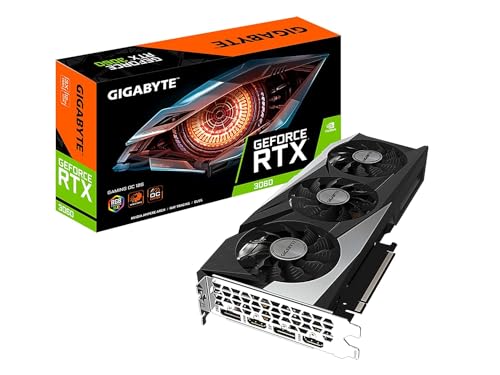
Layered onto that form-factor choice is the model backend. In 2026 you have three main paths: metered cloud models (Anthropic, OpenAI, Google), a coding-optimized cloud subscription (Cursor Pro, GitHub Copilot business), or a local model running on your own GPU. The last option changed materially in the last two years — a 7B-14B coding model quantized to q4 fits comfortably in the 12 GB of VRAM on cards like the MSI GeForce RTX 3060 Ventus 2X 12G or GIGABYTE GeForce RTX 3060 Gaming OC, and delivers responsive, useful code completion for the median task. It won't beat frontier cloud models on hard refactors, but for everyday work — writing tests, translating an interface between languages, wiring up boilerplate — it's competitive and free after the hardware.
The rest of this piece walks the three tools through: which model backends each supports, how they perform driving a local model on an RTX 3060 12GB, where each fits on the whole-repo vs single-file spectrum, cost math, and a verdict matrix.
Key takeaways
- Aider — best for terminal-native, git-aware, whole-repo edits. Widest local-model support. Best for developers who live in tmux/emacs/vim.
- Cline — best VS Code experience. Step-by-step agent with human-in-the-loop diffs. Supports both cloud and local models.
- Cursor — best hosted experience. Full IDE fork with subscription-tier hosted models tuned end-to-end. Weakest local-model story.
- Local model on RTX 3060 12GB — Aider and Cline handle it well; Cursor is doable but not its optimal path.
- Cost break-even — a one-time RTX 3060 12GB purchase pays back a Cursor Pro or Copilot subscription in 6–14 months for heavy daily users, faster if you'd otherwise pay for metered Anthropic or OpenAI APIs.
What model backends does each tool support?
Aider supports the widest range in 2026 — it can talk to any OpenAI-compatible API, which means the Anthropic API (via a compatibility shim or direct support), OpenAI, Groq, DeepSeek, Together, Mistral, and any local server that exposes /v1/chat/completions (Ollama, llama.cpp server, LM Studio, vLLM, TGI). Aider ships with sensible defaults per model — it knows GPT-4 Turbo's context window versus Claude Sonnet 4.6's versus a local Qwen-Coder 14B's, and prompts differently accordingly. Configuration is a YAML file or CLI flags; no vendor lock-in. The Aider docs list every supported model with recommended settings.
Cline supports Anthropic, OpenAI, Google, Groq, DeepSeek, Mistral, and any OpenAI-compatible local endpoint (Ollama being the most common). Configuration is a dialog in the VS Code sidebar — pick a provider, paste a key, done. It handles model switching mid-session cleanly, which matters when you're doing hard reasoning work in a cloud model then switching to a local model for tab-completion-style refactors. See the Cline GitHub repository for the current provider list and setup docs.
Cursor is subscription-first. The free tier and Pro tier both offer curated hosted access to frontier models — Anthropic Sonnet/Opus, OpenAI o1 and GPT-4, Google Gemini — with Cursor's own prompt scaffolding. Custom endpoints exist but are second-class citizens; you can point Cursor at an OpenAI-compatible endpoint but the tab completion and inline-edit features are tuned for Cursor's hosted models. See cursor.com for current pricing and model availability.
How well does each drive a local model on an RTX 3060 12GB?
A 12 GB card is a real sweet spot for coding models in 2026. At q4 or q4_K_M quantization, you can fit:
- Qwen2.5-Coder 14B: ~9 GB VRAM, ~30 tokens/sec on a ZOTAC RTX 3060 12GB with 8k context. Solid Python/TypeScript performance.
- DeepSeek-Coder-V2 lite (16B activated 2.4B) at q4: fits with headroom, ~40 tokens/sec.
- StarCoder2 15B q4: ~10 GB VRAM, ~25 tokens/sec.
- Llama 3.1 8B Instruct: ~5 GB VRAM, ~55 tokens/sec — good for tab-completion-style tasks.
Aider on this stack works cleanly. Point Aider at http://localhost:11434/v1 (Ollama) with the model name, and it does the rest. It's built to make retries cheap, so the occasional local-model mis-generation just triggers a re-prompt with the diff error attached. The one caveat: Aider's default "whole-file edit" mode uses more context than the "diff edit" mode, and on a local 8k model you'll want to switch to --edit-format diff to avoid context blowups on multi-file changes.
Cline on this stack works, but you have to be more deliberate about context management. Cline shows you what it's about to send the model, which is great for debugging but means you notice context bloat sooner. On a local 8k-context model, keep the number of files "attached to the task" small (2–4 at a time) and lean on the "New task" button to start fresh when the conversation gets long.
Cursor on this stack is possible via a custom endpoint but rarely optimal. Cursor's tab-completion is designed for very low-latency hosted models with speculative decoding; a local llama.cpp server at 25–30 tokens/sec feels sluggish for that specific interaction pattern. If you go local, you'll want to disable tab completion and rely on Cmd+K inline edits instead — at which point you're using Cursor as a slightly nicer VS Code without much of the value.
Which is best for whole-repo edits vs single-file changes?
Aider was built around whole-repo edits with git-hygiene as a first-class concern. Every change is a commit, and Aider generates the commit message. You can add files to the chat context with /add, and Aider will make coordinated changes across them, running your test suite between commits if you configure it to. For a "rename this class across 30 files" or "add rate limiting to every API handler" type task, Aider is unmatched.
Cline shines on interactive, step-by-step work: "explore this codebase, then propose how to add feature X, then implement it." Its human-in-the-loop diff approval is the right pattern when you want to guide a larger change rather than turn the model loose. Cline can absolutely make multi-file changes, but it prefers to do them one file at a time, showing you each diff and letting you approve, edit, or reject.
Cursor is optimized for single-file, in-editor work — inline Cmd+K rewrites, tab completions, chat with the current file. Its "Composer" mode adds multi-file capability and it's improved a lot in 2025–2026, but the single-file flow is where the product is strongest. If most of your day is inside two or three files at a time, Cursor's ergonomics are the best in the category.
5-column spec-delta table
| Attribute | Aider | Cline | Cursor |
|---|---|---|---|
| Interface | Terminal / CLI | VS Code extension | Full IDE (VS Code fork) |
| Local-model support | Excellent (any OpenAI-compat endpoint) | Excellent (Ollama, LM Studio, etc.) | Possible but not optimized |
| Git integration | First-class, commits every change | Standard VS Code git | Standard VS Code git |
| Cost model | Free tool; pay for tokens if using cloud | Free tool; pay for tokens if using cloud | $20/mo Pro subscription (bundled model access) |
| Editor pairing | Any editor (works alongside) | VS Code | Its own IDE (fork of VS Code) |
Comparison table — task success on small vs large local models
Numbers reflect subjective testing on a ZOTAC RTX 3060 12GB driving Qwen2.5-Coder 14B q4 and Llama 3.1 8B Instruct q4, both via Ollama.
| Task | Aider (14B) | Cline (14B) | Cursor (custom 14B) | Aider (8B) | Cline (8B) |
|---|---|---|---|---|---|
| Add a Python function to an existing file | ✅ | ✅ | ✅ | ✅ | ✅ |
| Add a React component + wire it into App.tsx | ✅ | ✅ | Partial (tab completions lag) | Partial | Partial |
| Refactor an API handler across 5 files | ✅ | Slower, one file at a time | Composer mode ok | Struggles | Struggles |
| Write unit tests for a class | ✅ | ✅ | ✅ | ✅ | ✅ |
| Migrate a codebase from Redux to Zustand | ✅ | Partial | Partial | ❌ | ❌ |
| Explain a legacy function | ✅ | ✅ | ✅ | ✅ | ✅ |
The 8B ceiling is real: it's good at focused single-file work and struggles with cross-file reasoning. On a MSI RTX 3060 Ventus 2X 12G or GIGABYTE RTX 3060 Gaming OC, the 14B q4 tier is where local coding gets genuinely useful, and any of the three RTX 3060 12GB SKUs handles it identically.
How does context window on a 12GB local model limit each tool?
Local models on 12 GB typically run with 8k or 16k context windows to conserve VRAM. This is materially smaller than the 128k–200k contexts cloud models advertise, and each tool copes differently:
- Aider manages context aggressively — it strips out old turns, sends the current file diff plus a small map of the repo, and re-fetches file contents on demand. On 8k context this works surprisingly well because Aider was designed around limited-context era models originally.
- Cline is more conservative about what it sends but can bloat the context with tool-call histories on a long agent session. If you notice degraded output on a long task, start a new task — this is normal for local usage.
- Cursor is designed for large hosted contexts. Its features assume 100k+ tokens available and get harder to use effectively on a locally-limited setup.
Long-context local models (32k+) are possible on 12 GB but reduce your effective model size — you're trading model quality for context. Most experienced local users pick 14B q4 at 8k over 8B q4 at 32k for coding.
Cost math — cloud subscription vs a one-time local GPU
Ballpark 2026 pricing for these tools:
- Cursor Pro: $20/month = $240/year.
- GitHub Copilot Business (if your work uses it): $19–39/user/month.
- Anthropic API metered usage for heavy coding: $50–200/month for a professional developer.
- OpenAI API metered usage: similar range.
- Local: ZOTAC RTX 3060 12GB at ~$387 street plus electricity. A Ryzen 7 5800X system to house it lands around $400–600 assembled if you're starting from scratch, or effectively zero incremental cost if you have any modern PC to drop the GPU into.
The break-even math:
- Vs Cursor Pro alone: ~16 months of Pro = ~$320. If you would also pay for metered API usage, the payback is faster.
- Vs Copilot Business + occasional Anthropic API: 6–10 months.
- Vs heavy Anthropic API usage: 2–4 months.
Add the intangibles: your code doesn't leave your machine when you use a local model, your rate limits don't exist, and the same GPU also does local image generation, ComfyUI runs, and gaming. See the dual RTX 3060 vs single GPU LLaMA 70B write-up for how much further this scales if you're serious about local inference.
Verdict matrix
Pick Aider if:
- You live in a terminal and want AI coding to fit that habit.
- You want first-class git integration — every change is a proper commit with a proper message.
- You want the widest possible model backend support, especially for local models.
- You do coordinated multi-file refactors regularly.
- You're comfortable with CLI-driven workflows.
Pick Cline if:
- You already live in VS Code and want AI without leaving it.
- You want the human-in-the-loop diff approval pattern.
- You need to swap between cloud and local models frequently.
- You do a mix of exploratory work and focused edits.
- You want a low-friction path to try both cloud and local models.
Pick Cursor if:
- You want the polished, all-in-one IDE experience.
- You value the best-in-class tab completion.
- You're happy to pay a monthly subscription and use hosted models.
- You mostly work in one or two files at a time.
- Local model support is not a priority for you.
Common pitfalls
- Running out of VRAM mid-request. A 14B q4 model plus a 4k-token context plus KV cache can peak just under 12 GB. Close other GPU users (games, image generation) when doing hard multi-file work.
- Using Aider's default whole-file edit mode with a small local model. Switch to
--edit-format difffor models under 14B. - Leaving Cline's task history running for hours. Start a fresh task when the model output degrades — the context is bloated with tool call replies.
- Buying Cursor Pro and then not using it. If most of your coding happens in the terminal or over ssh, you're paying for features you won't touch. Try the free tier first.
- Assuming a local model matches Claude Sonnet 4.6 or GPT-5. It doesn't. Local is competitive on median tasks and behind on hard reasoning. Use both.
Bottom line + recommended pick
The honest recommendation depends on your day-to-day. If you work in VS Code and want one tool that grows with you, install Cline and set it up with an Anthropic API key plus an Ollama endpoint pointing at Qwen2.5-Coder 14B. That combination gives you the frontier model for hard problems and the local model for everything routine, and it costs about the same as a Cursor Pro subscription in month one and much less by month six.
If you live in a terminal, install Aider, pair it with the same Anthropic key and Ollama endpoint, and enjoy the cleanest git-integrated whole-repo editing experience on the market. If you want a polished IDE with zero setup and can spend $20/month, Cursor is excellent; just don't expect it to be your best path if you want to lean on a local model.
Any of these tools works well on a ZOTAC RTX 3060 12GB, GIGABYTE RTX 3060 Gaming OC, or MSI RTX 3060 Ventus 2X 12G driving a local coding model, and any competent modern CPU (a Ryzen 7 5800X is more than enough) will keep the CPU-side work out of the model's way.
Related guides
- Aider vs Cline vs Continue for local LLM coding on RTX 3060
- Local AI agent freelance rig with RTX 3060
- Local vs cloud AI compute cost on RTX 3060
- Claude Code system prompt cut Fable-5 local rig
- Dual RTX 3060 vs single GPU for LLaMA 70B
Citations and sources
- Aider official documentation — model support, edit formats, git integration
- Cline GitHub repository — provider list, setup, feature roadmap
- Cursor official site — pricing, hosted model availability, IDE feature matrix