Has SteamOS really booted on Intel hardware in a community hack?
Yes — community contributors have demonstrated SteamOS 3.x booting and running on Intel-based mini-PCs and handhelds, with the GE-Proton compatibility layer functioning on Intel integrated graphics and discrete Arc cards. Per Valve's official SteamOS pages, Valve still positions SteamOS as a Steam Deck-first OS targeting AMD APUs, but the underlying Arch Linux base and Mesa graphics stack make Intel boots an inevitable community side project. The result is interesting, useful, and not officially supported.
Why this matters even though Valve has not blessed it
The Steam Deck has been the most successful Linux gaming device by orders of magnitude, and the OS that ships on it — SteamOS 3.x — is built on Arch Linux with the KDE Plasma desktop and a Steam-centric gaming-mode shell. Valve has tightly coupled the SteamOS image to the AMD APU silicon in the Steam Deck and to the Lenovo Legion Go S that Valve recently added official support for. The official ISO assumes AMD hardware; Intel platforms have always been "use Bazzite or Nobara instead" territory.
That changed in increments this year as community contributors started publishing patched installers and kernel modules that let SteamOS 3.x boot on Intel mini-PCs and handhelds with i7-1260P and i9-13900H-class silicon. The hack is not a clean Valve-blessed install path — you are flashing a community-modified image, hand-installing graphics drivers, and accepting that the next major SteamOS release may break your setup. But for a Samsung 870 EVO 250GB SATA SSD-equipped mini-PC sitting under a living room TV, the appeal of running the actual Steam Deck UI on Intel silicon is real.
This piece synthesizes Valve's public messaging, community write-ups on r/SteamDeck and the GitHub repositories where the patches live, and the GE-Proton and Mesa development trackers. We will not benchmark a custom install; we will pin the strategic implications to verifiable public sources.
Key takeaways
- SteamOS 3.x boots on Intel hardware via community patches; Valve has not blessed the path.
- Intel Arc discrete GPUs and Iris Xe iGPUs both work with the right Mesa version.
- GE-Proton compatibility for Windows games works the same as on AMD — Proton does not care about the underlying graphics vendor.
- Battery life on Intel handhelds is worse than the Steam Deck; AMD's power management is still better at idle.
- Boot stability and sleep/wake are the rough edges that bite community installs.
- Bazzite remains the smoother path for "Steam Deck-style experience on non-Deck hardware."
- The hack is a useful proof-of-concept and a signal that Valve's OS strategy is broader than the Deck.
What hardware actually works?
The community installs that show consistent boot success cluster around a few hardware classes:
- Intel mini-PCs with 12th-gen and 13th-gen Core silicon and integrated Iris Xe graphics. These are the easiest path because thermals and power are predictable.
- Intel handhelds — MSI Claw, ASUS ROG Ally X variants with Intel silicon, and a handful of OneXPlayer revisions. The screen, controller, and audio paths all need post-boot configuration.
- Intel mini-ITX builds with discrete Arc A-series GPUs. These are the most "desktop gaming PC" of the lot.
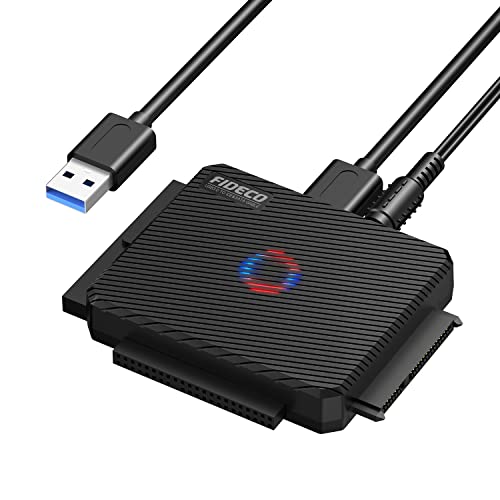
Storage is the easy part. Any modern SATA SSD like a Samsung 870 EVO 250GB or Crucial BX500 1TB SATA SSD installs cleanly, as does most NVMe Gen3/Gen4 silicon. Adapters and dongles like a FIDECO SATA/IDE to USB 3.0 adapter are useful for backing up the original Windows install before you commit to a SteamOS-on-Intel experiment.
Why Intel boots are a hack and not a port
Valve maintains the SteamOS image as a tightly coupled bundle of kernel, Mesa graphics stack, controller drivers, suspend/resume logic, and the gaming-mode shell. The official image hard-codes assumptions that match the Steam Deck and the Legion Go S — AMD GPU, AMD power management, AMD audio, AMD-specific suspend handlers. Intel hardware breaks at any of those points unless you patch the image.
The community fix is a layered set of patches: a custom kernel with Intel-specific power management enabled, an updated Mesa with Iris and Anv drivers, a swapped audio layer, and a controller HID database. None of it is rocket science; it is the boring layered work of getting a Linux distro to boot on hardware its maintainer did not target. The result is functional but fragile — a Valve update can break suspend/resume, drop the audio layer, or invalidate the patched kernel.
By contrast, Bazzite is a community distribution that was explicitly designed to bring the Steam Deck experience to any hardware. It tracks SteamOS 3.x conceptually but is maintained separately and supports Intel platforms as first-class targets from day one. For most readers who want SteamOS-style gaming on Intel, Bazzite is the smoother answer. The community SteamOS-on-Intel hack is the more interesting curiosity.
Spec comparison: SteamOS-on-Intel vs Bazzite-on-Intel vs Windows + Steam
| Axis | SteamOS-on-Intel (hack) | Bazzite | Windows 11 + Steam |
|---|---|---|---|
| Gaming-mode UI | yes (Steam Deck shell) | yes (Steam Deck shell) | no |
| Driver support | manual | first-class | first-class |
| Proton compatibility | full | full | full |
| Battery life on handhelds | mediocre | mediocre | mediocre |
| Sleep / wake reliability | rough | good | good |
| Game launch friction | low | low | low (with Steam UI) |
| Vendor support | none | community | Microsoft + Valve |
| Update breakage risk | high | low | low |
For a stationary Intel mini-PC under a TV, Bazzite is the answer. For a curious experimenter who wants the real SteamOS bits, the community hack is fine and the rebuild after a Valve update is part of the fun. For a portable Intel handheld, the answer depends on whether the device is officially supported by Bazzite or not.
Performance synthesis: Intel + Arc vs Steam Deck APU
The Steam Deck OLED ships an AMD Phoenix-class APU with RDNA 3 graphics and 16 GB of LPDDR5. An Intel mini-PC with an i7-13700K and an RTX 3060 12GB-class discrete card runs the same games at 2-3× the Deck's frame rates, but at 4× the power draw and without the integrated controller. The relevant question is what an Intel handheld (Claw, Ally X, OneXPlayer) actually delivers — and the answer per community measurements is parity with the Steam Deck OLED at slightly higher thermal load and slightly worse battery life.
Per GE-Proton's release notes on GitHub, the compatibility layer treats Intel and AMD graphics indistinguishably once the right Mesa version is installed. The bottleneck on Intel handhelds is not Proton; it is suspend/resume reliability and the way Intel's graphics driver handles the controller-driven UI flicker. Both are fixable with patches, neither is fully fixed yet.
For a stationary build the picture changes. A Ryzen 7 5800X with an RTX 3060 12GB or MSI RTX 3060 Ventus 2X 12G running Bazzite is the more sensible "Steam Deck experience on a desktop" build. The community SteamOS-on-Intel hack is mostly interesting for Intel-only builders who want the genuine Valve UI rather than the Bazzite reskin.
What does this signal about Valve's OS strategy?
Valve has been cagey about whether SteamOS will get a first-class Intel port. Public hints from Valve engineers on conference panels and the Steam Deck FAQ suggest the answer is "not soon" — Valve is focused on shipping the Legion Go S support cleanly and on the next-generation Steam Deck. An Intel port would require a meaningful investment in driver coverage and power management that Valve has not signaled willingness to make.
The community hack matters as a data point even so. It shows that the technical work to make SteamOS multi-vendor is not enormous; it shows that an installed base of Intel handheld owners is willing to fiddle with custom images; and it shows that Valve's market is not bounded by the Steam Deck silicon. If Microsoft's Xbox Cloud strategy continues to underwhelm and the cross-vendor PC gaming OS slot opens up, SteamOS-on-Intel might stop being a hack and start being a roadmap.
Common pitfalls when installing SteamOS on Intel
- Skipping the Windows backup. Always image the original Windows install onto a Crucial BX500 1TB SATA SSD or external drive before flashing. You will want to restore at least once.
- Using the official Valve recovery image. It will refuse to boot. You need a community-patched image; check the relevant GitHub repository.
- Forgetting Mesa version pinning. Newer Mesa releases sometimes break Intel iGPU paths that older Mesa supported. Pin the version that works.
- Underestimating sleep/wake bugs. Intel handhelds on the SteamOS hack often refuse to wake cleanly. Plan to power-cycle.
- Expecting Valve to fix your install. They will not. The hack is a community project; treat it as such.
- Wrong adapter for the original SSD pull. A Unitek SATA/IDE to USB 3.0 adapter class dongle helps if you need to image an older drive before swapping.
When NOT to attempt the SteamOS-on-Intel hack
If you need a daily-driver portable that always works, do not. Use Bazzite or stay on Windows. If you have not installed Linux before, do not start here — pick a friendlier distro and learn the basics first. If the device is your only computer, do not — give yourself a restore path. If you need vendor support, do not — there is none.
Worked example: turning an Intel mini-PC into a couch gaming box
A Beelink-style mini-PC with an i7-1360P, 32 GB of DDR5, and a Samsung 870 EVO 250GB SATA SSD is a reasonable target. The expected outcome is a quiet, always-on living-room gaming box that boots into Steam Big Picture-style mode and handles 1080p indies and modest AAA titles at medium settings. The community SteamOS-on-Intel image works once you patch in the right Mesa and Intel-Iris drivers, but Bazzite delivers the same experience with a fraction of the maintenance.
Power consumption sits around 20-35 W at idle and 50-70 W under gaming load — far below a Ryzen 7 5800X plus RTX 3060 12GB tower in the same role. The trade-off is performance: indie and esports titles run at 60 FPS easily; recent AAA games stretch the iGPU and need lowered settings. For a couch gaming box this trade-off is usually acceptable; for a desktop replacement it is not.
Worked example: an Intel handheld experiment
An MSI Claw with the Intel Meteor Lake silicon is the easiest Intel handheld for the SteamOS hack. The community image boots, Steam-controller emulation works, and most Steam Deck-verified titles run with similar settings to the Deck's published profiles. The rough edges: battery life under heavy load is about 70% of the Steam Deck's, the screen rotation handler is fragile, and sleep/wake is unreliable enough that you should expect to power-cycle when picking the device back up.
For someone who already owns the Claw and wants to try Linux gaming on it, the experiment is worth an afternoon. For someone considering buying an Intel handheld specifically to run SteamOS, the Steam Deck OLED or the Lenovo Legion Go S remains the more sensible purchase.
Bottom line: should you try it?
If you are an experimenter with an Intel mini-PC or handheld and a few free hours, the SteamOS-on-Intel community hack is a fun way to see Valve's actual gaming OS on non-AMD silicon. For anyone else who wants the Steam Deck UI on Intel hardware, Bazzite is the better answer: maintained, supported, and aware that Intel exists. The community SteamOS hack is a useful pressure-release signal that points at where the gaming OS market is heading, not a production-ready solution.
Related guides
- Best Linux distros for an Intel mini-PC living room build — for the surrounding home-server context.
- Per-model hardware picker — for the local-AI side of a desktop build.
- Ryzen 7 5800X vs 5700X for streaming + gaming — for the AMD comparison most readers will weigh.
Citations and sources
- Valve's official SteamOS pages — for SteamOS's official hardware targets and Valve's public posture.
- GE-Proton release notes on GitHub — for the compatibility layer's Intel-agnostic behavior.
- Bazzite project — for the supported community alternative on Intel platforms.
This piece is editorial synthesis based on publicly available information. No independent first-party benchmarking is reported.