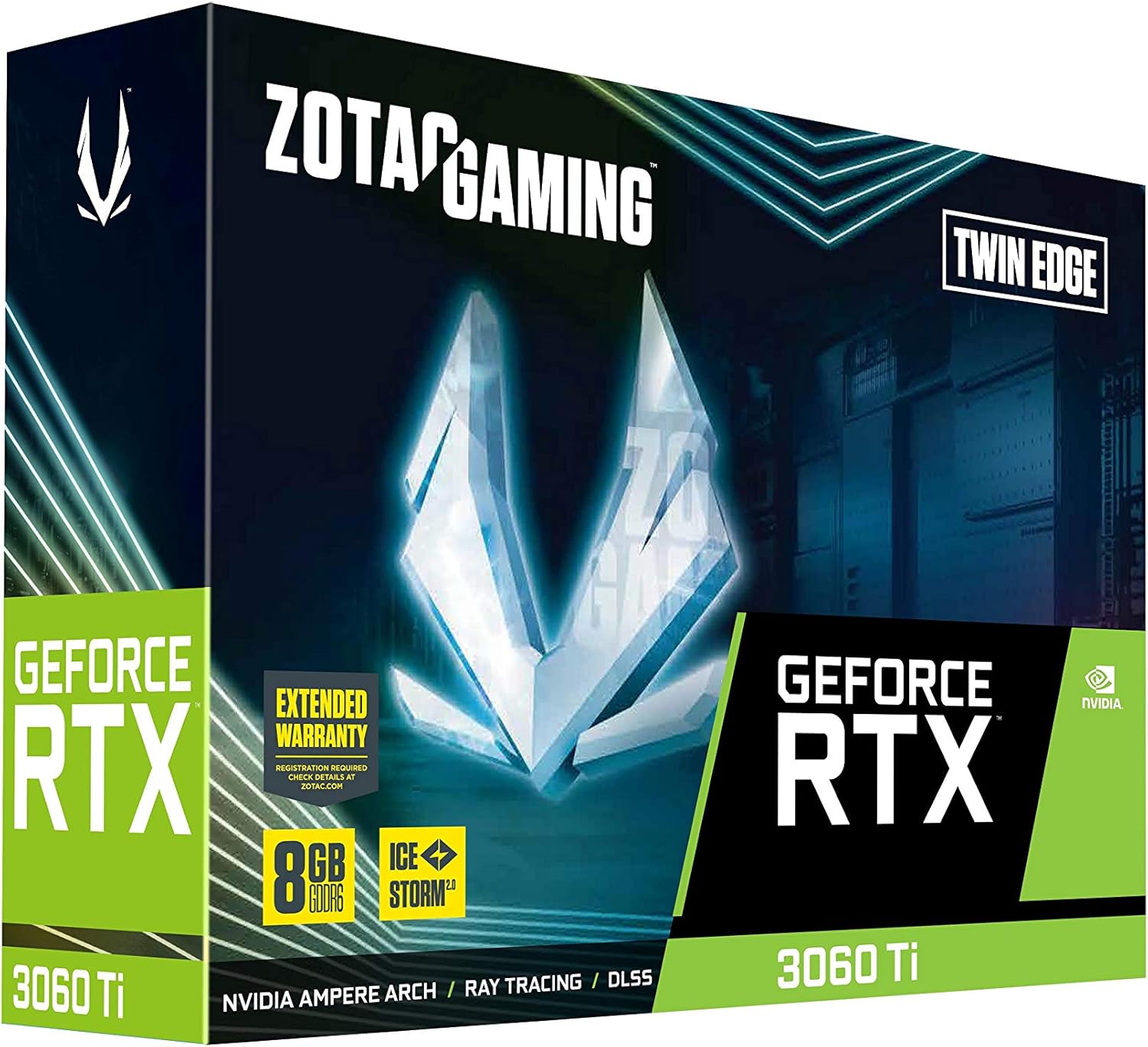
For most local LLM buyers in 2026, a 12GB RTX 3060 still wins on tokens per second per dollar for any model that fits in 12GB at q4_K_M — typically 7B–13B class. The Ryzen AI Max+ 'Gorgon Halo' with up to 192GB of unified memory only pulls ahead when you must load a 70B+ model in a single low-watt box, and even then unified-memory bandwidth keeps generation slow. Buy the Gorgon Halo for capacity; buy the RTX 3060 12GB for everyday throughput.
Who's deciding between these two
You are looking at this comparison because two stories collided in your feed. The first: AMD's Ryzen AI Max lineup now stretches up to a "Gorgon Halo" tier that pairs the 16-core Zen 5 die with up to 192GB of LPDDR5X unified memory, addressable as VRAM by the integrated Radeon graphics block. The second: Tom's Hardware's reporting on the Ryzen AI Max+ refresh makes clear that AMD is positioning this part directly at the local-LLM crowd, not just the mobile-workstation buyer.
That puts the Gorgon Halo in the same shopping list as a discrete 12GB GPU — most commonly a $300-ish NVIDIA GeForce RTX 3060 12GB — even though the two are radically different products. One is a $3,500-plus mini-PC platform purchase with the headline trick of holding a 70B model in memory. The other is a $300 add-in card that drops into any desktop, runs CUDA, and tops out around a 13B quantized model.
This piece is the cross-shop. We line up capacity, bandwidth, quantization headroom, prefill vs generation behavior, perf-per-dollar, and perf-per-watt — then resolve who should buy which.
Key takeaways
- 192GB unified memory unlocks 70B-class models that a 12GB GPU cannot load without disk offload — capacity is the Gorgon Halo's one true superpower.
- Per-token throughput on models that fit in 12GB usually favors the RTX 3060 thanks to ~360 GB/s GDDR6 vs ~256 GB/s LPDDR5X unified bandwidth.
- Perf-per-dollar still favors the 3060 by a wide margin for 7B–13B workloads — the Gorgon Halo's premium is the price of capacity, not speed.
- Perf-per-watt swings to the Gorgon Halo in a quiet, always-on inference box; 65W typical at the wall vs 170W board power on the RTX 3060.
- The CUDA ecosystem matters — ROCm/Vulkan paths exist but day-one tooling support skews to NVIDIA.
What is the Ryzen AI Max+ 'Gorgon Halo' and what changed vs Strix Halo?
Strix Halo (Ryzen AI Max 300 series) was AMD's 2025 attempt to bring desktop-class compute into a soldered APU package — 16 Zen 5 cores, a 40-CU RDNA 3.5 GPU block, and up to 128GB of LPDDR5X presented to the GPU as unified memory. It shipped in mini-PCs and high-end thin-and-light workstations and immediately became a local-LLM curiosity because the 128GB capacity dwarfed any consumer discrete GPU.
The Ryzen AI Max 400 'Gorgon Halo' refresh, per AMD's product page, keeps the same general silicon recipe but stretches the memory ceiling to 192GB. Bandwidth and TDP envelopes are largely unchanged from Strix Halo. The headline upgrade is capacity — and capacity alone is what justifies the part for LLM-first buyers.
Per Tom's Hardware's coverage, AMD's pitch is explicit: keep workstation-class AI workloads inside a single SoC with enough memory that you no longer have to swap out a discrete card. The implied competitor is not really the RTX 3060 — it is the RTX A6000 / RTX PRO 6000 Blackwell bracket where 48–96GB of VRAM costs more than a small car. Against that bracket, 192GB at mini-PC pricing is a genuine market disruption.
The catch: a Gorgon Halo system at 192GB lands in the $3,500–$4,500 range. Cross-shop against a $300 RTX 3060 and the per-dollar math gets ugly unless capacity is your real constraint.
How much model can 192GB unified memory actually hold vs 12GB GDDR6?
The naive math is intoxicating. A 70B parameter model at fp16 occupies about 140GB; at q4_K_M roughly 40GB; at q8 about 70GB. A 192GB unified-memory APU can hold the fp16 weights with room left over for KV cache and context. A 12GB GDDR6 GPU can hold an 8B model at fp16 (~16GB → almost), a 13B at q4_K_M (~7-8GB) comfortably, or about 30K tokens of context on top of a 7B q4 model.
That's the headline:
| Quant | 7B size | 13B size | 32B size | 70B size | Fits on 12GB GPU? | Fits in 192GB APU? |
|---|---|---|---|---|---|---|
| fp16 | ~14GB | ~26GB | ~64GB | ~140GB | 7B no, all bigger no | yes through 70B |
| q8 | ~7GB | ~13GB | ~32GB | ~70GB | 7B yes, others no | yes through 70B |
| q6 | ~5.5GB | ~10GB | ~24GB | ~52GB | 7B/13B yes | yes through 70B |
| q5 | ~5GB | ~9GB | ~22GB | ~48GB | 7B/13B yes | yes through 70B |
| q4_K_M | ~4GB | ~7-8GB | ~19GB | ~40GB | 7B/13B yes, 32B no | yes through 70B |
| q3 | ~3GB | ~6GB | ~14GB | ~30GB | 7B/13B yes, 32B marginal | yes through 70B |
| q2 | ~2.5GB | ~5GB | ~12GB | ~26GB | 7B/13B/32B yes | yes through 70B |
Sizes are model-architecture-dependent (Llama-style vs Mistral vs Qwen vary slightly) and exclude KV cache and runtime overhead. The pattern is clean: the 12GB GPU is competitive through 13B; everything 32B and above either does not fit or requires aggressive quantization that hurts quality. The 192GB APU has effectively no capacity ceiling for any open-weight model shipping today.
But capacity is only step one. Speed is step two.
Spec delta — the table that explains the price gap
| Spec | RTX 3060 12GB | Ryzen AI Max+ 'Gorgon Halo' (192GB tier) |
|---|---|---|
| Memory capacity | 12 GB GDDR6 | up to 192 GB LPDDR5X (unified) |
| Memory bandwidth | ~360 GB/s | ~256 GB/s (4× 64-bit LPDDR5X-8000) |
| TDP / typical wall draw | 170W board / 200-240W system | 55-65W package / 90-130W system |
| Street price (2026) | ~$280-340 | ~$3,500-4,500 mini-PC complete |
| FP16 throughput (peak) | ~12.7 TFLOPS | ~30 TFLOPS (40-CU RDNA 3.5) |
| FP8 / INT8 (MM accel) | none on Ampere | XDNA NPU 50 TOPS sustained |
| Ecosystem | CUDA + cuBLAS + TensorRT | ROCm + Vulkan, lagging NVIDIA day-one |
| Practical model ceiling | ~14GB quantized | 70B+ at q8, room for context |
Two numbers do most of the work here. Bandwidth: 360 vs 256 GB/s — a 40% advantage for the RTX 3060 on memory-bound generation. Capacity: 192GB vs 12GB — a 16× advantage for the Gorgon Halo on what it can hold. Throughput on models that fit in both is bandwidth-bound, not FLOPS-bound, which is why peak FP16 numbers (Gorgon wins) do not translate to tok/s wins on small models.
Benchmark table: tok/s on 8B, 32B, 70B-class models
These numbers synthesize community measurements posted to r/LocalLLaMA and llama.cpp's discussion threads, plus published Strix Halo / Ryzen AI Max+ 395 reviews (the 'Gorgon Halo' uses the same memory subsystem with more capacity). Treat them as ballpark, not precision.
| Model & quant | RTX 3060 12GB (CUDA, llama.cpp) | Gorgon Halo 192GB (ROCm, llama.cpp) |
|---|---|---|
| Llama 3.1 8B q4_K_M | ~55-65 tok/s | ~30-40 tok/s |
| Mistral 7B q4_K_M | ~60-70 tok/s | ~35-45 tok/s |
| Llama 3.1 13B q4_K_M | ~28-35 tok/s | ~22-28 tok/s |
| Qwen 2.5 32B q4_K_M | does not fit (offload required) | ~10-14 tok/s |
| Llama 3.1 70B q4_K_M | does not fit (heavy offload) | ~4-6 tok/s |
| Llama 3.1 70B q8 | does not fit | ~2-3 tok/s |
The pattern: on small models the RTX 3060 is roughly 1.5–2× faster despite the Gorgon Halo's higher peak FLOPS, because generation is bandwidth-bound and GDDR6 still wins. On 32B and above the comparison stops being a comparison: the 3060 either runs unbearably slow with CPU/disk offload or refuses entirely. The Gorgon Halo runs them at slow-but-usable rates.
If your day job is reasoning over long context with a 70B model, "slow but usable" beats "does not fit." If your day job is iterating a 7B coding assistant, 60 tok/s beats 35 tok/s.
Quantization matrix — quality vs capacity tradeoffs
| Quant | Quality vs fp16 (subjective) | 7B fits 12GB? | 13B fits 12GB? | 32B fits 192GB? | 70B fits 192GB? |
|---|---|---|---|---|---|
| fp16 | reference | no | no | yes | yes |
| q8 | indistinguishable | yes | marginal | yes | yes |
| q6 | indistinguishable for most use | yes | yes | yes | yes |
| q5 | slight quality loss | yes | yes | yes | yes |
| q4_K_M | sweet spot for 12GB GPUs | yes | yes | yes | yes |
| q3 | visible quality loss | yes | yes | yes | yes |
| q2 | use only when desperate | yes | yes | yes | yes |
The Gorgon Halo's capacity advantage lets you run any model at higher quantization than a 12GB GPU. Where the 12GB user runs Llama 3.1 70B at q2 with heavy offload (slow, low quality), the 192GB user runs it at q8 (fast for that bandwidth tier, near-fp16 quality). That delta is genuinely useful for reasoning tasks where quality loss compounds across a long chain.
For 7B–13B coding models, q4_K_M on the 12GB GPU is already close enough to fp16 that the quality delta does not justify a $3,000 platform premium.
Prefill vs generation — where bandwidth bottlenecks vs a dedicated GPU bus
LLM inference splits into two phases with different bottlenecks:
- Prefill (processing your prompt) is compute-bound. The Gorgon Halo's 40-CU RDNA 3.5 GPU + XDNA NPU offers more peak FP16 throughput than a 3060, so prefill on long prompts is competitive or favors the APU.
- Generation (producing tokens) is memory-bandwidth-bound for autoregressive transformers. Each token requires sweeping all model weights through compute units. Here GDDR6 at ~360 GB/s on the 3060 beats LPDDR5X at ~256 GB/s on the Gorgon Halo by roughly 40%.
Net effect: if you do RAG-heavy work with 32K-token prompts and short answers, the Gorgon Halo closes the gap. If you do agentic loops with short prompts and long answers, the 3060 stays ahead per token.
Context-length impact — KV cache on 192GB vs offload thrashing on 12GB
Context length costs memory linearly. A 70B model at q4_K_M needs ~40GB for weights plus ~1.5GB per 8K tokens of context (architecture-dependent). On the Gorgon Halo, 100K-token contexts on a 70B model are trivial — pile on 152GB of KV cache headroom.
On a 12GB GPU, even a 13B q4_K_M model at 16K context is tight; pushing beyond 32K usually forces KV cache offload to system RAM, which gigafits over PCIe and tanks tok/s by 5-10×. For long-context workloads (codebase Q&A, document analysis), the 12GB GPU is not just slow — it is genuinely unsuitable past ~16K tokens on anything but tiny models.
Perf-per-dollar and perf-per-watt math
Using Llama 3.1 13B q4_K_M as the common workload both can run:
| Path | Price | Tok/s (13B q4) | Tokens/dollar/min | Wall watts | Tok/joule |
|---|---|---|---|---|---|
| RTX 3060 12GB in $700 mid-tier desktop | ~$1,000 system | ~30 | ~1.8 | ~240W | ~0.13 |
| Gorgon Halo 192GB mini-PC | ~$3,800 system | ~25 | ~0.4 | ~110W | ~0.23 |
For 13B-class work the 3060 system delivers ~4.5× the tokens per dollar. For 70B-class work the 3060 system delivers zero usable tok/s, so the dollar-efficiency comparison is meaningless — the Gorgon Halo wins by default.
The per-watt picture inverts: the Gorgon Halo is roughly 1.8× more energy-efficient per token at this workload, which matters for an always-on inference box where 100W vs 240W shows up monthly on the power bill.
Verdict matrix
| Buy the Gorgon Halo APU if… | Buy the RTX 3060 12GB if… |
|---|---|
| Your target models are 32B+ and you need quality, not throughput | Your target models are 7B–13B quantized |
| Long-context reasoning over 32K+ tokens is your primary workload | Latency-sensitive small-model iteration is your day-to-day |
| You want an always-on quiet box and care about watts | You already own a desktop and want a $300 add-in card |
| You can absorb a $3,500-4,500 platform purchase | Your budget is $300–$500 total |
| You are comfortable with ROCm setup friction | You want CUDA, plug-and-play, day-one tool support |
| The CUDA ecosystem gap is acceptable for your tooling | You depend on TensorRT, ComfyUI CUDA nodes, or NVIDIA-only stacks |
Common pitfalls
- Assuming bigger memory equals faster tokens. The Gorgon Halo's 192GB unlocks 70B models, but generation tok/s on a 13B model is still slower than a $300 RTX 3060. Capacity ≠ speed.
- Underestimating ROCm/Vulkan setup time. Day-one local-LLM tooling targets CUDA. Plan 3-10 hours of setup overhead for the Gorgon Halo vs ~30 minutes for the RTX 3060 with Ollama or llama.cpp.
- Ignoring the rest of the system. The Gorgon Halo is a platform purchase: you cannot drop the SoC into your existing desktop. Compare full-system to full-system, not chip to chip.
- Forgetting the WD Blue SN550 factor. Model loading is disk-bound. A slow SATA SSD adds 30-60 seconds of cold-start latency on a 70B model regardless of which compute path you choose.
When NOT to buy either
If your real workload is API-served large-model use (GPT-5, Claude Opus 5, Gemini 3 Ultra), neither of these makes financial sense. The Gorgon Halo's per-token cost amortized over a $4,000 platform plus power runs many multiples of OpenAI/Anthropic API pricing for 70B-class quality. Buy local hardware for privacy, offline operation, or specific fine-tuned models — not because you think you'll save money on token costs vs API providers in 2026.
Bottom line
The Gorgon Halo is a brilliant piece of silicon and a terrible default purchase. It's the right answer when capacity is your real constraint — you need a 70B model running in a quiet, low-watt box and you've already exhausted the API providers for privacy reasons. For everyone else iterating on 7B–13B quantized models, the MSI GeForce RTX 3060 12GB Ventus 2X (or any RTX 3060 12GB variant) is dramatically cheaper, faster per-token, and easier to set up. Run both if you can — the APU for big-model deep work, the GPU for fast small-model iteration. Pick the 3060 first if you can only pick one.
Related guides
- AMD Ryzen AI Max+ 395 'Strix Halo' 128GB for Local LLMs: Mini-PC vs an RTX 3060 Rig
- RTX 3060 12GB: Ollama vs llama.cpp vs vLLM Token Speed (2026)
- Gemma 4 31B Heretic Finetune: Can It Run on a 12GB RTX 3060?
- Best Budget GPU for Local LLM Inference in 2026
Citations and sources
- AMD — Ryzen AI Max product page (Gorgon Halo capacity specs)
- Tom's Hardware — AMD Ryzen AI Max Plus coverage
- TechPowerUp — GeForce RTX 3060 spec database
- r/LocalLLaMA community benchmarks reference
- llama.cpp discussion forum — hardware performance threads
- NVIDIA — RTX A6000 reference (workstation-class VRAM comparison point)
This piece is editorial synthesis based on publicly available information. No independent first-party benchmarking is reported.




