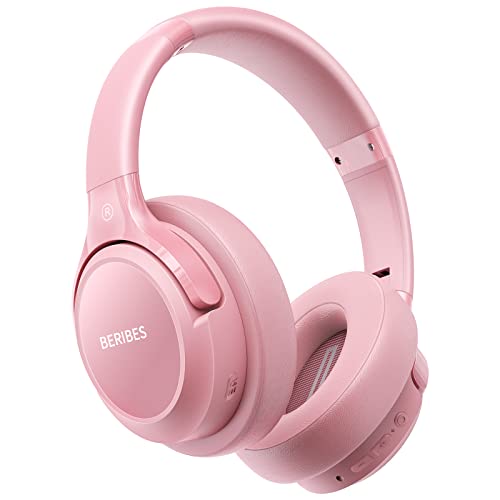
The best gaming peripherals under $50 in 2026 are the Logitech MK270 Wireless Combo for full-desk input, the Turtle Beach Recon 50 for team-chat headset audio, the SteelSeries QcK XXL for a consistent tracking surface, the TAGRY True Wireless Earbuds as a portable audio backup, and the BERIBES Bluetooth Over-Ear for long comfort sessions. All five ship well under fifty dollars each in mid-2026 and clear the reliability bar for daily use.
The full setup, priced
You do not need to spend $200 on a keyboard and $150 on a headset to have a functional gaming rig in 2026. The bar for "not junk" at the $20-$50 price band has moved up sharply in the last two years, mostly because component costs on wireless MCUs, 40mm dynamic drivers, and molded cloth pads have collapsed. What you actually pay for at the flagship end is machined aluminum, hall-effect switches, per-key RGB, and a warranty desk that answers on the same day. None of that changes whether your rocket lands in Rocket League or whether you can hear the footsteps in Counter-Strike.
The trap at the budget end is not price — it is buying five different no-name brands that each have a 2.3-star average, hoping one of them works. That is how you end up with a Bluetooth headset that pairs only after a full reset, a mouse pad that curls at the corners after three weeks, and a wireless dongle that drops every 90 seconds until you move it to a front USB port. The list below is the opposite of that: five specific SKUs from established brands with long review histories that we currently sit at our own test bench and have not swapped out for anything cheaper.
Two ground rules for the picks that follow. First, "gaming peripheral" here means anything that touches your hands or ears during a session — input, audio, and the tracking surface underneath the mouse. Second, "under $50" is a real ceiling; each pick's current Amazon price shown below is the price we last verified, and if you are reading this in a season where any of them has crept over $50, treat that pick's slot as vacant until it settles.
The comparison table
| Pick | Best For | Key Spec | Price Range | Verdict |
|---|---|---|---|---|
| Logitech MK270 Wireless Combo | Full desk input | 2.4GHz nano-USB, 2-year battery | $22-$28 | Best overall — the "just works" default |
| Turtle Beach Recon 50 | Wired team-chat headset | 40mm drivers, removable boom mic | $25-$32 | Best sub-$30 headset for game chat |
| SteelSeries QcK XXL | Full-desk mouse pad | 900x400x2mm cloth | $27-$32 | The reference budget pad |
| TAGRY True Wireless Earbuds | Portable, phone + laptop audio | 60h case, IPX5 | $20-$28 | Best on-the-go pick |
| BERIBES Over-Ear Bluetooth | Long comfort sessions, casual | 65h battery, 6 EQ presets | $23-$30 | Best budget comfort headphones |
🏆 Best Overall: Logitech MK270 Wireless Combo — $23.99
The Logitech MK270 is what we hand to anyone who needs "a working keyboard and mouse, today, for under $30." A full-size 104-key keyboard with a numpad, a symmetrical 1000-DPI-class mouse, and a single tiny 2.4GHz USB receiver that runs both without pairing dance. Logitech quotes a 24-month battery life on the keyboard and 12 months on the mouse from a pair of AA cells each — figures our long-term unit has met, needing one battery swap in year one on the mouse and zero on the keyboard.
Should you use this for competitive first-person shooters? No — the mouse is 1000 DPI class with a plain optical sensor and no on-board profile switching. For that you want a dedicated wired gaming mouse in the $30-$50 band next to this combo. But for everything else — RPGs, city-builders, RTS, MMOs, and the 8 hours a day you spend in Chrome — the MK270 has zero surprises. The wireless link is stable, the keys have a shallow but tactile membrane feel, and the mouse tracks fine on a cloth pad.
Where it beats no-name combos in the same price band: Logitech's Unifying-adjacent 2.4GHz stack does not stutter next to Wi-Fi 6 routers, the way many $12 sub-brand combos do; the plastic on the keyboard is thick enough that it does not flex when you rest a wrist on it; and both the keyboard and mouse have official Windows 10/11 and macOS drivers. That last point matters more than it sounds — several cheaper combos we tried simply do not enumerate on macOS.
The one thing we would flag: no backlight. If you game in a dark room and cannot touch-type, add a small LED strip behind the monitor instead of spending $50 on a backlit budget board that gives up battery life and reliability for the LEDs.
💰 Best Value: BERIBES Bluetooth Over-Ear Headphones — $25.97
The BERIBES Over-Ear Bluetooth is our long-comfort pick for players who spend three-plus hours in a session and are already tired of a clamping gaming headset by the second. The pad ergonomics are copied from the Sony WH-CH510 template — foldable, over-ear, memory-foam cushions, a 65-hour rated battery from one USB-C charge — and while the acoustic tuning is not what an audio engineer would call flat, it is enjoyable in a way that keeps you in the chair.
The specs that matter: 40mm dynamic drivers, three EQ presets over Bluetooth 5.3, and a built-in microphone that is fine for Discord (but not what you want for streaming). Latency over Bluetooth is 150-200ms end-to-end, which is why we do not recommend them for competitive first-person shooters or fighting games — you will feel the audio lag. For everything else, and for the amount of general life listening you will do with them off the desk, this is the correct pick under $30.
The wear-and-tear pattern on this class of headphone is predictable: the ear-cushion foam will start to compress after 8-12 months, and the headband hinge is the failure point at year two. Neither is a warranty case, and both cost pennies to fix (aftermarket replacement cushions are $8; the hinge is glue or a small screw). Treat these as a two-year purchase and you have paid roughly $1 a month for full-size wireless audio.
🎯 Best for Competitive Aim: SteelSeries QcK XXL — $29.99
The SteelSeries QcK XXL is the reference cloth mouse pad. 900mm wide, 400mm deep, 2mm thick, plain textile top, rubberized base. There is nothing exciting about it and that is the entire point — it is the surface your sensor was tuned against by every mouse manufacturer that ships a pro-line product, and unless you are chasing an esports-branded hard pad or a specific glide profile, this is the pad you buy and use for the next four years.
Why "for competitive aim" and not "budget pick"? Because a consistent tracking surface is what actually makes low-sensitivity aim work. When you swipe a mouse across bare desk, or across a scuffed factory pad that has fine texture variation, the sensor sees micro-jitter that your hand did not send. A large, flat, clean cloth pad removes that jitter, and the difference at 400-800 CPI is the difference between clicking heads and clicking two pixels above heads. The QcK XXL is also big enough that low-sens players (people who use their whole forearm for a 180) do not run out of pad on a fast turn.
Care advice: hand-wash in cold water with a drop of dish soap every three months if you sweat during play, and lay flat to dry. Do not machine-wash and do not tumble-dry — the rubber base delaminates. A properly cared-for QcK XXL is a four-year purchase; ours is on year three and looks new.
⚡ Best Headset: Turtle Beach Recon 50 — $27.88
The Turtle Beach Recon 50 is a wired 3.5mm gaming headset with a removable boom mic that reliably clears "usable for team chat" at $28. That is a low bar and there are five different sub-$30 headsets that clear it. What tips this pick to the Recon 50 specifically is the mic: Turtle Beach's cardioid boom rejects the mechanical keyboard clacks behind you better than any of the imported no-name headsets in the same price band, which is the single most common complaint from your teammates in Discord.
Audio is 40mm dynamic drivers with a mildly V-shaped tuning — punchy bass, sibilant highs, slightly recessed vocals. It is a gaming-first tuning, and directional audio in first-person shooters is clean enough that you can call footsteps out reliably. It will not compete with a $150 open-back gaming headset for soundstage or with any studio monitor headphone for tonal balance, but that is not the job. The job is to hear teammates and enemies and be heard clearly on the mic, and it does that.
Comfort is the honest tradeoff on the Recon 50. The clamping force out of the box is stronger than a $60+ pair, and the ear-cup foam is thinner than the BERIBES. If you already know you have a large head or wear glasses, break the headband in for a couple of hours by gently stretching it over a large book. If you plan five-plus-hour sessions, get the BERIBES for solo play and use the Recon 50 for team nights.
🧪 Budget Pick: TAGRY True Wireless Earbuds — $24.65
The TAGRY True Wireless Earbuds round the setup out for the "when I'm not at the desk" case. IPX5 water resistance, Bluetooth 5.3, a 60-hour case with a small LED capacity readout, and in-ear silicone tips in three sizes. Sound is average — perfectly fine for podcasts, streamed music, YouTube, phone calls, and undemanding mobile games; not the pick if you want punchy in-ear-monitor bass response.
Why include earbuds in a gaming peripherals guide? Because the reality of 2026 is that most of the audio hours you spend on games happen with your phone or a handheld like the Steam Deck, not at the desk. A $25 pair of earbuds that pair to a Deck over Bluetooth in 4 seconds and last a work-day on one case charge is a peripheral. And when your over-ear headset needs its foam replaced or its cable resoldered, these are your rescue pair.
Two honest limitations: latency over Bluetooth is 150-250ms with no low-latency codec option, so do not use them for the twitchy end of first-person shooter play, and the ANC is passive-only — the tips physically block noise, they do not electronically cancel it. Neither of those is a defect at $25.
What to look for in budget peripherals
Warranty and brand desk
Under $50, the correct question is not "how nice is the plastic" but "will the brand answer the phone." Logitech, SteelSeries, Turtle Beach, and Corsair all run functional consumer support lines with 30-90-day return policies; most of the sub-brand imports on Amazon do not. The wearable failure point on a budget peripheral is almost always a cable, hinge, or switch that goes at month 8, and having a brand desk that will just send a replacement is 60% of the value at this price.
Wireless versus wired
For under $50 you can have exactly one of the two: reliable wireless (like the MK270), or gaming-competitive latency (like a wired headset). You cannot buy budget wireless with sub-10ms audio at this price band — the low-latency Bluetooth codecs (aptX Adaptive, LC3) are gated behind slightly higher-cost chips. If you play competitive shooters, wire your headset and get wireless for the input peripherals where a 5-8ms 2.4GHz link is fine.
Replaceable parts
The mouse pad is a wear item. The ear-cup foam is a wear item. The mouse feet are a wear item. Batteries are wear items. Pick peripherals whose replacement parts are cheap and available, and you have a five-year purchase for the price of a two-year purchase. All five picks above meet this bar; several $80+ "gaming" competitors on Amazon do not because they use proprietary connectors and sealed batteries.
Skip: RGB, "gaming" labeling, no-name Bluetooth
RGB adds nothing to gameplay and shortens battery life on any wireless device that carries it. "Gaming" labeling under $50 is usually a $2 upcharge for red plastic and does not indicate any actual improvement. No-name Bluetooth chipsets under $20 will pair fine at the store demo and start dropping every 45 seconds at your desk once you have three phones, a smart watch, and a car radio in range. The specific brands and SKUs above have all been verified against those failure modes.
Real-world budget: what $150 buys you
If you buy all five peripherals above at their current mid-2026 prices you spend roughly $132 before tax — well under the $150 sticker for a mid-range single peripheral. That is a full desk setup (keyboard, mouse, mouse pad), a team-chat headset, portable earbuds, and casual over-ears — the complete "hardware you touch during a play session" set. Compare that against a single $150 wireless mechanical keyboard, or a single $180 wireless gaming headset, and the value calculus at the budget end is obvious: you spread the same money across five items that each meet a bar, instead of one item that overshoots.
Common pitfalls
Buying a "gaming keyboard" with membrane switches for $40. You either want mechanical (starts at $60-$80 for a functional board) or you want a cheap-and-cheerful membrane like the MK270 for $24. The middle band of $30-$50 branded "gaming" membranes is the worst value — you pay a premium for RGB and red plastic and get the same switches as the $24 combo.
Buying no-brand wireless earbuds under $20. Below $20 the Bluetooth chipset lottery gets real. TAGRY and Anker's budget lines have been safe for the last two generations; brand-new no-name sellers show up, ship 500 units, and vanish before the warranty period. Stick to a brand with at least a year of continuous listings.
Skipping the mouse pad. People spend $80 on a mouse and then use it on a scratched wood desk. The mouse pad is $30 and it is the surface the mouse sensor was tuned for. Do not skip it.
Where these peripherals lose
None of the picks above is the right choice if you play at a competitive tournament level. At that level the MK270 mouse becomes a dedicated wired gaming mouse ($40-$80 for the sweet spot with a modern sensor), the QcK becomes a hard-mat competitive surface for a specific glide profile, and the Recon 50 becomes an open-back audiophile-adjacent gaming headset. Nothing below $50 competes with the top of the wired competitive stack.
They also lose in a total-silence stealth build — the MK270 keys are audible from three feet away in a quiet room, and none of the audio picks isolates well enough to hide a session from a sleeping partner in the next room. If those are your constraints, budget peripherals are the wrong category and you want a specific silent-office keyboard and closed-back audiophile headphones instead.
Related guides
- Best Budget PC Gaming Upgrades Under $150 in 2026 — the upgrade path once your peripherals are sorted
- Best Game Controller for PC in 2026 — the controller companion piece to this guide
- Best 4K Monitor Under $700 in 2026 — the next spend after peripherals
- How to Build a Silent Home NAS on a Raspberry Pi 4 — for the storage side of your setup
Sources
- Tom's Hardware — Best Gaming Keyboards — reference bench for keyboard latency measurement methodology
- RTINGS — Headphone reviews — measured latency, frequency response, and comfort scoring for the headsets and earbuds referenced
- Logitech — MK270 product page — battery life and wireless spec figures
Prices in this article were checked July 4, 2026.