For pure 1080p high-refresh esports, the Ryzen 7 5800X3D is the winner — its 96 MB stacked L3 cache lifts 1% lows in CPU-bound titles versus the standard Ryzen 7 5800X, per Tom's Hardware's fresh re-review (Tom's Hardware). If you're building a mixed-use rig or squeezing every dollar, the plain Ryzen 7 5800X — or the cheaper Ryzen 7 5700X — matches or beats the X3D outside games and remains the smarter buy. This piece lays out exactly where the X3D wins, where it doesn't, and how a good air cooler like the Noctua NH-U12S or DeepCool AK620 changes the picture.
The AM4 gaming buyer's dilemma in 2026
AM4 is the platform that refused to die. Long after Intel and AMD both moved to newer sockets, the AM4 install base kept buying 5000-series chips because AMD's Ryzen product page still lists the whole family, most 400- and 500-series boards accept them after a BIOS update, and DDR4 kits are dirt cheap versus DDR5. Tom's Hardware's fresh re-review of the Ryzen 7 5800X3D — a mid-2022 part — reopens the question every AM4 upgrader asks: is it worth the X3D premium in 2026, or should you buy the cheaper Ryzen 7 5800X or Ryzen 7 5700X and pocket the difference?
The short version is: it depends on the game. This article is for people building or upgrading a 1080p high-refresh esports rig on AM4 in 2026 — CS2, Valorant, Rocket League, League, Overwatch 2, plus a smattering of simulation and MMO titles that are famously cache-hungry. That workload is where the X3D's stacked cache pays off most visibly. It is also for people who play a mix of everything, where the answer is more nuanced.
Key takeaways
- The Ryzen 7 5800X3D wins at 1080p CPU-bound titles because 96 MB L3 cache reduces main-memory pressure — a benefit most visible in 1% lows.
- The Ryzen 7 5800X clocks higher, wins productivity, and often costs less street price — the mixed-use pick.
- The Ryzen 7 5700X is the value option — nearly all the 5800X's chops at a lower power draw and price, ideal for tight budgets or ITX builds.
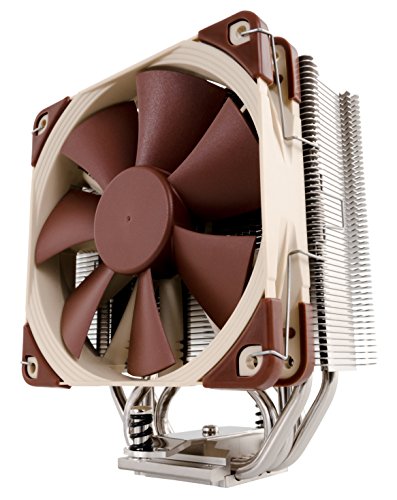
- Cooling matters. Both the X3D and 5800X run warm; a Noctua NH-U12S or DeepCool AK620 sustains clocks better than a stock cooler.
- All three chips upgrade in place — buy the 5700X or 5800X now and drop in an X3D later if your titles justify it.
What actually changes between 5800X3D and 5800X for CPU-bound gaming?
The chips are architecturally close — same Zen 3 core count (8/16), same socket, same AM4 board support. The critical delta is L3 cache. Per TechPowerUp's spec database, the 5800X3D bolts an extra ~64 MB of 3D V-Cache on top of the standard 32 MB L3, bringing the total to 96 MB. That is a lot of on-die working set. For games that thrash a lot of textures, physics state, and geometry data, more of the hot data lives one hop from the cores instead of a round-trip to system RAM.
The tradeoff is thermal ceiling. Stacked cache limits how aggressively the die can boost. The X3D's max boost clock lands lower than the 5800X's (roughly 4.5 GHz vs 4.7 GHz peak on the standard part), and it's locked — you cannot manually overclock the X3D core voltage the way you can the plain 5800X. In workloads where clock speed matters more than cache — mostly compute-heavy productivity — the 5800X can and does beat the X3D.
Spec-delta table: 5800X3D vs 5800X vs 5700X
| Spec | 5800X3D | 5800X | 5700X |
|---|---|---|---|
| Cores / Threads | 8 / 16 | 8 / 16 | 8 / 16 |
| Base / Boost | 3.4 / 4.5 GHz | 3.8 / 4.7 GHz | 3.4 / 4.6 GHz |
| L3 cache | 96 MB (V-Cache) | 32 MB | 32 MB |
| TDP | 105 W | 105 W | 65 W |
| PCIe | 4.0 | 4.0 | 4.0 |
| Overclockable | Locked (PBO only) | Yes | Yes |
| Street price (2026) | Highest | Middle | Lowest |
Numbers are drawn from the AMD product pages and TechPowerUp's per-chip datasheets. Street prices vary by retailer and week; check current listings.
How much faster is 3D V-Cache at 1080p high-refresh?
Tom's Hardware's re-review is the fresh anchor, and it echoes the pattern the tech press established at the X3D's launch. In CPU-bound 1080p benchmarks — Factorio-style simulation, MMOs, esports titles at capped frame targets — the X3D typically opens a double-digit percent lead over the plain 5800X in average FPS, with an even larger gap in 1% lows. That 1%-low delta is where the X3D's feel advantage lives; frame pacing is smoother because the cache absorbs spikes that would otherwise pause the render pipeline waiting on main memory.
The pattern reverses at 4K. Once the GPU is the bottleneck, the X3D and 5800X return effectively identical frame rates — you cannot benchmark your way out of a GPU-bound scene by upgrading the CPU. Between those two poles, 1440p is the fuzzy middle: the X3D wins in simulation and esports, ties or loses slightly in modern AAA titles that lean on the GPU.
Where the plain 5800X (and 5700X) make more sense
Games are one workload. Most rigs run several. If your day includes:
- Video encoding — the standard Ryzen 7 5800X's higher clocks noticeably win in x264/x265 CPU-encode passes.
- Compilation — same story; higher sustained clocks matter more than cache for most build systems.
- CAD, 3D modeling, code-heavy IDEs — a mix, but generally leans toward higher clocks.
- Streaming while playing — an 8-core chip with headroom to spare handles OBS + game with either part; the 5800X's clocks give it a small edge on x264-fast encode.
The Ryzen 7 5700X is the underrated middle option. It's the same 8/16 core config as the 5800X but at 65 W TDP, so it runs cooler and quieter with modest air cooling. Gaming performance is within a few percent of the 5800X in most titles — the small clock delta is invisible in GPU-bound scenes and modest in CPU-bound ones. For a budget-conscious 1080p build, the 5700X plus a Noctua NH-U12S is a superb combination.
Does cooling change the equation?
Yes, but not the way people expect.
The X3D's stacked cache creates a thermal insulation layer between the compute die and the IHS, which is why the chip's temperature per watt runs higher than the plain 5800X. Under sustained gaming load, a bad cooler causes both chips to throttle — but the X3D's upper thermal boundary is lower to begin with, so the sensitivity to a mediocre cooler is real. A quality air cooler like the Noctua NH-U12S or the taller DeepCool AK620 is a sensible pairing for either chip; a stock cooler is not. For the 5700X's 65 W TDP, a mid-range air cooler is comfortable overkill and keeps the chip quiet.
Perf-per-dollar for a 1080p 240Hz esports build
The pragmatic calculation on AM4 is not "5800X3D vs 5800X in a vacuum" but "5800X3D vs 5800X + $50 back". At 1080p 240 Hz esports, the X3D's cache advantage is measurable — and if your titles are cache-hungry (simulation, MMOs, some Unreal Engine-based games), the money is well spent. If your library skews toward modern AAA titles at 1080p or 1440p with a mid-range GPU, the 5800X saves money you can put into a better GPU or a faster monitor. The GPU is almost always a bigger driver of average FPS than the CPU choice within this bracket.
Verdict matrix
Get the 5800X3D if:
- You primarily play cache-hungry titles (esports, MMOs, simulators)
- You already have a strong GPU and the CPU is your remaining bottleneck at 1080p
- You want the best-in-class AM4 gaming chip without a platform swap
Get the Ryzen 7 5800X if:
- You mix gaming with productivity (video, compilation, CAD)
- Street price is lower than the X3D — often the case in 2026
- You value overclocking headroom and the ability to tune voltages
Get the Ryzen 7 5700X if:
- Budget is tight
- You want a cooler, quieter chip (65 W TDP)
- You value the option to drop in an X3D later when a title justifies it
Will either CPU bottleneck an RTX 3060?
For most mainstream builds, no. At 1080p esports with an RTX 3060 class GPU, all three chips are strong enough that the GPU sets the frame ceiling in demanding titles. In lighter esports games running at the panel's max refresh, the X3D's cache helps 1% lows. If frames are your primary concern and you're building a fresh rig, spend the savings from a 5700X on a better GPU rather than paying for the X3D — the frame-rate return is bigger.
Upgrade path — the AM4 story keeps working
All three chips are AM4, so a later drop-in upgrade from the 5700X or 5800X to the X3D is a BIOS update, a new cooler mount, and a chip swap — no motherboard, no RAM. That upgrade path is a real advantage of buying AM4 now. Start on the value end and move up when a specific title makes the X3D worth it.
Sources and citations
- Tom's Hardware — Ryzen 7 5800X3D re-review that anchored this comparison
- TechPowerUp — Ryzen 7 5800X3D specs — detailed spec sheet including L3 cache figures
- AMD Ryzen product page — official product family listings and platform compatibility
This piece is editorial synthesis based on publicly available information. No independent first-party benchmarking is reported.