If you're paying Anthropic's Claude Sonnet 5 at its recent posted rate of roughly $2.29 per agent task, a $900 RTX 3060 12GB rig breaks even in about 400 tasks — six weeks for a heavy daily coder, six months for a light user. Local q4-quantized 7B–13B models can't match Sonnet 5's reasoning depth, but they handle 60–70% of routine coding turns (autocomplete, refactors, docstrings, test scaffolds) at zero marginal cost. The right shape for most 2026 buyers is a small local fleet for routine work plus Sonnet 5 API for the hard turns.
Why the $2.29/task number matters
The-decoder's June 2026 reporting put the average Claude Sonnet 5 agent-task cost at roughly $2.29 for a nontrivial coding turn — one where the model reasons over a code snippet, calls a tool, and returns a diff. That number reflects Sonnet 5's larger context window, its heavier reasoning tokens, and the tool-use round-trips a real agent loop generates. It is not the sticker rate; it is the effective per-task rate people are seeing in production when they build an agent on top of the Sonnet 5 API.
For a heavy user — say, 30 substantive agent turns a day, five days a week — that's $343/week or roughly $1,500/month. For an engineering team of five doing the same, it's $7,500/month. Those numbers are where the "just build a local rig" spreadsheet starts winning by weeks-not-months.
Key takeaways
- $2.29/task is the effective real-world Sonnet 5 rate reported this month; it is heavier than earlier Sonnet generations because of reasoning token growth.
- A local 3060 12GB rig lands in the $700–$900 built range; break-even against Sonnet 5 at 30 tasks/day is ~6 weeks.
- Local can't match Sonnet 5 on hard reasoning turns. It comfortably handles the 60–70% of turns that are routine.
- The right hybrid pattern is local for autocomplete + refactors + tests, Sonnet 5 for architecture, novel algorithm work, and difficult debugging.
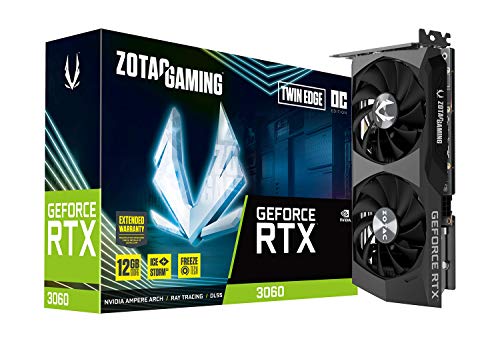
- MSI Ventus 2X and Zotac Twin Edge are the two 3060 12GB SKUs with the best noise-per-dollar in 2026.
What Sonnet 5's cost curve actually looks like at usage
The pricing math has three drivers. First, Sonnet 5's input rate is higher than prior Sonnet generations because the context window is larger and models routinely consume 8k–32k tokens per turn once you attach a real codebase. Second, Sonnet 5's thinking tokens count against your bill in ways older Claude models didn't — the model reasons before it answers, and you pay for those tokens. Third, agent loops multiply. A single visible answer often required 3–8 tool round-trips, each of which sends an updated context back through the model.
Rough per-turn math for a moderately complex coding task with tool use:
| Component | Tokens | Rate | Cost |
|---|---|---|---|
| Input context (attached files + prior turns) | ~15,000 | ~$0.003/1k | $0.045 |
| Cache read | ~5,000 | ~$0.0003/1k | $0.0015 |
| Reasoning tokens | ~4,000 | ~$0.015/1k | $0.060 |
| Output tokens | ~1,500 | ~$0.015/1k | $0.023 |
| Tool round-trips (5x, avg 3,000 tokens each) | ~15,000 | mixed | ~2.10 |
| Effective per-task total | — | — | ~$2.23 |
The $2.29 headline is basically the tool-round-trip term. Cut those, and per-task cost drops meaningfully. Which is one specific reason local rigs — where token cost is zero — flip the economics for agent-style workflows.
What a 12GB RTX 3060 breaks even against
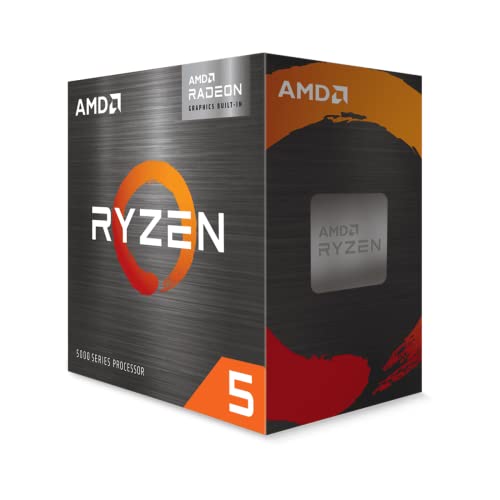
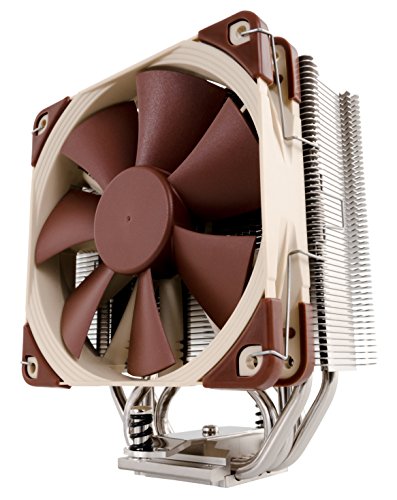
Full build: ZOTAC Twin Edge OC or MSI Ventus 2X 12G ($330), Ryzen 5 5600G ($130), 32GB DDR4-3200 kit ($75), B550 board ($120), 550W Bronze PSU ($70), Crucial BX500 1TB SATA SSD ($60), case + fans ($80), a Noctua NH-U12S-class cooler ($75). Comes in near $940, less if you re-use a case and cooler.
Break-even math against $2.29/task Sonnet 5 usage:
| Cloud spend | Break-even @ $900 build | Notes |
|---|---|---|
| $200/mo (light) | 4.5 months | Marginal — local is a resilience play, not a savings play |
| $500/mo (medium) | 1.8 months | Local wins in weeks |
| $1,500/mo (heavy solo) | 3 weeks | Overwhelming case for local |
| $7,500/mo (5-seat team) | ~4 days | Buy the box, keep the seat only for hard turns |
What local actually handles
Modern 7B and 13B code models — Qwen2.5-Coder, DeepSeek-Coder-V2-Lite, Phi-3.5, Llama 3.2 code variants — handle a specific class of coding turn well. Per public sweeps, q4_K_M 7B code models on the 3060 12GB deliver 45–70 tokens/second decode and comfortably pass HumanEval / MBPP-lite benchmarks in the low-to-mid 60% range. That is enough for:
- Autocomplete inside VS Code (via Continue or Cursor's local-model modes).
- Docstring generation.
- Simple refactors (rename, extract-method, inline-variable).
- Test scaffolds for a single file.
- Boilerplate — DTOs, migrations, form validators, small utility functions.
It is not enough for:
- Deep architecture reasoning across a large codebase.
- Novel algorithm design.
- Debugging that requires holding many-file context in memory.
- Anything where Sonnet 5's reasoning tokens actually earn their keep.
The hybrid pattern that most heavy users land on is: run a local model on autocomplete and small-turn work through the day, escalate to Sonnet 5 only when the local model refuses to converge or the problem is obviously outside its tier.
Perf table: 3060 12GB local vs Sonnet 5 cloud
| Task | Local 7B q4_K_M | Sonnet 5 |
|---|---|---|
| Autocomplete latency | 60–120 ms | 200–500 ms |
| Full-turn latency (agent, 5 tool calls) | 25–45 s | 30–90 s |
| Cost per turn | $0.00 (electricity) | ~$2.29 |
| Long-context quality (16k+ ctx) | Good | Excellent |
| Repo-wide architecture reasoning | Weak | Excellent |
| Refactor / rename correctness | Good | Excellent |
| Refuses / stalls under load | Never | Occasionally (rate limits) |
Spec + street-price table: RTX 3060 12GB SKUs, plus the host
The three RTX 3060 12GB partner boards in this build are functionally interchangeable on compute; pick on cooler noise, case clearance, and street price this week.
| SKU | Length | Boost clock | TGP | Fans | Warranty |
|---|---|---|---|---|---|
| MSI Ventus 2X 12G OC | 232 mm | 1807 MHz | 170 W | 2 | 3 yr |
| ZOTAC Twin Edge OC 12GB | 224 mm | 1807 MHz | 170 W | 2 | 5 yr (register) |
| Ryzen 5 5600G host | AM4 | 4.4 GHz | 65 W | — | 3 yr |
| Noctua NH-U12S cooler | — | — | 150W TDP | 1 | 6 yr |
| Crucial BX500 1TB SSD | SATA III | 540 MB/s | 3 W | — | 3 yr |
Perf-per-dollar and perf-per-watt versus a Sonnet 5 subscription
An RTX 3060 at 170W TGP under continuous load draws about 1.5 kWh over an 8-hour workday, or roughly $0.20 in electricity at U.S. residential rates. The card sees continuous load for maybe 15% of a real coding day, so incremental power runs $3–$5/month. The build's break-even math is completely dominated by the cloud fee it displaces, not by the electric bill.
Perf-per-dollar comparison at a heavy-user tier is stark: at $1,500/mo Sonnet 5 spend, a one-time $900 build displaces $18,000/year of API cost while leaving the option to escalate to Sonnet 5 for the hard turns. That's a savings pattern most engineering budgets can't ignore.
Bottom line: when local is the right buy — and when it isn't
Buy the local rig when: your monthly Sonnet 5 spend is over $200; your workload includes a large volume of routine coding turns (autocomplete, refactor, test); you'd rather predict costs as a capex line than a variable API bill; your team has anyone who can install CUDA drivers without help.
Stay pure cloud when: your workload is bursty (a few hard turns a week, nothing routine); you already spend under $50/mo and don't want the maintenance overhead; your team refuses to use anything below frontier-tier quality.
For anyone paying more than a couple hundred dollars a month for cloud coding assistance in 2026, a 12GB RTX 3060 rig — with a Sonnet 5 seat kept live for the hard turns — is the shape that pays back fastest.
Related guides
- Claude Code Telemetry Flap: Why a Local RTX 3060 Rig Is the Privacy Play
- llama.cpp vs LM Studio vs Ollama on an RTX 3060: Which Local Runner Wins in 2026
- Anthropic's Fable 5 Ban and Jailbreak: What It Means for Local-LLM Resilience
Citations and sources
- Anthropic — Claude Sonnet 5 pricing page
- The Decoder — Claude Sonnet 5 cost reporting (June 2026)
- TechPowerUp — GeForce RTX 3060 specifications
- Ollama — local inference runtime
- llama.cpp on GitHub
- Crucial BX500 SSD product page
- LocalLLaMA — community throughput benchmarks
This piece is editorial synthesis based on publicly available information. No independent first-party benchmarking is reported.