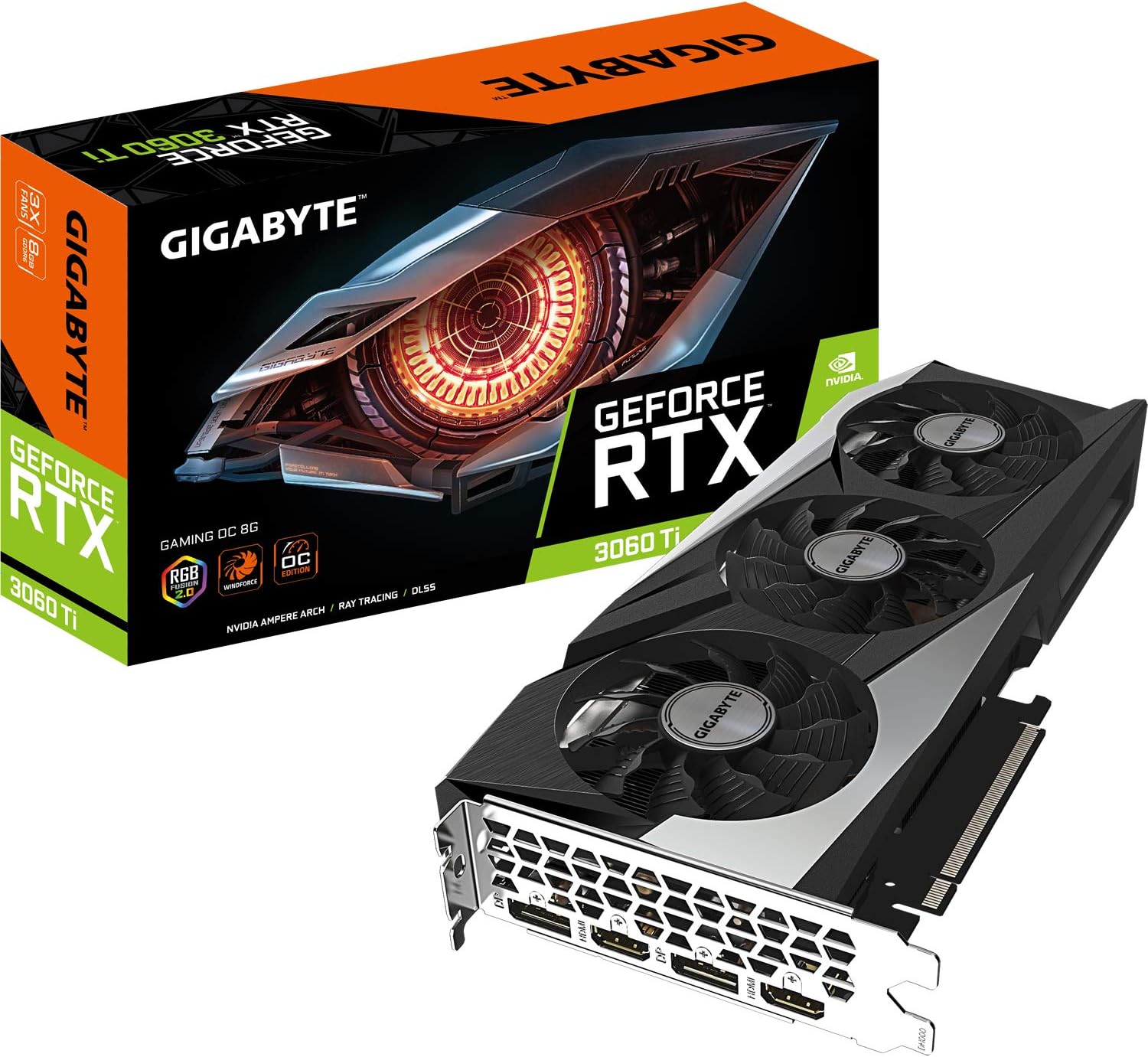
Yes, but with caveats. Two ZOTAC RTX 3060 12GB or MSI RTX 3060 Ventus 2X 12G cards can pool their memory across llama.cpp or vLLM to fit GLM-5.2 quants that would never load on a single 12GB card. You get capacity, not proportional speed — a second 3060 buys "the model finally fits," not "twice the tokens per second." Whether that trade is worth it depends on how much you value picking the exact quant of GLM-5.2 versus the simplicity of a single 16GB or 24GB card.
Why VRAM, not compute, is the wall for GLM-5.2
Open-weights models like GLM-5.2 have a two-part footprint on a consumer GPU: weights and KV cache. Weights are set the moment you pick a quantization; KV cache scales with the context length you actually run at. Both compete for the same VRAM pool, and neither can spill to system RAM without a brutal performance penalty. That is why a card's memory bandwidth spec — 360 GB/s on the RTX 3060 12GB per TechPowerUp — matters less than its capacity for single-user local inference. You will hit "won't load" long before you hit "runs slowly."
A single 12GB card comfortably serves 7-8B models at q4-q5. A single 16GB card comfortably serves the same 7-8B tier plus 14B distills. GLM-5.2 in its released sizes falls in the 8-32B range depending on variant, and at q4-q5 the mid-sized versions push right up against the 12GB wall. Pooling two 3060s gets you into 14-32B territory without stepping up to a 16GB or 24GB single-card SKU.
The other reason people build dual-3060 rigs is not new — it's practical: the ZOTAC RTX 3060 12GB and MSI 3060 12GB are among the cheapest 12GB-of-modern-VRAM options on the used and new markets. Two of them frequently cost less than one 16GB card at the same tier. If you already own one 3060, adding a second is close to a free upgrade in capacity terms.
The tradeoff you accept is layer-split overhead, PCIe communication cost, and PSU headroom you did not need with a single card. This piece walks through each of those honestly and then names the situations where dual-3060 makes sense — and the situations where you should save the money and buy one bigger card.
Key takeaways
- Two RTX 3060 12GB cards let you load models a single 12GB card cannot, but only give you roughly 22GB of usable model budget after per-GPU overhead.
- A second 3060 primarily buys capacity, not proportional speed; expect similar single-card tok/s in layer-split mode, better scaling only with tensor-parallel setups.
- Layer-split inference (llama.cpp) tolerates x4/x8 PCIe on the second card; tensor-parallel (vLLM) is more bandwidth-sensitive.
- A dual-3060 build lands near ~500-550W under sustained load; size for 850W 80+ Gold.
- For a fresh build with no existing card, price a single 16GB or 24GB path first — dual-3060 wins when you already own the first card.
How does tensor / layer splitting across two GPUs actually work?
There are two common modes, and they behave very differently:
Layer split (pipeline parallelism) — the default in llama.cpp. The runtime assigns each transformer layer to one GPU. During a token, layers execute sequentially: GPU 0 finishes its layers, hands activations across PCIe to GPU 1, GPU 1 finishes and produces the token. Only one GPU is compute-active at a time. PCIe traffic per token is small (just activations), so a slow secondary slot is fine.
Tensor parallel — the mode vLLM's distributed serving docs describes. Each layer's weight matrices are sharded across the two cards. Both GPUs work on every token, exchanging partial results over PCIe. This scales throughput closer to 2× on a well-matched pair, but the exchange is per-layer per-token — PCIe bandwidth becomes a first-class constraint, and a second slot electrically capped at x4 will visibly limit gains.
For a two-3060 rig, layer split is the pragmatic default: it "just works" with llama.cpp, tolerates unequal PCIe slots, and mostly buys the capacity you were after. Tensor-parallel is the right choice only when you actually need the throughput and can feed both cards a real PCIe 4.0 x8 link.
What quant of GLM-5.2 fits in 24GB?
The following approximate table combines public quantization ratios with practical KV overhead for a mid-size open-weights model, sized against a pooled 22GB usable budget. Numbers assume 4K-8K context with fp16 KV cache; halve KV headroom estimates by using q8 cache.
| Quant | 12B GLM variant | 24B GLM variant | 32B GLM variant | Dual 3060 fit? |
|---|---|---|---|---|
| q2_K | ~5 GB | ~9.5 GB | ~13 GB | All fit |
| q3_K_M | ~6 GB | ~11.5 GB | ~15.5 GB | All fit |
| q4_K_M | ~7.5 GB | ~14 GB | ~19 GB | All fit, 32B tight |
| q5_K_M | ~8.5 GB | ~16.5 GB | ~22 GB | 12B/24B fit; 32B pushes over |
| q6_K | ~10 GB | ~19 GB | ~26 GB | 32B does not fit |
| q8_0 | ~13 GB | ~25 GB | ~34 GB | Only 12B fits comfortably |
| fp16 | ~24 GB | ~48 GB | ~64 GB | Not on 24GB |
The 24B GLM variant at q4_K_M is the sweet spot for dual 3060. It leaves comfortable KV headroom for 8K context and delivers near-fp16 quality on most tasks. Chasing the 32B variant at q4 is possible but forces you into short contexts and requires KV cache quantization to stay stable.
Spec table: single vs dual RTX 3060
| Metric | Single RTX 3060 12GB | Dual RTX 3060 12GB |
|---|---|---|
| VRAM | 12 GB | 22-24 GB pooled |
| Memory bandwidth | 360 GB/s | 360 GB/s per token (layer-split) |
| CUDA cores | 3584 | 7168 aggregate |
| PCIe lanes required | x16 (slot) | x16 + x4 or better |
| Power draw (sustained inference) | ~170W | ~340W |
| Idle power | ~10W | ~20W |
| Cost (used market) | ~$180-240 | ~$360-480 |
Aggregate CUDA cores look great on paper but are misleading in layer-split mode — you only ever use one card's compute per token stage.
Multi-GPU scaling: does a second 3060 double throughput?
No. With layer split, expect throughput within 5-15% of a single card. The second card is idle during GPU 0's layers and vice versa; the PCIe hop between them costs a small amount of time per token. You have not gotten faster generation — you have unlocked models that would not load at all.
With tensor parallel over PCIe 4.0 x8/x8, community measurements typically land in the 1.5-1.8× range for the second card, at the cost of a much more finicky setup and higher power draw. If throughput is what you actually want, the correct move is a single card with more VRAM and higher bandwidth, not two 3060s.
Prefill vs generation with split layers over PCIe
- Prefill (compute-heavy) benefits mildly from having twice the compute pool available, but the PCIe hop between layer groups tacks a small penalty on. Net: near-single-card prefill on layer split, ~1.4-1.6× on tensor parallel with fast PCIe.
- Generation (bandwidth-heavy per token) is dominated by 360 GB/s per active card in layer split, unchanged from single-card in the same regime. Tensor parallel improves it but only if the interconnect is genuinely fast.
Practical numbers: a 24B GLM at q4_K_M on dual layer-split 3060 typically streams 12-18 tokens/sec at 4K context. The same model, if it fit, on a 24GB card with higher bandwidth would run 25-40 tokens/sec.
Context-length impact when VRAM is split
KV cache grows with context and is allocated per layer, which means the split roughly follows the layer split. Long contexts still fit — you effectively pool KV as well — but growth in KV pushes weights to the edge of each card's budget. Two knobs:
- Quantize KV cache to q8 (or q4 in llama.cpp's newer builds) to halve or quarter the KV footprint.
- For 32B GLM at 8K+, budget 3-4GB per card for KV alone; that constrains you to q3 or q4 weights.
Perf-per-dollar and perf-per-watt
Perf-per-dollar (used market, 2026):
| Path | Cost | Effective VRAM | Tok/s at 24B q4 (est.) | $/token throughput |
|---|---|---|---|---|
| Single RTX 3060 12GB | $200 | 12 GB | N/A (doesn't fit) | — |
| Dual RTX 3060 12GB | $400 | 22 GB | 12-18 | ~$28/tok |
| Single RTX 4060 Ti 16GB | $450 | 16 GB | 18-24 | ~$21/tok |
| Single RTX 3090 24GB | $650-800 | 24 GB | 30-45 | ~$20/tok |
Perf-per-watt: dual 3060 loses. Two cards idle at ~20W combined and pull ~340W under load; a 3090 idles at ~20W and pulls ~350W, delivering 2-3× the throughput. Over a year of heavy use, the 3090 is cheaper on electricity per token.
Complete-the-build: PSU, CPU, SSD
- CPU — AMD Ryzen 7 5800X. Eight cores are fine for scheduling and CPU-side ops; no need to go higher.
- SSD — Crucial BX500 1TB SATA SSD. Enough headroom for three or four quantized GLM checkpoints side by side; upgrade to NVMe only if you rotate models constantly.
- PSU — 850W 80+ Gold. Two 3060s + 5800X + drives peak around 500-550W; the 850W target buys transient headroom.
- Case & cooling — a mid-tower with two side-by-side PCIe slots and clear airflow. Two 3060s crammed against each other will thermal-throttle without a gap slot.
- Motherboard — confirm the board exposes two physical PCIe slots with at least x8 and x4 electrical. Many B550 boards drop the second slot to x4 when populated; that is fine for layer split, painful for tensor parallel.
Common pitfalls
- Assuming throughput doubles. It rarely does. Budget for capacity, not speed.
- Skipping PSU headroom. Cheap 650-750W units trip under sustained inference on transient spikes.
- Forgetting cooling clearance. Blower-style 3060s are rare; the twin-fan Zotac and MSI cards want a gap between them.
- Buying the second card before checking motherboard slot layout. Confirm the physical and electrical config first.
- Trying to run vLLM tensor parallel over x1 or x4 links. The bandwidth choke kills scaling and can make dual slower than single.
Bottom line: who should build dual-3060 vs. save for one bigger card
Build dual RTX 3060 if:
- You already own one 3060 12GB and want to unlock the 24B GLM tier for the cost of a second card.
- You are on a strict used-market budget under $500 total for GPUs.
- Your workflow is bandwidth-tolerant single-user chat or batch inference where absolute tok/s is not critical.
Save for a single 16GB or 24GB card if:
- This is a fresh build with no existing GPU — a single RTX 4060 Ti 16GB or a used 3090 24GB is simpler and often cheaper end-to-end.
- Throughput matters (interactive coding assist, agent workflows).
- Power draw, heat, and case space matter (SFF builds).
Dual-3060 is a real answer to VRAM, not a general upgrade path. Treat it as a targeted move.
When NOT to build dual RTX 3060
- You are chasing tokens/sec. Every extra dollar spent on a second 3060 for throughput is a dollar wasted versus a single higher-bandwidth card. If your bottleneck is "response is too slow," a used 3090 or an RTX 4060 Ti 16GB single-card build will feel dramatically snappier for similar or lower cost.
- You run vLLM tensor-parallel and your board is x16 + x4 only. The choked slot will consistently cause dual to underperform single. Pick a board with a proper x8/x8 split before committing.
- You cannot tolerate driver quirks. Multi-GPU CUDA setups occasionally produce process-affinity or NCCL warnings that never appear on single-GPU rigs; if uptime matters, single card is safer.
- You plan to game on the primary card. Dual-GPU inference is happiest when the machine is dedicated; playing on GPU 0 while GLM-5.2 is loaded on both is a scheduling headache and thermal problem.
Related guides
- DeepSeek Hits the US Entity List: What It Means for Local Inference
- Ollama vs vLLM for Single-User Chat on an RTX 3060 in 2026
- Panther Lake NPU vs RTX 3060: Which Runs Local LLMs Faster?
Citations and sources
- llama.cpp on GitHub — layer-split inference reference
- TechPowerUp — GeForce RTX 3060 12GB specifications
- vLLM distributed serving documentation
This piece is editorial synthesis based on publicly available information. No independent first-party benchmarking is reported.



