The 30-second answer
Budget Game Boy clones run Pokémon Red faster than the original because their main boards ship the wrong crystal — typically a generic 4.5MHz or 5MHz oscillator instead of the DMG's specific 4.194304MHz part. The CPU runs at whatever the crystal dictates, so the entire system ticks faster: games run faster, music pitches up, and timing-sensitive tricks break. The fix is a $0.30 through-hole crystal and a soldering iron.
What happened — the "Pokémon plays Donkey Kong tempo" complaint
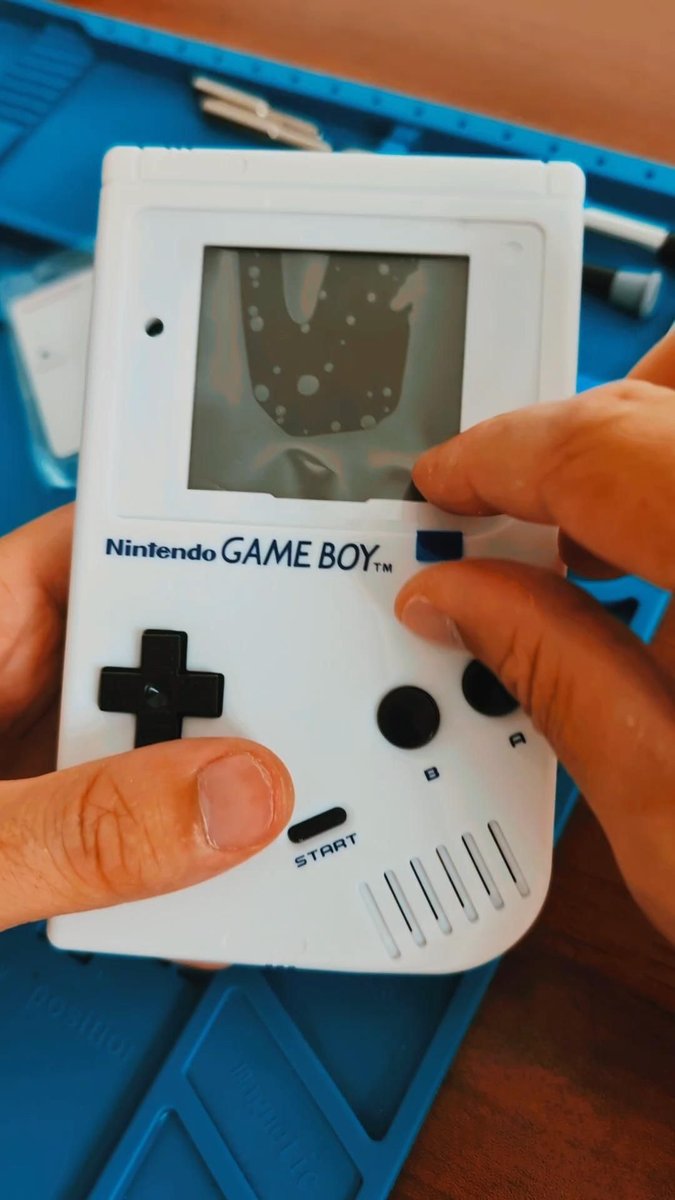
A wave of cheap Game Boy clones — sold under brand names like Powkiddy, BittBoy variants, and unbranded AliExpress listings — hit social media this month with the same recurring complaint: games run noticeably faster than they should, music tracks pitch up roughly a tone, and turn-based mechanics that depend on frame timing feel rushed. The clones in question are not the software-emulation handhelds like Anbernic or Miyoo devices (those run a Linux-based RetroArch / RG35XX-style stack); they are hardware clones built around third-party Sharp LR35902-compatible CPUs on custom PCBs.
The unifying defect: the wrong crystal oscillator on the main board.
Why the crystal matters
The original Nintendo Game Boy DMG, the Pocket, and the Color all run their CPUs from a single primary crystal: 4.194304MHz, which is exactly 2^22 Hz. The number is deliberate. The CPU divides this clock down to drive the system timer registers, the sound channel frequencies, and the video refresh — and powers of two make the divider math both fast and exact in fixed-point hardware. The Pan Docs project, which is the canonical engineering reference for the Game Boy hardware, documents the exact dividers and their target frequencies down to the register level.
Every game on the platform was timed assuming this clock. Movement speed in Pokémon, music tempo in Tetris, frame transitions in Super Mario Land — all of it assumes 4.194304MHz at the crystal. Move the crystal, and the entire system speeds up or slows down by the same ratio.
What the clones are shipping
The cheap clones, per teardowns posted in retro-handheld communities, are shipping crystals in the 4.5MHz to 5MHz range. The BOM picker grabbed a standard value the factory had in stock rather than the DMG's specific oddball frequency. The CPU clones themselves are reasonably faithful — they implement the LR35902 instruction set well enough to run real cartridges — but the clock source is wrong, and so the entire system runs 7-20% fast depending on the specific crystal.
The audible symptom is the easiest tell. A song that's supposed to play at 120BPM in a real Game Boy plays at 130-140BPM on the clone. If you have any musical memory of the GBC version of Tetris, the difference is unmistakable within seconds.
The fix — a crystal swap
For hardware Game Boy clones with the wrong crystal, the fix is straightforward:
- Identify the crystal. Open the unit (one-screw or four-screw plastic shell, no warranty seal on most), and locate the silver metal can on the main board — usually a HC-49S or HC-49U through-hole package near the CPU. Read the frequency markings on the top of the can; if it says anything other than
4.194304MHz, that's the problem. - Order the replacement. A 4.194304MHz HC-49S through-hole crystal is a stocked part at Mouser, DigiKey, Adafruit, and most general electronics distributors. Cost is $0.30-1 in quantity 1. Buy two — they are cheap and easy to damage with too much heat. Adafruit's clock-oscillator section carries the standard package.
- Desolder the original. Use a temperature-controlled iron at around 350°C, add fresh flux to both pads, and wick away the existing solder with desoldering braid. The crystal will lift off with gentle prying once the joints are clean. The risk is lifting the pad off the PCB if the iron is too hot or you press too hard.
- Solder the replacement. Insert the new crystal in the same orientation (crystals are not polarized, but matching the original placement avoids confusion). Add a small amount of fresh solder to each pad. Trim the leads, reassemble.
- Verify. Power the unit on with any Game Boy cartridge and a familiar music track. The pitch and tempo should now match the original.
Total time for someone with basic soldering experience: 10-15 minutes. Total cost: under $1 for the part, plus consumables.
What if it's a software-emulation handheld?
If the device in question is actually an Anbernic RG-series, Miyoo Mini, Powkiddy V90, or any Linux-based handheld running RetroArch or a similar emulator stack, the crystal is not the issue — there is no real Game Boy CPU inside. The fix lives in software:
- Open the Game Boy core's settings inside RetroArch (Quick Menu → Options).
- Look for "Frame Throttle" or "Audio Sync" or "Use Custom Frame Rate". Confirm the framerate cap is 59.7275Hz (the Game Boy's native refresh) and any speed multiplier is set to 1.0x.
- If audio is choppy, increase the audio latency buffer slightly — the throttle requires a few frames of headroom to stay in lock.
For modern emulator handhelds the audible-speed issue almost always traces to a wrong-frequency cap or an enabled fast-forward toggle, not a hardware problem.
A short list of credible alternatives
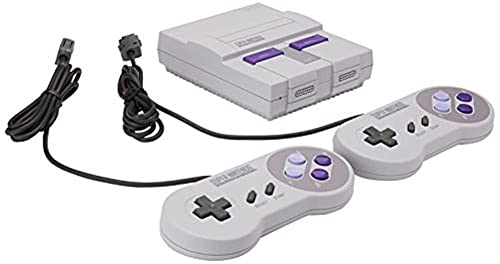
If the crystal-swap project is more than you want to take on, the genuinely original-feel handhelds are the obvious step up. The 8BitDo Sn30 Pro controller pairs well with a phone or PC running an open-source emulator for accurate playback. The Nintendo Super NES Classic Edition and the Sega Genesis Mini offer factory-correct timing on their respective libraries — neither is a Game Boy device, but both represent the "right way" to do hardware-faithful retro consoles when you don't want to chase BOM defects.
Why this matters beyond Game Boy clones
The crystal-mismatch problem shows up across the cheap clone-handheld category. Famicom clones with wrong clocks, NES-on-a-chip implementations with subtly off PPU timing, Genesis clones with audio chips clocked off-spec — every one of these is the same root cause: a factory BOM that prioritized parts availability over engineering correctness. The Game Boy version is unusually visible because the music pitch is an audible reference, but the underlying pattern is general.
For the retro-hardware community, the lesson is that hardware-cloned doesn't mean hardware-correct. A "real" Sharp LR35902 implementation with the wrong clock is closer to a slow-motion bug demo than to authentic gameplay. The Pan Docs explicitly call out the exact frequencies the platform expects; any clone that respects them runs games at the right speed, and any that doesn't won't.
Bottom line
If your Game Boy clone runs too fast, the crystal on the main board is almost certainly wrong. The original DMG runs on a 4.194304MHz crystal, the clones often ship 4.5MHz or 5MHz, and a $0.30 replacement plus a soldering iron restores correct timing. For software-emulation handhelds, the framerate-cap setting in RetroArch is the equivalent fix. Either way, the original Game Boy hardware reference and the community-maintained Pan Docs documentation are the authoritative sources for what the system expects.
Extended context — why the 4.194304MHz number exists at all
It is worth understanding why Nintendo's engineers picked an oddball frequency like 4.194304MHz instead of a round number. The answer is the divider tree. The Game Boy's CPU and peripheral hardware divide the master clock down to drive the timer, the serial port, the sound generator, and the LCD refresh. Each divider is implemented in silicon as a chain of binary counters — flip-flops that halve the input frequency. To produce exact, jitter-free frequencies for music synthesis and frame timing, the master clock must be a power of two times the slowest derived clock. 2^22 Hz = 4,194,304Hz is exactly that, and it lets the dividers produce clean musical frequencies for the sound chip down to the lowest audible notes.
This is the same engineering trick used across early embedded hardware. The 1.8432MHz crystal that shows up on classic UART chips is chosen because it divides cleanly into the standard baud rates. The Game Boy crystal is chosen because it divides cleanly into the GB's specific timer and audio derivations. A 5MHz crystal divides into nothing useful for the platform.
The broader retro-handheld category in 2026 — credible options that don't have the wrong crystal
Beyond fixing existing clones, the retro-handheld market in 2026 has matured into several distinct tiers, each with its own quality profile. A brief tour for readers shopping rather than soldering:
Software-emulation handhelds (the right path for most people)
The Anbernic RG-series, Miyoo Mini Plus, Powkiddy V90, and similar Linux-based handhelds use general-purpose ARM SoCs running RetroArch or a similar emulator stack. The Game Boy "core" inside these devices is a software emulator (typically Gambatte or SameBoy), which means timing is set by the emulator's frame cap rather than by a physical crystal. As long as the framerate cap is configured correctly, these devices run games at exactly the right speed.
The trade-offs versus a real Game Boy are familiar — emulator cycle accuracy varies by core, audio glitches happen on specific games, and the screen is an LCD with its own latency characteristics — but the timing accuracy of the modern open-source cores is excellent.
Modern repro handhelds with FPGA implementations
The Analogue Pocket is the gold standard for hardware-accurate Game Boy reproduction in 2026. The unit implements the DMG hardware in an FPGA, which is electrically identical to the original CPU but runs at deliberately-correct timing. The cartridge slot is real and supports original physical media. Expensive ($220 base in 2026) but the only commercial product that runs original DMG cartridges at original speeds without compromises.
Hardware clones with real Sharp LR35902 silicon
This is the category our crystal-swap fix applies to. Hardware clones that ship CPU silicon (cloned or new old-stock) but generic clock sources. The crystal-swap fix restores correct timing; without it, games run fast and music pitches up.
Pi-based DIY handhelds
Building a Game Boy form-factor unit around a Raspberry Pi 4 8GB and a battery / screen module is its own hobby. Performance is identical to software-emulation handhelds (the Pi runs RetroArch); the appeal is the build experience itself. Several open-source projects publish 3D-printable shells and PCB designs.
Soldering basics for first-timers
If this is your first time picking up a soldering iron, three things to know before you start on a vintage Game Boy clone:
- Iron temperature matters more than wattage. A temperature-controlled iron at 350°C delivers consistent heat for short enough that the pad doesn't lift. A 30W iron with no temperature control runs hotter under no load and risks pad damage. Spend $40-80 on a basic Hakko or Pinecil before tackling a delicate desolder.
- Flux is the cheat code. Adding fresh rosin-core flux to old joints lets solder flow cleanly without prolonged heat. The solder that came with the crystal in 1995 is dry, oxidized, and resistant to flowing. Flux fixes that in seconds.
- Practice on something you don't care about first. Buy a $5 LED practice kit, solder ten LEDs, and develop muscle memory for the iron-and-solder dance before touching a vintage piece. The crystal swap is a 10-minute job for someone who's done a hundred solder joints; for an absolute beginner it's an afternoon and one risk of pad damage.
What goes wrong when the swap doesn't work
The most common failure modes after a Game Boy clone crystal swap, in order of frequency:
- Lifted pad on desolder. Heat applied too long, pad lifts off the PCB. Recoverable with careful wire jumpers; annoying when it happens on a unit you don't want to live with the visual scars on.
- Cold solder joint on the new crystal. Solder didn't fully bond because flux ran out or iron wasn't hot enough. Symptom: works intermittently, fails when shaken. Reheat with fresh flux.
- Wrong crystal frequency ordered. Ordering 4.194MHz instead of 4.194304MHz delivers a crystal that's 80ppm off — close enough that audio sounds right but slightly slow on long sessions. Order the exact 4.194304MHz spec.
- Damaged adjacent component. The crystal pads sit close to small SMD capacitors that the iron can knock loose if it slips. Use shorter iron contact times and a fine tip to keep adjacent components safe.
Each of these has a fix; none are catastrophic on their own. The pattern across them is "go slow, use flux, and practice first."
Citations and sources
- Pan Docs — Game Boy hardware reference
- Wikipedia — Game Boy
- Adafruit — clock oscillators and crystals
This piece is editorial synthesis based on publicly available information. No independent first-party benchmarking is reported.