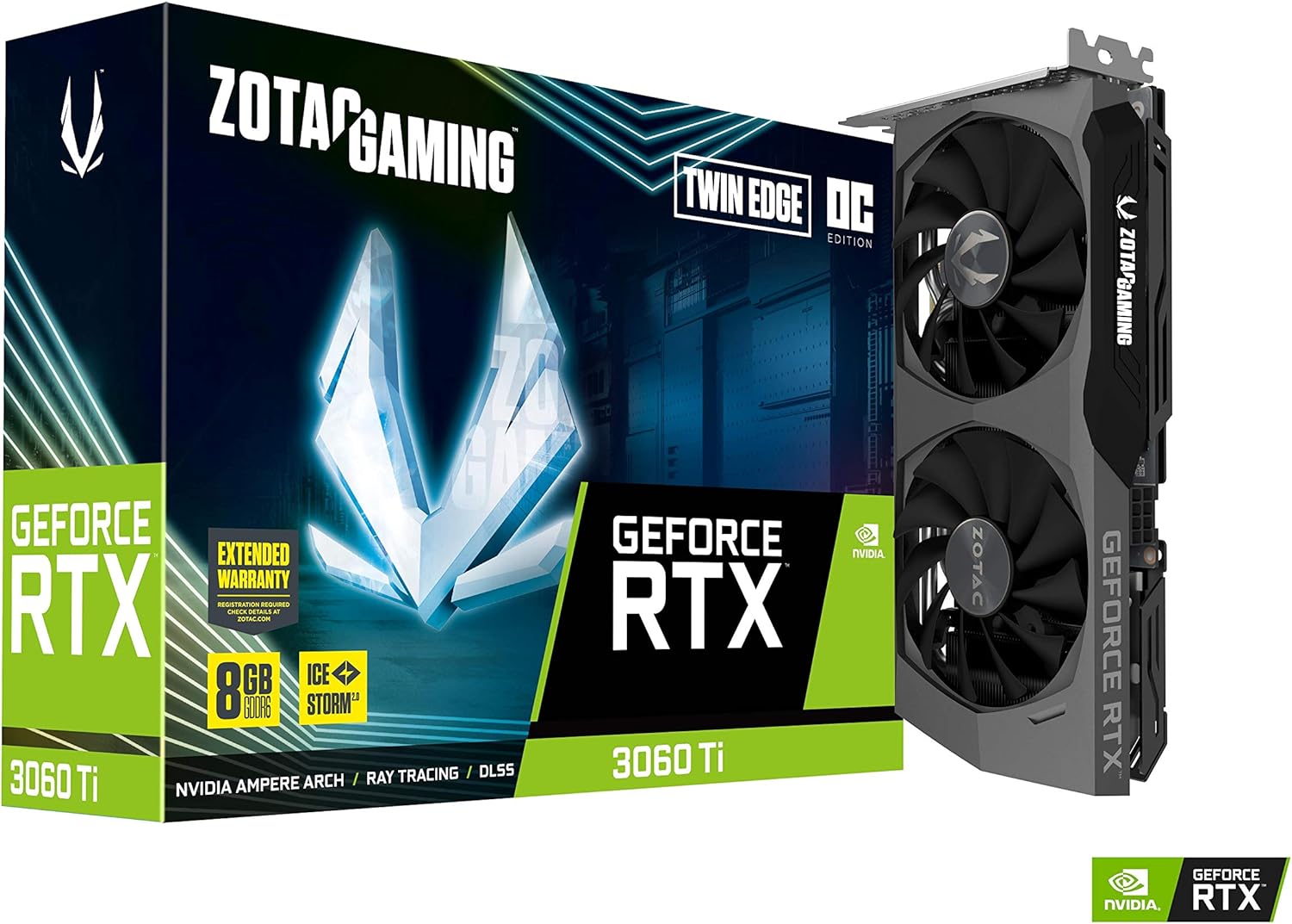
The best GPU for Stable Diffusion under $300 in 2026 is the RTX 3060 12GB. Its 12GB of VRAM lets it run SDXL, ControlNet stacks, and memory-optimized Flux without the out-of-memory walls that stop faster 8GB cards cold. It is not the quickest card per image, but for budget image generation, capacity beats raw speed — and nothing else near this price clears the same workloads.
Why 12GB of VRAM, not raw speed, is the budget gatekeeper
Newcomers to AI image generation almost always shop by the wrong number. They compare clock speeds, CUDA core counts, or gaming FPS charts, pick the fastest card in budget, and then hit a wall the first time they load SDXL or stack a couple of ControlNet models. The wall is VRAM. Stable Diffusion loads the model weights, the VAE, and every LoRA or ControlNet adapter into video memory simultaneously, and higher resolutions inflate the working set fast. An 8GB card can run the older SD 1.5 happily, but it chokes on SDXL at standard resolution, forces aggressive tiling, or simply errors out when you add ControlNet.
The RTX 3060 12GB sidesteps that wall. Its unusually large memory for the tier — 12GB on a mainstream card — is exactly what modern diffusion pipelines want, and it is the reason a nominally slower 3060 routinely out-delivers a faster 8GB card for this specific job. You wait a little longer per image; you do not get locked out of the model you wanted to run. For a hobbyist learning ComfyUI, generating SDXL art, or experimenting with Flux on a sub-$300 budget, that tradeoff is the right one almost every time. This guide shows exactly how much VRAM each model class needs, what throughput to expect, why the "8GB trap" hurts, which 3060 SKU to buy, and when you have outgrown the card.
Key takeaways
- The pick: RTX 3060 12GB — the budget VRAM champion for Stable Diffusion under $300.
- VRAM over speed: SDXL and ControlNet need memory headroom; an 8GB card hits out-of-memory errors a 12GB card never sees.
- Runs the modern stack: SD 1.5, SDXL, and memory-optimized Flux all run on 12GB, just slower than a high-end card.
- SKU parity: The ZOTAC Twin Edge and MSI Ventus 2X use the same GPU and 12GB — pick on cooler, size, and price.
- Step up when: Training, large Flux, or batch production make the 3060's slower compute the bottleneck.
How much VRAM does Stable Diffusion actually need?
The memory budget scales with the model generation and the resolution you target. These are practical working-set figures, not just weight sizes:
| Model | Typical VRAM (standard res) | 8GB card | RTX 3060 12GB |
|---|---|---|---|
| SD 1.5 (512px) | 4–6GB | Fine | Fine |
| SDXL (1024px) | 8–11GB | Tight / OOM | Comfortable |
| SDXL + ControlNet | 10–13GB | Frequent OOM | Usable |
| Flux (memory-optimized) | 10–12GB+ | No | Borderline-usable |
The pattern is clear: 8GB is the SD 1.5 era's comfort zone, and 12GB is what the SDXL-and-newer era demands. The 3060's 12GB lands right where the modern stack lives.
What image-gen throughput do public benchmarks show?
Speed on a 3060 is modest but perfectly workable for hobby use. Iteration rate (it/s) and per-image time depend on sampler, steps, and resolution, but community benchmarks cluster around these figures:
| Workload | RTX 3060 12GB (approx) |
|---|---|
| SD 1.5, 512px, 20 steps | ~6–9 it/s, ~3–5s/image |
| SDXL, 1024px, 30 steps | ~1.5–2.5 it/s, ~20–35s/image |
| SDXL + ControlNet | slower, but completes without OOM |
| Flux (optimized) | minutes per image, but runs |
A faster card finishes an SDXL image in a fraction of that time — but only if it has the memory to start. The 3060's value is that it finishes the job at all within budget. As cross-referenced in Tom's Hardware's GPU hierarchy, higher tiers buy speed, not the ability to fit; for diffusion, fit comes first.
Why does the 8GB trap hurt SDXL and ControlNet?
The "8GB trap" is buying a faster card that wins gaming charts and then discovering it cannot run your actual workload. SDXL at native 1024px already brushes the 8GB ceiling once you include the VAE and any refiner pass. Add a single ControlNet model — depth, pose, canny — and you push past it, triggering out-of-memory errors, forced tiling that degrades coherence, or a crash mid-generation. Stacking two ControlNets, common in serious ComfyUI workflows, is simply not viable on 8GB. The 3060's 12GB clears all of these. It will not be fast, but "slow and finished" beats "fast and crashed" every single time you sit down to actually make something.
ZOTAC Twin Edge vs MSI Ventus 2X: which RTX 3060 12GB to buy
Both the ZOTAC Gaming Twin Edge and the MSI Ventus 2X 12G are built on the same GA106 GPU with the same 12GB of GDDR6, so generation performance is effectively identical between them. The differences are physical: cooler design, card length, noise under sustained load, and — most importantly — price the day you buy. In a compact case, check the listed length and clearance before committing. As of 2026 the in-stock, ready-to-ship pick of the two is the MSI Ventus 2X 12G, a compact dual-fan card that drops into most builds without drama. If you find the ZOTAC at a lower price and it fits your case, it is an equally good choice — the silicon underneath is the same.
Settings that stretch 12GB even further
The 3060's 12GB is generous for the tier, and a few standard settings make it stretch further still, letting you run jobs that would otherwise brush the ceiling. Memory-efficient attention (often exposed as a "medvram" or low-VRAM mode) trades a little speed to keep peak memory down. Tiled VAE decoding splits the final image-decode step into chunks so high resolutions do not spike VRAM all at once. Generating at a sensible base resolution and upscaling afterward, rather than rendering enormous canvases directly, keeps the working set in check. And unloading models you are not actively using — clearing an old checkpoint before loading a new one — frees memory the pipeline would otherwise hold. None of these are exotic; they are defaults in mature tools like ComfyUI and Automatic1111. With them enabled, a 12GB 3060 comfortably runs workloads that nominally look like they need more, which is exactly why it punches above its price for diffusion.
Used alternatives and why 12GB beats a faster 8GB card
The used market is full of cards that benchmark faster than a 3060 in games but carry only 8GB. For Stable Diffusion, skip them. A used RTX 3060 12GB is the smarter buy than a faster 8GB card because the memory ceiling, not the core speed, is what stops a budget diffusion build. If you are pairing the GPU with a fresh system, a fast boot drive like the WD Blue SN550 1TB NVMe keeps model loading snappy — SDXL checkpoints are multi-gigabyte files, and loading them off a slow disk adds seconds to every model switch. A capable CPU such as the AMD Ryzen 7 5800X keeps the rest of the pipeline fed, though the GPU's VRAM remains the gatekeeper.
Perf-per-dollar at current street prices
Under $300, the RTX 3060 12GB offers the best dollars-per-capable-workload in the category. Cheaper 8GB cards cost less but cannot run the modern stack, so their effective value for diffusion is zero on SDXL and Flux. More expensive 12GB-plus cards run the same models faster, but you pay a steep premium for time you may not care about as a hobbyist. The 3060 sits at the value inflection point: the cheapest card that runs everything a budget creator actually wants to run. Measured as "workloads completed per dollar," it is hard to beat at this price.
Real-world numbers: 12GB vs a faster 8GB card on SDXL
The clearest way to see why VRAM wins is to watch what happens when an 8GB card and a 12GB card run the same modern workload. A faster 8GB card may post a higher iteration rate on a job that fits — but the jobs that matter increasingly do not fit.
| Workload | Faster 8GB card | RTX 3060 12GB |
|---|---|---|
| SD 1.5, 512px | Faster per image | Slightly slower, completes |
| SDXL, 1024px | Tight; tiling or OOM | Completes cleanly |
| SDXL + 1 ControlNet | Frequent OOM | Completes |
| SDXL + 2 ControlNet | Fails | Completes (slowly) |
| Memory-optimized Flux | No | Borderline-usable |
Read down the column and the story writes itself: the faster 8GB card wins the top row and loses every row below it, because losing means "cannot run," not "runs slower." For a budget creator whose work has moved to SDXL and ControlNet, a card that finishes every job slowly is worth far more than one that flies through SD 1.5 and crashes on everything newer. That is the entire case for prioritizing the 12GB buffer over raw clock speed at this price.
A worked example: a sub-$700 SDXL workstation
Put the card in context. A practical budget machine for SDXL might pair an RTX 3060 12GB with a Ryzen 7 5800X and a WD Blue SN550 1TB NVMe for model storage. The GPU does the diffusion work, the CPU keeps the pipeline and any preprocessing fed, and the fast NVMe means swapping between multi-gigabyte SDXL checkpoints takes a second or two instead of a slow grind off a hard drive. In that build, the 3060's 12GB is the part that lets you run SDXL with a ControlNet or two and a couple of LoRAs loaded at once — the rest of the system is comfortably within a sub-$700 total because none of it has to be high-end. The lesson: spend the VRAM budget on the GPU, not on a faster card with less memory, and let mid-range CPU and storage round out the rig.
Common pitfalls when buying a budget SD GPU
- Buying for gaming FPS, not VRAM: A card that tops gaming charts but carries 8GB will choke on SDXL. For diffusion, read the VRAM number first.
- Underestimating ControlNet's memory cost: Each ControlNet model adds to the working set. Two stacked ControlNets can exceed 8GB instantly — 12GB clears them.
- Pairing with a slow disk: Multi-gigabyte checkpoints load slowly off a hard drive. A cheap NVMe removes seconds from every model switch.
- Skimping on system RAM: Some optimized pipelines offload to system memory; 16GB is a sane floor, 32GB is comfortable.
- Expecting high-end speed: The 3060 finishes the job, not quickly. If you need fast batch output, budget for a higher tier.
Verdict matrix
Get the RTX 3060 12GB if...
- You generate SDXL art, use ControlNet, or want to try Flux on a budget.
- You value never hitting an out-of-memory wall over raw speed.
- Your budget is under $300 and you want one card that runs the whole modern stack.
Step up to a 16GB-plus card if...
- You train models, run large Flux, or do batch production where minutes per image add up.
- Your time per image matters more than the purchase price.
Recommended pick
For budget Stable Diffusion in 2026, buy the RTX 3060 12GB. It is the cheapest card that runs SD 1.5, SDXL, ControlNet stacks, and memory-optimized Flux without the out-of-memory failures that cripple 8GB hardware. You trade peak speed for the certainty that your workflow completes — the right trade for anyone learning or creating on a budget. Step up only when training or large-batch production turns the 3060's modest compute into your real bottleneck.
Related guides
- Best GPU for Stable Diffusion in 2026
- Stable Diffusion vs Flux: a comparison
- Best GPU for Llama 70B: RTX 3060 stack vs workstation
- Gemini 3.5 Flash vs RTX 3060 12GB local inference
- Cactus hybrid router: Gemma4-2B local + Gemini fallback
Citations and sources
- TechPowerUp GeForce RTX 3060 specifications — VRAM, memory bandwidth, and GA106 details.
- Tom's Hardware — Best GPUs hierarchy — relative performance tiers across the GPU stack.
- Stability AI — Stable Diffusion — model family and SDXL documentation.



