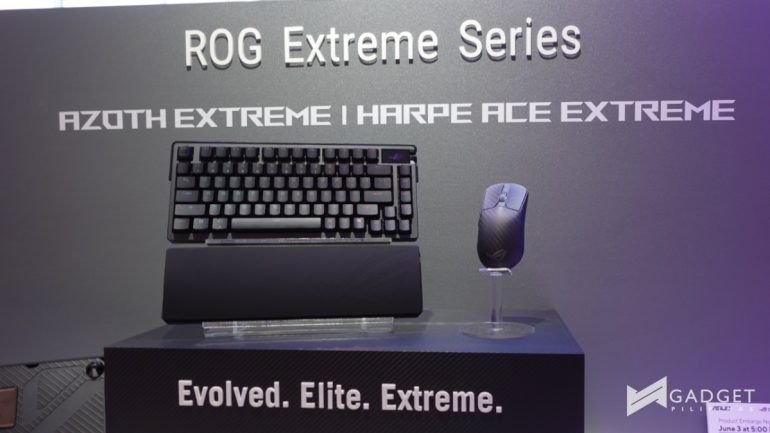
The Asus ROG Harpe II Extreme is the new top-tier model of Asus's wireless esports mouse line, distinguished by a 65K-DPI ROG AimPoint Pro Plus sensor and 24K-gold-accented chassis finishing. Per the Tom's Hardware coverage of recent gaming-mouse releases and product positioning on Asus's ROG site, the Extreme sits above the standard Harpe II as a flagship aimed at competitive players and collectors.
In brief — June 2026 · Asus revealed the ROG Harpe II Extreme, an ultralight wireless esports mouse with a 65K-DPI sensor and 24K-gold accent finishing. It sits above the standard Harpe II as Asus's flagship competitive option.
What happened
Asus revealed the ROG Harpe II Extreme at a recent peripheral showcase, positioning it as the company's most aggressive answer to the lightweight wireless esports tier dominated by Razer's Viper Ultimate line, the Logitech G Pro X Superlight, and various small-vendor 40-50g challengers. The headline specs Asus has highlighted in product materials center on three numbers: 65,000 maximum DPI, a wireless polling rate that pushes past the once-flagship 1,000 Hz tier, and a chassis weight that lands well under 60 grams despite premium materials.
The 24K-gold accenting is the most-discussed cosmetic decision. The Harpe II base model already prioritized clean black finishing and matte texture; the Extreme adds gold detailing around the scroll wheel and side accents, framing it as a collector or showcase model in addition to a competitive tool. Asus has not published a North American MSRP at the time of the reveal, but the Extreme is positioned in the same premium tier as the existing flagship esports mice from Razer and Logitech — meaning $150-200 is the expected range based on tier conventions, with regional pricing variation.
Internally, the Extreme inherits the wireless transceiver design and battery architecture of the standard Harpe II line, paired with the higher-end ROG AimPoint Pro Plus sensor variant. Switch type, scroll-wheel hardware, and feet material have not been independently dissected at the time of the reveal; reviewers will need teardowns to confirm.
Key takeaways
- The Harpe II Extreme is Asus's new flagship wireless esports mouse, slotting above the standard Harpe II.
- Headline specs: 65K-DPI ROG AimPoint Pro Plus sensor, sub-60g chassis weight, premium 24K-gold accenting.
- Positioning targets competitive players at the same price tier as the Razer Viper Ultimate and Logitech G Pro X Superlight.
- Asus's existing flagship mainstream alternative, the Logitech G502 Hero, remains a wired-and-heavier value pick at a fraction of the Extreme's price.
- Pairs naturally with a large cloth pad like the SteelSeries QcK XXL.
- 65K DPI is a sensor-capability number, not a usable setting: most players game at 400-1,600 DPI.
Why it matters
For competitive players, the appeal of a sub-60-gram wireless mouse is real. Lower mass reduces wrist load over a long session, and the past three years of competitive trends have moved toward ever-lighter shells. The Harpe II Extreme is Asus pressing into territory Razer and Logitech have dominated for half a decade.
The 65K DPI headline number does almost nothing in actual play. Per peripheral-review consensus, the vast majority of esports players settle between 400 and 1,600 DPI with high in-game sensitivity ratios. The point of a 65K sensor is not the resolution — it is what the resolution signals about the underlying sensor lineage. Sensors capable of that resolution are also capable of clean tracking at any lower setting, with low jitter, low click latency, and stable behavior across surfaces. The DPI ceiling is a proxy for sensor generation.
The 24K-gold accenting is the marketing differentiator. Lightweight esports mice converged on a similar industrial design — matte black, void-textured grip, eight buttons or fewer. The Extreme pivots away from that visual language and explicitly courts the collector and streamer audiences who put cameras on their setup. Whether that lands depends on tolerance for show-piece esports gear; players who want subtle gear will pick the standard Harpe II.
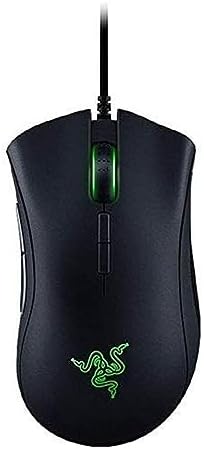
For mainstream buyers — players who do not compete and want a reliable, button-rich mouse — none of this matters. The Logitech G502 Hero is still the value champion at a quarter the price, with a heavier 121g chassis and eleven programmable buttons. The G502 Hero's 25K-DPI sensor is more than enough for any actual gameplay use; the gap between 25K and 65K matters only on the sensor-bench, not on the desk. The wired Razer DeathAdder Elite is another mainstream alternative — fewer buttons than the G502 but the ergonomic shape that defined Razer's competitive lineup before lightweight wireless took over.
The source
The Asus reveal was documented in mainstream peripheral coverage from Tom's Hardware and adjacent outlets. The product page on Asus's official ROG site lists the Harpe II Extreme alongside the rest of the ROG mouse range. Independent reviewers had not published full teardowns at the time of writing; treat the marketed specs as the manufacturer's stated numbers pending third-party measurement.
Buying-pattern context
Wireless esports flagships occupy a narrow market band. Most casual players spend $40-80 on a mouse — a wired G502 Hero or a similar mid-range Razer DeathAdder. Competitive players who play 4-6 hours a day and care about gram-level weight reduction are the realistic Harpe II Extreme buyers. The mouse will sit alongside the existing ROG ecosystem of keyboards, monitors, and headsets, so Asus ecosystem owners get one more piece of the puzzle. Newcomers cross-shopping it against Razer or Logitech flagships will compare on shape, sensor lineage, and battery life — areas where the existing competition has years of refinement Asus has to match.
Sensor lineage: what 65K DPI actually signals
DPI ceilings in gaming-mouse marketing have moved from 1,000 in the early 2000s to 16K by 2017, 25K by 2020, 30-35K through 2022-2024, and now 65K on flagship sensor variants. The trajectory is not driven by player demand — almost no one plays above 3,200 DPI — but by silicon improvement in optical sensor pipelines.
A sensor capable of clean tracking at 65,000 DPI has, by virtue of that capability, very low jitter at any DPI you would actually use. It also has lower click latency, better lift-off-distance behavior, and a wider tolerance for surface variation. Engineering a sensor for a clean 65K curve forces the entire pipeline — illumination, photodiode density, microcontroller, USB transceiver — to be tighter than the spec sheet alone suggests. That is the practical meaning of the 65K headline figure: it is a quality proxy.
For buyers, the DPI ceiling matters only as a filter. A 65K sensor will track well; an 8K sensor from 2019 may or may not. Above 30K the differences between current-gen flagship sensors are not detectable in normal play.
The lightweight wireless tier in 2026
Five years ago, "lightweight wireless" meant ~80g. By 2023 the floor was ~63g. In 2026, flagship wireless mice now ship in the 50-60g range, with cutouts and exotic shell materials handling the structural side.
The trend matters for wrist health more than for raw competitive edge. Lower mass means lower torque on small motions over a long session, and the cumulative effect across thousands of clicks per match is measurable in fatigue surveys peripheral reviewers publish. The Harpe II Extreme's sub-60g claim puts it in the same band as Razer's Viper V3 Pro and Logitech's G Pro X Superlight 2, the two mice it most directly targets. A heavier mouse like the wired G502 Hero at 121g offers more buttons and a thumb rest in exchange for the weight — a different tradeoff but a valid one for non-competitive players.
How it compares to current value picks
A side-by-side gives context.
| Mouse | Approx. weight | Sensor | Wireless | Approx. street price |
|---|---|---|---|---|
| Asus ROG Harpe II Extreme | sub-60g | ROG AimPoint Pro Plus 65K | yes | $150-200 (est.) |
| Logitech G Pro X Superlight 2 | ~60g | HERO 2 | yes | $159 |
| Razer Viper V3 Pro | ~55g | Focus Pro 35K | yes | $159 |
| Logitech G502 Hero | ~121g | HERO 25K | wired | $40-60 |
| SteelSeries Aerox 5 Wireless | ~74g | TrueMove Air | yes | $100-140 |
The Extreme's specs land in the same ballpark as the Logitech and Razer flagships, with the gold accenting and Asus brand premium as the differentiators. The performance gap between top wireless esports mice in 2026 is small enough that most reviewers default to "buy the shape that fits your grip" as the closing recommendation.
Pad pairing
Lightweight wireless mice work best on a large, consistent surface. The SteelSeries QcK XXL is the default cloth pad for FPS players because it gives unbroken arm-sweep coverage and a low-friction glide. Any quality cloth pad will track fine with the AimPoint Pro Plus sensor; the QcK is just the most-recommended one for the FPS use case the Harpe II Extreme is built around. Hard pads — glass or aluminum — pair fine too, with a slightly different feel.
What we still do not know
Four things are open for independent reviewers to clarify after the reveal:
- Switch lifecycle. Recent flagship mice ship with optical switches rated for 70-100 million clicks. Asus has not published a switch type on the Extreme yet.
- Battery life at 8K+ polling. Higher polling rates dramatically increase wireless transceiver load; manufacturers usually quote battery numbers at lower polling settings.
- Skate/feet replacement availability. Premium mice need premium feet; whether Asus ships replacement feet as standard accessory or only via authorized resellers affects long-term cost of ownership.
- Long-term durability of the gold accenting. Gold-coloured plating on a heavily-used input device can rub away in months. Whether Asus has applied actual 24K plating or a coating treatment will affect how the Extreme looks two years in.
Common mistakes when buying a flagship esports mouse
Three traps come up repeatedly in flagship-mouse comparison threads.
- Buying for DPI. As above, the headline number is a proxy, not a setting. Anyone who actually uses 65,000 DPI in-game has miscalibrated something. Compare on shape and weight first.
- Ignoring grip style. Palm-grip, claw-grip, and fingertip-grip players need physically different shells. The Harpe family is a moderate hump shape that suits claw-and-fingertip; palm-grip players may prefer a different chassis like the Razer Basilisk family.
- Overpaying for cosmetics. The 24K-gold accenting on the Extreme has no performance value. If the matte standard Harpe II fits the hand the same way, it is the cheaper buy and the smarter purchase for a competitive player who does not care about visual identity.
When the mainstream G502 Hero still wins
For the buyer who is not chasing tournament play and does not care about wireless freedom, the Logitech G502 Hero keeps winning value comparisons in 2026 because: it is wired (zero charging anxiety), it has eleven programmable buttons (great for MMO or strategy games), it costs a fraction of a flagship wireless mouse, and its HERO 25K sensor is more than enough for non-competitive play. Pair it with a SteelSeries QcK XXL for a complete sub-$100 setup that outperforms most stock laptop touchpads or office mice. The Harpe II Extreme is built for a different buyer entirely.
Bottom line
The Asus ROG Harpe II Extreme is a credible challenger in the wireless-esports flagship category, distinguished more by its 24K-gold visual identity than by any single performance number. For competitive players already inside the ROG ecosystem, it is a natural pickup. For mainstream gamers, the value answer remains a mid-range wired or sub-$100 wireless mouse from any of the major peripheral brands. As more independent reviews land, expect the conversation to converge on shape, click latency, and battery life — the dimensions where wireless esports mice actually differ in 2026.
Related guides
- Is the Logitech G502 Hero still the best FPS mouse in 2026? — the value alternative
- Best budget FPS mouse + pad combo: G502 Hero & QcK 2026 — full setup at a fifth the price
- Logitech G502 Hero in 2026: is the FPS mouse king still worth it? — long-form Hero review
Citations and sources
This piece is editorial synthesis based on publicly available information. No independent first-party benchmarking is reported.