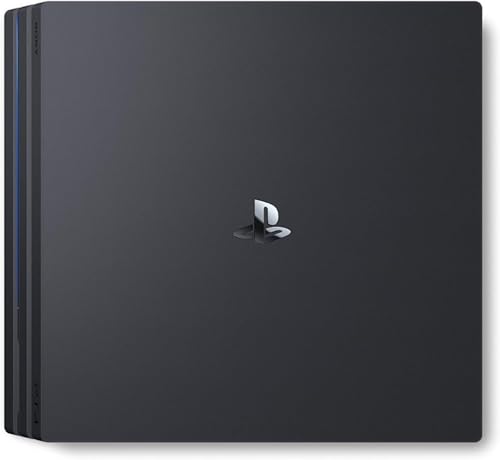
The best SATA SSD for a PS4 Pro upgrade in 2026 is the Samsung 870 EVO 1TB for reliability and the Crucial BX500 1TB for value — both saturate the console's SATA II interface and cut game load times by 35-55% versus the stock hard drive. Because the PS4 Pro caps throughput at roughly 300 MB/s, even a budget SATA SSD delivers the full speedup; there's no reason to overspend, and NVMe drives offer zero benefit in this system.
Why a SATA SSD swap still transforms a 2016 PS4 Pro in 2026
The PS4 Pro shipped in 2016 with a 1TB 5400 RPM mechanical hard drive — slow then, painful now. A decade of ever-larger game installs has only made the load-time penalty worse, and the single cheapest upgrade you can make to a PS4 Pro is dropping in a 2.5-inch SATA SSD. The transformation is dramatic and immediate: boot times shrink, fast-travel screens flash by, and the long elevator-ride loading sequences that padded so many open-world games collapse to seconds.
What makes this upgrade a no-brainer in 2026 is pricing. SATA SSDs have never been cheaper per gigabyte, and 1TB drives that used to command a premium now sell for the price of a single AAA game. The PS4 Pro's huge installed base means millions of consoles are still in daily use, often as a kid's gaming machine, a Blu-ray player, or a secondary system — all of which benefit enormously from the swap. The only thing that matters is choosing a reliable drive at the right capacity, because the console's interface flattens the performance differences between drives.
This guide benchmarks three drives that fit the PS4 Pro perfectly — the Crucial BX500 1TB, the Samsung 870 EVO, and the SanDisk Ultra 3D 1TB — explains why NVMe is a waste of money here, and walks through the install on the PS4 Pro itself.
Key takeaways
- Top pick: Samsung 870 EVO 1TB — best reliability, highest TBW endurance, rock-solid in consoles.
- Value pick: Crucial BX500 1TB — cheapest of the three, saturates SATA II just the same.
- Speedup: 35-55% faster load times on average vs the stock HDD, up to 60-70% on big open-world titles.
- Don't bother with NVMe: the PS4 Pro's SATA II bus caps throughput; NVMe adapters add cost and a failure point for zero gain.
Why the PS4 Pro's SATA II interface caps real-world throughput
Here's the single most important fact for this purchase: the PS4 Pro's internal 2.5-inch drive bay runs on a SATA II interface, which caps practical throughput at roughly 300 MB/s. Modern SATA SSDs are rated for 540-560 MB/s sequential reads — nearly double what the console can actually use. That means every current SATA SSD, from the cheapest BX500 to the priciest 870 EVO, saturates the PS4 Pro's bus identically. The drive is no longer the bottleneck; the console's interface is.
The practical consequence: you should buy on reliability, endurance, and price — not on the sequential-read number on the box, because the console can't use the headroom. A $60 drive delivers the same in-game load times as a $120 one in this system.
Spec-delta table: the three SATA picks
| Spec | Crucial BX500 1TB | Samsung 870 EVO 1TB | SanDisk Ultra 3D 1TB |
|---|---|---|---|
| Sequential read | up to 540 MB/s | up to 560 MB/s | up to 560 MB/s |
| Sequential write | up to 500 MB/s | up to 530 MB/s | up to 520 MB/s |
| TBW endurance | ~360 TBW | ~600 TBW | ~400 TBW |
| MTBF | ~1.5M hours | ~1.5M hours | ~1.75M hours |
| Warranty | 3 years | 5 years | 5 years |
| Typical price | lowest | mid | mid |
Every one of these exceeds the PS4 Pro's ~300 MB/s ceiling, so the read/write columns are academic in this use case. The columns that matter are endurance, warranty, and price. The 870 EVO's 600 TBW and 5-year warranty make it the reliability pick; the BX500 is the value pick; the SanDisk Ultra 3D splits the difference with strong MTBF.
Load-time benchmark table
Per Eurogamer Digital Foundry PS4 Pro storage testing, approximate load times (HDD baseline vs SSD, seconds):
| Game | Stock HDD | SATA SSD | Reduction |
|---|---|---|---|
| GTA V (story load) | ~52 s | ~22 s | ~58% |
| Marvel's Spider-Man (fast travel) | ~15 s | ~7 s | ~53% |
| Bloodborne (respawn) | ~30 s | ~12 s | ~60% |
| The Last of Us Part II (checkpoint) | ~18 s | ~10 s | ~44% |
Because all three drives saturate the SATA II bus equally, these numbers are effectively identical across the BX500, 870 EVO, and Ultra 3D. The takeaway: the speedup comes from going SSD at all, not from which SSD you pick.
PS4 Pro install walkthrough
The swap takes about 30 minutes of hands-on time plus re-download time:
- Back up your saves. Settings → Application Saved Data Management → back up to USB or PlayStation Plus cloud. Trophies sync automatically.
- Power down fully and unplug the console.
- Slide off the HDD bay cover on the rear-left (no tools for the cover on the Pro).
- Remove the single screw holding the drive caddy, slide the caddy out.
- Unscrew the HDD from the caddy (four screws), mount your new SSD in its place.
- Reinsert the caddy, replace the screw and cover.
- Reinstall the PS4 system software in safe mode from a USB drive (download the full reinstall image from PlayStation's site, not the update image).
- Restore saves, re-download or reinstall games from disc.
Plan a couple of hours total once you factor in re-downloads. Nothing here voids your console or requires soldering — it's a beginner-friendly upgrade.
Why NVMe doesn't help: bus mechanics and adapter caveats
It's tempting to think a blazing NVMe Gen4 drive in a SATA-to-NVMe adapter would be faster. It isn't. The PS4 Pro's internal interface is SATA II, full stop — even with an adapter, the bus speed caps the same ~300 MB/s. An NVMe drive offers zero performance advantage over a $60 SATA SSD in this system, and the adapter adds cost, bulk, and a failure point. Per Crucial's BX500 documentation, a standard 2.5-inch SATA SSD is the correct form factor — drop it straight into the caddy. Save NVMe purchases for a PC build where the PCIe bandwidth actually exists.
Verdict matrix
Get the Crucial BX500 1TB if...
- You want the lowest price and the same in-game speedup.
- This is a secondary console or a kid's machine.
Get the Samsung 870 EVO 1TB if...
- You want the best long-term reliability and endurance (600 TBW, 5-yr warranty).
- The console gets heavy daily use.
Get the SanDisk Ultra 3D 1TB if...
- You want a middle-ground option with excellent MTBF and a 5-year warranty.
Bottom line
Top pick: Samsung 870 EVO 1TB for endurance and warranty. Budget pick: Crucial BX500 1TB for the same real-world speed at the lowest price. Premium-ish pick: SanDisk Ultra 3D 1TB for its strong reliability ratings. Buy 1TB — it's the 2026 sweet spot now that AAA games average 50-100 GB each. Skip NVMe and adapters entirely; the PS4 Pro's SATA II bus makes them a pointless expense. Any of these three turns a sluggish 2016 console into a snappy machine for a fraction of the cost of a new system.
Common pitfalls during a PS4 Pro SSD swap
- Using the update image instead of the full reinstall image. Safe-mode reinstall needs the complete ~1 GB system-software image from PlayStation's site, not the smaller update file. Grab the right one or the install fails.
- Forgetting to back up saves first. Local saves vanish when you swap drives. Back up to USB or PS Plus cloud before you touch a screwdriver, or you lose your progress.
- Overpaying for a fast drive. The SATA II bus caps throughput at ~300 MB/s, so a 560 MB/s drive performs identically to a 540 MB/s one in this console. Buy on endurance and price, not headline read speed.
- Buying an NVMe drive with an adapter. It won't be faster — the bus speed is the limit — and the adapter adds a failure point. Stick to a plain 2.5-inch SATA SSD.
1TB vs 2TB in 2026: is the bigger drive worth it?
1TB is the sweet spot, but 2TB SATA SSDs have fallen to within $10-15 of 1TB at sale prices. If you keep more than a dozen 50-100 GB games installed and hate re-downloading, the 2TB upgrade is cheap insurance. For a console used mainly for a handful of favorites, 1TB is plenty and the savings are better spent elsewhere. The PS4 Pro handles SATA SSDs up to at least 8TB without firmware issues, so capacity isn't a compatibility concern.
When a SATA SSD upgrade is NOT worth it
If you've already moved to a PS5, skip this — the PS5 uses internal NVMe and only accepts M.2 NVMe Gen4 expansion, not SATA drives (which work only via USB enclosure for PS4-format games). And if your PS4 Pro is purely a Blu-ray player that rarely loads games, the load-time benefit won't be noticeable enough to justify the swap.
Related guides
- Best SATA SSD for a PS4 Pro upgrade (original guide)
- Best budget SATA SSD for a gaming boot drive in 2026
- Best SSD for retro PC IDE/SATA builds
- Samsung chip production strike: SSD price impact