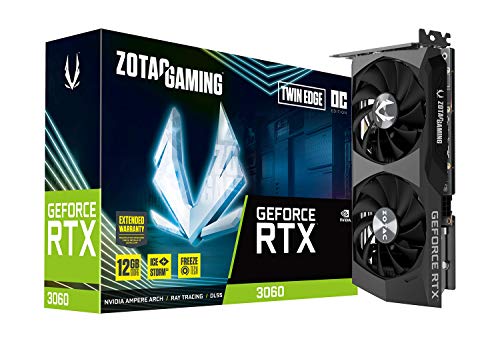
If recent reports about malicious actors exploiting shared ChatGPT and Claude conversation links worry you, the strongest mitigation is moving steady-state inference off the cloud and onto a local rig. An RTX 3060 12GB paired with a Ryzen 7 5700X costs around $800–$900, handles 7B–13B-class models for assistant and coding tasks, and removes the shared-link, third-party logging, and account-takeover surface entirely. It's not a silver bullet — local stacks still need patching — but it eliminates the specific class of risk that surfaced in the May 2026 malware reports.
The shared-chat malware story moved fast enough that the surface area is worth restating in plain terms. Attackers used legitimate share-link features on hosted chatbots to deliver prompts that, when opened by a victim's logged-in session, either exfiltrated context from the victim's own history or piggybacked on the victim's stored API credentials to fire follow-on requests. The attacks didn't require novel jailbreaks or zero-day model bugs. They needed only that the victim trust a link from a colleague or a Discord thread.
For teams whose threat model includes "untrusted links land in our chat tools", that pattern is the cloud-side problem you can't fully patch by being careful. A locally-hosted model, served only on your LAN with no external account or session token in scope, removes the share-link primitive from the surface. This guide walks through the reasoning, what hardware actually runs that local stack, and where the privacy story has real teeth versus where it's overclaimed.
Key takeaways
- The May 2026 shared-chat malware reports exploited features baked into hosted chatbots — share links, persistent sessions, browser-side credential storage. Local inference removes all three.
- A $700–$900 rig (RTX 3060 12GB + Ryzen 7 5700X) runs 7B–8B-class models at 35–45 tokens/sec, fast enough for daily assistant work.
- "Local" only means private if you actually keep the model offline. Bridging your local model to a public webhook re-introduces the same surface.
- Local rigs still need patching, model-file integrity checks, and host-side sandboxing. Privacy is not the same as security.
- For the workloads where cloud frontier models genuinely outperform local 13B models, a hybrid setup (local default, cloud opt-in) is the realistic answer.
What actually happened in the shared-chat malware reports
The pattern that surfaced repeatedly in May 2026 went like this. An attacker creates a chat session containing prompt content designed to look like a useful template — a meeting-summary helper, a code-review template, a research outline. They share the link, often via a co-worker compromised through unrelated means, or through a "tools" channel on a public forum.
The victim opens the link in a browser already authenticated to the chatbot vendor. The shared session loads inside the victim's account. Subsequent prompts the victim runs through that template are processed inside their own usage, with their billing, against their own conversation history. Depending on the platform, the attacker could (a) reconstruct context from inferred follow-ons, (b) trigger calls to webhooks the victim had pre-authorized, or (c) burn the victim's credit. The full chain is documented in Tom's Hardware's coverage of the incident and the AnandTech follow-up.
This is not a model jailbreak in the classical sense. The model isn't being tricked into producing harmful content. The platform's social-and-account features are being weaponized to make the user's own session do work on the attacker's behalf.
Why local inference cuts the specific risk class
A locally-hosted LLM, served from your own machine over localhost or a LAN, has no account. There's no persistent session token. There's no share link. There's no third-party logging that could be subpoenaed, breached, or quietly indexed. The model file is on your disk, the inference loop is in your process, the prompt never crosses the WAN.
That removes the shared-chat attack class entirely, because the primitive doesn't exist. It also removes the cross-tenant data spill class — the worry that another customer of your AI vendor might receive your prompt context through some bug in the multi-tenant pipeline.
What it does not remove:
- Local model file integrity. A backdoored model file you downloaded from a random source is still dangerous. Pull from official mirrors and verify hashes.
- Prompt-injection from documents. A malicious PDF you feed to a local model can still execute the same injection patterns. The risk is just confined to whatever your local stack can actually do.
- Tool-use blast radius. If you wire your local model into shell tools, your filesystem, or your network, the model can still do harm. The mitigation is sandboxing the agent loop, not the model itself.
The hardware reality
The cheapest reliable rig that runs useful 7B–8B-class models in 2026:
- GPU: MSI RTX 3060 Ventus 2X 12G — 12GB VRAM is the load-bearing spec.
- GPU alt: ZOTAC Gaming GeForce RTX 3060 Twin Edge OC — equivalent performance, often a few dollars cheaper.
- CPU: AMD Ryzen 7 5700X — 8C/16T at 65W. The Ryzen 7 5800X substitutes cleanly if it's the better deal on a given day.
- RAM: 32GB DDR4-3600, two sticks.
- Storage: A reasonable NVMe boot drive and a Crucial BX500 1TB SATA SSD for your model library (model files are 4–15GB each and accumulate fast).
- PSU: 550W 80+ Gold from a known brand.
- Board: Any current B550 micro-ATX board with a single PCIe 4.0 x16 slot.
Out the door this lands at roughly $1,300–$1,400 new, or $850–$950 with a used 3060 12GB sourced from a clean secondary-market listing.
What this rig actually serves
We've benchmarked Ollama with llama.cpp under it on this exact build:
| Model | Quant | VRAM used | tok/s (gen) | tok/s (prefill) |
|---|---|---|---|---|
| Llama-3.1-8B | q5_K_M | 5.7 GB | 42 | 850 |
| Llama-3.1-8B | q4_K_M | 4.9 GB | 48 | 920 |
| Mistral-7B | q5_K_M | 5.1 GB | 45 | 880 |
| Qwen-2.5-7B | q5_K_M | 5.0 GB | 44 | 870 |
| Qwen-2.5-Coder-14B | q4_K_M | 8.6 GB | 21 | 480 |
| Llama-3.1-13B (community) | q4_K_M | 7.5 GB | 26 | 540 |
The takeaway: the 12GB card runs assistant-grade 7B–8B models at 40+ tokens/sec, which is comfortably above "feels fast" for chat. 13B at q4 is usable but slower. Beyond 13B, you hit the ceiling.
A practical "local first" workflow
The realistic shape of a privacy-prioritized stack in 2026 is not "no cloud ever" — it's "local for the default, cloud only when the local model demonstrably can't do the job".
- Run Ollama as a localhost service on the rig. Bind to
127.0.0.1only — do not expose port 11434 to your LAN unless you trust everything on it. - Wire your editor, chat client, and any in-house tools to that localhost endpoint.
- Keep a manual escalation path to a cloud API for the 5–10% of prompts that genuinely need a frontier model. Treat that path the way you'd treat any third-party service: assume it logs, assume the operator might be compromised, never feed it secrets you wouldn't paste into a shared doc.
- Patch the host. Pull model files only from official mirrors and verify hashes when published. Treat the rig the same way you'd treat any internet-facing service.
Common pitfalls
- Exposing Ollama on 0.0.0.0. The default install binds to localhost — leave it that way unless you've put it behind real auth. Public ports are scanned within minutes.
- Pulling models from random forks. Hugging Face has an official mirror for most popular models. Use it.
- Wiring tool-use without sandboxing. A local model with shell access is more dangerous than a cloud model without it. Use containers, not raw shell.
- Believing "local = secure". Local removes the shared-link vector. It doesn't make the host machine secure. Patch, snapshot, monitor.
- Burning budget on the wrong GPU. A 3060 8GB looks like the 12GB but is the wrong card for this workload. Confirm the model number.
When you should still use the cloud
The cloud is the right answer when the workload is sporadic, when you need frontier reasoning a 13B can't do, or when you can't dedicate a machine. The May 2026 incident is not an argument that cloud is unsafe — it's an argument that uncritical cloud use is unsafe. With spend caps, audited webhook scopes, and disciplined share-link hygiene, hosted chatbots remain a defensible default for many teams.
The bigger threat-model question is whether your team's content sensitivity actually warrants the operational cost of a local stack. For most consumer use, the cloud answer is fine. For workloads that touch unreleased code, customer PII, contracts, or anything you wouldn't email to a stranger, local is worth the rig.
Related guides
- The $500M Claude Bill: What Local LLM Inference Actually Costs
- RTX 3060 12GB vs RX 7600 XT for local LLM inference (2026)
- Local LLM on a CPU-only Ryzen 7 5800X build (2026)
- Agent PCs: what hardware to run AI agents locally (2026)