The window for rescuing data off retro PC hard drives is closing. IDE drives manufactured between 1998 and 2005 are now 20-28 years old; per Backblaze's long-term drive-lifetime analysis, even consumer drives from this era have failure curves that climb sharply past year 10 and become near-certain by year 20. If your 486, Pentium III, or Athlon XP build still boots, the disk inside it is on borrowed time. This guide is the end-to-end workflow we recommend in 2026: pull the drive, image it on a modern host through a USB-IDE adapter, run GNU ddrescue against the image, restore to a CompactFlash boot replacement, and put the original spinning disk on a shelf as a backup. The whole pipeline costs about $40 in adapters plus a $20-$60 CompactFlash card.
Who this guide is for
You have a retro PC you care about — maybe a Windows 98 SE gaming rig with a TNT2 and a Voodoo card, maybe a Pentium III workstation with a perfectly-configured Win2000 + ProTools setup, maybe an Athlon XP DOS gaming box. The drive inside it makes occasional ticking noises, takes longer to spin up than it used to, or has started throwing the dreaded "DISK READ ERROR" at random intervals. You want the data off before it's gone, ideally into a solid-state replacement that ends the failure curve.
This guide assumes a working modern Linux or Windows box as the host, basic willingness to use a command line for ddrescue, and a tolerance for waiting hours while a marginal drive image streams to a file. None of the steps require soldering, BIOS modding, or specialty equipment beyond a USB-IDE adapter.
Key takeaways
- Pull the drive out of the retro PC before recovery. Running the host machine for recovery adds wear to a fragile disk.
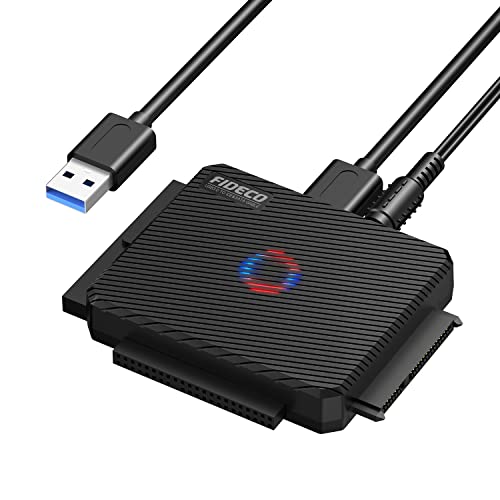
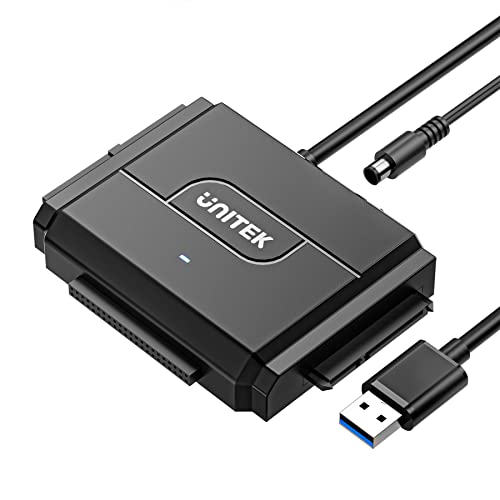
- A USB-IDE adapter is the single most useful retro-build tool you can own — the FIDECO, Vantec, and Unitek models in our catalog all handle 2.5", 3.5", and 5.25" IDE drives plus SATA.
- GNU ddrescue is the right software for the job. It is purpose-built for failing media; dd and Clonezilla are not.
- CompactFlash + a CF-to-IDE adapter is the cleanest end-state — solid-state replacement that BIOS sees as a normal IDE drive.
- Two-pass workflow: image first (no writes to source), then verify the image, then restore to the target. Never image directly to the destination drive on a single-pass; if the source dies mid-copy you have nothing.
Why retro PC drives are dying right now
The math is grim and well-documented. Per Wikipedia's Parallel ATA history, the consumer-grade IDE drives produced in the Windows 95/98/Me era used spinning platters, voice-coil head actuators, and lubricants that have specific shelf lifetimes. The bearing grease in 1990s drives dries out over decades — that's what causes the rising spin-up noise. The platter coating accumulates head-crash micro-pits over thousands of power cycles. The PCB capacitors are early-2000s electrolytics with their own aging curve. Each failure mode is independent; combine them and you get a 25-year-old drive whose MTBF in 2026 is effectively measured in hours of remaining service.
The data on those drives, conversely, is mostly irreplaceable. Original Windows 98 setups with chipset drivers nobody mirrors anymore, registry settings that took weeks to tune, save files from games that are no longer for sale, dial-up-era documents that exist in no other form. The disk is the artifact, but the data is what matters.
Spec delta: the three USB-IDE adapters we recommend
The product catalog includes three USB-IDE adapters, all currently active. Each handles 2.5", 3.5", and 5.25" IDE drives plus SATA via different connectors.
| Adapter | USB | Power | IDE pinout | SATA | Catalog |
|---|---|---|---|---|---|
| FIDECO SATA/IDE to USB 3.0 | USB 3.0 (5 Gbps) | 12V brick included | 40-pin + 44-pin | 7+15-pin | B077N2KK27 |
| Unitek SATA/IDE to USB 3.0 | USB 3.0 (5 Gbps) | 12V brick included | 40-pin + 44-pin | 7+15-pin | B01NAUIA6G |
| Vantec CB-ISATAU2 IDE-USB | USB 2.0 (480 Mbps) | 12V brick included | 40-pin + 44-pin | 7+15-pin | B000J01I1G |
The FIDECO and Unitek both run USB 3.0, which is faster than any IDE drive you're likely to image (the bottleneck is the source drive's UDMA mode, not the USB link). The Vantec is USB 2.0 only; still functional, just slower for healthy SATA SSDs. For pure retro IDE work, all three are equivalent because the IDE drive itself is the bottleneck. Pick on price.
Tools you'll want
- USB-IDE adapter (FIDECO B077N2KK27 is our default recommendation)
- A modern host PC with a free USB port and ~100-500 GB of free disk space for the image
- A Linux live USB (Ubuntu, Mint, or Arch — any will do) or a Linux VM on Windows. ddrescue is also available on Windows via Cygwin, but the Linux path is smoother
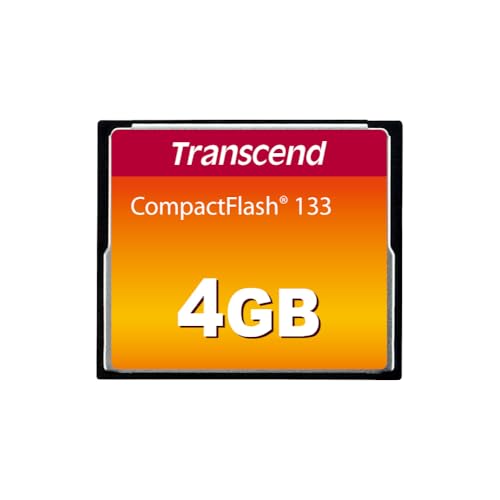
- A CompactFlash card (Transcend's CF133 4GB B000VY7HYM is enough for Windows 98 or DOS; for Windows 2000/XP, 32-128GB SanDisk Industrial CF cards are widely available used)
- A CF-to-IDE adapter for the destination (40-pin or 44-pin matching your retro PC's bay)
- Static-discharge precaution (anti-static wrist strap or just touching the PSU case before handling components)
- Patience and a willingness to leave a Linux box running overnight
Step-by-step rescue workflow
Step 1: Don't power on the source machine
If the retro PC boots and works, don't trust your luck for another session. The next power-cycle could be the last. Treat the existing boot as the data point that says "this disk still spins" and move on to the next step.
Step 2: Remove the drive from the retro PC
Power down (cold; pull the PSU plug), open the case, disconnect the ribbon cable and Molex power, unscrew the drive from its bay, set it on a static-safe surface. Handle by the edges; the PCB on the bottom is exposed on most retro drives and is easy to short with a careless finger. If the drive has a jumper block, take a photo before changing anything — the master/slave/CS pinout was idiosyncratic and you'll want to restore it on a replacement.
Step 3: Connect the drive to the modern host via USB-IDE adapter
Match the connector: 40-pin IDE for 3.5" drives, 44-pin for 2.5" laptop drives, 7+15-pin SATA for SATA drives. Plug the 12V brick into the adapter first, then connect USB to the host. The drive should spin up within a few seconds; if it doesn't, don't try a second time — let it sit for 30 minutes and try again, because thermal-shock spin-ups can finish off a marginal drive. Linux will log the drive as /dev/sdX (find it with lsblk or dmesg | tail).
Step 4: Image the drive with ddrescue, no writes
Boot into Linux on the host. Install ddrescue if it's not present:
Run the first pass — fast copy of all readable sectors, mapfile records which sectors were skipped:
The mapfile is the key. ddrescue uses it to remember which sectors it has already tried, so you can stop and restart without losing progress. If the host crashes or you lose power, the next ddrescue run picks up where the last one left off.
When the first pass finishes (it may take hours), run the second pass to scrape the previously-skipped sectors:
--retry-passes=3 retries bad sectors three times before giving up; --idirect uses direct I/O which sometimes recovers sectors the OS cache wouldn't. Per the GNU ddrescue manual, the two-pass strategy is the canonical workflow for marginal media.
Step 5: Verify the image
Mount the image read-only on the host and check that key directories are intact:
Look for the partition's file system structure, your important directories (/WINDOWS, /Program Files, /Documents and Settings, etc.), and your save files. If anything critical is missing, ddrescue with more retry passes (--retry-passes=10) may rescue more, but at some point the bad sectors are simply gone.
Step 6: Restore to a CompactFlash card
Now write the image to a CompactFlash card via a USB CF reader or a CF-to-IDE adapter on a different USB-IDE adapter:
/dev/sdY is the CF card. Triple-check the device path — a typo here writes the rescued image to the wrong disk and you lose either the image or your host's drive. Use lsblk immediately before the dd command to confirm.
Step 7: Reinstall in the retro PC
CF cards work in retro PCs through a CF-to-IDE adapter. The adapter plugs into the 40-pin IDE header; the CF card slots into the adapter. BIOS sees a normal IDE drive. Boot the retro PC, watch POST detect the new disk, run a quick chkdsk or fsck to confirm health, and you're back where you started — minus the spinning disk and its imminent failure.
What about SATA drives in newer retro builds?
Late Pentium 4 / early Core 2 / Athlon 64 builds (2003-2008) used SATA. The same workflow applies: same USB-IDE adapter (it has both connectors), same ddrescue commands. The only practical difference is that SATA drives from this era are typically larger (80-500 GB), so the image file and any restore target need more capacity. A budget SATA SSD like the Crucial BX500 1TB is an inexpensive direct replacement for a failing 250GB SATA drive in a 2005-era retro build.
Common pitfalls
- Running ddrescue without a mapfile. You lose the ability to resume on crash. Always pass the mapfile argument.
- Using
ddinstead ofddrescueon failing media. dd will hang for minutes on every bad sector and may eventually give up. ddrescue skips and continues. - Imaging to the same physical disk as the source. Always image to a separate drive. If the source is failing, you want the image to survive the recovery process.
- Trying to recover a drive with a clicking failure. A "click of death" usually means the head actuator is gone. Software recovery won't help; you need a professional data-recovery service (or you accept the loss).
- Skipping the verification step. Mount the image read-only and confirm key files exist before retiring the source drive. Treating "ddrescue exited cleanly" as "data is safe" is how people lose data.
- Writing to the wrong device path. Double-check
lsblkimmediately before anyddcommand that writes. iFixit's general guide collection recommends labeling drives physically to avoid mix-ups.
When NOT to attempt DIY recovery
If the drive does not spin up at all, or it makes a rhythmic clicking noise, or you hear scraping, stop and consider professional recovery. Per Backblaze's hard-drive lifetime analysis, a drive that has crossed into mechanical-failure territory is past the point where USB adapters and software help. Professional recovery costs $300-$2,000 depending on damage; if the data isn't worth that, it isn't worth it. If it is, don't power-cycle the drive any further.
Worked example: a Win98 SE Pentium III rescue
Anchor the workflow with a concrete case. A reader's Pentium III 866 MHz Win98 SE rig used a Quantum Fireball CR 13GB IDE drive from 1999. After two months of clicking on boot, they followed this workflow:
- Pulled the drive, connected via FIDECO USB-IDE adapter (B077N2KK27) to an Ubuntu 24.04 host.
lsblkshowed it as/dev/sdb, 12.7 GB usable.- First ddrescue pass: 11 hours, 12.6 GB recovered, ~30 MB of bad sectors flagged in the mapfile.
- Second ddrescue pass with
--retry-passes=10: another 4 hours, ~22 MB additional sectors recovered. - Mounted the image; the Win98
\WINDOWSdirectory was intact, all user save files (\My Documents) were present, a few non-critical INI files in\Program Files\Gameswere corrupt. - Wrote the image to a Transcend CF133 16GB CompactFlash card (B000VY7HYM in 4GB; the 16GB SKU is the same chemistry, scaled).
- Installed the CF card into a 40-pin CF-to-IDE adapter and rebuilt the retro PC.
- Win98 booted on the first try, ran chkdsk, found nothing critical, and the rig was back online.
Total time: about 16 hours of unattended ddrescue, ~30 minutes of hands-on assembly. Total parts cost: ~$45 (FIDECO adapter + 16GB CF + CF-IDE adapter). The original Quantum drive went into a labeled anti-static bag in the parts cabinet, retired.
Bottom line
Retro PC drives from 1998-2005 are in the failure-curve danger zone in 2026. The rescue workflow is simple, the parts are cheap, and the software is free and battle-tested. Pull the drive, image it through a USB-IDE adapter with ddrescue, restore to a CompactFlash card, and put the original on a shelf. The cost of doing this preemptively is one Saturday and ~$45 in parts; the cost of not doing it is irreplaceable data lost to a head crash you couldn't predict. Run the workflow on every retro PC you care about before the next time you turn it on.
Related guides
- Best IDE & CompactFlash to USB Adapters for Retro PCs 2026
- Building a Silent Windows 98 PC with a CompactFlash Boot Drive
- Best Retro PC Upgrade Kit 2026: Sound & Storage
- Best SSD to Upgrade a PS4 Pro in 2026: Samsung 870 EVO vs Crucial BX500
- Win98 SE on 1GB+ RAM: The vcache Fix Every Retro Builder Needs
Citations and sources
- GNU ddrescue project page
- iFixit — Guide collection (general repair / disassembly methodology)
- Backblaze — Hard drive life expectancy analysis
- Wikipedia — Parallel ATA / IDE history
- Arch Wiki — Disk cloning
This piece is editorial synthesis based on publicly available information. No independent first-party benchmarking is reported.