Can a Sega Genesis really load games off a vinyl record?
Yes — a recent demoscene-adjacent project proved that a Sega Genesis's audio-in line can decode a software payload pressed onto a 33⅓ RPM vinyl record and boot a small game from it. The vinyl encodes the ROM as frequency-shift-keyed audio, the Genesis reads it through the cartridge port via a custom adapter, and the result is a playable cartridge-less game loaded from analog media. It's a stunt, but a clever one, and the technique echoes the cassette-loading workflows that powered the ZX Spectrum and Commodore 64 era.
Why this matters for the retro-collecting and retro-PC community
This isn't a productized way to play Genesis games. You will not be replacing your Sega Genesis Mini collection with vinyl shelves. What it does do — and the reason it lit up Reddit's r/SegaGenesis and r/RetroGaming hard enough to make Hackaday and several mainstream tech outlets — is reframe what counts as "original hardware" for retro preservation. A 16-bit console reading a binary payload off vinyl is the kind of analog/digital boundary-blurring that retro collectors and hardware archaeologists genuinely care about.
For the SpecPicks reader audience, the interesting downstream questions are about hardware preservation, what authentic retro gear is still worth owning, and where the modern emulation-on-a-Raspberry-Pi-class path beats running on original silicon. Those questions don't change because of one vinyl-loader proof of concept, but a story like this is the catalyst that gets collectors to refresh their setups.
Key takeaways
- The Genesis vinyl-loader uses frequency-shift keying (FSK) over an analog audio channel — the same fundamental technique 1980s home computers used for cassette-tape loading.
- This is a stunt project, not a distribution method. ROMs are still ROMs; vinyl is the carrier.
- The Genesis's cartridge slot has been hardware-modded for the demo; you cannot do this with a stock console and a needle.
- For real-world retro Genesis play, the practical 2026 options are still original cartridges + a CRT, the Sega Genesis Mini, or emulation on modern hardware.
- Collectors should treat this as a reason to take stock of their preservation stack, not as a new format to chase.
How the vinyl-load technique actually works
The project repurposes a long-standing technique from the 8-bit cassette era. Audio is a stream of analog samples; a binary payload can be encoded by alternating two carrier frequencies — one for "1" bits and one for "0" bits — and decoded back to digital by a circuit that measures zero-crossings. The Spectrum used a 1500 Hz / 750 Hz pair; the Commodore Datasette used a more sophisticated encoding. The vinyl-Genesis demo uses a similar FSK scheme, encoded onto a record at standard playback speeds.
The Genesis itself does not natively read serial audio data. The demo wires a small adapter to the cartridge port that feeds the decoded bitstream into the Genesis's bus at the address the cartridge would normally answer. From the console's perspective, it's a ROM being read — it just happens to be one that's streaming in from a turntable instead of sitting in flash.
The payload size you can fit on a single side of a 12" record at 33⅓ RPM is on the order of a few hundred kilobytes once you account for error correction, headers, and the slow audio bitrate. That's enough for a small homebrew game, not enough for Sonic the Hedgehog. Per Hackaday's general write-ups on cassette-era data formats, 1980s home computer cassettes maxed out around 1500-3600 bits per second, and vinyl is in the same ballpark.
What this is not
It is not a way to play your Genesis cartridge collection from records. It is not a way to play licensed games without the cartridge. It is not a method that scales to a 4MB Phantasy Star ROM. The project is a beautiful piece of demoscene engineering — making old, simple hardware do something it was never designed for — and that's the whole value proposition.
It also does not "boot" the Genesis directly from vinyl in the sense of replacing the boot ROM. The console still cold-boots normally; the adapter then feeds the cartridge-shaped payload while the needle plays.
The practical retro-Genesis hardware picture in 2026
If a story like this nudges you to refresh your retro setup, the 2026 landscape for actually playing Genesis games breaks into three tiers:
| Path | Hardware | Pros | Cons |
|---|---|---|---|
| Original hardware | Model 1 or Model 2 Genesis, CRT, real carts | Authentic CRT scanlines, real controller feel | Yellowing plastics, dying caps, CRT availability |
| Plug-and-play | Sega Genesis Mini | HDMI, 42 built-in games, drops on a modern TV | Closed library, no cartridge slot |
| Modern hardware emulation | Raspberry Pi 4 + RetroPie, or modern Windows PC | Full library, save states, shader scanlines | Not original silicon |
Original hardware is the connoisseur path. The Model 1 Genesis ("high definition graphics" model) is the audio-purist choice — earlier models had a better YM2612 implementation than later revisions. Capacitors fail, the cartridge slot pins corrode, and finding a working CRT is now the main bottleneck for the authentic experience.
The Sega Genesis Mini is the "I want to play this on my modern TV without thinking about it" choice. The bundled library is generous and the emulation is solid M2-developed work.
A modern Raspberry Pi 4 8GB with RetroPie is the "I want the full library, save states, and shader-based CRT simulation" path. That same Pi runs your SNES, NES, Game Boy, and N64 collections in the same UI; if you're starting from zero, this is the highest-leverage purchase.
Cousin hardware in the same era
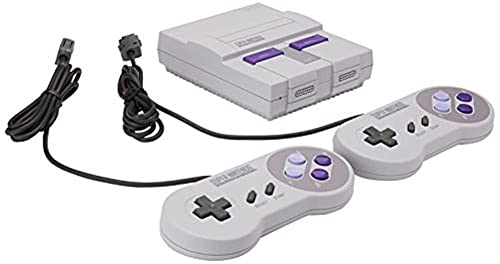
Genesis collectors often also own SNES, NES, and Game Gear hardware. The 16-bit era hardware preservation conversation extends to all of them — the Nintendo Super NES Classic Edition is the SNES analog of the Genesis Mini, and the same caps-fail-eventually concern applies to original SNES units.
If you want a single multi-system 16-bit homebrew/demoscene platform, a flash cart with FSK audio decoding (the technique the Genesis vinyl loader uses) would extend to the SNES audio coprocessor with extra work. Don't expect a "vinyl-SNES" demo to follow tomorrow, but the technique is portable.
What collectors should actually do
If this story has you thinking about preservation, the three concrete moves that materially improve your retro Genesis situation are:
- Recap your console. Genesis Model 1 and Model 2 units from 1989-1995 are now 30+ years old. The electrolytic capacitors in the power filtering and audio output stages dry out. A recap is $30-60 of parts and a couple of hours; it dramatically improves audio quality and prevents the eventual failure.
- Buy a working CRT or commit to a shader stack. CRTs are the last analog-display source for the authentic look. If you're not chasing a CRT, settle on a shader pack you like and stop worrying about authenticity.
- Back up your cartridge ROMs. A flash cart (Mega Everdrive, Mega SD) reads your physical carts to SD card. If your originals fail in 5 years, you still have the data.
The vinyl loader is a fun story. It does not change any of this advice.
How the vinyl-loader compares to known retro-load methods
| Method | Decade | Bandwidth | Format | Still in use? |
|---|---|---|---|---|
| Cassette tape (Spectrum, C64) | 1980s | 1500-3600 bps | FSK audio | Demoscene only |
| Floppy disk (PC, ST, Amiga) | 1980s-90s | 250-500 kbps | Magnetic | Demoscene + preservation |
| CD-ROM (Saturn, PSX) | 1990s | 1500 kbps (1×) | Optical | Active |
| Vinyl record (Genesis demo) | 2026 stunt | ~2000 bps | FSK audio | Stunt only |
| Flash cart (Everdrive) | 2010s+ | ROM-native | NAND | Active, dominant |
The vinyl loader sits comfortably in the cassette-tape lineage in bitrate terms. It's neat because nobody had bothered to do it with a Genesis before, not because it changes the practical question of how to play Genesis games.
Common pitfalls collectors run into
- Buying a Genesis "for parts" assuming it'll be easy to fix. Cap replacement is doable; trace damage from a leaking battery on a Phantasy Star cart is not.
- Trusting eBay "tested working" listings without a return window. Many 30-year-old consoles work for 5 minutes, then fail. Buy from sellers with returns.
- Mixing region cartridges without the right modchip. A JP-region Mega Drive cart will not play in a US Genesis without a cartridge slot adapter.
- Cheap HDMI converters. Composite-to-HDMI converters under $30 mostly look terrible. The OSSC and RetroTink lines are the well-regarded options.
When not to chase original hardware
If you came to retro Genesis through nostalgia and you don't care about the CRT scanline experience, original hardware is the wrong path for you in 2026. The combination of the Genesis Mini for the curated greatest-hits set and a Raspberry Pi 4 8GB running RetroPie for the long tail will give you the better experience for less money, less rack space, and less ongoing maintenance. Original hardware is for people who specifically want original hardware.
Bottom line
The Genesis-from-vinyl demo is a genuinely cool engineering trick that revives the 1980s cassette-loading lineage on a 16-bit console nobody thought to try this with. It is not a product, not a distribution method, and not a reason to change anything about how you currently play retro Genesis games. If anything, it should remind you to recap your console, dump your cartridges, and decide whether you want to stay on original silicon or move to a Raspberry Pi-based emulation rig. Both are good answers.
Related guides
Citations and sources
- Hackaday — coverage of demoscene and audio-encoded data techniques
- Sega Genesis (Wikipedia)
- Frequency-shift keying explainer (Wikipedia)
This piece is editorial synthesis based on publicly available information. No independent first-party benchmarking is reported.
What this means for the broader retro audio-data preservation movement
The vinyl-Genesis demo is part of a small but growing thread of analog-medium-as-digital-carrier projects. Other recent examples: storing ZIP files on cassette via modern modems, encoding Game Boy ROMs onto QR codes pressed onto t-shirts, and (most ambitiously) the "Internet over LoRa radio" community that treats RF as a carrier for arbitrary binary. The throughline is people demonstrating that the digital/analog boundary is mostly conventional — given a clever encoder/decoder, any analog medium can carry digital payloads.
Retro preservation cares about this because the long-term storage question for the medium itself is unsettled. Magnetic cartridge save batteries die in 25 years. CD-R photoresist degrades in 30 years. Vinyl, magnetic tape, and high-quality optical (M-Disc) all outlast their digital peers for raw bit-storage longevity. The clever insight in projects like vinyl-Genesis is that if you can press the digital payload into a long-lived analog carrier, you've decoupled the data from the medium that originally held it.
For collectors with original cartridges, this matters in a subtle way: it suggests the long-term archival path for your ROM collection is not "another flash card" but "a digital image of the ROM, plus a documented decoding scheme, stored on something that lasts." A flash card lasts 10-30 years; a documented spec plus a vinyl pressing arguably lasts 100. Whether that's worth doing is a separate question, but the demo shows it's technically possible.
A short FAQ on the Genesis vinyl loader
Q: Could you fit Sonic the Hedgehog on vinyl? A: Sonic 1 is a 512KB ROM. At the demo's effective bitrate of roughly 2000 bps, that's 35+ minutes of continuous audio. Technically possible on a 12" record at 33⅓ RPM; practically a stretch given side-flip mid-game.
Q: Could you do this on SNES? A: Yes, with a similar cartridge-port adapter and an audio decoder that handles the SNES's slightly different bus timing. Nobody has demoed it publicly yet.
Q: Could you do this on NES? A: The NES cartridge port is older and the adapter is harder to build because of the CHR-ROM vs PRG-ROM split, but it's electrically feasible.
Q: Is this legal? A: Pressing a ROM you own onto vinyl is in the same legal grey zone as any ROM backup. Pressing and distributing copyrighted ROMs is not. Don't sell records with commercial games on them.
Q: Where can I see the demo? A: Search the project authors' usernames on Mastodon, the Hackaday writeups, and the YouTube channels that cover demoscene projects.