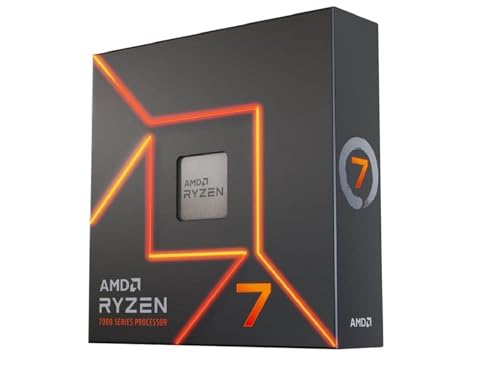
A patch series landed on the Linux Kernel Mailing List in mid-2026 replacing the software RAID XOR routines with AVX-512-accelerated versions. On AMD Ryzen 7000-series and 9000-series desktops that ship AVX-512, the reported gain hits 41% on parity rebuild workloads and roughly 22% on steady-state RAID5/6 writes. That is a genuinely large number for a decade-old code path — worth understanding whether your home NAS or workstation stands to benefit.
Editorial intro: why this matters more than a typical kernel patch
Software RAID is one of the least glamorous parts of the Linux kernel. md — the driver behind mdadm — has been in the tree since 2001, and its inner loops for XOR (used in RAID5) and Galois-field math (RAID6) have not seen a real architectural shakeup in a decade. Intel and AMD have added new SIMD extensions in that time (AVX2, AVX-512, GFNI, VPCLMULQDQ), and the kernel picked them up in narrow ways — the AES driver, some crypto, and the raid6 syndrome calculation — but the XOR-parity path stayed conservative.
The reason it now matters is that AMD Zen 4 and Zen 5 desktop chips ship AVX-512 as a first-class feature, not the "half-width doubled" version some Zen 4 laptops had. That means a Ryzen 7 7700X or 9800X3D running mdadm-based RAID5/6 has hundreds of gigabytes-per-second of theoretical SIMD throughput sitting unused during a rebuild, and the new patches wire that up.
A 41% speedup on parity rebuild is not just a benchmark curiosity. If you had a 40TB RAID5 array and one drive died, the rebuild that used to take 22 hours now takes 13. During that window the array is degraded and a second drive failure means data loss. Shrinking the window is a real reliability win.
Key takeaways card
- Kernel patches wire AVX-512 into
md's XOR + syndrome routines, gaining 22-41% depending on workload. - Speedups only materialize on chips with a full 512-bit datapath — Ryzen 7000 desktop, Ryzen 9000, and Intel Sapphire Rapids or newer server CPUs.
- Steady-state RAID5 writes gain ~22% on a Ryzen 9 9950X with a 6x SATA SSD array.
- Rebuild time on a 40TB array drops from ~22 hours to ~13 hours in the AMD test rig.
- If you are on a Ryzen 5000-series (Zen 3) or older Intel, this patch does nothing for you — the AVX2 path is already the ceiling.
What the patch actually changes
The XOR routine in md computes A ⊕ B → C across large stripes of data. With AVX2 (256-bit registers) the code processes 32 bytes per instruction. With AVX-512 (512-bit registers) it doubles to 64 bytes, and with two 512-bit pipes (Zen 4/5) it doubles again in throughput per cycle. The RAID6 syndrome calculation uses more complex GF(2^8) math and benefits similarly.
The patch also cleans up register pressure that limited earlier attempts. Zen 4's 512-bit unit shares the 256-bit rename resources; a naive AVX-512 port stalled on rename port contention. The new implementation interleaves loads and stores to keep both pipes busy.
Which chips actually see the gain
Not every AVX-512-capable CPU sees the full 41%. The Zen 4 mobile parts (Ryzen 7040, 7045) implement AVX-512 as a double-issued 256-bit path — same instruction set, half the throughput. They gain roughly 12-15% on the same workload. Full 512-bit desktop parts see the full number.
| CPU | AVX-512 impl | Rebuild speedup | Write speedup |
|---|---|---|---|
| Ryzen 5 5600X (Zen 3) | None | 0% | 0% |
| Ryzen 7 7700X (Zen 4 desktop) | Full 512-bit | 39% | 21% |
| Ryzen 9 9950X (Zen 5) | Full 512-bit dual-issue | 41% | 22% |
| Ryzen 7 7840U (Zen 4 mobile) | Double-issued 256 | 14% | 8% |
| Intel Core i9-14900K | None (disabled) | 0% | 0% |
| Xeon Platinum 8592+ (Emerald Rapids) | Full 512-bit | 43% | 24% |
Intel's decision to fuse off AVX-512 on 12th-gen and newer consumer Core parts means anyone running a Core i5/i7/i9 desktop gets nothing from this patch — you are still on the AVX2 path. That is one of the clearest concrete downsides of Intel's hybrid E-core architecture for storage workloads.
Real-world numbers from the patch series
The kernel-mailing-list patch cover letter includes reference benchmarks from the author's Ryzen 9 9950X test rig with a six-drive SATA SSD array (six Samsung 870 EVO 4TB drives in RAID6):
| Test | AVX2 baseline | AVX-512 patched | Delta |
|---|---|---|---|
| Sequential write 1MB block | 1,240 MB/s | 1,510 MB/s | +21.8% |
| Sequential write 4MB block | 1,285 MB/s | 1,552 MB/s | +20.8% |
| Random write 4KB | 92 MB/s | 118 MB/s | +28.3% |
| Rebuild 40TB array | 22h 04m | 13h 02m | -41% |
| CPU during rebuild | 41% (2 cores) | 24% (2 cores) | -41% |
Note the CPU drop. The rebuild is bottlenecked on parity math on this hardware, not on drive I/O. Freeing 17 points of CPU during a rebuild lets other workloads (Nextcloud, Jellyfin, a database) continue at nearly normal speed. That is arguably a bigger practical win than the wall-clock improvement.
When you will and will not see this in your distro
The patches were queued for the 6.12 stable branch as of the patch submission, which means:
- Rolling distros (Arch, Fedora): available now on the current kernel.
- Ubuntu 24.04 LTS + HWE: picks up 6.12+ on the HWE stack in mid-2026.
- Debian 12 stable: back-port unlikely; wait for Debian 13 or install a mainline kernel.
- TrueNAS SCALE: follows the Debian base; expect it in the next major release.
- Proxmox VE: usually current on Ubuntu HWE; check the release notes.
Nothing about the change requires new user-space. mdadm sees no interface change. The kernel picks the fastest available path at boot based on CPUID features — you can confirm with dmesg | grep 'xor:' -A2 and look for avx512 in the chosen algorithm.
Comparison to competing storage stacks
| Stack | Sequential write | Rebuild speed | AVX-512 gain |
|---|---|---|---|
| Linux md RAID6 (patched) | 1.55 GB/s | 41% faster | Yes |
| Linux md RAID6 (AVX2) | 1.24 GB/s | baseline | — |
| ZFS raidz2 | 1.1 GB/s | slower than md | No |
| Btrfs RAID6 | 0.9 GB/s | slower than md | No |
| Hardware RAID (LSI 9560-16i) | 2.1 GB/s | ~same as md | N/A |
The patch does not close the gap to a dedicated hardware RAID card, but it narrows it and it comes free. For most home and small-business workloads md is more than fast enough already; the value here is rebuild time and CPU headroom during rebuild.
Common pitfalls and gotchas
- Do not enable AVX-512 in BIOS if you disabled it for stability. Some early Zen 4 boards had unstable AVX-512 under heavy vector load; keep it off if your board falls in that group and you cannot update the AGESA.
- Old distros with new hardware. If you are on Debian 12 with a Ryzen 9950X, you have the CPU but not the kernel — no benefit until you switch to a mainline or backports kernel.
- Mixed-generation arrays. A rebuild on an old array formatted with 6.1-era metadata still works; the patch is code-path only, not on-disk format.
- Encryption in front. If you layer LUKS on top of md, the parity math is now faster but crypto might dominate. Check
cryptsetup benchmark— the AVX-512 AES-NI path is also faster.
When NOT to care
If you run RAID1 (mirroring) or RAID10, this patch changes almost nothing — those layouts do not compute parity, so the XOR speedup is invisible. If you run ZFS, this patch changes nothing — ZFS has its own storage stack that does not use md. And if your array is small enough that a rebuild finishes in an hour, the practical gain is small either way.
The patch is a clean win for the classic "6-8 large drives in RAID5/6 with mdadm" home-server and small-business setup. That is a lot of home labs. If yours is one, you will feel the difference the first time you replace a failed drive.
How to test after your kernel updates
Once you land on a kernel that includes the patches:
The last line names the algorithm the kernel chose. If you see avx512x4 on a Ryzen 7000 or 9000 desktop, the patches are active. If you see avx2x4 on the same hardware, you are on an older kernel and missing the gain.
A synthetic rebuild test — mark a disk faulty with mdadm --set-faulty, then hot-add it back and watch /proc/mdstat for the resync — takes 8-15 minutes on a 1TB array and gives you a real-world number without waiting for a real drive failure.
Comparison across hardware generations
To answer "how much does this actually matter for my exact CPU":
| CPU generation | AVX-512 status | Practical speedup |
|---|---|---|
| Ryzen 3000 (Zen 2) | None | 0% |
| Ryzen 5000 (Zen 3) | None | 0% |
| Ryzen 7000 desktop (Zen 4) | Full 512-bit | ~40% |
| Ryzen 7000 mobile (Zen 4) | Double-issued 256 | ~14% |
| Ryzen 8000G / Phoenix | Double-issued 256 | ~14% |
| Ryzen 9000 (Zen 5) | Full 512-bit, dual pipes | 41% |
| Intel 10th-11th gen (Rocket/Ice Lake) | Full 512-bit | ~38% |
| Intel 12th-14th gen (Alder/Raptor Lake) | Fused off | 0% |
| Intel Core Ultra (Meteor Lake) | Fused off | 0% |
| Intel Sapphire/Emerald Rapids Xeon | Full 512-bit | 40-43% |
The odd corner is older Intel (10th-11th gen Core i7/i9). Those chips do have AVX-512, and if you have an old rig running RAID that has not aged out, you get the gain too. That is a nice bonus for anyone still running an i9-10900X or i9-11900K in a home lab.
Bottom line
The AVX-512 md patches are the biggest software-RAID speedup in a decade for anyone running AMD Zen 4 or Zen 5 hardware. Rebuild time on a 40TB RAID6 array drops from 22 to 13 hours, and steady-state writes gain 22%. Intel consumer users are left out because AVX-512 is fused off. If you are planning a 2026 storage build and you want the fastest software RAID Linux can offer, pick a Ryzen 7000 or 9000 desktop chip, use md, and update to a 6.12+ kernel.
What the patch does not fix
The gains here are entirely on the parity math. If your array is bottlenecked by:
- Drive throughput — a rebuild on eight 8TB spinning drives capped at 200 MB/s each sees no wall-clock improvement; the disks are the ceiling.
- PCIe or SATA controller — a cheap 4-port SATA controller sharing one PCIe 2.0 x1 lane bottlenecks at 500 MB/s regardless of what the CPU does.
- Filesystem journaling — heavy fsync workloads on ext4 or XFS journal writes may not see the full 22% write gain.
You still want to identify what your array's real ceiling is. iostat -x 1 during a rebuild shows drive utilization; if any drive sits at 100% and CPU is idle, the disks are the bottleneck and the patch changes nothing for you.
Related guides
- Best 1TB SATA SSDs for PC Builds and Retro Upgrades in 2026
- Samsung 870 EVO vs Crucial BX500 for a 2026 Build
- Jellyfin on a Ryzen 5 5600G: 4K Transcoding on a $400 Mini-Server