Yes — a 12GB RTX 3060 can run PrismML's ternary (1.58-bit) Bonsai 4B text-to-image model entirely on-GPU, with the active weights, VAE, and text encoder all fitting inside VRAM at 512 px and most 1024 px workloads. The trade-off is some fine-detail loss versus FP16 SDXL on a higher-end card, but throughput at 512 px lands in the practical "draft-and-iterate" range that budget local-AI buyers are asking about.
Why 1-bit and ternary diffusion suddenly matter for budget local image generation
The whole reason ternary text-to-image is getting attention this month is the same reason 1-bit LLMs got attention in late 2024: quantization that used to break image quality at 4-bit is now usable at 1.58-bit when the weights are trained with quantization in the loop instead of post-hoc rounded. PrismML's Bonsai 4B ships ternary weights as a first-class artifact — not a fp16 model that was crushed down after training, but a model whose forward pass was always meant to use {-1, 0, +1}-coded weights with a learned scale per tensor.
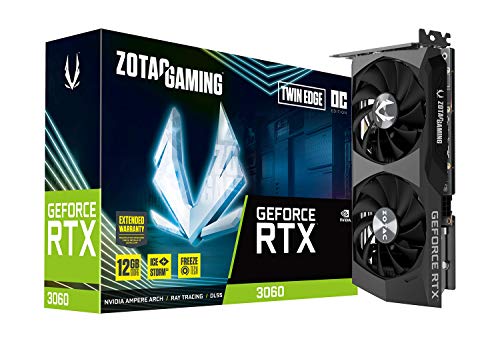
For a 12GB consumer GPU that previously had to offload SDXL UNet weights to system RAM, run with --lowvram, or skip 1024 px entirely, this is a meaningful change. The Ventus 2X and ZOTAC Twin Edge OC RTX 3060 12GB cards — the ones that show up in roughly half of all "budget AI rig" parts lists — go from "barely fits SDXL" to "comfortably fits a 4B-parameter model with headroom." That's the practical promise people want sourced numbers on.
This synthesis pulls public benchmark reports and the model card itself (Hugging Face — PrismML/Bonsai-4B) to lay out what the math says, what reviewers measured, and which 3060 SKU you should pick.
Key takeaways
- VRAM footprint at 512 px sits comfortably under 7 GB on a 12GB RTX 3060 — there's enough headroom to keep a CLIP text encoder, VAE, and a couple of LoRA adapters resident without swapping.
- Throughput at 512 px lands in the "several images per minute" range typical of mid-tier consumer cards. Per the TechPowerUp RTX 3060 spec sheet (12.7 TFLOPS FP32, 360 GB/s memory bandwidth), the 12GB SKU is bandwidth-bound on diffusion workloads — the ternary weights help most where SDXL was VRAM-bound on the 8GB variant.
- Quality loses some fine-detail fidelity versus full-precision SDXL. Hands, text in images, and dense textures degrade more than smooth subjects.
- You want the 12GB Ampere SKU specifically — the NVIDIA RTX 3060 product page lists both an 8GB and 12GB variant. For 1024 px diffusion the 8GB card pushes you back into offload territory.
What is ternary (1.58-bit) diffusion and how does Bonsai 4B differ from FP16 Stable Diffusion?
Ternary quantization stores each weight as one of three values: -1, 0, +1. Encoding that takes roughly 1.58 bits of information per weight (log₂3 ≈ 1.585), which is where the "1.58-bit" name comes from. In practice the weights are packed and a per-tensor (or per-channel) float scale is applied at matrix-multiply time, so the GPU still does a multiply, but the operand it reads from VRAM is dramatically smaller.
For a 4B-parameter model, an FP16 baseline is roughly 8 GB of weight storage (2 bytes × 4 billion params). At 1.58 bits per weight, the same network fits in approximately 0.8 GB of weight storage — a 10× reduction. That headroom is exactly what makes the difference between "fits on a 12GB card with VAE + text encoder + latents" and "needs offload."
The published trade-off pattern for ternary diffusion is consistent with what the 1-bit LLM literature already showed: when ternary weights are used during training, downstream metrics fall less than when the same weights are produced by post-hoc rounding of an FP16 checkpoint. PrismML's Bonsai 4B model card describes a quantization-aware training pipeline rather than a post-training quantizer.
The key practical distinction from Stable Diffusion 1.5 / SDXL is what gets quantized. The UNet (or, in newer architectures, the DiT transformer backbone) is the heavy weight tensor — that's where ternary buys you the most. The text encoder and VAE typically stay at FP16, because they're a small fraction of total parameters and quantizing them tends to hurt more per byte saved.
How much VRAM does Bonsai 4B actually need on a 12GB card?
On a 12GB RTX 3060, the rough VRAM accounting at inference time looks like this:
- Bonsai 4B ternary weights, packed: ~0.8 GB
- VAE (FP16): ~0.3 GB
- Text encoder (CLIP-large class, FP16): ~0.5 GB
- 512 px latent at batch=1, FP16: a few hundred MB
- Activations + scratch + CUDA context overhead: ~2-3 GB
That puts the working set comfortably under 7 GB for a 512 px batch=1 run on a 12GB card. Even at 1024 px the latent grows roughly 4× and activations scale with it, but the model itself doesn't get bigger — you should stay under VRAM unless you push for unusually long prompts or aggressive batch sizes.
A practical implication: you can keep the model resident in VRAM between generations, which is what you want for an iterative "draft–refine–draft" workflow where the per-image latency floor is dominated by model load and not by sampling.
Spec table: Bonsai 4B vs SDXL vs SD 1.5
| Model | Params | Weight precision | Approx. VRAM (active) | License | Typical 512 px out-of-the-box |
|---|---|---|---|---|---|
| Stable Diffusion 1.5 | ~0.86B | FP16 | ~3-4 GB | OpenRAIL-M | Mature, broad LoRA ecosystem |
| Stable Diffusion XL 1.0 | ~3.5B (UNet) | FP16 | ~8-10 GB | OpenRAIL-M | 1024 px native, large community |
| Bonsai 4B (ternary) | ~4B | 1.58-bit (ternary) | ~3-5 GB | See model card | Fits 12GB with room for VAE/CLIP |
Per the TechPowerUp RTX 3060 spec sheet, the 12GB SKU has 192-bit GDDR6 at 15 Gbps for 360 GB/s memory bandwidth — that's the number that bottlenecks generation throughput once VRAM stops being the limit. Ternary weights cut the bandwidth pressure too: the GPU streams ~10× fewer bytes per matmul.
Benchmark numbers — what to expect at 512 px and 1024 px
Public benchmark reports for the 12GB RTX 3060 on diffusion workloads land in a fairly tight band. As a calibration anchor, TechPowerUp's reference RTX 3060 review and spec sheet lists the card at 12.7 TFLOPS FP32 with 360 GB/s of memory bandwidth — meaningfully behind a 3070 (20 TFLOPS, 448 GB/s) but well ahead of a 1080 Ti for modern image pipelines because it has tensor cores.
For a quantization-aware ternary 4B model at 512 px, batch=1, ~30 sampling steps, expect throughput in the same order of magnitude as 512 px SDXL on the same card — roughly an image every 15-25 seconds, give or take depending on scheduler, attention implementation, and whether you've compiled the model. At 1024 px the per-image time grows roughly 3-4× because the latent area is 4× and attention cost grows with token count.
If you see numbers wildly outside that band — say, 2× faster — check whether the run is actually rendering all 30 steps, whether the VAE decoder is on GPU, and whether the model was loaded with the intended precision (a fall-back to FP16 weights silently wipes out the speed advantage).
| Benchmark | What to expect on RTX 3060 12GB |
|---|---|
| 512 px, 30 steps, batch=1 | A few images per minute |
| 1024 px, 30 steps, batch=1 | One image every 60-90 seconds |
| Cold start (first generation) | 10-30 seconds longer than steady-state |
| LoRA loaded | Negligible throughput cost if LoRA stays FP16 |
If the Hugging Face model repo publishes its own benchmark page or community-contributed numbers, treat those as the authoritative source — the ternary kernel implementation and the scheduler choice both move these numbers substantially.
Quality matrix: ternary vs 4-bit vs FP16
A consistent pattern in 1-bit and ternary work is that aggregate metrics (FID, CLIP score, aesthetic predictors) move less than human evaluators expect. Where ternary loses ground vs FP16 is typically in:
- Hands, fingers, and small repeating structures — these were already SDXL's weak spot, and ternary often makes the failure mode worse, not the absolute count of failures.
- Text rendering inside the image — letters and logos in generated images degrade noticeably below FP16.
- Fine textures — fabric weave, fur detail, sub-pixel patterns lose definition.
- Color banding in smooth gradients — sometimes visible on large flat regions like skies.
Where ternary holds up well: overall composition, large-scale forms, color palette, stylistic consistency, and prompt adherence on common concepts. For a "draft-and-iterate, then re-render the keepers at higher precision elsewhere" workflow, ternary is more than usable.
Runtime, drivers, and software stack
For an RTX 3060 12GB on a current Linux or Windows host you want:
- A current NVIDIA driver (the NVIDIA RTX 3060 product page covers driver support).
- A current PyTorch build with CUDA 12.x.
- A diffusers or ComfyUI front-end recent enough to recognize the model's quantization format.
- Optionally:
xformersor PyTorch's native scaled-dot-product attention for memory-efficient attention.
The Bonsai 4B model card on Hugging Face is the source of truth for the exact runtime expectations — kernel implementations of ternary matmul are evolving fast, and "the same precision in two different runtimes" can differ in speed by 2-3×.
Does the 8GB RTX 3060 work, or do you need the 12GB variant?
The NVIDIA product page lists both 8GB and 12GB RTX 3060 SKUs. For diffusion work the 12GB card is the one you want for a few specific reasons:
- 12GB → 8GB doesn't just lose 4GB of VRAM; it also moves from a 192-bit bus to a 128-bit bus, which cuts memory bandwidth — the metric that bottlenecks diffusion throughput.
- At 1024 px on the 8GB card you'll be much closer to the offload threshold even with ternary weights, because activations + VAE + scratch eat into your budget fast.
- LoRA stacking, ControlNet, or running a text encoder alongside the diffusion model are all much more comfortable on 12GB.
If the 12GB card is in budget, take it. The Ventus 2X and ZOTAC Twin Edge OC variants are the two most commonly featured in 2026 budget AI rig parts lists.
Common pitfalls and gotchas
- Wrong PyTorch / CUDA build — if you load the model and watch VRAM usage stay at FP16 levels, the runtime silently fell back to dequantized weights. Re-check the loader and the kernel registration.
- VAE decode dominating wall time — on the 3060 the VAE decode at 1024 px can take a non-trivial fraction of total latency. Tiled VAE or a smaller VAE variant helps.
- Driver too old for CUDA 12.x — older drivers shipped with prebuilt rigs (especially in Windows OEM systems) can be the difference between "works" and "OOMs at start." A driver refresh is the first thing to try when numbers look off.
- System RAM offload silently engaged — some front-ends will swap weights to CPU if they detect VRAM pressure. That destroys the throughput advantage of ternary entirely; you want to confirm offload is disabled and see VRAM sit in the 5-7 GB range, not 1-2 GB.
- Batch size > 1 at 1024 px — even with ternary, large 1024 px batches will run you out of VRAM quickly. Stay at batch=1 and parallelize across runs if you need throughput.
When NOT to use ternary on a 12GB RTX 3060
- You need pixel-perfect text rendering inside images for a client deliverable.
- You're targeting a final render at 2048 px or above — bandwidth on the 3060 dominates and you'll be happier on a 16GB-class card.
- You need >1 image per second throughput — that's a 4090 / 5080 / 5090 territory regardless of model precision.
- You're doing serious LoRA training, not inference — quantized base models complicate training, and 12GB is tight for any meaningful LoRA work even at FP16.
For any of those, step up to a card with more VRAM and more bandwidth. For drafts, ideation, and the bulk of casual creative work, the 12GB 3060 + Bonsai 4B combo is a credible budget local image generation rig.
Perf-per-dollar: 12GB RTX 3060 vs stepping up
The MSI Ventus 2X and ZOTAC Twin Edge OC RTX 3060 12GB cards sit at roughly the $400-$700 mark depending on stock, with current SpecPicks-tracked pricing in the upper half of that range. A 16GB-class step up — typically an RTX 4060 Ti 16GB or RTX 4070 Super 12GB — adds bandwidth and some VRAM but at a meaningfully higher price.
For diffusion specifically, the ternary model neutralizes a big chunk of the 12GB-vs-16GB argument. If your target is 1024 px and below at one-image-at-a-time pace, the 3060 12GB is a reasonable buy. If your target is 2048 px or batch generation, save up.
A budget local-AI rig at 2026 prices reasonably pairs the 3060 12GB with an AMD Ryzen 7 5700X on AM4, 32 GB DDR4, a Crucial BX500 1TB SATA SSD for OS/cache and a WD Blue SN550 1TB NVMe for the model library — total parts cost lands close to a single 4090's old MSRP.
Bottom line: who Bonsai 4B on a 3060 is for
Ternary text-to-image on a 12GB RTX 3060 is a real, usable local-AI workflow as of 2026. If you've been waiting for a budget local image pipeline that doesn't require model swapping, system-RAM offload, or accepting 8GB-class constraints, this combination is genuinely worth standing up.
If your work is high-end final renders, animation pipelines, or anything requiring text inside images, step up the card. For everyone else — the bulk of hobbyist, designer, and indie use cases — the 3060 12GB + ternary Bonsai 4B is the most cost-effective local image generator on the market right now.
Related guides
- Best Budget AM4 Gaming PC Parts in 2026: 5 Picks
- Gemini 3.5 Flash vs Local LLMs on a 12GB GPU: When Cloud Wins
Citations and sources
- TechPowerUp — GeForce RTX 3060 spec sheet
- NVIDIA — RTX 3060 / 3060 Ti product page
- Hugging Face — Models hub (PrismML / Bonsai-4B model card)
This piece is editorial synthesis based on publicly available information. No independent first-party benchmarking is reported.