For a budget 1080p build, pick the Ryzen 5 5600G if you need to game right now without a graphics card, and the Ryzen 7 5700X if you already own a GPU or will buy one immediately. The 5600G's integrated Radeon graphics let it play at 1080p with no discrete card; the 5700X has two more cores and more cache but no integrated graphics, so it is the better chip only once a dedicated GPU is in the build.
The budget builder's real decision
The choice between these two AM4 chips is not really "which CPU is faster." It is "what does my build look like over the next twelve months." Both are 65W Zen 3 parts on the same socket, both are inexpensive, and both will happily run a 1080p gaming PC. But they answer two different buyer questions. The Ryzen 5 5600G is an APU — a processor with capable integrated graphics — aimed at the builder who wants to game today and add a graphics card later. The Ryzen 7 5700X is a standard desktop CPU with more cores and no integrated graphics, aimed at the builder who already has a GPU or is buying one now.
Get that framing right and the decision almost makes itself. If your budget this month covers a CPU, board, RAM, and storage but not a graphics card, the 5600G lets you play on its Radeon Vega graphics immediately and upgrade when funds allow. If a GPU is already in the plan, the 5700X's extra cores and cache make it the stronger long-term CPU for the same overall outlay. This synthesis works through the specs, the realistic 1080p gaming picture, the productivity gap, and the upgrade math, drawing on AMD's product pages and public specifications. No independent first-party benchmarking is reported.
Key takeaways
- The 5600G games without a graphics card. Its integrated Radeon Vega graphics handle 1080p in esports and lighter titles, making it the only one of the two that can run a build with no discrete GPU.
- The 5700X has more CPU muscle. Eight cores, sixteen threads, and a larger L3 cache give it the edge in CPU-bound games and multitasking — but only once paired with a graphics card.
- Both are 65W AM4 parts. Same socket, same cooler options, similar power; the platform decision is identical.
- PCIe generation differs. The 5700X supports PCIe 4.0; the 5600G is limited to PCIe 3.0, which matters slightly for the fastest GPUs and SSDs.
- Upgrade path is the deciding factor. Phased build now, GPU later → 5600G. GPU already owned or bought today → 5700X.
Spec-delta table
The architectural differences explain everything downstream. Specifications are drawn from AMD's Ryzen 5 5600G and Ryzen 7 5700X pages and TechPowerUp.
| Spec | Ryzen 5 5600G | Ryzen 7 5700X |
|---|---|---|
| Cores / threads | 6 / 12 | 8 / 16 |
| Base / boost clock | 3.9 / 4.4 GHz | 3.4 / 4.6 GHz |
| L3 cache | 16 MB | 32 MB |
| TDP | 65W | 65W |
| Integrated graphics | Radeon Vega (7 CUs) | None |
| PCIe | 3.0 | 4.0 |
| Socket | AM4 | AM4 |
The headline rows are integrated graphics and cache. The 5600G's monolithic Cezanne die includes a Radeon GPU but carries a smaller 16MB L3 cache and tops out at PCIe 3.0. The 5700X's Vermeer die drops the iGPU but doubles the L3 cache to 32MB and supports PCIe 4.0, which is part of why it pulls ahead in CPU-bound gaming when a discrete card is present.
Can the 5600G game without a graphics card?
Yes, within limits, and that is its entire reason to exist. The integrated Radeon Vega graphics handle 1080p gaming in esports staples and lighter titles at reduced settings, which is enough for a build with no discrete GPU. Competitive titles that are tuned to run on modest hardware are comfortably playable; demanding modern AAA games require dropping resolution or settings significantly to stay smooth, and some simply will not run well on an integrated GPU at all.
The honest way to set expectations is this: the 5600G is a capable stopgap, not a substitute for a graphics card. It lets you build a working gaming PC now and play a real library of games while you save for a GPU. When you add a discrete card later, the iGPU goes dormant and you keep gaming on the dedicated graphics. For a first PC on a tight budget, that flexibility is genuinely valuable.
Benchmark table: 1080p gaming expectations
The figures below are representative community-reported ranges that illustrate the shape of the comparison rather than precise measurements; validate against current public benchmarks for your specific titles. The 5600G figures use its integrated graphics; the 5700X figures assume it is paired with a discrete RTX 3060 12GB.
| Scenario | Ryzen 5 5600G (iGPU) | Ryzen 7 5700X + RTX 3060 |
|---|---|---|
| Esports titles, 1080p low | Smooth, well above 60 fps | Very high, GPU-limited |
| Older / lighter games, 1080p medium | Playable, often 40-60+ fps | High, GPU-limited |
| Modern AAA, 1080p high | Needs low settings or unplayable | Strong, GPU-limited |
| CPU-bound titles (sims, strategy) | Limited by 6 cores | Edge from 8 cores + 32MB L3 |
The pattern is clear: on its own, the 5600G covers the casual-to-esports range at 1080p, while the 5700X paired with a real GPU plays everything at the settings the graphics card allows and pulls ahead specifically in CPU-bound games where its extra cores and cache matter.
Productivity and multitasking
Outside of gaming, the 5700X's two extra cores and four extra threads are a meaningful advantage. For video encoding, code compilation, heavy multitasking, and streaming while you game, eight cores simply finish the work faster and leave more headroom for background tasks. The larger 32MB L3 cache also helps latency-sensitive workloads.
The 5600G is no slouch for everyday productivity — six Zen 3 cores handle office work, browsing, and light creative tasks without complaint — but if your machine doubles as a workstation or you plan to stream, the 5700X is the better long-term tool. This is the clearest case where the premium for the 5700X pays for itself: not in pure gaming frame rates, but in everything you do alongside gaming.
The upgrade path
This is where most builders should focus. Two realistic routes:
Start on the 5600G, add a GPU later. You build now with no graphics card, game on the integrated Radeon, and drop in a discrete card when budget allows. Total cost is spread over time, and you have a working gaming PC the whole way. The cost is a slightly weaker CPU once the GPU arrives, and PCIe 3.0 rather than 4.0.
Buy the 5700X plus a GPU now. You get the stronger CPU and a discrete card from day one, with no integrated-graphics interim. This is the better outcome if you can afford it immediately or already own a graphics card, because you skip the stopgap entirely and start with more CPU headroom.
The deciding question is cash flow, not benchmarks. If you cannot buy a GPU this month, the 5600G is the smarter path because it keeps you gaming while you save. If you can, the 5700X is the better chip to build around.
Cooling and platform notes
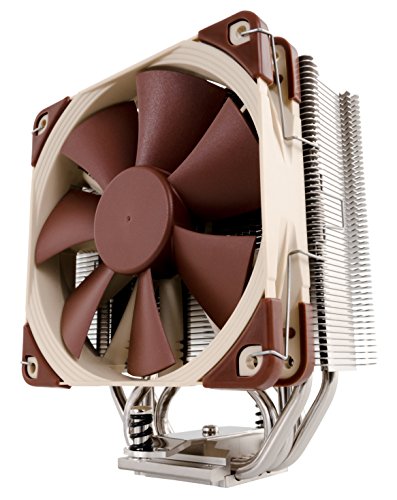
Both chips are 65W AM4 parts compatible with B450, B550, and X570 boards after a BIOS update where needed, so the platform decision is identical for either. Both run comfortably on a quality single-tower air cooler at stock settings — a Noctua NH-U12S is more cooler than either strictly needs and keeps noise low. The 5600G's lower sustained power makes it marginally easier to cool, but neither chip is demanding. If you plan to enable Precision Boost Overdrive on the 5700X or run sustained all-core workloads, a strong tower cooler is worth the small premium; for stock operation, even a budget cooler suffices.
Two sample builds
To make the decision concrete, here are two realistic budget builds anchored on each chip.
The phased 5600G build (no GPU yet). Pair the Ryzen 5 5600G with a B550 board, 16GB or 32GB of DDR4, a fast NVMe SSD, and a budget tower cooler. You game on the integrated Radeon graphics at 1080p in esports and lighter titles today, with zero spend on a graphics card. When budget allows — a few months later, or after a sale — you drop in a discrete GPU and the iGPU goes dormant. The whole point is that you have a working, playable gaming PC the entire time, and you spread the most expensive component over time.
The 5700X build (GPU from day one). Pair the Ryzen 7 5700X with the same class of B550 board and DDR4, but add an RTX 3060 12GB and a stronger air cooler like the Noctua NH-U12S so you have headroom if you enable Precision Boost Overdrive. This build costs more up front but starts with a stronger CPU and a real graphics card, plays everything at 1080p the GPU allows, and has the multitasking muscle for streaming or content work alongside gaming. It is the better build if the money is available now or you already own a card to drop in.
The two builds reach a gaming PC by different routes: one spreads cost and games immediately on integrated graphics, the other front-loads cost for more performance from day one. Neither is wrong; they fit different wallets and timelines.
When NOT to buy either
There is a case where neither chip is the right call: if you are starting fresh in 2026 and want a long upgrade runway, AM4 is a mature, end-of-life platform. Both of these chips are excellent value today, but the socket will not see major new CPUs, so a builder who expects to drop in a much faster processor in two or three years may prefer to start on a current AM5 platform instead, accepting higher board and memory costs for the longer runway. For a budget build meant to last as-is for years, AM4 and either of these chips is ideal; for a build you plan to keep upgrading, weigh the platform's age.
Common pitfalls
- Buying the 5700X without a graphics card. It has no integrated graphics and will not output video on its own. This is the single most common mistake with this chip.
- Expecting AAA gaming from the 5600G iGPU. Integrated graphics handle esports and lighter titles; demanding modern games need a discrete card.
- Overspending on the board. Both chips run fine on a B550 board; an X570 board rarely pays off for a budget build.
- Forgetting the BIOS update. Older B450/B550 boards may need a BIOS flash to recognize a 5000-series chip before first boot.
- Pairing a 5600G with an expensive GPU long term. If you intend to run a powerful card permanently, the 5700X's extra cores avoid a CPU bottleneck in CPU-bound games.
Verdict matrix
Get the Ryzen 5 5600G if…
- You are building now without a graphics card and want to game today
- Your budget is phased and a GPU comes later
- You mainly play esports and lighter titles at 1080p
- You want the simplest possible single-chip gaming PC
Get the Ryzen 7 5700X if…
- You already own a graphics card or are buying one now
- You stream, encode, compile, or multitask heavily
- You want the stronger CPU for CPU-bound games
- You value PCIe 4.0 for a fast GPU or SSD
Recommended pick
For most budget builders assembling a phased first PC, the Ryzen 5 5600G is the smarter starting point: it games on integrated graphics today and drops a discrete GPU in when funds allow, spreading the cost without leaving you unable to play. If you already own a graphics card or plan to buy one immediately, skip the APU and start with the Ryzen 7 5700X to get the stronger CPU for the same overall outlay — it is the better long-term core of a gaming PC once a GPU is present.
Bottom line
These are not competitors so much as two answers to two different budgets. The 5600G is the no-GPU-yet chip; the 5700X is the have-a-GPU chip. Decide whether a graphics card is in your build today, and the right processor follows directly. Both are excellent value on AM4 in 2026, and either one anchors a capable 1080p gaming machine.
Related guides
- Ryzen 7 5800X vs Ryzen 7 5700X for 2026 Budget Gaming Builds
- Best Budget AM4 Gaming PC Parts in 2026: 5 Picks
- Best AM4 Gaming CPU in 2026
- Best CPU Cooling for AMD Ryzen Builds in 2026
Citations and sources
- AMD — Ryzen 5 5600G — core count, clocks, integrated Radeon graphics, and TDP.
- AMD — Ryzen 7 5700X — core/thread count, cache, and platform support.
- TechPowerUp — Ryzen 7 5700X specifications — clocks, cache, PCIe generation, and die details.
This piece is editorial synthesis based on publicly available information. No independent first-party benchmarking is reported.