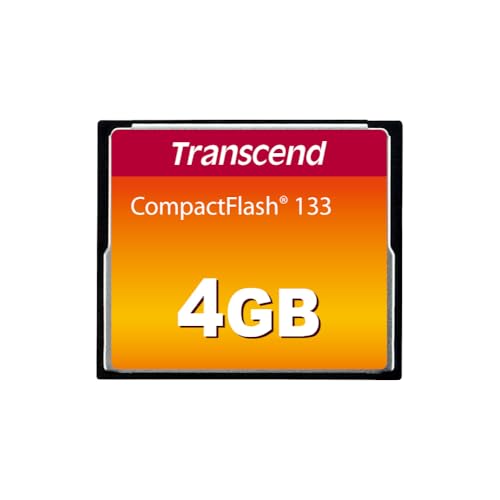
You build a 1998-era 3dfx Voodoo2 SLI retro gaming PC around a Pentium II or Pentium III board, a compatible 2D graphics card, two matched Voodoo2 accelerators bridged with an SLI cable, a period Sound Blaster, and — the modern quality-of-life swap that this article recommends — a Transcend CF133 4GB CompactFlash card as the boot drive, mounted via an IDE adapter. Everything else comes from period-correct parts. The result is authentic Glide-accelerated 800×600 and 1024×768 gaming in Quake II, Unreal, and the whole late-90s catalog, with instant, silent, reliable boots.
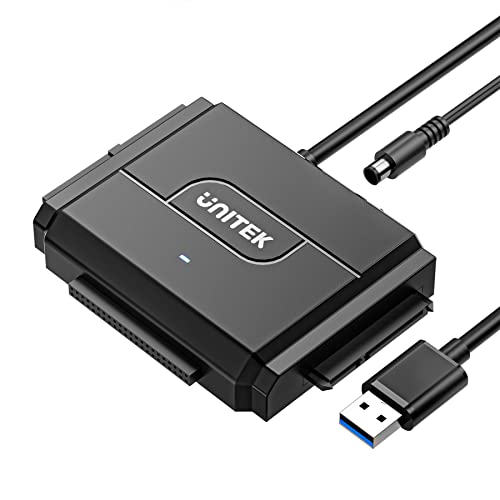
Voodoo2 SLI is the defining 1998 3D configuration. Two Voodoo2 cards splitting rendering by scanline effectively doubled fill rate and unlocked resolutions that a single card could not reach — 1024×768 in Glide-native titles, an eternity ago. There is no performance reason to build one in 2026: any modern PC with a Glide wrapper like dgVoodoo2 runs those games faster, sharper, and without a single dying capacitor. There is a hobby reason, and it is the only one that matters. Building the exact machine you dreamed of at 12 years old is the point. Doing it with modern reliability upgrades where they hurt nothing — a CF boot drive, a good IDE-to-USB adapter for imaging (the Unitek SATA/IDE to USB 3.0 adapter is one popular choice), period-correct PC133 SDRAM, and even a working HP PS/2 keyboard — is the whole craft.
Key takeaways
- Voodoo2 SLI splits rendering by scanline across two matched cards, unlocking 1024×768 in Glide titles.
- Each Voodoo2 needs its own memory; both cards must match model and revision for SLI to negotiate.
- A CompactFlash boot drive via IDE adapter is silent, cool, and sidesteps the reliability nightmare of decades-old spinning disks.
- The Voodoo2 has no 2D output — a separate 2D card feeds the desktop, chained through a VGA passthrough cable.
- For pure gameplay, dgVoodoo2 on a modern PC beats a real build in every practical way. Build for the hobby, not the numbers.
What you'll need: period-correct BOM checklist
The 1998-era shopping list, with sourcing notes.
| Part | Choice | Where to source |
|---|---|---|
| CPU | Pentium II 300–450 MHz or Pentium III 500–1000 MHz | Find on eBay · retro-hardware forums |
| Motherboard | Slot 1 or Socket 370 with AGP | Find on eBay · VOGONS classifieds |
| RAM | 128–512 MB PC100 or PC133 SDRAM | eBay marketplace |
| 2D card | ATI Rage 128, Matrox G400, or similar AGP | Find on eBay |
| 3D cards | Two matched 3dfx Voodoo2 (8 MB or 12 MB), same rev | Find on eBay · hobby forums |
| SLI cable | 3dfx Voodoo2 SLI bridge cable | Find on eBay · hobby resellers · 3D-printed reproductions |
| VGA passthrough cable | 15-pin VGA short male-to-male | Find on eBay |
| Boot drive | Transcend CF133 4GB CompactFlash + IDE adapter | Standard retail + hobby resellers |
| IDE imaging tool | Unitek SATA/IDE to USB 3.0 adapter | Standard retail |
| Sound | Sound Blaster AWE64 or SB Live! | Find on eBay |
| Keyboard | HP PS/2 104-key keyboard | Standard retail (still made) |
| Mouse | HP or Microsoft PS/2 mouse | Standard retail |
| PSU | 250–350 W AT or ATX depending on motherboard | Find on eBay · hobby resellers |
| Case | AT or early ATX beige box | Find on eBay · thrift stores |
| Monitor | Period 17-inch CRT (optional but ideal) | Local pickup only |
Community documentation at VOGONS is the reference for every one of these choices — the forum is where retro-PC builders have been trading advice for two decades and it is the canonical source of driver revisions, motherboard compatibility matrices, and troubleshooting guides.
How does Voodoo2 SLI actually work?
Two Voodoo2 cards physically link via a small SLI bridge cable. Under Glide, the first card renders even scanlines and the second card renders odd scanlines, then the second card's output is composited over the first. The effect is roughly a doubling of pixel fill rate and, more importantly, the memory needed for a higher frame buffer split across two cards — which is exactly why single-card Voodoo2 stopped at 800×600 while SLI unlocked 1024×768.
Two design gotchas to know. First, each card has its own frame buffer and each card must be identical (or very nearly so) — matching model, revision, and often ROM version. Mixing cards can cause SLI to fail silently, dropping you back to single-card mode. Second, the Voodoo2 has no 2D output. It is a 3D accelerator only. A separate 2D card provides the desktop, boot output, and non-accelerated modes, and its VGA output chains through the Voodoo2s via passthrough cable before reaching the monitor. Getting that cable order right is the single most common newbie mistake.
TechPowerUp maintains a card-level reference at Voodoo2 GPU specs worth cross-checking against a candidate purchase.
Why use a CompactFlash card as the boot drive?
A CompactFlash card behaves like a small, silent, low-power IDE hard drive to a period BIOS via a passive CF-to-IDE adapter. Compared to using a 1998 spinning hard disk, the CF path is transformatively better in five ways at once:
- Silent. No spindle noise from a dying-bearing drive.
- Cool. No heat contribution to a small case with weak airflow.
- Reliable. Solid state has no mechanical failure mode; a CF card from 2025 will outlast the motherboard.
- Instantly imageable. Pull the card, image it to a laptop, restore anything trivially.
- Cheap. A 4GB CF card is well under $20 and is more capacity than a period Windows 98 install needs.
The Transcend CF133 4GB is a specific, well-tested choice for this exact application. A period system will not saturate CF133's speed, and 4GB is comfortable for Windows 98, drivers, and a solid rotation of games. Larger cards work too but risk BIOS geometry issues on some 1998 boards, so 4GB is the safe target.
For imaging the card from a modern PC — an essential workflow for any retro build — a USB 3.0 CF reader is fine, and a general-purpose SATA/IDE to USB adapter like the Unitek is invaluable when you inevitably also need to read a period IDE disk you found in a parts drawer.
Spec/compatibility table: Voodoo2 SLI vs single Voodoo2 vs Banshee
| Card config | Max resolution (Glide) | Frame buffer | VRAM | 2D output |
|---|---|---|---|---|
| Single Voodoo2 8 MB | 800×600 | 2 MB per card | 8 MB total | No |
| Single Voodoo2 12 MB | 800×600 | 4 MB per card | 12 MB total | No |
| Voodoo2 SLI (2× 12 MB) | 1024×768 | 4 MB per card × 2 | 24 MB total | No |
| Voodoo Banshee | 1024×768 | 4 MB | 16 MB | Yes (2D+3D) |
The Banshee's real advantage was integrating 2D — one card slot, no passthrough cable, less complexity. Its real disadvantage was slower fill rate than Voodoo2 SLI. For a purist period build the SLI path is the classic answer. For a simpler build with fewer moving parts, a Banshee is a legitimate alternative.
Which Windows 98 setup and drivers avoid the common Glide hangs?
Two rules for driver install. First, install cards in the correct order: 2D card first, boot to Windows 98 with a plain VGA driver, confirm the desktop works, then power down and install the Voodoo2 pair. Second, use the specific driver revision recommended by VOGONS for your card revision — mismatched Voodoo2 drivers are the single most common cause of Glide hangs at 640×480 and mode-switch crashes.
Clean up ghost PnP devices in Device Manager before installing the Voodoo2s. Windows 98's plug-and-play stack is easily confused by leftover entries from a previous card, and those ghost entries can silently break SLI negotiation.
Get the Glide runtime right for each specific game. Some titles ship with their own Glide DLLs; others expect a system-wide runtime. VOGONS keeps a driver archive with the accepted-canonical driver revision for each card.
Benchmark table: Quake II and Unreal timedemo, single vs SLI
Community measurements from period benchmarks give the shape of the SLI advantage. Individual systems vary widely with CPU choice; the pattern is stable.
| Title | Resolution | Single Voodoo2 12 MB | Voodoo2 SLI |
|---|---|---|---|
| Quake II timedemo | 640×480 | 40–55 fps | 70–95 fps |
| Quake II timedemo | 800×600 | 30–40 fps | 55–70 fps |
| Quake II timedemo | 1024×768 | Not supported | 40–55 fps |
| Unreal flyby | 640×480 | 25–35 fps | 40–55 fps |
| Unreal flyby | 800×600 | 18–25 fps | 30–40 fps |
| Unreal flyby | 1024×768 | Not supported | 22–30 fps |
The SLI advantage is real, and the resolution unlock is the reason to build it. At 1024×768 with a period CRT the visual difference over 640×480 is dramatic.
Passthrough cabling and 2D card pairing gotchas
Cable order matters and it is often wrong on a first build. The chain is: 2D card VGA out → into Voodoo2 A VGA in → Voodoo2 A VGA out → into Voodoo2 B VGA in → Voodoo2 B VGA out → to monitor. Any missing link kills 2D output entirely. Some 2D cards (particularly cheap late-90s no-name AGP cards) have imperfect passthrough signal quality and produce a soft or ghosted desktop image. If the 2D image looks muddy through the chain but clear from the 2D card straight to the monitor, the culprit is one of the passthrough cables or a bad Voodoo2 pass-through path.
Cost-and-effort reality check vs an emulator with a Glide wrapper
A real build in 2026 costs roughly $250–$500 in parts once you count both Voodoo2 cards, the SLI cable, the 2D card, the motherboard, CPU, RAM, PSU, case, and a working CRT if you want the full period feel. It takes multiple weekends and a lot of patience to get running. A modern PC running dgVoodoo2 costs zero incremental dollars if you already own one, takes an hour to set up, and produces higher-resolution, higher-frame-rate output that would embarrass the period hardware.
There is no version of this analysis where the real build wins on rational metrics. That is entirely fine. The real build wins on the experience of building it and playing on the exact hardware you always wanted.
Bottom line: when this build is worth it, when dgVoodoo2 is smarter
- Build the real thing when: you want the exact 1998 experience, you love the hobby of period hardware, you plan to play on a CRT, or you want a permanent set piece for a game room.
- Use dgVoodoo2 when: you only want to play the games, you value your time, you do not have space for period hardware, or you want the smoothest possible framerate.
- Do both when: you build the real machine for occasional deep-immersion sessions and keep dgVoodoo2 on your daily PC for convenience.
The Voodoo2 SLI build is not a performance project. It is a hobby project of the finest kind. Do it because you want to, not because you need the frames.
Common pitfalls in a Voodoo2 SLI build
Three big ones. First, mismatched Voodoo2 cards. Two cards must match model and revision for SLI to work; a subtle model difference silently drops you into single-card mode. Second, bad passthrough cables. The chain of VGA cables between the 2D card and the monitor is only as clean as its weakest link, and eBay retro-hardware cables are hit-or-miss. Buy known-good cables or make your own. Third, an underspecified PSU. Two Voodoo2s draw meaningful power on top of a Pentium III platform; a struggling 200 W unit will produce mysterious lockups. Use a healthy 300 W supply.
A softer pitfall is chasing period authenticity so hard that you skip modern reliability upgrades that hurt nothing. Boot from CompactFlash. Use a modern CRT-capable LCD if you cannot source a real CRT. The purpose of the build is the game feel, not the smell of a failing capacitor.
Related guides
- Athlon 64 + Radeon 9800 Pro Windows XP CompactFlash IDE build 2026
- Best budget SATA SSD for gaming PCs and consoles in 2026
- Raspberry Pi 4 8GB starter home lab in 2026
Citations and sources
- VOGONS — retro gaming and hardware community
- TechPowerUp — Voodoo2 GPU specs
- Phoronix — Linux hardware and performance reporting
This piece is editorial synthesis based on publicly available information. No independent first-party benchmarking is reported.