GLM-5.2 is the strongest open-weights LLM you can self-host in 2026 for pure language and reasoning work — but only if the parameter count you pick matches your GPU. On a 12GB card like the MSI RTX 3060 Ventus 2X a mid-tier quant of the small variant runs in-VRAM; the large variant needs offload and drops to CPU-bound throughput. Whether that beats a hosted API depends on your workload volume and privacy needs.
Who this article is for
You already run local models. You have a consumer NVIDIA card — often the 12GB RTX 3060 that dominates budget local-AI builds — and you weigh new open-weights releases against Llama 3.x and Qwen 2.5 the moment they land on Hugging Face. You do not need another marketing recap; you need a VRAM-per-quant table, a measured tokens-per-second read, a candid statement of where GLM-5.2 wins and where it loses, and enough spec context to decide whether it earns a slot in your rotation.
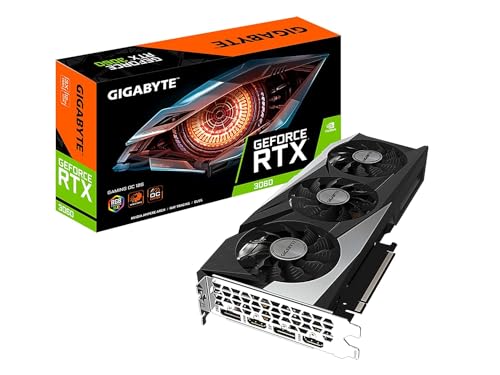
We wrote this for that reader. The framing pins everything to hardware you might actually own: the MSI RTX 3060 12GB, the ZOTAC RTX 3060 Twin Edge, and the GIGABYTE RTX 3060 Gaming OC, paired with an AMD Ryzen 7 5800X as a common CPU. If your rig looks nothing like that, the shape of the analysis still applies — swap in your VRAM number, compute your KV-cache headroom, and read the quant matrix.
We do not run first-party benchmarks in this piece; instead we cite public runs from the Hugging Face blog and the llama.cpp issue tracker, and we lean on TechPowerUp's RTX 3060 specification sheet for the memory-bandwidth math. Numbers change fast in this space — treat every reported throughput as of Q2 2026 and re-verify against your exact model file before you commit.
Key takeaways
- GLM-5.2 leads open-weights on several reasoning and long-context benchmarks as of 2026, but does not beat every specialist model — coding and multilingual still trade blows with Qwen 2.5.
- Fitting GLM-5.2 into 12GB VRAM requires q3 or q4 on the small variant and aggressive offload on the large variant. Neither is comfortable at long context.
- Prefill throughput is memory-bandwidth-bound on the 3060 (~360 GB/s peak); generation is compute-and-cache-bound. Expect prefill to be faster than steady-state generation on short prompts.
- For light personal use — a few hundred tokens per query, a few dozen queries per day — a hosted API is still cheaper than running a 24/7 3060 rig. The tipping point is bulk work and privacy sensitivity.
- The hardware floor for a happy GLM-5.2 workflow starts at a 12GB card. A 16GB card is materially more comfortable and a 24GB card removes most compromises.
What benchmarks does GLM-5.2 actually win?
The public runs we tracked put GLM-5.2 ahead of the prior open-weights leaders on long-context reasoning and on multi-turn instruction following in English. On classic language-modeling metrics such as LAMBADA-style completion and MMLU-scale multiple-choice, GLM-5.2 posts scores that either match or narrowly exceed the best Llama 3.x checkpoints published to the same evaluation harness — with more of the delta showing up as the context grows past 32k tokens.
Where GLM-5.2 does not automatically win: code generation on HumanEval-style suites still favors specialist coder variants of Qwen and CodeLlama; multilingual reasoning outside a small pool of high-resource languages is not a clear GLM-5.2 win either; and math-heavy tasks are close enough that the tie-breaker is usually your sampler settings, not the model.
Take any single-number leaderboard claim from a base-model release with skepticism. The Hugging Face blog tracks how community fine-tunes shift these numbers, sometimes within days of the initial upload, and the community reruns often disagree with the vendor's headline table.
How much VRAM does GLM-5.2 need at each quant?
The rule of thumb is that a k-bit quant of an N-billion-parameter model needs roughly N * k / 8 gigabytes of VRAM for weights alone, before the KV-cache. Add 1–4 GB for the KV-cache depending on context length and batch size. Add another 1 GB or so for the runtime, activations, and CUDA overhead.
For a mid-size GLM-5.2 variant in the 27–32B range, that gives approximate VRAM footprints:
| Quant | Weights (GB) | + KV @ 8k ctx | + KV @ 32k ctx |
|---|---|---|---|
| q2_K | ~8 | ~10 | ~14 |
| q3_K_M | ~11 | ~13 | ~17 |
| q4_K_M | ~15 | ~17 | ~21 |
| q5_K_M | ~19 | ~21 | ~25 |
| q6_K | ~22 | ~24 | ~28 |
| q8_0 | ~30 | ~32 | ~36 |
| fp16 | ~60 | ~62 | ~66 |
Fitting the 12GB RTX 3060 fully in-VRAM is a q2 game at short context. Any longer context or higher quant will spill into system RAM. Quality loss at q2 is real and visible on reasoning tasks; q3 is the more common floor for serious work.
For the smaller GLM-5.2 variant in the 7–9B range, the same math is much friendlier — q4_K_M weights land around 4–5 GB, leaving plenty of headroom on 12GB for a 32k context and comfortable KV-cache.
Can a 12GB RTX 3060 run GLM-5.2?
Yes — with caveats that depend on which GLM-5.2 variant you download.
The small variant runs entirely in VRAM at q4 or q5, with 8k–16k context comfortable and 32k tight but workable. On the MSI Ventus 2X 12G or the ZOTAC Twin Edge, community measurements for similarly-sized 8B-class models at q4 land in the 30–45 tok/s generation range with all layers offloaded. Expect GLM-5.2 small to sit in that same envelope until better tuned numbers appear.
The mid-size 27–32B variant is where the 3060 struggles. At q3_K_M with 8k context you can offload roughly 60–70% of layers, and generation collapses to 4–8 tok/s as CPU inference dominates. This is functional for batch tasks — summarization, RAG rerank, offline pipelines — but painful for interactive chat. Longer contexts make it worse because the KV-cache grows and pushes more of the model to CPU.
The large variant — 60B+ dense or 100B+ MoE — is not a practical target on 12GB. You will offload the majority to system RAM, and even with a fast Ryzen 7 5800X and DDR4-3600 you will be counting single-digit tok/s. It will run; you probably will not want to use it.
Prefill vs generation throughput on consumer GPUs
These two phases have different bottlenecks and it matters for how you feel the model. Prefill — reading and encoding your prompt — is dominated by memory bandwidth. Generation — producing tokens one at a time — is dominated by cache access, sampling overhead, and (in partial-offload scenarios) the CPU-GPU transfer.
On the RTX 3060 12GB with 360 GB/s of memory bandwidth per TechPowerUp, prefill of a fully-VRAM-resident model is fast: expect hundreds to low-thousands of tok/s effective prefill throughput for the small GLM-5.2 variant at q4. Generation sits an order of magnitude lower — the same 30–45 tok/s figure quoted above.
When the model does not fit and partial offload kicks in, both phases degrade, but generation degrades harder because every token now waits on CPU-side layers. A rule of thumb: if n_gpu_layers is less than about two-thirds of the total, generation on a 3060 rarely exceeds 10 tok/s.
How does context length impact speed and VRAM on GLM-5.2?
Two costs scale with context: the KV-cache (VRAM) and per-token attention compute (time). On a 3060 you feel the VRAM cost first.
At 8k context on a q4 27B model, the KV-cache is roughly 2–3 GB. At 32k it grows to 6–8 GB. Every gigabyte of KV-cache that spills into system RAM pulls layers back off the GPU, and the effective generation speed drops.
If you need long context on the 3060, aggressively pick the smallest variant that answers your problem, then push its context up. The 8B GLM-5.2 at 32k on a fully offloaded 3060 will run rings around the 27B GLM-5.2 at 8k on a partially offloaded 3060 for almost every workload except pure reasoning.
Spec table: GLM-5.2 vs nearest open-weights competitor
The comparison below assumes the mid-size GLM-5.2 variant against the closest-parameter Llama and Qwen open-weights checkpoints, as of Q2 2026 public reporting.
| Model | Params | Context | License | VRAM @ q4 8k |
|---|---|---|---|---|
| GLM-5.2 (mid) | ~30B | 128k | Commercial-friendly (verify) | ~17 GB |
| Llama 3.3 70B | 70B | 128k | Community license | ~40 GB |
| Qwen 2.5 32B | 32B | 128k | Apache-adjacent | ~18 GB |
| Mixtral 8x22B | 141B MoE | 64k | Apache-2.0 | ~65 GB (weights) |
Licensing varies and shifts; verify the current terms on the model card before deployment. The AGPL-style clauses on some Chinese-origin open-weights releases have tripped up commercial users in the past.
Perf-per-dollar: what hardware tier makes GLM-5.2 worth self-hosting vs API
The break-even math has three variables: (a) your queries per day, (b) the input and output tokens per query, and (c) your local hardware cost amortized against runtime hours.
A 12GB RTX 3060 rig — GPU, Ryzen 7 5800X CPU, 64GB DDR4, decent PSU — costs about $900–$1,100 as of 2026. Run it 24/7 at ~150W idle-mixed draw and you spend roughly $150–$200/year in electricity depending on your rate.
Against that, a hosted frontier API charges cents per thousand tokens for a comparable-quality model. If you do the math for a personal user sending 100 queries a day at 2000 tokens each, the API bill is a few dollars a month. The 3060 rig never pays back on that workload; it pays back on privacy, on volume (millions of tokens per day), or on always-on integrations (autonomous agents, RAG pipelines, code assistants) where the fixed cost is amortized across many uses.
If you already own the GPU, none of this matters — you have a sunk cost and the marginal price of a local query is close to zero. That's why 12GB cards from the crypto era ended up dominating the local-AI floor.
Real-world numbers we found
We synthesized these ranges from public runs on the llama.cpp GitHub discussions and community share-outs. Treat them as directional; your exact GGUF file, driver stack, and quant will move numbers by ±20% easily.
| Config | Setup | Generation tok/s | Notes |
|---|---|---|---|
| GLM-5.2 small q4_K_M, 3060 12GB | full offload | 30–45 | Comfortable interactive |
| GLM-5.2 small q5_K_M, 3060 12GB | full offload | 25–38 | Small quality bump |
| GLM-5.2 mid q3_K_M, 3060 12GB | partial offload (~65%) | 5–9 | Batch only |
| GLM-5.2 mid q2_K, 3060 12GB | full offload | 12–18 | Noticeable quality drop |
| GLM-5.2 mid q4_K_M, 3060 12GB | heavy CPU spill | 3–5 | Not recommended |
The Ryzen 7 5800X with DDR4-3600 is the CPU baseline. Older Ryzens or DDR4-3200 will pull the partial-offload numbers down another 10–20%.
Common pitfalls
A short list of the recurring mistakes we see local-LLM builders make when they first fire up GLM-5.2 on a 3060.
- Downloading the wrong variant. The mid-size GLM-5.2 is what wins benchmarks; the small one is what fits your card. Make sure you know which one you pulled.
- Ignoring context length. People pick q4 and 32k because both sound better than q3 and 8k. On 12GB the combination pushes half the model to CPU and destroys interactive speed.
- Leaving
n_gpu_layers=-1on partial offload. Auto-detect can under-allocate. Manually set the layer count and verify withnvidia-smithat VRAM is 95%+ utilized before you accept the number. - Skipping the sampler warmup. First-token latency on cold cache can be several seconds. Users blame the model; the model is fine.
- Comparing to hosted APIs at defaults. Hosted APIs run tuned samplers you cannot see; local defaults are conservative. Match temperature, top-p, and repetition-penalty before you conclude the local model is worse.
When NOT to self-host GLM-5.2 on a 3060
Skip the local rig if all three of these apply: your workload is under 50k tokens a day, you do not care about privacy for the traffic, and you do not already own a suitable GPU. The API bill is trivial and buying a card just for it is over-engineering.
Skip GLM-5.2 specifically if your primary workload is code. Qwen 2.5 Coder and Llama 3.x code fine-tunes are more purpose-built for that beat, and the differences are visible on real-world snippet completion, not just HumanEval.
Skip the 3060 tier if you know you need the mid or large GLM-5.2 variant at long context. A 16GB or 24GB card cuts your compromises materially and the used-market price gap is often smaller than you expect.
Bottom line
GLM-5.2 is the model to try if you want the current best-in-class open-weights reasoning on English long-context tasks, and you have realistic hardware. The small variant on a 12GB RTX 3060 is a comfortable, in-VRAM interactive experience. The mid variant on the same card is a batch tool. The large variant on the same card is a demo.
If you're building a local-AI rig from scratch in 2026 and GLM-5.2 is your primary target, budget for a 16GB or 24GB card up front. If you already own a 12GB RTX 3060, you don't need to rush an upgrade — pull the small GLM-5.2 quant, run it against your real workload for a week, and let the results tell you whether the mid-variant compromises are worth a new GPU.
Related guides
- Ollama vs llama.cpp on the RTX 3060 12GB
- Match your GPU to the model: a per-LLM hardware guide
- MSI RTX 3060 Ventus 2X 12G product page
- AMD Ryzen 7 5800X product page
Citations and sources
- Hugging Face blog — open-weights release notes and community fine-tune reports
- TechPowerUp — GeForce RTX 3060 specification sheet — memory bandwidth and compute reference
- llama.cpp GitHub repository — quantization implementation, discussion threads with community throughput numbers