Yes, per Tom's Hardware's June 2026 coverage an enthusiast has booted Valve's SteamOS on Intel hardware, but it's a community hack — not official Valve support. The proof-of-concept shows SteamOS can be coerced past its AMD-first assumptions; daily-driver use still requires Linux troubleshooting comfort. Couch-gaming pads like the GameSir G7 SE, DualSense, and 8BitDo Pro 2 work fine on either platform via Steam Input.
In brief — 2026-06-26 · An enthusiast hacked Valve's AMD-first SteamOS to boot on Intel hardware.
What happened
SteamOS in its current form is the operating system Valve ships on the Steam Deck. It's Arch-based, uses the immutable A/B partition scheme borrowed from container-style operating systems, and is tuned end-to-end around the Steam Deck's AMD Aerith APU and its RDNA 2 graphics. The tuning is not cosmetic: SteamOS ships AMD-specific firmware bundles, RADV (Mesa's RDNA Vulkan driver) optimizations, and power-management profiles that assume an AMD APU's specific behavior under suspend/resume and TDP scaling.
Per the Tom's Hardware report, an enthusiast worked around those assumptions by substituting Intel's Mesa Vulkan driver (ANV) for RADV, swapping firmware blobs, and patching the install-time hardware detection to not abort on a non-AMD GPU. The result: a Steam Deck UI booting on Intel silicon, with Steam itself launching titles via Proton. The hack is meaningful because it demonstrates SteamOS's user-space stack — the Deck UI, the Game Mode launcher, the controller mapping layer, Steam Input — is not strictly AMD-locked. The lock is in the kernel/firmware/driver bundling, not the application layer.
How it bypasses Valve's AMD-first assumptions
There are roughly four layers SteamOS makes AMD-specific assumptions in:
- GPU driver stack. SteamOS ships Mesa with RADV (the open-source AMD Vulkan driver) as the primary path. Intel hardware needs ANV (the Intel Vulkan driver) and an iris Gallium driver for older non-Vulkan codepaths. Both are upstream Mesa components, so swapping them in is a matter of building Mesa with the right flags.
- Firmware blobs. AMD APUs need
amdgpufirmware; Intel GPUs need a different bundle fromlinux-firmware. SteamOS's image installer historically dropped only AMD-relevant blobs. The hack adds the Intel set back in. - Power management. The Steam Deck's TDP-control slider and SteamOS's "Performance" / "Battery saver" presets call into AMD-specific kernel interfaces. Those don't exist on Intel, so TDP control falls back to whatever the standard Linux
intel_pstatedriver exposes. Less granular, but functional. - Suspend/resume firmware. This is the layer most likely to bite. The Steam Deck's behavior under sleep/wake is tightly coupled to the APU and the EC firmware. Intel laptops and mini-PCs have their own quirks here, and the hack does not magically inherit Valve's polish.
Per the Tom's Hardware writeup, the enthusiast booted the OS on a generic Intel mini-PC and confirmed Steam Game Mode launches, the controller-mapping overlay shows up, and Proton games run. Issues reported include rougher suspend/resume than on a Deck, less granular battery telemetry, and occasional display-output quirks on HDMI 2.1 — all consistent with a non-validated platform.
Why it matters: Intel handhelds and DIY couch-gaming rigs
Two practical implications follow from the hack working at all.
Intel handhelds become a real category for SteamOS hobbyists. Devices like the MSI Claw, ASUS ROG Ally X (Intel variants), and the GPD Win series have shipped with Windows 11 because that was the supported path. Owners who wanted SteamOS-style ergonomics had to live with Bazzite or HoloISO — well-maintained community spins, but not Valve's own image. The hack establishes that the real SteamOS, with Game Mode and the Deck UI, can run on Intel handhelds. That's a different value proposition than the community spins, even if the user experience is shakier.
DIY couch-gaming on Intel mini-PCs gets easier. A reader building an Intel-based living-room rig — for example, an Intel NUC 13 Pro paired with a discrete GPU and a GameSir G7 SE, DualSense, or 8BitDo Pro 2 — can now pick SteamOS as the OS rather than building a Bazzite/Garuda/Nobara setup. The trade-off is still real: SteamOS-on-Intel is unsupported, and you'll be the one debugging the kernel update that breaks Vulkan next month.
Comparison: SteamOS-on-Intel vs the maintained community spins
| Option | Maintenance status | Game Mode UI | Intel GPU support | Recommended for |
|---|---|---|---|---|
| SteamOS (official, AMD-only) | Valve-maintained | Yes | No | Steam Deck and (eventually) validated AMD handhelds |
| SteamOS-on-Intel (this hack) | Community POC | Yes | Yes (Mesa ANV) | Curious tinkerers willing to debug |
| Bazzite | Community-maintained, large user base | Yes (BazziteOS spin) | Yes | Most users wanting a SteamOS-like couch rig on non-Deck hardware |
| HoloISO | Community-maintained, smaller team | Yes (closest clone of SteamOS) | Yes | Users who want SteamOS-fidelity UI without the hack |
| Nobara | Community-maintained, Fedora-based | No (uses KDE/GNOME desktop) | Yes | Gaming-focused desktop, not couch-gaming UI |
For most readers who want the Steam Deck experience on non-Deck hardware today, Bazzite or HoloISO remain the practical answer. The Tom's Hardware hack matters because it's a step toward Valve potentially supporting Intel officially — but it's not a recommendation to wipe your handheld tomorrow.
What controllers actually work
The hardware-agnostic part of the SteamOS stack is the controller layer. Steam Input is built around the Steam Controller and pad-mapping concepts that don't care about the underlying CPU. Three pads we trust on any Linux-based gaming rig — official Deck, Bazzite spin, or this experimental Intel build:
- GameSir G7 SE Wired Controller ($45). Wired Xbox-layout pad with Hall-effect sticks and Hall-effect triggers — no stick drift over time. Plug-and-play under Linux's xpadneo driver; Steam Input sees it as an Xbox 360 controller and gestures, gyro, and dual-stage triggers all work. The best-value option for a primary couch pad.
- Sony DualSense Wireless Controller ($60–$75). The PS5 pad. Steam Input has built-in DualSense support: adaptive triggers, haptics, the touchpad, and motion all expose to compatible games. Pairs over Bluetooth in Linux; for low-latency competitive titles, the included USB-C cable is the safer call.
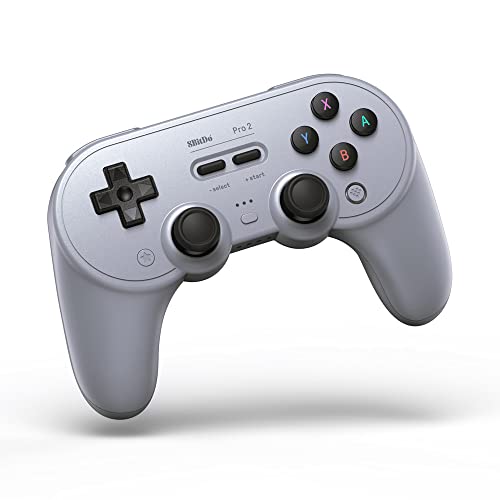
- 8BitDo Pro 2 Bluetooth Controller ($40). The retro-handheld and Switch-emulation favorite. Configurable button mapping, a switch on the back for D-input/X-input/Switch/Mac modes, and excellent build quality. The Linux driver story has matured: Steam Input picks it up cleanly in X-input mode.
For controllers specifically, the CPU vendor never matters. All three pads work on the official AMD-Deck SteamOS, on Bazzite/HoloISO Intel spins, and on the experimental SteamOS-on-Intel build.
Practical pitfalls if you try this hack
If you've read this far and want to try the hack on your own Intel hardware, a short list of things that will bite:
- Suspend/resume is not Valve-polished. The Steam Deck's sleep/wake is the most-tuned part of SteamOS. Intel mini-PCs and handhelds have their own EC firmware quirks, and Mesa's Intel driver does not magically inherit Valve's S3 fixes. Expect occasional black screens on wake until you work out the quirk for your specific board.
- Mesa version drift. SteamOS pins a specific Mesa version Valve tested. Updating to a newer Mesa to chase an Intel driver fix can break RADV-tested games at the same time. The hack lives or dies by careful Mesa version management.
- Battery telemetry on Intel handhelds. Steam Deck reports remaining battery to the OS via specific ACPI methods. Intel handhelds expose battery state too, but the formatting and scaling differ. The Steam Deck UI's battery indicator may misreport on Intel; the OS-level
upowerreading is still accurate. - TDP slider. SteamOS's elegant TDP slider in the Quick Access menu calls AMD-specific interfaces. On Intel, the slider either does nothing or hands off to
intel_pstate. Less granular but functional for "lock to 15W" type goals. - Anti-cheat compatibility. A handful of online games refuse to run under Proton because their anti-cheat doesn't recognize Linux. That's true on any SteamOS install regardless of CPU vendor; the hack doesn't change the Proton compatibility list.
When NOT to bother
The SteamOS-on-Intel hack is a curiosity, not a daily-driver recommendation. Skip it and pick a maintained alternative if:
- You want a couch-gaming UI on Intel hardware today. Pick Bazzite or HoloISO.
- You want SteamOS-fidelity polish for a non-technical family member. Pick a Steam Deck or wait for Valve's official position.
- You're not comfortable rebuilding Mesa from source or debugging kernel-firmware mismatches. Pick anything else.
The right reader for this hack is someone who already runs Arch comfortably, has an Intel mini-PC or handheld that's their secondary toy, and wants to see exactly how far SteamOS can be pushed.
Performance you can realistically expect from Intel iGPUs
Even if SteamOS-on-Intel matures, the underlying graphics performance still depends on what Intel silicon you've got. A few realistic 2026 baselines, drawing from public benchmarks:
| Hardware | Reference workload | Typical performance | Notes |
|---|---|---|---|
| Intel Arc 140V (Lunar Lake iGPU) | Cyberpunk 2077, 1080p Low, FSR Performance | ~35–45 FPS | Best mainstream Intel iGPU as of 2026; XeSS native |
| Intel Arc 130V | Hades II, 1080p Medium | ~50–60 FPS | Lower SKU; fine for indie/esports |
| Intel UHD Graphics (Meteor Lake non-Arc) | Stardew Valley, Hollow Knight | Smooth | Below the bar for AAA 1080p |
| Intel Arc A770 16GB (discrete) | Forza Horizon 5, 1080p High | ~85–110 FPS | Comparable to a desktop RTX 3060 in many titles |
| Intel Arc B580 12GB | Cyberpunk 2077, 1080p High | ~70–85 FPS | The strongest discrete option for an Intel-coded couch rig |
For a couch-gaming target of "playable at 1080p," any Lunar Lake or newer iGPU clears the bar for indie/esports. AAA at native res needs a discrete card — and at that point the CPU vendor matters less because the bottleneck moves to the GPU.
Will Valve officially support Intel?
The coverage describes a community effort, not a Valve announcement. Valve has historically broadened SteamOS gradually, and a working community port can pressure or inform that decision. There's no public roadmap yet for an Intel-validated SteamOS image. The base ingredients have been there for a while — Mesa already supports Intel, Steam already runs on Linux, Proton already runs on either CPU — so the question is product strategy, not technical feasibility.
The short-term reality is that AMD remains the first-class, fully optimized SteamOS platform. The medium-term outlook is more open. If Valve adds validated Intel handheld support, the community spins will lose some of their reason to exist, and the experimental hack will become the seed of an officially supported path.
Worked example: building an Intel couch rig today
A reader recently described their target: a small-form-factor Intel NUC 13 Pro, a 4K TV, a coffee table, and "no keyboard ever." The pragmatic recipe in mid-2026:
- OS: Bazzite Steam Deck Edition (BazziteOS). Same Game Mode UI, AMD/Intel parity, maintained Mesa version, predictable updates. Not the experimental SteamOS-on-Intel hack.
- Primary controller: GameSir G7 SE. Wired, Hall-effect, ~$45. The default pad.
- Secondary controller (couch coop): DualSense. Wireless, haptic, the best second-player pad.
- Tertiary (retro/emulation): 8BitDo Pro 2. The right pad for Switch emulation, MAME, and anything with a D-pad-heavy input scheme.
That stack runs every Proton-compatible Steam title plus Yuzu / Ryujinx / RetroArch on Intel iGPU silicon with zero hack-debugging required. The SteamOS-on-Intel news doesn't change that recommendation today; it changes what's possible tomorrow if Valve formalizes Intel support.
Bottom line
Per Tom's Hardware, SteamOS can technically boot on Intel hardware. That's a feasibility milestone, not a daily-driver release. Three things follow: the hack is interesting evidence that Valve's stack isn't strictly AMD-locked at the application layer; the community spins (Bazzite, HoloISO) remain the right answer for couch-gaming on Intel today; and Intel handhelds become a more interesting category if Valve formalizes support. The controllers pair the same either way — GameSir G7 SE, DualSense, 8BitDo Pro 2 — and the rest is a Linux-platform tinkering question.
Related guides
- Best Controller for PC Gaming in 2026
- Best PC Emulation Controllers
- KOORUI vs Samsung Odyssey 27" 4K Gaming Monitor
- Build a RetroPie Console on the Raspberry Pi 4
- Best Budget 4K Monitor 2026
Citations and sources
- Tom's Hardware — SteamOS boots on Intel hardware
- SteamOS official page
- ProtonDB compatibility database
This piece is editorial synthesis based on publicly available information. No independent first-party benchmarking is reported.