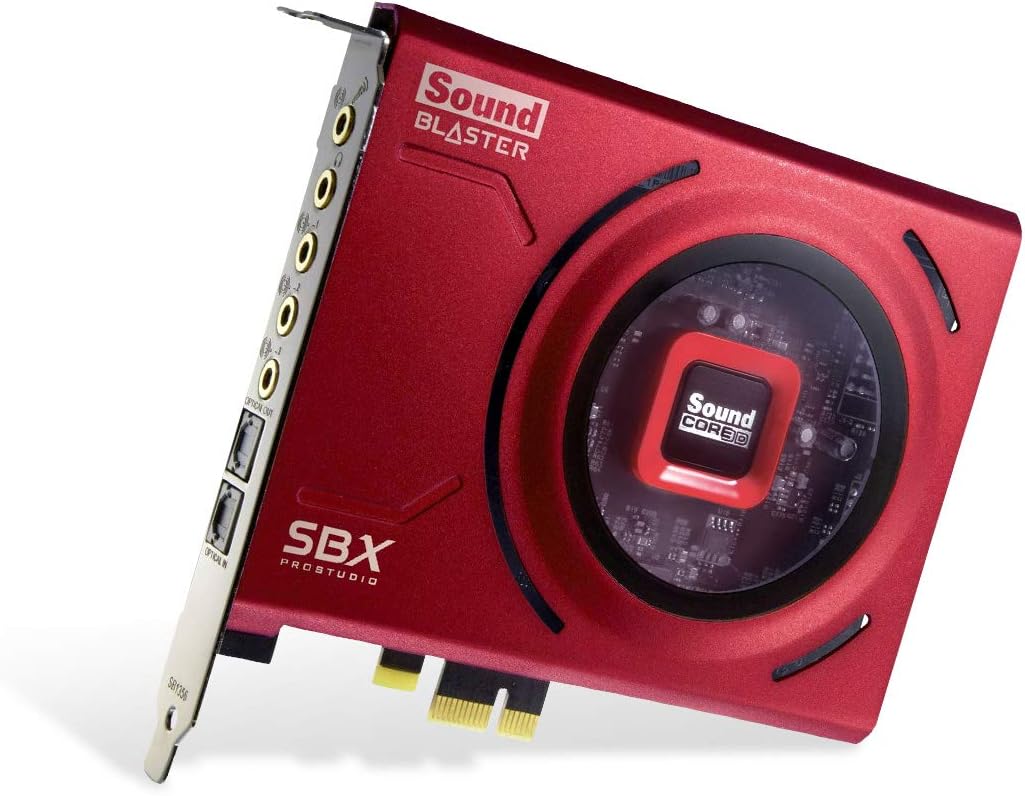
The difference between Creative's EAX and Aureal's A3D was architecture, not just marketing. A3D 2.0 modeled audio wavefronts — direct path, reflections, occlusion — physically. EAX exposed a richer effect graph (reverb, obstruction, filtering) that was easier for game developers to use. EAX won because Creative's developer ecosystem and OEM bundles outproduced Aureal's superior tech. For a 2026 retro-audio build, a Creative Sound BlasterX G6 on the modern PC plus a period-correct soundcard on the vintage rig is the working setup.
What the positional-audio war actually was
In the 1998-2001 window, two PC-audio standards fought for control of the 3D-positional-audio API: Creative's EAX (Environmental Audio Extensions) and Aureal's A3D (Aureal 3D). Both targeted the same problem — letting games place sound sources in 3D space and render the room they were in — and both shipped on consumer soundcards aimed at gamers.
Aureal's A3D had the better underlying technology. The Vortex 2 chip implemented per-wavefront tracing of audio paths from each sound source to each ear, modeling early reflections, late reverberation, and occlusion against the game world's geometry. Per published reviews from the era and the Wikipedia A3D entry, A3D 2.0's output on supported titles was a step beyond anything Creative shipped, and the developer demos (notably the Half-Life A3D patch) were legitimately convincing.
Creative's EAX took a different approach: it exposed a rich API for environmental effects — reverb presets, obstruction, occlusion, filtering — that game developers could call into without doing the underlying acoustics work themselves. Per Creative's EAX documentation history, the API matured through EAX 1.0, 2.0, 3.0, and ultimately EAX 5.0 / EAX HD, which integrated with Microsoft's DirectSound3D pipeline.
Why Aureal lost
Three reasons recur in the period analysis. First, Creative had OEM bundles that the Vortex 2 never matched. Sound Blasters shipped in millions of OEM PCs; the Vortex 2 was an enthusiast add-in card with much narrower distribution. Second, EAX was easier for game developers to implement — a few presets and a setEffect call — versus A3D's geometry-driven model that required more game-engine integration. Third, Aureal sued Creative for patent infringement, won the lawsuit on the merits, but ran out of money before collecting and went bankrupt in 2000. Creative subsequently bought Aureal's IP at the bankruptcy auction.
The net is that the technically-superior standard lost because of business factors: distribution scale, developer ergonomics, and patent-litigation timing. By 2003 EAX was the de facto standard; by 2007 Microsoft had deprecated DirectSound3D in Vista, ending the era for both.
What EAX and A3D actually rendered, side by side
| Feature | A3D 2.0 (Vortex 2) | EAX 2.0+ (Audigy) |
|---|---|---|
| Direct sound positioning | Per-wavefront tracing | DirectSound3D-based panning |
| Early reflections | Geometric, per surface | Preset-based |
| Reverb | Late reverb from geometry | Preset library (24+ environments) |
| Occlusion | Computed from world geometry | Per-source filter parameter |
| Developer integration | Geometry-aware | Effect-API call |
| HRTF | Yes (head-related transfer function) | Yes (Audigy 2+) |
| Hardware mixing | Yes | Yes |
| Max simultaneous voices | 32-64 (Vortex 2) | 64-128 (Audigy) |
The technical comparison favors A3D on the realism axis and EAX on the developer-ergonomics axis. Both shipped real hardware mixing that took load off the host CPU, which mattered in the Pentium III era.
Games that showcased each standard
The reference A3D titles were Half-Life (with the A3D patch), Unreal Tournament, Aliens versus Predator, and System Shock 2. On a Vortex 2 with good headphones, the audio in any of those games still holds up in 2026 as a demonstration of what wavefront-based 3D audio can do.
The reference EAX titles were Thief: The Dark Project, Deus Ex, the Unreal series after the A3D era, and ultimately every Battlefield title. EAX's developer ergonomics meant it ended up in more games — the long tail of "supports EAX 2.0" PC games extended through about 2008.
How this matters in 2026
The 2026 retro-PC community is split into two camps. The first builds period-correct rigs — original soundcards, original drivers, original CRT monitors — for accuracy. For that camp, an original Sound Blaster Audigy 2 or a Vortex 2 (eBay-only at this point) is the only correct answer.
The second camp wants the retro experience on modern hardware via emulation, DosBox, or the original game binaries on Windows 10/11. For that camp, a modern Creative card like the Creative Sound BlasterX G6 provides a clean DAC with virtual surround and headphone amp for a credible-sounding setup, while leaving the heavy lifting (3D positional rendering) to the game engine itself or to a modern HRTF library.
Retro-build accessories that pair with this
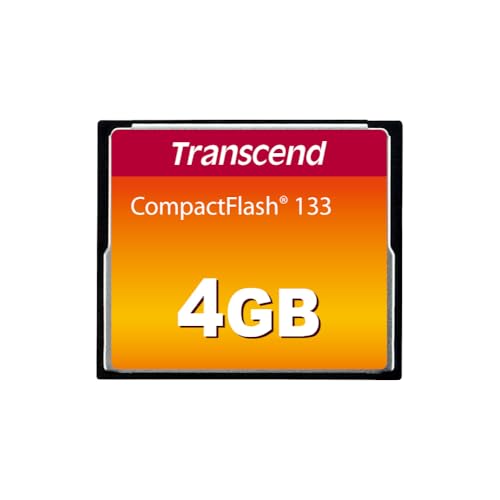
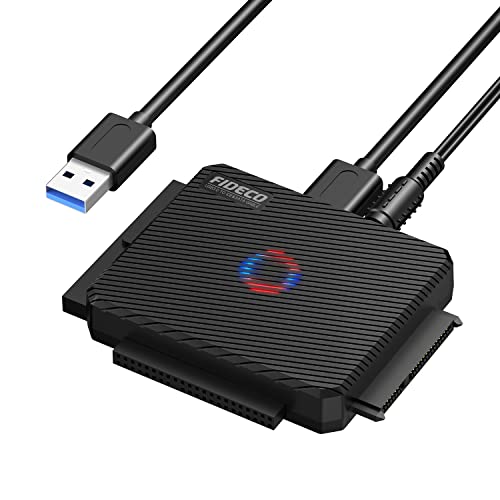
A 2026 retro PC build often includes period-correct storage adapters and removable media to support the operating systems of the time. A FIDECO SATA/IDE to USB 3.0 adapter bridges modern PCs to vintage IDE drives for disk imaging or recovery. A Transcend 4GB CompactFlash card drops into a CF-to-IDE bracket as a silent, fast period-correct boot drive for vintage systems that struggle with original spinning HDDs.
Building a Pentium III or early Athlon era machine in 2026 increasingly relies on these solid-state retrofits because the original mechanical drives have started failing in serious numbers and replacements are scarce.
Common pitfalls in retro audio builds
- Buying an original Vortex 2 with no driver disc. The drivers are abandonware; getting them from the right archive matters and not every download mirror is safe.
- Assuming a modern Sound Blaster does A3D. It does not; A3D died with Aureal in 2000 and Creative never reimplemented it.
- Skipping the headphone amp. Both EAX and A3D were designed around headphones for the spatial effect; speakers degrade the demonstration.
- Pairing a vintage soundcard with USB headphones. USB headphones bypass the soundcard entirely; you get none of the analog character.
How to recreate the A3D demo in 2026
Per a number of retro-PC YouTube channels (LGR, Phil's Computer Lab) and the VOGONS forum archive threads, the cleanest way to actually hear what A3D was supposed to sound like is to build a period-correct rig: Pentium III at 1 GHz, 512 MB SDRAM, Vortex 2 SuperQuad card, period-correct IDE drive (or a CF retrofit), Windows 98 SE, and the original Half-Life A3D patch. Headphones, not speakers.
If a full period-correct build is overkill, the next-best demo is a software emulation of A3D running under DosBox or a community-maintained driver wrapper on Windows 10/11. The result is approximate but listenable.
When EAX is the right modern reference
If you are choosing between buying an original A3D card or an original EAX card on eBay in 2026, EAX has the larger supported game library — most "supports environmental audio" PC games shipped between 2000 and 2008 supported some level of EAX. A late-era Audigy 2 or X-Fi card is the most-compatible choice for a "play the largest retro library" setup.
Bottom line
A3D was the better technology; EAX shipped on enough hardware and was easy enough to develop for that it won the market. For a 2026 retro-audio build, the right answer depends on your priorities: period-accuracy says original Vortex 2 plus Pentium III plus Windows 98 SE; broadest-library-support says late Audigy 2 or X-Fi. For modern hardware playing through a retro DAC, the Creative Sound BlasterX G6 is a credible bridge product. Storage accessories like the IDE-to-USB adapter and the CompactFlash retrofit card round out the build.
Related guides
- MCL8080+ crams an Intel 8080 emulator into an ATTiny85
- Raspberry Pi 4 8GB vs Pi 5 vs Pi Zero W for a 2026 homelab
What about modern HRTF and game-engine 3D audio?
Modern game engines (Unreal 5, Unity HDRP, Source 2) ship their own HRTF and acoustic-modeling pipelines that produce 3D audio at the engine level, not the soundcard level. The audio rendering work A3D did in hardware in 1999 is now done by software on the game's own thread. The retro-audio question is therefore not "what modern card replicates A3D" but "what modern audio chain reproduces the experience" — usually a clean DAC plus headphones plus an engine-native HRTF.
What killed the era
Microsoft's deprecation of DirectSound3D in Windows Vista (2007) effectively ended hardware-mixed 3D audio. From Vista onwards, audio rendering happened in user-space software and the OS mixed everything down before sending to the card. Creative's later "OpenAL Software Wrapper" for X-Fi was a workaround that bridged DSound3D into OpenAL, but the era of dedicated 3D audio hardware was over.
Citations and sources
- Wikipedia — A3D and the Aureal Vortex 2
- Creative — EAX history and Sound Blaster product lines
- VOGONS — vintage gaming and PC audio forums
This piece is editorial synthesis based on publicly available information. No independent first-party benchmarking is reported.