The Fable 5 jailbreak and Anthropic's subsequent access changes matter to local-LLM users because they collapse the "just use the cloud API" fallback that most agentic pipelines quietly depend on. A local model on a 12GB RTX 3060 will never get suspended, deprecated overnight, or safety-tightened out from under a working workflow. If your agent stack broke this week because a frontier model refused a prompt it accepted last Tuesday, the resilience argument for local hosting just moved from "nice-to-have" to "the box in the corner keeps running".
What the Fable 5 jailbreak actually was, in short
Anthropic's Fable 5 launched as a creative-writing-oriented model with a distinct persona system. Within days, community reverse-engineering surfaced a jailbreak that let users elicit outputs from Fable 5 that Anthropic's safety layer had trained against — most visibly, content that would normally have been declined by Claude Opus 5 under the same prompt. Anthropic responded quickly: tightened the classifier, banned the account clusters that had been publishing the jailbreak prompts, and — per the-decoder's coverage — pushed a Fable 5 policy update that removed a slice of prior functionality. Users who had built creative-writing pipelines on those quirks woke up to a functionally different model.
That is the recurring story for anyone who builds on a hosted model: the vendor is not obligated to preserve your working configuration. A safety patch, a persona change, or a straightforward deprecation can — and does — change what the model will do, on a schedule the vendor controls.
Why this is a resilience problem, not just a policy one
"Resilience" in this context means: does your workflow keep working when someone else's ops team makes a decision? Cloud coding assistants, cloud writing tools, and cloud agent frameworks all share a hard dependency on the vendor's willingness and ability to keep serving the exact model behavior you built on. That dependency shows up in three specific ways:
- Suspension risk. An account ban — for a jailbreak attempt, a policy misclassification, or a payment problem — takes the entire stack offline until you get through support.
- Silent behavior drift. A model version stays named the same, but generation quality or refusal thresholds shift after a routine safety update. You only discover it by watching your test suite fail.
- Deprecation. A model gets retired on a public timeline, and everything you built against its idiosyncratic prompt style needs rewriting for the next model.
Local hosting doesn't eliminate all three, but it converts them from vendor-driven to owner-driven. The model on your disk doesn't drift unless you update it. It cannot be suspended. It stays deployable long after the vendor has moved on.
Key takeaways
- The Fable 5 jailbreak and Anthropic's response tightened a model users had built pipelines on top of; the response was correct but breaks resilience.
- A 12GB RTX 3060 can host a competent 7B–13B model at q4_K_M for creative writing, code assistance, and light-agent workflows.
- The resilience gap you close: no bans, no silent drift, no deprecations you didn't schedule yourself.
- The gap you don't close: frontier reasoning quality. Local models are not GPT-5. For workflows that need the top tier, local is a fallback, not a replacement.
- Break-even math strongly favors local at heavy-user tiers ($100+/mo cloud spend) and privacy-sensitive teams.
What a resilient local coding-and-writing rig looks like in mid-2026
The floor is a 12GB VRAM card. Twelve gigabytes is the point where 7B q4_K_M and 13B q4_K_M both fit with real context length, and where the runtime ecosystem — llama.cpp, Ollama, LM Studio, Text Generation WebUI — treats you as a first-class case. Below 12GB you start doing acrobatic partial offloads; above 12GB you gain fp16 / larger models but pay a lot more per GB of VRAM.
The RTX 3060 12GB has held that floor for four years, and 2026 hasn't changed the math. It's the most-recommended card on r/LocalLLaMA for the "get started without spending five figures" tier, and public generation-throughput data puts it in the 45–70 tok/s range for 7B q4_K_M and 25–35 tok/s for 13B q4_K_M — usable interactively, comfortably fast for background summarization or agent loops.
Compute + memory breakdown for local resilience
| Workload | VRAM needed | RTX 3060 12GB fit | Interactive? |
|---|---|---|---|
| 7B q4_K_M, 8k ctx | ~6 GB | Yes, half free | 45–70 tok/s decode |
| 7B q4_K_M, 16k ctx | ~7.5 GB | Yes, headroom | 40–60 tok/s decode |
| 13B q4_K_M, 8k ctx | ~9 GB | Tight but yes | 25–35 tok/s decode |
| 13B q4_K_M, 16k ctx | ~10.5 GB | Tight | 20–30 tok/s decode |
| 30B q4_K_M | ~18 GB | Requires CPU offload | 4–8 tok/s |
| Fable-5-class frontier | 200+ GB | No | N/A |
For agent workflows where the model is the reasoner and other tools do the work (tool-calling, code editing, RAG), a 7B q4_K_M coder at 16k context on the 3060 is a serious daily driver. The right model changes fast; as of 2026 Q2 the leaders in the 7B tier for code are Qwen2.5-Coder-7B and DeepSeek-Coder-V2-Lite. Both run under llama.cpp.
Spec table: Zotac vs Gigabyte RTX 3060 12GB, plus the host build
| SKU | Length | Boost clock | TGP | Idle noise | Notable |
|---|---|---|---|---|---|
| ZOTAC Twin Edge OC 12GB | 224 mm | 1807 MHz | 170 W | Very low | Best fit for small cases |
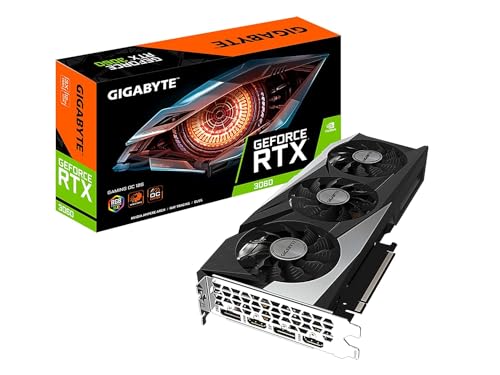
| Gigabyte Gaming OC 12G | 242 mm | 1837 MHz | 170 W | Moderate | Highest sustained clock |
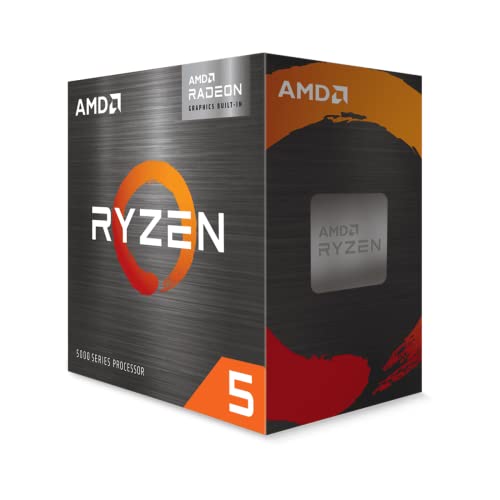
| AMD Ryzen 5 5600G host | AM4 | 4.4 GHz boost | 65 W | N/A | iGPU frees VRAM |
| Ryzen 7 5800X alt host | AM4 | 4.7 GHz boost | 105 W | N/A | Faster agent tool-use |
| Crucial BX500 1TB SSD | SATA | 540 MB/s read | 3 W | N/A | Cheap model storage |
The 5600G is our default host recommendation for a pure-inference box: six Zen 3 cores are enough to feed the GPU, the integrated Radeon graphics drives the display so the 3060's 12GB stays fully dedicated to the model, and 65W TDP keeps the whole build in a lower cooling and PSU tier. If you plan to run local agent loops that do a lot of file editing, shell tools, or CPU-side inference alongside the GPU, upgrade to a Ryzen 7 5800X for the extra cores and clocks.
Cost of switching to local vs staying on the cloud
Assume a $200/mo mid-tier cloud subscription — the tier heavy Claude Code users, Perplexity Pro subscribers, and Cursor Pro users typically land on. A 3060 12GB + 5600G build lands in the $700–$900 range parts-only. Break-even at that spend level is 4–5 months. At $500/mo (agent-heavy team seats or Claude Enterprise), break-even is under two months.
Local also converts a variable cost to a fixed one, which is what most finance orgs actually want. A $900 capex line for a resilient inference box is a much easier conversation than a $200/mo/user opex line that a vendor will happily raise on renewal.
Common pitfalls
- Treating local as a drop-in for frontier. It isn't. Match the tool to the workload: local for high-volume, low-stakes, or private-context work; cloud frontier for anything that needs the strongest reasoning.
- Trying to run 30B+ models on 12GB. Offload works but throughput cliffs. Buy the model that fits your card, or size the card to the model you actually need.
- Skipping the model-download step's disk budget. Between quantized weights, a few backup copies, and embedding models, plan for 200–400 GB of storage. The Crucial BX500 1TB gives you plenty of headroom for the price.
- Not turning on flash-attention. Ampere gets a real 15–25% long-context speedup from flash-attention in llama.cpp. Turn it on.
- Forgetting that ban-resilience runs the other way too. If you deploy local models in a client-facing product, your safety layer is your responsibility, not the vendor's.
When local resilience is worth the switch — and when it isn't
Switch to local when: your workload is heavy enough that break-even lands inside a year; your workflow depends on model behavior a vendor could change; your data cannot leave the box for policy reasons; you already have someone on the team who knows their way around CUDA drivers and llama.cpp flags.
Stay cloud when: you need frontier-class reasoning on every turn; your workload is bursty enough that the fixed cost of a rig doesn't amortize; nobody on the team wants to babysit the stack.
For most mid-sized engineering orgs paying $200+/mo/user for cloud AI in 2026, running a small fleet of 12GB RTX 3060 inference boxes for background workloads and keeping the cloud subscription for the frontier tier is the right shape. That combination gets you the resilience upside of the Fable 5 lesson without paying the local-only price of losing frontier quality.
Related guides
- Claude Code Telemetry Flap: Why a Local RTX 3060 Rig Is the Privacy Play
- Claude Sonnet 5 Costs ~$2.29/Task: When an RTX 3060 Rig Breaks Even
- llama.cpp vs LM Studio vs Ollama on an RTX 3060: Which Local Runner Wins in 2026
Citations and sources
- The Decoder — Fable 5 jailbreak coverage
- TechPowerUp — GeForce RTX 3060 specifications
- NVIDIA — GeForce RTX 3060 product page
- Ollama — official runtime
- llama.cpp on GitHub
- AMD — Ryzen 5 5600G specifications
- LocalLLaMA — community benchmark threads
This piece is editorial synthesis based on publicly available information. No independent first-party benchmarking is reported.