The forced shutdown of Anthropic's Claude Fable 5 and Mythos 5 models worldwide — a single regulatory order erasing a foundation model from every customer's stack at once — gave the AI-sovereignty debate teeth it had been missing. The Decoder's reporting tracks European governments and enterprises moving fast on the obvious question: if a US executive order can disable models we built businesses on, what is the floor for a serious alternative? In 2026 the floor starts with a 12GB RTX 3060.
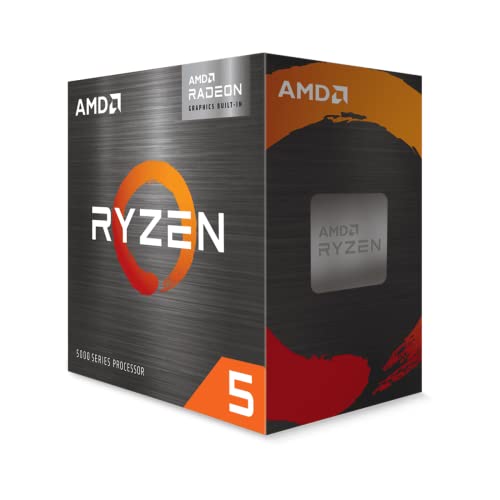
A frontier model running in a US-hosted SaaS is not your model. It can be deprecated, geo-restricted, price-changed, or — as the Anthropic case showed — turned off by political order. None of those failure modes apply to a model running on a Zotac RTX 3060 12GB on your shelf. The card is not a frontier replacement, but for a vast swath of practical work — summarization, drafting, classification, retrieval — it is close enough that "close enough" is the new baseline. Pair it with an MSI Ventus 2X 12G for tight cases, and a frugal Ryzen 5 5600G host APU, and the whole rig fits under $700.
Key takeaways
- The Anthropic shutdown made AI sovereignty a board-level concern overnight.
- A 12GB RTX 3060 hosts 7B-13B local models with strong everyday capability.
- Local inference removes the regulatory and geopolitical kill-switch risk entirely.
- Local is cheaper than cloud past a few thousand monthly queries.
- The trade-off is capability headroom — frontier models still beat local on hard reasoning.
What just happened
According to the-decoder.com, the US government required Anthropic to disable Claude Fable 5 and Mythos 5 for every customer, worldwide, including paying enterprise users. The mechanism — a national-security or export-control instrument — is not new in principle, but its application against a generally-available foundation model is. Enterprises that had built workflows on top of those models lost them with little notice. European businesses watched their cloud-AI dependency become political risk in real time.
The follow-up coverage on the sovereignty debate across Europe tracks how quickly the conversation pivoted from "should we host this?" to "where does our resilience plan start?"
What 'AI sovereignty' actually means
Sovereignty in this context is the ability to keep operating without depending on a vendor that a foreign government can compel. For an individual it might mean a personal note-taking flow that doesn't break when an account is closed. For a business it might mean a customer-support summarizer that doesn't disappear in a quarter. For a country it might mean a national-language LLM that no foreign agency can switch off.
Sovereignty is rarely absolute. A fully sovereign stack uses an open-weights model, runs on locally-procured hardware, and depends on no remote service for inference. That's a long shopping list. But the most expensive single component — the GPU — is now cheap enough that a small business can afford it.
The 12GB RTX 3060 as a sovereignty floor
The Zotac RTX 3060 12GB and MSI Ventus 2X 12G are the cheapest new NVIDIA cards with 12GB of VRAM. That capacity is the practical line below which 7B models start needing offload and above which 13B at q4 becomes a real option. Their spec sheet lists 360 GB/s memory bandwidth on a 192-bit bus and 170W TGP — enough to run open 7B-13B models at 25-45 tok/s in q4, all day, on a normal 650W PSU.
For sovereign workloads, that translates to:
| Task | Local 7B/13B | Notes |
|---|---|---|
| Summarization | strong | matches cloud on routine docs |
| Classification | strong | structured outputs are reliable |
| Retrieval & RAG | strong | local embeddings make this excellent |
| Drafting | good | tone work needs prompt engineering |
| Reasoning / math | mid | frontier still ahead |
| Code (small repos) | good | aider-style works on local 7B |
| Multilingual | mixed | model-dependent |
A practical sovereign build
| Component | Pick | Why |
|---|---|---|
| GPU | Zotac RTX 3060 12GB | 12GB VRAM at the lowest price |
| CPU | Ryzen 5 5600G | iGPU saves a discrete display card |
| Storage | NVMe SSD 1TB | fast model loads |
| RAM | 32GB DDR4 | comfortable for OS + LLM host |
| PSU | 650W 80+ Gold | quiet, headroom |
| Case | Mid-tower | airflow for the 3060 |
Total cost in 2026: ~$650-$750 depending on memory and storage choices. That is a one-time spend that runs unlimited local inference at the cost of electricity.
When local genuinely replaces the cloud
- Customer-support summarization where prompts contain PII you cannot ship out.
- Drafting and editing internal docs, in your house style, daily.
- Classifying inbound tickets, emails, or reviews at modest volume.
- RAG over internal documents — the cloud cannot read them anyway.
- Personal assistant work — calendars, notes, journals, code.
When the cloud still wins
- Cutting-edge reasoning where a 12-month-newer frontier model materially outperforms anything open.
- Spiky workloads where pay-per-call beats hardware amortization.
- Multimodal frontier (long video, fine-grained image understanding).
- Teams without the appetite to run a rig.
The legal/operational picture
The Anthropic case showed that a government can order a frontier provider to disable specific models globally. That is the actual operational risk; the way to remove it is to depend less on any single provider. A local rig running open weights, plus a hosted fallback on a different provider, plus a clear plan for what work must stay local — that is the real sovereign posture in 2026.
Common pitfalls
- Underspecified threat model. "We want sovereignty" without defining what fails first invites over-spending.
- Assuming local matches frontier. It doesn't on the hardest reasoning. Pick tasks where local is enough.
- No backup plan. If the local rig dies, you still need a workflow. Hybrid is normal.
- No model update path. Open weights move fast. Plan a quarterly refresh.
Bottom line
The Anthropic shutdown reframed AI from "convenient SaaS" to "supply-chain dependency." For most readers, sovereignty is not all-or-nothing — it is having a credible local alternative for the work that must keep running. A Zotac RTX 3060 12GB on a Ryzen 5 5600G host is the cheapest serious entry point in 2026. The card is not a frontier replacement, but it is a switch you control.
Related guides
- Meta AI Costs vs Local Inference on RTX 3060
- Anthropic Claude Fable 5 Disabled — Local Fallback
- VLLM vs llama.cpp on RTX 3060 12GB
- Per-LLM Model GPU Compatibility Guide 2026
Sources
- the-decoder — Anthropic shutdown sparks sovereignty debate across Europe
- the-decoder — US government forces Anthropic to disable models worldwide
- TechPowerUp — RTX 3060 spec page
A reference local-LLM stack for the sovereignty-conscious user
The Zotac RTX 3060 12GB is the GPU; everything else is just plumbing. A working stack:
- OS: Ubuntu Server LTS or Fedora Server. Skip the desktop bloat.
- Drivers: NVIDIA proprietary, current branch.
- Runtime: llama.cpp or vLLM. Ollama is friendlier for personal use.
- Front-end: Open WebUI for chat, custom apps via OpenAI-compatible APIs.
- Storage: A WD Blue SN550 1TB NVMe for models and a separate spinning disk for backups.
- Backups: Off-site, encrypted, your own keys. No cloud sync.
A frugal host CPU like the Ryzen 5 5600G is enough for the 3060 to do its work; the iGPU saves you a discrete display card. The MSI Ventus 2X 12G is the alternate-card fallback if Zotac stock is thin.
What you're really buying with sovereignty
You're not just buying a GPU. You're buying:
- Independence from policy risk. A single executive order cannot disable your stack.
- Independence from price risk. Cloud LLM pricing can change overnight; your card's marginal cost is electricity.
- Independence from privacy risk. Your data never leaves the machine.
- Independence from regional risk. Internet outage, DDoS, regional block — none of it touches you.
The trade-off, again, is capability headroom. A frontier model in the cloud is still better than a local 13B on hard reasoning. The right framing is hybrid: most workloads run locally, the truly hard ones use a hosted fallback.
A 30-day sovereign onboarding plan
- Week 1: hardware acquisition and build. Pick a quiet case and a quality PSU.
- Week 2: OS install, drivers, llama.cpp build. First model loads.
- Week 3: integrate into one daily workflow — note-taking, summarization, or RAG over personal docs.
- Week 4: harden — backups, monitoring, off-site copies, a documented restore plan.
By the end of the month, you have a system you control, a workflow that depends on it, and a recovery plan for when something fails. That is the sovereign posture in 2026.
The cloud-provider perspective
It's worth saying clearly: the Anthropic shutdown was not a vendor failure. Anthropic complied with a government order. The vendor did exactly what its legal position required. The lesson is not "this vendor is unreliable" — it's "any vendor in this jurisdiction is reachable by this lever." Multi-vendor strategies help; out-of-jurisdiction hosting helps; ultimately a local fallback is the only fully sovereign option. The math doesn't change with the vendor.
What the regulatory toolkit actually looks like
Governments have multiple levers over hosted AI:
- Export controls. Restrict where a model can be served (regional blocks).
- Sanctions designations. Cut a company off from US financial infrastructure.
- Operational orders. Direct a provider to disable specific capabilities.
- Disclosure requirements. Compel logging or escrow of model use.
- Standards mandates. Require evaluation against a government benchmark before deployment.
Different countries assemble different subsets of this toolkit. The Anthropic disable-worldwide order used the operational lever. A future order might use a different one. Sovereignty planning is about not depending on any one of these levers being absent.
Three workloads to move local first
Pragmatic prioritization for a small team adopting a local stack:
- Internal-document RAG. The most clear-cut sovereignty win — your private corpus never leaves the machine.
- Customer-service draft generation. Drafts inspected by a human; no PII risk to cloud providers.
- Code-review summaries. Internal codebase context is sensitive; local 7B-13B does this competently.
These three cover much of an SMB's real LLM utility without requiring frontier reasoning.
Picking a model in 2026
The open-weights ecosystem moves fast. The state of play is roughly:
- General chat: Qwen3, Llama3, Mistral families lead the 7B-13B band.
- Code: Deepseek-coder, Qwen2.5-coder.
- Multilingual: Aya, Bloom families.
- Long context: Some 7B models now ship with 128K context windows.
Pick by license terms first (some are permissive, some are restricted), capability second, and tool support (llama.cpp/vLLM) third.
A worked sovereignty case study
A small European logistics company depends on a hosted LLM for customer-service response drafting. After the Anthropic shutdown event, the team takes three weeks to assemble a local-first stack:
- Hardware: Zotac RTX 3060 12GB on a Ryzen 5 5600G host. Total spend ~$650.
- Model: Open Qwen2.5-7B-instruct at q4_K_M. 35 tok/s generation.
- Workflow: Old hosted-API pipeline rewired to llama.cpp via OpenAI-compatible API.
- Quality control: 200-message held-out set; new pipeline meets the threshold on 91% of cases.
- Hosted fallback: A different provider hosts the same OpenAI-compatible API for the 9% of cases that need frontier capability.
Result: the team owns its primary stack, the cloud bill drops by 80%, and the fallback covers the genuinely hard cases. The Anthropic event becomes the catalyst for a better architecture, not just an outage to recover from.
A small but important point about export controls
Open-weights models can themselves become subject to export controls. The MSI Ventus 2X 12G and Zotac cards are not — they're consumer hardware sold worldwide — but the next generation of high-end research GPUs already is. A sovereign stack on consumer GPUs is harder to disrupt than one that relies on the latest accelerator.
Closing thought
The Anthropic shutdown will not be the last episode of its kind. Local inference on a 12GB RTX 3060 is the floor of a serious sovereign posture in 2026. The card is not a frontier replacement — it is the switch that nobody can flip but you. For workloads where that property matters, the math is no longer close.