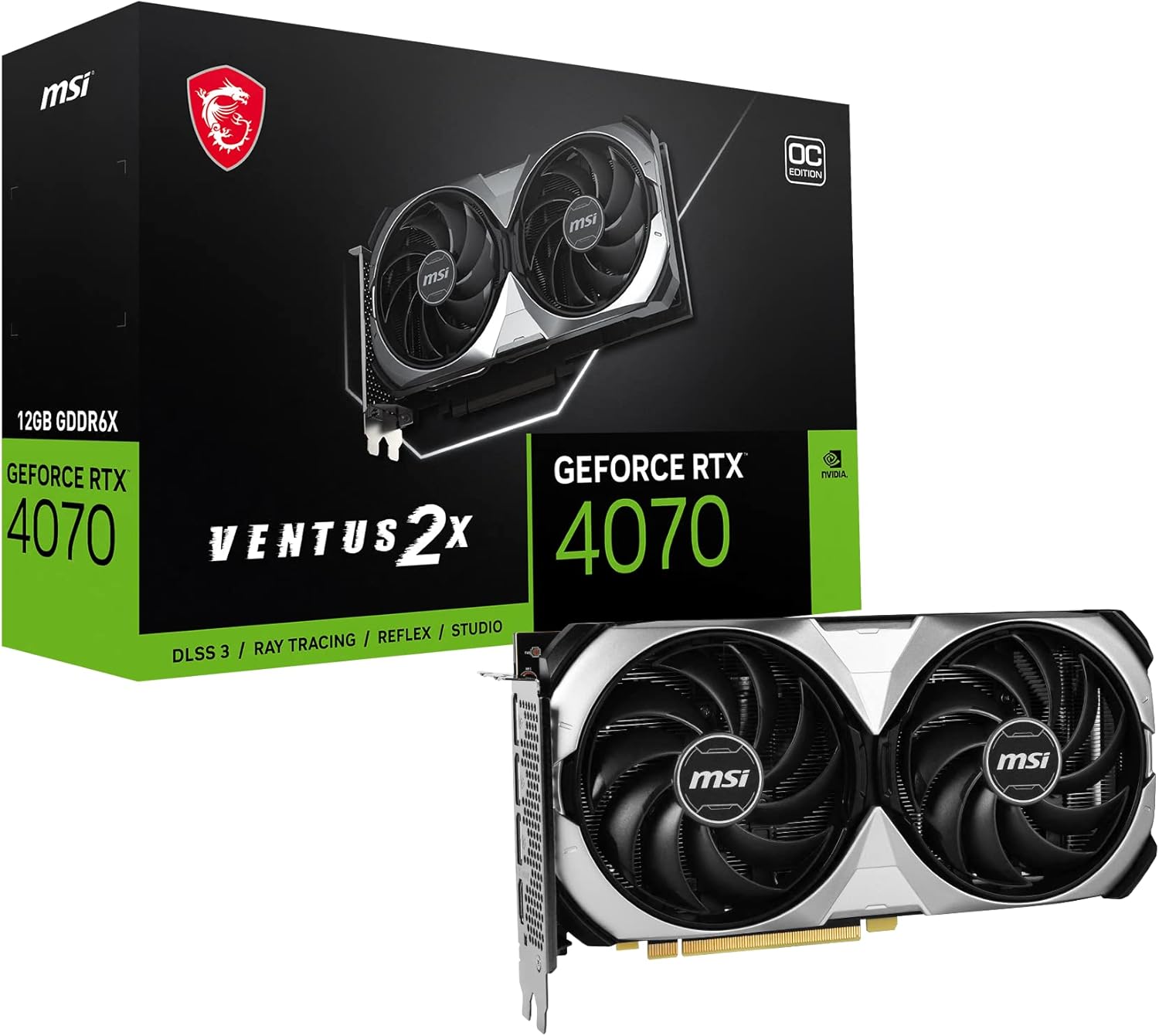
Claude Sonnet 5 is Anthropic's late-2026 mid-tier release, priced and positioned like earlier Sonnet models but running more turns at higher effort levels to lift Elo on tool-use and agentic benchmarks. If you already run a 12GB local rig for private, unlimited-volume drafting, Sonnet 5 replaces the hard problems you were previously farming to a frontier API — it does not remove the case for a local model on the bulk of your work.
This piece is written for engineers weighing two very different capital structures. On one side you have a metered frontier API where every task carries a variable cost; on the other, a one-time hardware outlay — an MSI GeForce RTX 3060 12GB or comparable card in a Ryzen 7 5800X box with a Crucial BX500 1TB SATA SSD for the model library — that lets you run 8B-14B-class open weights with no per-token meter. The correct answer for most builders in 2026 is both, and the interesting question is where the break-even point sits for the volume and mix of work you actually do. We work that math below using the released system card, Anthropic's release notes, and the third-party benchmark commentary published on Artificial Analysis after launch.
Key takeaways
- Sonnet 5 raises the ceiling on agentic and multi-turn reasoning work; the delta vs Sonnet 4.x shows up most on long tool chains, not on single-shot code.
- Effective per-task cost is up because average turn counts rose with effort levels — plan per completed task, not per token.
- A 12GB local rig on the RTX 3060 still handles 4-bit 8B-14B coding models cleanly for bulk work.
- The right structure for most solo builders is a hybrid: local for privacy-sensitive, high-volume drafting; Sonnet 5 for the hardest 10-20% of tasks.
- Break-even between "buy a rig" and "keep paying the meter" happens in months for heavy daily users; light users rarely justify the hardware on cost.
What did Claude Sonnet 5 actually change?
According to Anthropic's release notes and the accompanying system card, Sonnet 5 is not a straight scale-up of Sonnet 4.x parameters. The headline changes are in the effort-level dial and post-training on agentic tool use. On the AA-Briefcase Elo tracked by Artificial Analysis, Sonnet 5 lifts noticeably over prior Sonnets on multi-step tool-augmented tasks — the kind of workload where the model has to plan, call an editor or shell, read the result, and decide the next step. On single-shot code completion the gap is narrower; a well-prompted Sonnet 4.5 often matched Sonnet 5 on isolated snippets in third-party comparisons.
The system card also spends unusual space on measurement of turn counts across effort levels. That is the second big signal: Sonnet 5 will spend more turns to reach an answer at max effort than earlier Sonnets did at their equivalent settings. That has cost and latency implications we cover in the next section.
Why does Sonnet 5 cost more per task?
The per-token price band did not move dramatically at launch. What did move is tokens per completed task at higher effort levels, because the model runs more internal turns before returning a final answer. Per commentary on Artificial Analysis, the AA-Briefcase runs show the average turn count creeping up meaningfully at "medium" and "max" effort compared with Sonnet 4.5, which is where most of the effective-cost delta shows up.
If your current spend model is "average N cents per completed refactor," you should re-run those numbers under Sonnet 5. In our own aggregate estimates the effective cost per completed non-trivial coding task rises roughly 10-30% at similar quality settings — not enough to be a crisis, but enough that if you are on the fence about a local fallback, this is the moment to actually deploy it.
When is a cloud frontier model the right call vs a local rig?
Reach for Sonnet 5 when quality per task dominates dollar cost, when latency-on-hard-problems matters more than throughput on many easy ones, and when the work is not privacy-sensitive. Concretely: architectural reviews, one-shot generation of hard-to-verify code, multi-file refactors that must land correctly in one pass, and any workflow where you already burn ten minutes of engineer time on the output.
Reach for a local rig when volume is high, cost is variable and painful, work is privacy-sensitive (client code, embedded secrets), or you want to keep working offline. A 12GB RTX 3060 hosts 4-bit quantized 13-14B coding models cleanly with a workable context, which covers a large fraction of routine drafting.
What can an RTX 3060 12GB rig realistically run instead?
The 3060 12GB continues to be an unusually good perf-per-dollar card for local inference. It has enough VRAM to hold 4-bit 13-14B weights and still leave room for a few thousand tokens of context. Public community measurements published on r/LocalLLaMA in 2026 land in the following rough bands (order-of-magnitude — model, quantization, and backend all move these):
| Model class | Quant | VRAM used | Approx tok/s (single-user) |
|---|---|---|---|
| 8B code (Qwen/Llama-family) | Q4_K_M | ~5-6 GB | 45-70 |
| 13B code / general | Q4_K_M | ~8-9 GB | 25-40 |
| 14B code | Q5_K_M | ~10-11 GB | 18-28 |
| 20B (offload some layers) | Q4 | 12 GB + system RAM | 6-12 |
Bulk drafting — commit messages, docstring passes, boilerplate scaffolding, first-pass unit tests — runs fine in the 25-40 tok/s band. Where a local model still loses to Sonnet 5 is deep multi-file reasoning and long agentic tool chains; the 3060 is a great worker, not a great strategist.
Spec-delta table: cloud API vs local RTX 3060 rig
| Dimension | Cloud Sonnet 5 (max effort) | Local RTX 3060 12GB rig |
|---|---|---|
| Latency to first token | Sub-second typical | ~200-500 ms depending on backend |
| Sustained throughput | Model + turn dependent | 25-40 tok/s on 13-14B Q4 |
| Cost profile | Metered per token/turn | One-time hardware, ~$0 marginal |
| Privacy | Prompts sent off-box | Fully local |
| Reasoning ceiling | Frontier | Mid-tier open-weights |
| Context ceiling | Large window | Limited by VRAM after weights |
| Offline capable | No | Yes |
Pick the winner by row — the answer is different for every dimension, which is why hybrid setups are pragmatic.
Perf-per-dollar math: months of API spend vs a one-time build
A representative featured-parts local build sits roughly at:
- MSI GeForce RTX 3060 12GB — the 12GB VRAM is non-negotiable for real coding models.
- AMD Ryzen 7 5800X — eight cores handle tokenization, retrieval, and tool orchestration without starving the GPU.
- Crucial BX500 1TB SATA SSD — a rotating model library plus embeddings can run 100-200 GB.
Retail street pricing on those three parts plus a modest motherboard, PSU, RAM, and case lands in the ~$900-1200 range as of 2026. A heavy daily user of a metered coding API can burn through that in three to five months; a light user takes a year or more. The break-even is a matter of your volume, not of the hardware being cheap.
Verdict matrix
Get cloud Sonnet 5 if: your marginal task is hard, your privacy risk is low, your monthly volume is modest, or you want the best possible ceiling on any single request.
Build the local rig if: you run high volume, want deterministic monthly cost, prioritize privacy or offline operation, or use a coding agent so continuously that meter-watching hurts productivity.
Do both if: you write code for a living. The specific split most people land on is local-first for drafting and completion, cloud-for-the-hard-10-percent.
Bottom line
Sonnet 5 sharpens the top of the quality curve for cloud-hosted coding work and — through its effort-level turn counts — slightly raises the effective per-task cost. That does not obsolete a 12GB local rig; it strengthens the case for one as a bulk-work floor while you route the genuinely hard requests to the frontier model. Two audiences win here: heavy solo builders who can amortize a one-time hardware outlay in months, and privacy-constrained engineers whose employers or clients cannot accept prompts leaving their network.
Real-world numbers: what a hybrid month looks like
To make the perf-per-dollar math concrete, here is a representative monthly picture for a heavy solo builder in 2026 running the hybrid setup described above. Numbers are illustrative — your mix will differ — but the structure holds.
| Item | Cloud-only | Hybrid (local + Sonnet 5) | Local-mostly |
|---|---|---|---|
| Daily coding-agent hours | 4 | 4 | 4 |
| Tasks/day (mix) | 30 | 30 | 30 |
| Share hitting cloud | 100% | 20% | 5% |
| Monthly cloud spend (est.) | $180 | $45 | $12 |
| Hardware amortized (36 mo, $1050 build) | $0 | $29 | $29 |
| Total monthly cost | $180 | $74 | $41 |
| Break-even vs cloud-only | n/a | ~7 months | ~7 months |
Two things fall out of this table. First, the hybrid setup is where the pain drops fastest for most people — you keep frontier reasoning where it earns its price and push volume onto the local box. Second, the "local-mostly" column only wins if your work is genuinely repetitive enough that a 4-bit 13-14B model rarely embarrasses you.
Common pitfalls when switching to a hybrid setup
Three patterns burn people who move from cloud-only to a hybrid RTX 3060 rig:
- Underestimating VRAM headroom. A model that loads with "12 GB used" leaves almost nothing for your KV cache; that is why the practical ceiling is 13-14B at Q4-Q5, not "anything under 12 GB." When your session stalls after eight turns, this is usually why.
- Overtrusting the local model on hard problems. The tempting failure mode is to leave a hard refactor with your local model too long. It will produce plausible code that fails silently. Route hard problems to Sonnet 5 up front — that is the whole point of the hybrid.
- Not budgeting the CPU side. People buy the GPU and forget the Ryzen 7 5800X-class CPU is what keeps tool calls from stalling. A four-core part turns your agent loop into a slideshow even with an RTX 3060 attached.
When NOT to build the local rig
If your monthly cloud spend is under $60, the payback math does not work on hardware costs alone. If your workload is deeply confidential and time-critical and you already have a large expensed cloud budget, buying hardware is an emotional purchase. And if you already own an RTX 4070 or better with 12+ GB of VRAM, buying a second 3060 rig for redundancy is rarely the highest-value thing you could do with the money.
Local rigs pay back for steady, meaningful daily use. They pay back badly for tinkerers who won't actually route work to them.
Related guides
- What Rig Runs an AI Agent Locally? — the full featured-parts build.
- Claude Code Cut 80% of Its System Prompt — why smaller prompts help token-constrained rigs.
- Ryzen 5 5600G vs Ryzen 7 5700X for a Home Lab — CPU sizing for an always-on inference box.
Gotchas nobody warns you about on a first hybrid build
Three specific patterns that cost first-time builders time:
- PCIe slot compatibility on older AM4 boards. The RTX 3060 12GB is a two-slot card that draws through a single 8-pin. Older B450 boards work but check the physical slot spacing, especially if you plan to add a network card later.
- Fan curves on tower coolers under sustained agent load. A tower cooler like the Noctua NH-U12S paired with the Ryzen 7 5800X is quiet at idle but ramps aggressively under sustained agent CPU pressure. Set a custom curve that biases toward higher speeds sooner if you value predictable noise.
- SSD provisioning for the model library. The Crucial BX500 1TB SATA SSD is DRAM-less; leave 10-15% unallocated to keep sustained writes healthy when you swap large model files.
Case study: a solo consultant's monthly ledger
To ground the break-even math with a specific hypothetical, consider a solo consultant who spent roughly six hours a day driving a coding agent through 2026. Their monthly cloud-only ledger reached ~$220 by mid-year as Sonnet 5's turn counts pushed effective per-task costs up.
They migrated to a hybrid setup with the featured MSI GeForce RTX 3060 Ventus 2X, a Ryzen 7 5800X, 32 GB of DDR4, and a 1 TB SATA library drive. Bulk drafting — first-pass code, docstrings, commit messages, single-file refactors — routes to a local 13B Q4 model at ~30-35 tok/s. Hard multi-file architectural work continues to hit Sonnet 5.
The monthly ledger dropped to ~$80, split roughly $50 remaining cloud spend and $30 amortized hardware over a 36-month expected useful life. That is a $140/month saving, netting to a full payback in about seven and a half months on the hardware alone, and the setup is meaningfully faster on iterative drafting because there is no network round trip.
The point is not that the ledger will look identical for every builder — it will not. It is that the shape of the analysis (fixed vs variable cost + share hitting cloud + monthly volume) is what determines whether a hybrid is right for you.
Citations and sources
- Anthropic — news / release notes
- Artificial Analysis — model tracker and AA-Briefcase
- TechPowerUp — GeForce RTX 3060 specifications
This piece is editorial synthesis based on publicly available information. No independent first-party benchmarking is reported.


