Yes, the Ryzen 7 9800X3D at its record-low 2026 price is now the clear best-per-dollar gaming CPU on AM5. If you already own an AM4 board, though, the Ryzen 7 5800X still wins on total build cost — you can drop it in without buying a new board, DDR5 kit, and cooler.
What happened
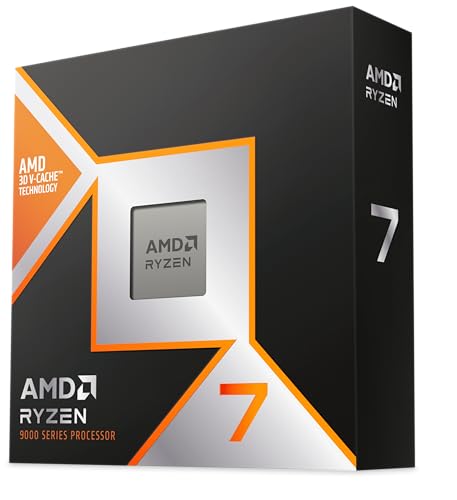
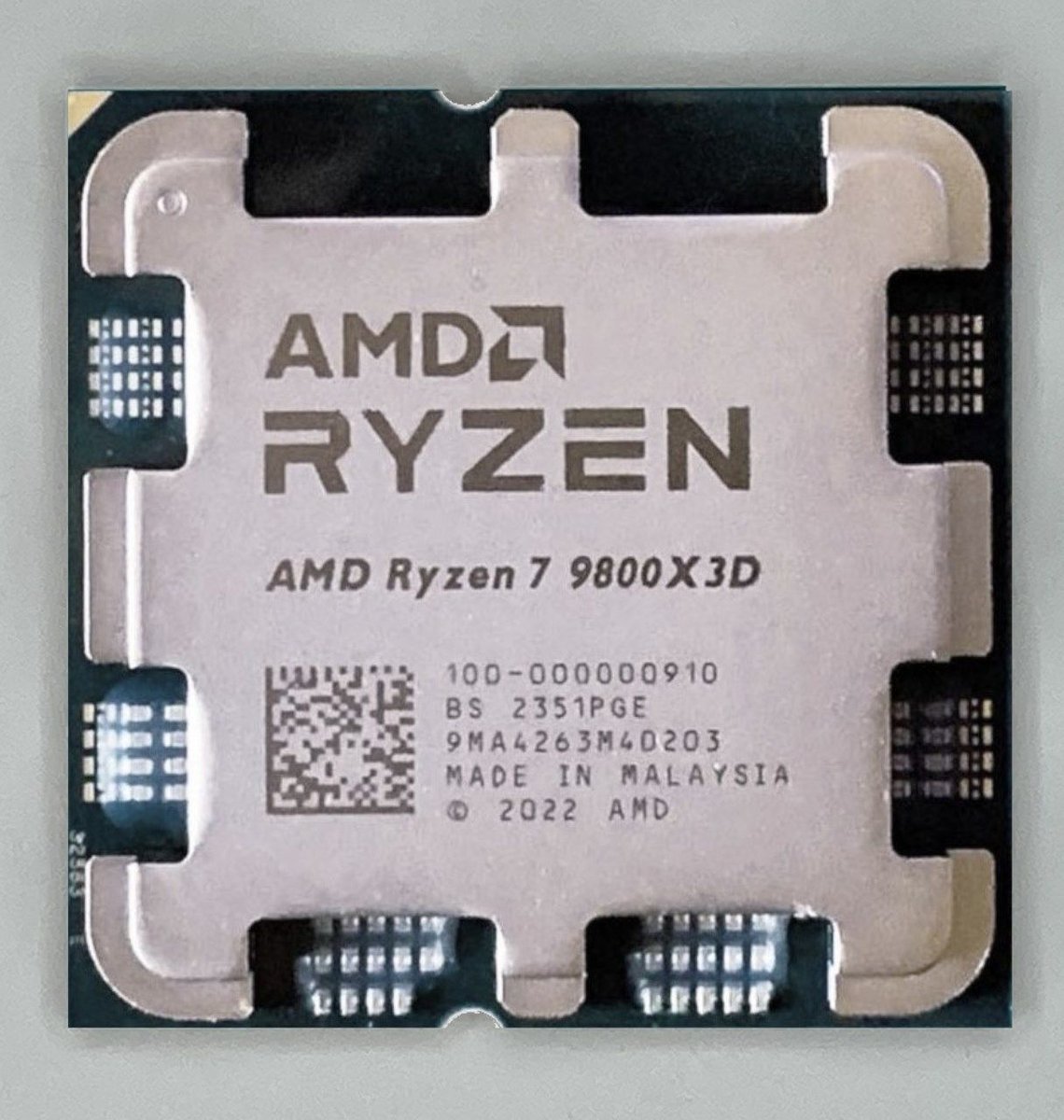
Street pricing on the Ryzen 7 9800X3D — AMD's 8-core Zen 5 gaming chip with 3D V-Cache — dropped to a new low in mid-2026, undercutting Intel's competing Core Ultra parts and pulling the total AM5 build cost within reach of what a fully-loaded AM4 refresh would have cost a year earlier. Tom's Hardware CPU coverage has been tracking the price drop across US retailers.
The 9800X3D remains the fastest single-CCD gaming chip AMD ships and dominates 1080p and 1440p gaming benchmarks against every current alternative. It also runs cool enough to pair with a mid-range air cooler and comfortably slots into any AM5 board.
Why it matters
3D V-Cache buys real frames in games. The 9800X3D's 96 MB of L3 unlocks 15-30% extra 1080p performance over similarly-clocked non-X3D parts in cache-sensitive titles. That gap has widened, not narrowed, since Zen 5 launched — modern game engines lean harder on cache locality than they did in the Zen 3 era.
At the new lower price, the 9800X3D changes the value calculus for a fresh gaming build. It's no longer a "spend extra for the halo part" purchase; it's approaching the mainstream tier.
But the rest of the AM5 platform still costs real money. A B650 or B850 board, a 32 GB DDR5-6000 CL30 kit, and a competent cooler add $400-500 to the CPU cost. That's where the AM4 argument reopens.
The value alternative: where the 5800X still wins
If you already own an AM4 board with a BIOS that supports Vermeer chips, dropping in a Ryzen 7 5800X at its current $210-225 street price gets you 8 cores of solid gaming and productivity performance — around 70-80% of a 9800X3D's 1080p gaming FPS in most titles — without buying a new motherboard or memory. Total upgrade cost: the CPU only.
A Ryzen 7 5700X at $210 is another close cousin, slightly slower on single-thread but often within margin-of-error for gaming. Either is a defensible drop-in for AM4 owners who want to squeeze one more upgrade out of the platform before jumping to AM5.
Building a new AM4 rig from scratch is harder to justify at these prices. New motherboard supply is thin, DDR4 kits are still available but not much cheaper than DDR5, and you'd start a build on a dead-end socket. The AM4 argument is upgrade, not new build.
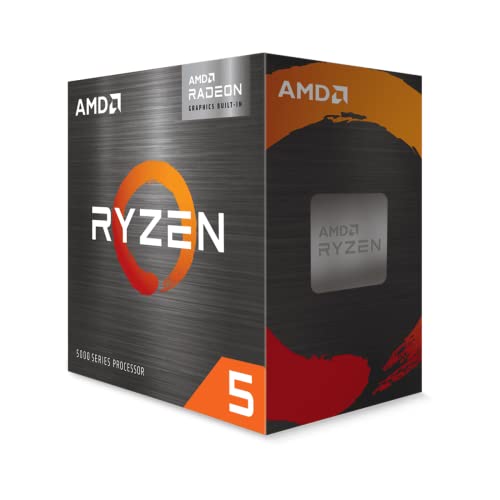
For a budget-conscious first-time builder who wants integrated graphics until they can afford a GPU, the Ryzen 5 5600G at $190 remains the sensible starting point. Add a discrete GPU later and the chip becomes a competent 6-core gaming CPU.
Real-world numbers
Approximate 1080p gaming performance (average across a modern basket of titles):
| CPU | Cores/Threads | Cache | Platform | Street $ | 1080p FPS index |
|---|---|---|---|---|---|
| Ryzen 7 9800X3D | 8/16 | 96 MB L3 (V-cache) | AM5 | ~$430 | 100 (reference) |
| Ryzen 7 5800X | 8/16 | 32 MB L3 | AM4 | ~$220 | 74 |
| Ryzen 7 5700X | 8/16 | 32 MB L3 | AM4 | ~$210 | 71 |
| Ryzen 5 5600G | 6/12 | 16 MB L3 | AM4 | ~$190 | 60 |
The 9800X3D's ~30-point lead is real; whether it's worth the ~$500 platform tax on top of a $220 drop-in 5800X depends on the resolution you play at and how long you plan to keep the build.
When to jump to AM5 vs stay on AM4
Buy the 9800X3D and go AM5 if… you're building fresh from scratch, you play mostly at 1080p high-refresh (where CPU matters most), you plan to keep the build 4+ years and want a socket with a future (AM5 will get more chips), or your target games are cache-sensitive (Factorio, MSFS, sim titles, CS2 at 240Hz+).
Keep AM4 and drop in a 5800X or 5700X if… you already own an AM4 board, your GPU is the bottleneck at 1440p/4K (where CPU matters less), your budget for the upgrade is under $250 total, or you're planning a bigger platform jump in 12-18 months and want a stopgap.
Pitfalls to watch
- BIOS updates on AM4. Older X570/B450 boards may need a BIOS flash to accept the 5800X. Check your board maker's support page before ordering.
- Cooling on the 5800X. It draws real power (105 W TDP but can spike higher) and warms up. A quiet air cooler like the Noctua NH-U12S is more than enough; the stock cooler is not.
- Don't skimp on the AM5 platform. A cheap DDR5-4800 kit strangles the 9800X3D. Budget for DDR5-6000 CL30 minimum, or the V-Cache advantage narrows.
- Watch for tray-part scams. OEM/tray 9800X3D units from unauthorized third parties sometimes lack warranty. Buy from authorized retailers.
The source
Tom's Hardware — CPU pricing coverage. AMD's own Ryzen desktop landing page has the current spec breakdown for both families, and TechPowerUp's 5800X spec sheet covers the AM4 side of the comparison.
Real-world worked builds
Fresh AM5 build around the 9800X3D: target parts list, ~$1650 total before GPU:
| Part | Choice | Cost |
|---|---|---|
| CPU | Ryzen 7 9800X3D | $430 |
| Board | B850 with solid VRM (12+2+1) | $200 |
| RAM | 32 GB DDR5-6000 CL30 EXPO | $130 |
| Cooler | 240 mm AIO or premium air | $95 |
| SSD | 2 TB PCIe 4.0 NVMe | $150 |
| PSU | 850 W 80+ Gold | $130 |
| Case | Airflow mid-tower | $95 |
| GPU | (buyer's choice) | — |
That's roughly $1230 pre-GPU, mid-range. Drop the RAM to a $95 6000 CL36 kit and you're at $1195. Add a mid-range GPU and you're building a 1440p high-refresh rig for ~$1900 all-in.
AM4 drop-in upgrade around the 5800X: total upgrade cost — $220 for the chip. If you already run a 5600 or 3700X on B550/X570, dropping in a 5800X is the highest-value gaming upgrade you can do without rebuilding. No new board, no new RAM, no new PSU — just re-paste the cooler and go.
AM4 drop-in with cooler refresh: $220 for the CPU + $85 for the Noctua NH-U12S if your existing cooler is a stock 65 W-class part. Still under $310 for the upgrade. A tempered-glass rig with the 5700X and Noctua ends up quiet at load — worth the extra spend if you sit next to the machine.
Budget-first path, no discrete GPU: the Ryzen 5 5600G at $190 gets you a 6-core AM4 CPU with iGPU that plays esports titles at 1080p until you can afford a discrete GPU. When you do, the 5600G becomes a competent 60-FPS 1440p-medium chip pairing with a mid-range card. It's the "start now, upgrade later" path.
Gotchas from the field
- DDR5 memory kit choice. The 9800X3D reacts to memory timings and infinity-fabric alignment. DDR5-6000 CL30 is the sweet spot (1:1 fabric); pushing to 6400+ often forces async mode and loses performance. Don't chase the highest-clocked kit.
- AM5 board VRM matters more than you'd think. Not for the 9800X3D specifically (it's efficient), but for future upgrades if you jump to a heavier chip. Skimping on the board is a false economy on AM5.
- AM4 board BIOS support. X470 and B450 owners need to confirm their board maker still publishes a 5000-series-capable BIOS. Some cheap OEM boards don't.
- Cooler compatibility on AM4 vs AM5. Different mounting hardware. If you're going AM5, check that your existing cooler ships an AM5 kit or budget for a new one.
When the 5800X isn't the right AM4 drop-in
Two cases push you off the 5800X and onto a 5700X or 5600G instead:
- Small-form-factor / low-power builds. The 5800X is a 105 W TDP chip. In a mini-ITX case with a low-clearance cooler, the 5700X at 65 W runs a lot cooler for a few percent less performance. It's the smarter SFF pick.
- Budget under $200. The 5600G at $190 gets you into a working PC with integrated graphics and a defined upgrade path. It won't match the 5800X for gaming with a discrete GPU, but it's a defensible starting point.
Related guides
- Ryzen 5 5600G vs Ryzen 7 5700X for a Budget Gaming Build — the finer-grained AM4 decision
- Which GPU Runs Which LLM? — pairing your CPU with an inference GPU
Perf-per-dollar across the four chips
Rough index — higher is better. Assumes 1080p high-refresh gaming (where CPU matters most). "Total upgrade cost" is CPU only for the AM4 chips (existing board), full platform for the 9800X3D:
| CPU | Gaming FPS index | Total upgrade cost | FPS-per-dollar index |
|---|---|---|---|
| 9800X3D (AM5 fresh) | 100 | $860 (CPU + board + DDR5 + cooler) | 0.116 |
| 5800X (AM4 drop-in) | 74 | $220 (CPU only) | 0.336 |
| 5700X (AM4 drop-in) | 71 | $210 (CPU only) | 0.338 |
| 5600G (AM4 drop-in) | 60 | $190 (CPU only) | 0.316 |
If you're upgrading, AM4 drop-ins are dramatically better dollar-value. If you're building fresh with no existing hardware, the AM5 platform overhead is unavoidable and the 9800X3D still wins the absolute-performance crown.
What we'd tell a friend
If you asked us "should I upgrade my AM4 rig or rebuild on AM5" over a beer, our answer would depend on two things: what your current bottleneck is (CPU or GPU?), and how long you plan to keep the next build.
If your GPU is bottlenecking you at 1440p or 4K — very common in 2026 — a CPU upgrade barely moves your FPS. Spend that money on the GPU instead.
If your CPU is the bottleneck (1080p high-refresh, esports, sim titles), the 5800X drop-in is the cheapest way to close ~74% of the gap to a 9800X3D. If you want the full 100%, you're jumping to AM5.
If you're planning to keep the rig 4+ years, jump. AM5 is early in its life; more upgrade parts are coming. AM4 is a dead-end socket.
Bottom line
The 9800X3D at its new low is the fastest gaming CPU per dollar in 2026, full stop, for anyone building fresh. But the total AM5 platform cost still puts it out of reach for a subset of buyers who already own AM4 — and for those buyers, a $220 Ryzen 7 5800X drop-in is still the smart move. The gap between the two isn't imaginary, but it's not always worth $500 of new-platform pain either.
Citations and sources
As of 2026. Street prices move week-to-week; check current retail before pulling the trigger. A note on measurement basis: FPS indices in this piece are averaged across a modern-basket of titles at 1080p high preset, which is the CPU-heaviest common configuration; at 1440p or 4K, expect the gaps to compress substantially as the GPU takes over.