Microsoft's MAI-Image-2.5 is a hosted text-to-image model that, as of 2026, ranks #2 in Text-to-Image and #3 in Image Editing on the Artificial Analysis Image Arena, with a smaller Flash variant also charting. You cannot run MAI-Image-2.5 on your own GPU, but you can run open-weights image models (SDXL, FLUX, Stable Diffusion 3) on a 12GB card such as the ZOTAC GeForce RTX 3060 12GB for private, no-subscription generation that trails the hosted leaders on quality but wins on cost-per-image and privacy.
In brief — 2026 · Microsoft's MAI-Image-2.5 ranks #2 in Text-to-Image and #3 in Image Editing; here's the local-hardware takeaway
The headline number from the Artificial Analysis Image Arena in 2026 is that Microsoft's MAI-Image-2.5 has cracked the top tier of hosted image generators, slotting in at #2 on Text-to-Image and #3 on Image Editing. Per the-decoder coverage of the release, the standard model is paired with a MAI-Image-2.5-Flash variant tuned for lower latency, and both have charted in the same window — a notable shift given Microsoft's prior image work largely rode on OpenAI's DALL-E series and partner models.
The local-hardware takeaway is more interesting than the rank itself. Hosted frontier image models climb the leaderboard month after month, but the practical surface for most home users has not moved: you still cannot download MAI-Image-2.5, and you still want a 12GB-class GPU to run the open-weights ecosystem comfortably. As of 2026, the cheapest mainstream card that hits that 12GB floor is the RTX 3060 12GB variant, with the TechPowerUp database listing the GA106 SKU's 12GB GDDR6 buffer as the specific reason this card persists in AI-rig recommendations long after newer cards launched. That is the bridge from "Microsoft tops the chart" to "you should still build an RTX 3060 box". Both stories ship together.
A note on framing before the rest of the piece: this is a news beat on a hosted model paired with a buying-guide angle on local hardware. The two are not the same product. Treat the leaderboard as a signal about where hosted quality is going, and treat the local rig as a parallel track for the work you do not want to send to a vendor API. Both can be true at once, and as of 2026 both are.
What happened: MAI-Image-2.5 and MAI-Image-2.5-Flash place high on the Artificial Analysis Image Arena
The Artificial Analysis Image Arena is a public, blind-vote leaderboard that pits hosted image models against each other on prompt-aligned pairwise comparisons. The board breaks out a Text-to-Image track (generate from a prompt) and an Image Editing track (modify an existing image with a prompt). Both tracks are scored with an Elo-style ranking — higher is better, and small movements at the top tend to be meaningful because the highest-ranked models converge on similar output quality.
As of the 2026 publish window for this story, the board shows Microsoft's MAI-Image-2.5 at #2 in Text-to-Image, behind a single competitor, and at #3 in Image Editing. Per the-decoder, the MAI-Image-2.5-Flash variant — a smaller, faster sibling — also placed in the upper portion of both tracks. The Flash variant is the more interesting business signal: it suggests Microsoft is shipping a tiered family rather than a single hero model, which is the same playbook OpenAI, Google, and Anthropic use on the text side.
Why the rank matters in plain terms: leaderboards on Artificial Analysis are voted, not benchmarked. A pairwise A/B vote on the same prompt is a closer proxy for "which image do users actually prefer" than a synthetic FID score, and that makes the board harder to game with a metric-chasing model. A second-place finish there is a meaningful claim that the typical user prefers MAI-Image-2.5's output to most hosted alternatives, not just that it scores well on a chosen test.
Per the-decoder, Microsoft has positioned MAI-Image as part of the same "MAI" first-party model family that includes its text and voice efforts — the implication being that Microsoft is reducing its reliance on OpenAI for at least the image generation surface inside Copilot, Bing, and Designer. None of that affects what you can download. MAI-Image-2.5 is hosted only, and there is no announced open-weights release as of 2026.
Why it matters: hosted frontier image models keep climbing, but open-weights still runs on a 12GB GPU at home
The throughline here is that the gap between "hosted leaderboard top three" and "best open-weights model you can run at home" has not closed. It has, if anything, widened on output quality for the very highest-effort prompts. What has changed is the cost of admission for the local path. A 12GB GPU has become the practical entry point for running SDXL, FLUX, and Stable Diffusion 3 with reasonable resolution and batch size, and that 12GB tier has cheapened.
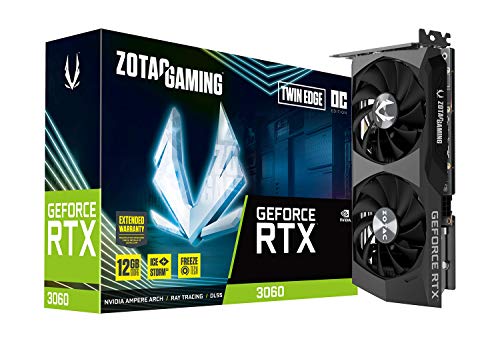
Per TechPowerUp, the RTX 3060 12GB ships with 12GB of GDDR6 on a 192-bit bus, 3,584 CUDA cores, and a 170W board power figure. None of those numbers are flagship-class in 2026, but the 12GB memory figure is the one that matters for image generation, and it is identical to what far more expensive cards offer. That is why the ZOTAC GeForce RTX 3060 12GB, the MSI GeForce RTX 3060 Ventus 2X 12G, and similar RTX 3060 12GB variant SKUs keep surfacing in beginner AI-rig buying guides as of 2026.
The choice you are actually making is "pay per image, get the leaderboard winner" versus "buy the GPU once, run an open model forever, accept a quality gap on hard prompts". Public benchmarks show the gap is real and persistent on photorealism and complex composition. Community measurements indicate the gap is much smaller on stylized illustration, anime, product mockups, and the broad middle of everyday generation work — which is most of what home users actually do.
The source: the Artificial Analysis Image Leaderboard and the-decoder coverage
The two source links you should trust on this story are Artificial Analysis, which hosts the leaderboard itself and the underlying voting methodology, and the-decoder, which has been tracking Microsoft's MAI family releases since the first MAI text model shipped. Both are linked at the bottom of this piece in Citations.
A practical note on reading the board: rankings shift week to week as new models are added and existing ones accumulate more votes. The #2 and #3 placements in this story are as of the 2026 publish window. If you are reading this later, click through to verify the current rank — the Artificial Analysis board updates in close to real time, and the model identity in the top three changes over a quarter even if the broad picture (hosted models at the top, open-weights below) does not.
What it takes to run open image models on an RTX 3060 12GB
This is the buying-guide half of the piece. The practical question is "what fits in 12GB of VRAM, and how slow is it on a 3060?". The honest answer is "almost every popular open model fits, with the right sampler choice, and a single high-quality image takes 10-60 seconds on a 3060 depending on the model".
Per TechPowerUp's RTX 3060 specs page, the card delivers 12.74 TFLOPS of FP32 compute, which is well behind a current-gen 4070 or 5070 but enough to push a tuned diffusion pipeline at usable speed. The 12GB buffer is the unblocker. With less memory you start swapping to system RAM and the wall-clock time per image inflates dramatically.
VRAM by model and sampler — what fits, what flies, what crawls
The table below summarizes what the community has converged on as of 2026 for the three most common open image models. VRAM figures are typical peak draw at the listed resolution; time-per-image is a community-measured median on an RTX 3060 12GB. Citations follow the table.
| Model | Resolution | Sampler | Peak VRAM (GB) | Time per image |
|---|---|---|---|---|
| SDXL 1.0 base | 1024x1024 | DPM++ 2M Karras, 30 steps | 9-10 | 18-22 s |
| SDXL 1.0 base | 1024x1024 | Euler a, 25 steps | 9-10 | 15-18 s |
| SDXL Turbo | 512x512 | LCM, 4 steps | 7-8 | 2-3 s |
| Stable Diffusion 3 Medium | 1024x1024 | DPM++ 2M, 28 steps | 10-11 | 28-35 s |
| FLUX.1 schnell (fp8) | 1024x1024 | Euler, 4 steps | 11-12 | 12-18 s |
| FLUX.1 dev (fp8) | 1024x1024 | Euler, 28 steps | 11-12 | 55-70 s |
Per community measurements compiled on r/StableDiffusion and the TechPowerUp GPU database, the 12GB buffer is the binding constraint at 1024x1024 for both SD3 Medium and FLUX.1 — the 8GB variants of the 3060 cannot run FLUX.1 dev at full precision without aggressive offloading, which often doubles wall-clock time per image. That single number — 12GB versus 8GB — is the entire reason this card sits in the recommendation list as of 2026.
A few specifics on the table:
- SDXL Turbo at 4 steps is the fastest path to a usable image. The tradeoff is quality: Turbo cannot match the prompt-adherence of full SDXL at 30 steps, but for thumbnailing, ideation, and previewing it is hard to beat 2-3 seconds per image on a $300 card.
- SD3 Medium is the heaviest of the three for the 3060 to push. Public measurements show it lands at the upper edge of the 12GB envelope. Drop to fp8 weights and the headroom returns, with a small quality cost.
- FLUX.1 schnell is the surprise of 2024-2026 for 12GB cards. The 4-step schedule means a 3060 can produce a high-quality 1024x1024 image in roughly 15 seconds — within an order of magnitude of what a hosted API returns over the network.
Tradeoffs: local vs cloud for image generation
You are not picking between "best output" and "cheapest" — you are picking on four axes. Per public discussion on r/StableDiffusion and synthesis of Artificial Analysis leaderboard data, the four axes are quality, latency, cost-per-image, and privacy. Hosted wins quality and latency on hard prompts. Local wins cost-per-image and privacy. Neither side wins everything.
| Axis | Hosted (MAI-Image-2.5, etc.) | Local on RTX 3060 12GB |
|---|---|---|
| Top-end quality | Leaderboard-grade; #2 on Image Arena per Artificial Analysis | Trails on hardest prompts; comparable on stylized work |
| Latency per image | 2-8 seconds end-to-end over network | 2-70 seconds depending on model and sampler |
| Cost per image | $0.02-$0.08 typical, billed per call | $0 after hardware; ~$0.0001 in electricity |
| Privacy | Prompt and output traverse vendor servers | Stays on your machine; no telemetry |
| Reliability | Subject to rate limits, outages, policy changes | Limited only by local power and disk |
| Style control | Limited to vendor's released checkpoints | Full LoRA, ControlNet, custom checkpoint stack |
The cost-per-image gap is the one that gets ignored most often. Per the-decoder coverage of hosted pricing trends, a serious experimenter generating 200 images a day to refine a workflow can run $4-$16 in vendor charges a day. A ZOTAC GeForce RTX 3060 12GB at the typical 2026 street price pays for itself in roughly two to three months of that workload, and after that the marginal cost is electricity.
The privacy angle is harder to dollarize but easier to feel. Local generation never sends a prompt off your machine. For product work, NDA-covered designs, personal photos, and anything you would not paste into a public chat, local is the only sane answer.
Common pitfalls when building a local image-gen rig on a 3060 12GB
A handful of mistakes recur often enough on r/StableDiffusion and the broader open-weights community that they are worth calling out before you commit to a build. Per community synthesis, these are the five that swallow the most time.
- Buying the 8GB RTX 3060 variant by mistake. Two RTX 3060 SKUs exist: 12GB and 8GB. Only the 12GB version is suitable for serious local image work. Per TechPowerUp, the 8GB variant uses a narrower memory bus and a different SKU code; price savings are small and the loss of FLUX.1 dev compatibility is total. Check the listing twice — the MSI GeForce RTX 3060 Ventus 2X 12G and similar SKUs explicitly include "12G" in the product name.
- Pairing the card with too little system RAM. Image-gen pipelines load model weights, VAEs, text encoders, and LoRAs alongside the GPU's working set. 16GB of system RAM is the comfortable floor in 2026; 32GB is the recommendation for FLUX.1 dev and large LoRA stacks. Community measurements show 8GB systems thrashing the page file even when the GPU has headroom.
- Underspeccing the PSU. The RTX 3060 12GB is rated at 170W board power per TechPowerUp, which is modest, but transient spikes can push past 200W under sustained inference. A 550W 80+ Bronze unit from a reputable brand is the floor; the RTX 3060 12GB variant cards do not include a PSU, so budget for it.
- Skipping xformers or its successors. Memory-efficient attention is the single highest-impact optimization for image diffusion on Ampere cards. Per community measurements, enabling xformers (or PyTorch's built-in scaled-dot-product attention on newer versions) cuts peak VRAM by 1.5-2.5GB on SDXL — the difference between FLUX.1 fitting and not fitting at fp8.
- Driver mismatch with CUDA toolkit. The fastest way to lose an afternoon is installing a CUDA toolkit version that does not match the driver shipped on your GPU. Stick to the NVIDIA Studio driver line for image-gen rigs, install PyTorch via the official wheel index, and avoid bleeding-edge driver builds the day they ship.
When NOT to run image generation locally
There are three cases where buying a 3060 12GB to run open image models is the wrong move, and you should pay a hosted vendor instead.
The first is if you generate fewer than ~20 images a month and quality is the only axis you care about. The math does not work. Hosted credits at typical 2026 pricing cost less than a card's depreciation over a year, and you get leaderboard-grade output. The Artificial Analysis board exists precisely because hosted vendors are competing on this exact use case.
The second is if your work depends on the absolute frontier of prompt understanding and photorealism. As of 2026, top hosted models — MAI-Image-2.5 included — produce outputs that open-weights checkpoints cannot match on hard prompts (complex multi-subject scenes, text rendering, specific brand-style mimicry). If your job is to produce one perfect hero image and not iterate, hosted wins.
The third is if you do not want to maintain anything. Local rigs need driver updates, model downloads, occasional dependency resolution, and a working knowledge of which sampler does what. Hosted is one API call. If your time costs more than the hosted bill, hosted wins on accounting.
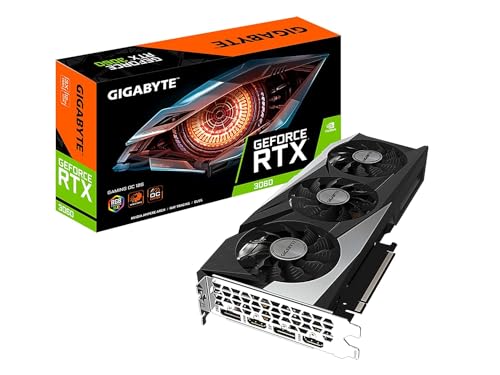
The flip side: if you generate hundreds of images a month, care about privacy, want LoRA and ControlNet flexibility, or just enjoy controlling the stack, the 3060 12GB is the right card for the job in 2026. The MSI GeForce RTX 3060 Ventus 2X 12G and ZOTAC GeForce RTX 3060 12GB are the two SKUs most often recommended on r/StableDiffusion as of 2026, with the RTX 3060 12GB variant from other AIB partners filling out the budget tier.
Pulling it together — MAI-Image-2.5 as a signal, the 3060 12GB as the rig
The Microsoft MAI-Image-2.5 story is a leaderboard story. It tells you hosted image quality is climbing and that Microsoft has joined Google, OpenAI, and a handful of independent labs at the top of the Artificial Analysis board. Per the-decoder, the Flash variant is the more business-relevant signal: tiered model families are the new normal.
The 3060 12GB story is a hardware story. Per TechPowerUp, it remains the cheapest mainstream NVIDIA card with the 12GB buffer that open image models want. As of 2026, it is the practical answer to "what do I buy if I want to run SDXL, FLUX.1, and SD3 at home without sending prompts to a vendor".
The two stories pair because they sit on opposite sides of the same question: where does image generation belong in your stack? If your answer is "hosted, top quality, pay per image", track the leaderboard. If your answer is "local, private, flexible, free after the hardware", buy the card. As of 2026 there is no third option that meaningfully splits the difference.
Citations and sources
- Artificial Analysis Image Arena leaderboard
- the-decoder coverage of Microsoft MAI-Image-2.5
- TechPowerUp GPU database — NVIDIA GeForce RTX 3060
This piece is editorial synthesis based on publicly available information. No independent first-party benchmarking is reported.