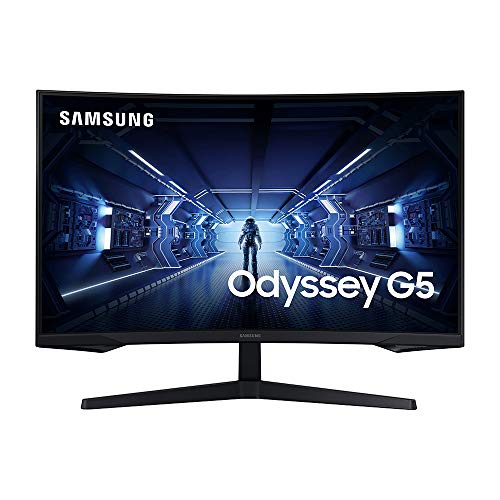
For console gaming in 2026, the best-value 4K monitor is the SANSUI 27" 4K, which delivers UHD resolution and high refresh at a sharp price. If picture quality is the priority, the KOORUI 27" 4K QD-Mini LED brings real HDR via local dimming. Want a bigger, cheaper screen and can accept 1440p? The 32" Samsung Odyssey G5 is the big-screen value pick. Pair any of them with a DualSense for a tidy desk setup.
What consoles actually need from a 4K monitor
The PS5 and Xbox Series X are built around a TV, so moving them to a desk monitor takes a little care. The features that matter are not the same ones a PC gamer obsesses over. You need enough HDMI bandwidth to accept the resolution and refresh rate you want, variable refresh rate (VRR) to smooth frame-rate dips, HDR that actually does something, and a panel response fast enough to avoid smearing. Get those right and a monitor beats a TV for desk-distance response and space; get them wrong and you have paid for a "4K 120Hz" label the console can never light up.
This guide walks through each of those requirements, then names picks for three situations: the best-value true-4K screen, the picture-quality 4K screen with genuine HDR, and the big-screen pick for buyers who will trade 4K for a larger, cheaper 1440p panel. We are deliberately honest about that last trade-off, because a 32-inch 1440p monitor and a 27-inch 4K monitor are different tools, not interchangeable bargains.
Key takeaways
- Value pick: the SANSUI 27" 4K — true UHD and high refresh at an aggressive price.
- Picture-quality pick: the KOORUI 27" 4K QD-Mini LED — local-dimming zones for real HDR impact.
- Big-screen pick: the 32" Samsung Odyssey G5 — a larger, cheaper WQHD (1440p) panel, not 4K.
- Check the HDMI spec, not the headline refresh: many budget 4K panels cap at 60Hz over HDMI.
- VRR is worth prioritizing for the smoothness it adds on both consoles.
What HDMI features do the PS5 and Xbox Series X need from a monitor?
This is the spec that trips up the most buyers. The PS5 supports 4K up to 120Hz in titles that implement it, but it needs the monitor to accept that signal over HDMI with adequate bandwidth. Many budget 4K panels advertise a high refresh rate that is only reachable over DisplayPort from a PC, while their HDMI input caps at 4K60. Since consoles only output over HDMI, that cap is what you actually get. Per console-focused testing like RTINGS' best monitors for PS5, the rule is simple: verify the HDMI input's supported resolution-and-refresh combination, not just the panel's peak number. A monitor that does 4K120 over HDMI is meaningfully different from one that only manages it over DisplayPort.
Does a budget 4K panel deliver real HDR, or just the label?
Mostly the label, with exceptions. Entry-level HDR certifications often mean the panel merely accepts an HDR signal without the brightness and local dimming needed for genuine high-dynamic-range impact. A Mini LED model like the KOORUI gets far closer to real HDR thanks to dimming zones that let bright highlights pop against dark areas, whereas a basic HDR400-class panel mainly adds the badge. If HDR matters to you, look for local dimming and a meaningful peak-brightness figure rather than the bare "HDR" word, a point editorial roundups like Tom's Hardware's best 4K gaming monitors consistently make.
Panel type and response: what VA, IPS, and Mini LED mean for you
The panel technology behind a console monitor shapes its strengths. VA panels, like the Samsung Odyssey G5's, deliver deep contrast and rich blacks that suit cinematic single-player games, with the trade-off of slightly slower response in dark transitions. Fast LCD/IPS-class panels prioritize quick pixel response and wide viewing angles, which helps in motion-heavy titles. Mini LED, as in the KOORUI, layers local-dimming zones over an LCD to push real HDR contrast that ordinary panels cannot match. For console gaming you want a response time fast enough to avoid visible smearing during fast pans — and crucially, you want to read the actual response and contrast figures rather than trust the marketing, because "1ms" claims often refer to a best-case mode that compromises image quality. Match the panel to your library: VA for atmospheric single-player, faster panels for reaction games, Mini LED when HDR is the whole point.
Spec-delta: three console monitor options compared
| Spec | SANSUI 27" 4K | KOORUI 27" 4K Mini LED | Samsung 32" Odyssey G5 |
|---|---|---|---|
| Resolution | 4K UHD (3840×2160) | 4K UHD (3840×2160) | WQHD (2560×1440) |
| Panel tech | Fast LCD | QD-Mini LED, local dimming | VA |
| HDR | Basic HDR | Real HDR via dimming zones | Basic HDR |
| Size | 27" | 27" | 32" |
| Best for | Value 4K | Picture quality | Big screen on a budget |
| Price | ~$285 | ~$500 | ~$279 |
The table clarifies the choice. Two are true 4K at 27 inches; the Samsung is a larger 1440p screen at a similar price to the value 4K pick. That is the central decision: maximum sharpness at 27 inches, or a bigger picture at lower pixel density.
Is 27-inch or 32-inch better for console couch-and-desk distance?
It depends on how far you sit. A 27-inch 4K panel packs an extremely high pixel density that looks razor-sharp at desk distance and rewards close viewing. A 32-inch screen feels more TV-like and is easier to read from a couch a little further back, but at 1440p (as with the Odyssey G5) its pixel density is lower, so it is less crisp up close. Choose by viewing distance: a desk setup where you sit close favors 27-inch 4K; a mixed desk-and-sofa arrangement, or a preference for a bigger image, leans toward the 32-inch screen with the understanding that you are trading resolution for size.
How does VRR/120Hz support change the console experience?
VRR (variable refresh rate) synchronizes the monitor's refresh to the console's fluctuating frame rate, eliminating the tearing and stutter that appear when a demanding title dips below its target. Both the PS5 and Xbox Series X support VRR over HDMI, so a monitor advertising console-compatible VRR meaningfully improves perceived smoothness in real games, which rarely hold a perfectly locked frame rate. The 120Hz ceiling matters for the subset of titles that render at high frame rates — competitive shooters and well-optimized games — where the extra fluidity is genuinely visible. Together, VRR plus a high refresh ceiling is what makes a monitor feel responsive in a way a basic 60Hz TV does not.
Where does a DualSense + monitor setup beat a TV for response and desk space?
Moving console gaming to a desk monitor with a DualSense wins on two fronts. First, response: gaming monitors typically have lower input lag and faster pixel response than the average living-room TV, which matters for reaction-heavy games. Second, space and ergonomics: a desk setup puts the screen at an ideal distance, frees the living room, and keeps a headset and controller within reach. The DualSense's 3.5mm headphone jack is a simple way to route audio when a monitor lacks decent speakers — many do — so you get a clean, headset-ready station without extra hardware. For a single-player at a desk, it is often a better experience than the couch.
Performance-per-dollar across the three
The SANSUI 27" 4K is the value leader for true UHD: it gets you genuine 4K and high refresh at a price near the 1440p Samsung, which is a strong showing. The KOORUI Mini LED costs roughly double but earns it with real HDR and superior contrast — money well spent only if picture quality is your priority. The Samsung Odyssey G5 is the pick for buyers who value screen size and a proven brand over outright resolution, delivering a big, smooth 1440p image cheaply. There is no single "best dollar"; it depends on whether you weight resolution, HDR, or size.
Common pitfalls when buying a console 4K monitor
- Trusting the headline refresh rate. Confirm the HDMI input supports the resolution-and-refresh combo you want; many high-refresh 4K panels only hit their peak over DisplayPort.
- Expecting real HDR from a basic certification. Without local dimming and meaningful brightness, "HDR" is mostly a label. Look for Mini LED or a real dimming spec.
- Confusing 4K and 1440p picks. The 32" Odyssey G5 is WQHD, not 4K — a great big-screen value, but do not buy it expecting UHD sharpness.
- Forgetting about speakers. Many gaming monitors have weak or no speakers; plan to use the DualSense's audio jack, a headset, or external speakers.
- Overbuying refresh for the games you play. If your library is cinematic single-player titles, locked 4K60 with VRR may serve you better than chasing 120Hz you rarely trigger.
Real-world: setting up your console with a desk monitor
A few minutes of setup gets the most from any of these panels. Connect the console with a certified high-bandwidth HDMI cable — the cable matters, because a low-spec cable can silently cap your resolution or refresh. On the PS5, run the console's display test from the video settings so it negotiates the highest supported resolution and refresh the monitor reports, and enable VRR and 120Hz output where the option appears. On the Xbox Series X, the display settings expose resolution, refresh, and "Allow VRR" toggles; turn them on and let the console confirm what the panel accepts. Then enable HDR only if the panel does it justice — on a basic-HDR screen, SDR can actually look better than a washed-out HDR mode, so trust your eyes over the badge.
Finally, sort out audio before your first session. If the monitor's speakers are weak or absent, plug a headset into the DualSense's 3.5mm jack or run a cable to external speakers. Doing this up front avoids the common "great picture, no sound" surprise that catches first-time desk-console converts.
When NOT to buy a 4K console monitor
A 4K monitor is not always the right console display. If you sit far back on a couch in a living room, a large 4K TV is the better tool — monitors are optimized for desk distance, and their smaller sizes look cramped across a room. If your budget is tight and you mostly play frame-rate-sensitive competitive titles, a high-refresh 1440p monitor (like the Odyssey G5) often serves better than a budget 4K panel that only manages 4K60, because the consoles render those games at high frame rates that a sharper-but-slower 4K screen cannot fully exploit. And if you already own a capable HDR TV at a comfortable viewing distance, a desk monitor is a lateral move unless you specifically want the space savings and lower input lag. Match the display to where and how you actually play.
Verdict matrix
- Get the SANSUI 27" 4K if... you want genuine 4K sharpness and high refresh at the best price, and a 27-inch desk-distance screen suits your space. It is the value pick.
- Get the KOORUI 27" 4K Mini LED if... picture quality is your priority and you want real HDR with local dimming — and you accept the higher price for it.
- Get the Samsung 32" Odyssey G5 if... you want the biggest, smoothest screen for the money and are happy with 1440p rather than 4K. It is the big-screen value choice, not a 4K one.
Bottom line
Buy a console monitor for what the console can actually use: verified HDMI bandwidth, console-compatible VRR, and HDR that is more than a sticker. The SANSUI 27" 4K is the value sweet spot for true UHD, the KOORUI Mini LED is the upgrade when HDR matters, and the Samsung Odyssey G5 is the honest big-screen-on-a-budget pick at 1440p. Add a DualSense and route audio through its jack, and a desk monitor will out-respond the living-room TV every time.
Related guides
- Best 4K gaming monitors under $500 in 2026
- Best gaming monitors for console and PC in 2026
- Best 4K gaming monitors under $600 in 2026
- Best console-and-PC dual gaming monitor in 2026
Citations and sources
- RTINGS — best monitors for the PS5
- Tom's Hardware — best 4K gaming monitors
- Samsung — gaming monitors
This piece is editorial synthesis based on publicly available information. No independent first-party benchmarking is reported.