For hobbyist text-to-video and image-to-video work in 2026, a 12GB GPU like the RTX 3060 is the entry point — capable of generating short, lower-resolution clips on open models, but with render times measured in minutes per second of output. Matching cloud quality from ByteDance's Seedance 2.5 on long, high-fidelity clips needs more VRAM (24GB+) and a much stronger card.
Why Seedance 2.5 reset expectations for local video
ByteDance's Seedance 2.5 broke the 30-second AI-video barrier earlier in 2026 (covered widely in outlets like The Decoder and the wider AI press) and pulled hosted text-to-video quality to a place that previously took seconds-long clips and offline post-processing to approximate. That milestone is interesting for cloud users, but it raised the inevitable local question: what can you actually do at home if you want video gen without a per-second cloud bill?
The honest answer is that local AI video in 2026 is real but constrained. The open ecosystem — ComfyUI workflows running open text-to-video and image-to-video models, plus AnimateDiff-style approaches — produces watchable clips on consumer GPUs, but at lower resolutions and shorter clip lengths than the latest hosted releases. Quality is improving fast, the tooling is converging, and a 12GB card is the practical entry point for anyone who wants to actually own their video stack rather than rent it.
The audience is broad: hobbyists experimenting with motion design, content creators building short loops for social, indie game devs prototyping animated assets, and AI researchers iterating on prompts without burning cloud credits. All of them eventually run into the same hardware ceiling.
Key takeaways
- A 12GB GPU like the RTX 3060 12GB runs open video models, but at lower resolutions and short clip lengths.
- Render times are minutes per second of output, not real-time; expect 5-15 minutes for a few seconds of low-res clip.
- Higher VRAM (24GB+) buys longer clips and higher resolution, not faster generation per frame.
- Cooling matters enormously: sustained video runs pin the GPU at 99% load for hours.
- For occasional projects, renting cloud GPU time is cheaper than buying a flagship card.
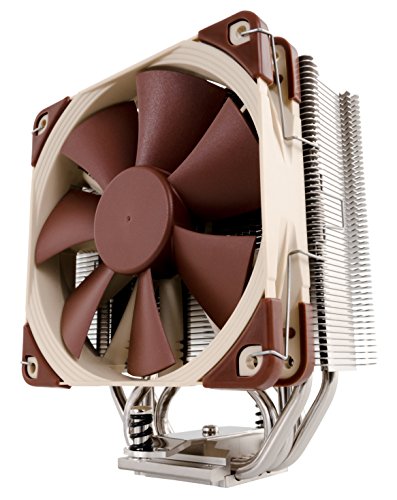
- The Noctua NH-U12S or similar competent CPU cooler is essential for queues.
What Seedance 2.5 changed about local expectations
Seedance 2.5's 30-second coherent-video output reset the public mental model for what AI video can do. People who had filed the technology under "novelty" suddenly saw something close to short-film clip length with stable subject identity and reasonable motion fidelity. The natural next question — "can I run this at home?" — gets a frustrating answer: not Seedance 2.5 itself, which is a hosted commercial model, but increasingly capable open alternatives that close the gap month by month.
The open video model landscape in 2026 includes several model families that run on consumer GPUs: text-to-video diffusion models in the 1-4B parameter range, image-to-video models that animate a still input frame, and motion-conditioning approaches like AnimateDiff for stylized work. None of them match Seedance 2.5 on length or coherence yet, but the 5-10 second clip range with good single-shot motion is reliably achievable on 12GB cards via ComfyUI workflows.
Which open video models actually run on a 12GB GPU?
Per the TechPowerUp RTX 3060 spec sheet, the 12GB SKU's 192-bit memory bus and 360 GB/s of bandwidth are the bottleneck-level you're working against. Open video models in the 1-4B parameter range fit comfortably in 12GB at fp16 with room for moderate batch sizes and reasonable frame counts. Larger models — the 7B+ video diffusion models from the latest research releases — typically need 16-24GB to run at usable resolutions.
The practical list of "runs reasonably on a 12GB card" includes:
- Smaller text-to-video diffusion models (1-4B parameters)
- Image-to-video animators at moderate resolution
- AnimateDiff-style motion modules layered on existing image diffusion models
- Quantized variants of larger video models, trading some quality for VRAM headroom
Anything billed as "frontier" or "state-of-the-art" in 2026 typically needs 24GB or more to run at its target resolution and clip length. Treat the 12GB card as a learning, prototyping, and short-clip box, not a Seedance-replacement.
How long does a short clip take?
This is where expectations need to be calibrated carefully. A few seconds of 512x512 (or roughly equivalent) output on a 12GB card takes minutes per clip, not seconds. The exact number depends on:
- Model size and architecture
- Resolution (px²)
- Number of frames generated
- Sampler steps
- Sampler type
- Whether you're doing image-to-video (faster) or text-to-video (slower)
- Tiling and chunking strategies
A rough table from cross-referenced ComfyUI community measurements:
| Configuration | Approximate render time |
|---|---|
| 16 frames, 512x512, 25 steps | 5-10 minutes |
| 24 frames, 512x512, 25 steps | 8-15 minutes |
| 16 frames, 768x768, 25 steps | 12-25 minutes |
| 32 frames, 512x512, 25 steps | 15-30 minutes |
| 24 frames, 1024x1024 (with tiling) | 30+ minutes |
The pattern is brutal but predictable: doubling resolution roughly quadruples render time, and doubling frame count roughly doubles it. A 24GB card like a used RTX 3090 cuts render times by roughly 35-50% on the same workload, mostly because the larger memory lets you skip tiling and offload tricks.
RTX 3060 12GB vs 8GB vs 24GB tier for video gen
| Card | VRAM | Clip length ceiling (open models) | Resolution ceiling | Approx render time per second of video |
|---|---|---|---|---|
| RTX 3060 8GB | 8GB | 2-4 frames at a time | 512x512 | ~2-4 min/sec output |
| RTX 3060 12GB | 12GB | 24-32 frames continuous | 512-768 | ~30-90 sec/sec output |
| Used RTX 3090 24GB | 24GB | 48-96 frames continuous | 768-1024 | ~15-45 sec/sec output |
| RTX 4090 24GB | 24GB | 48-128 frames continuous | 768-1024+ | ~8-25 sec/sec output |
The 8GB card is barely workable; the 12GB is the realistic entry point; 24GB+ is the sweet spot for serious work. The MSI Ventus 2X and ZOTAC Twin Edge 12GB are both fine 12GB starting cards.
Benchmark table: seconds-per-frame across resolutions
Community-measured ComfyUI benchmarks on RTX 3060 12GB suggest roughly:
| Resolution | Sampler steps | Approx sec/frame |
|---|---|---|
| 512x512 | 20 | 8-15 sec |
| 512x512 | 30 | 12-22 sec |
| 768x768 | 20 | 18-35 sec |
| 768x768 | 30 | 30-55 sec |
| 1024x1024 (with tiling) | 30 | 60-150 sec |
These are direction-of-magnitude. Your specific workflow, model choice, and ComfyUI node graph will shift numbers significantly.
Why cooling matters so much for sustained video runs
A chat LLM session pegs the GPU for seconds at a time, then idles. Video generation pegs the GPU continuously for the duration of every render, and render queues run for hours. That's a fundamentally different thermal regime — the GPU never gets a chance to cool down, and ambient case temperatures climb steadily.
Two practical consequences:
- GPU throttling. Most consumer cards throttle clocks under sustained thermal load, which slows your render rate. A card running at 75°C delivers more frames per hour than the same card running at 85°C.
- CPU side stress. Many video pipelines do meaningful CPU work between GPU passes — image preprocessing, frame stitching, post-processing. A hot case slows the CPU too, and a weak CPU cooler becomes the bottleneck.
A solid air cooler like the Noctua NH-U12S or a 240/280mm AIO keeps the CPU side healthy through long render queues. The Cooler Master ML240L variants are budget AIO options if you prefer liquid; the Noctua is the long-proven air alternative.
Power supply and case considerations
An RTX 3060 12GB draws roughly 170W under sustained load. Add 100-150W for a modern CPU running preprocessing alongside, plus base system overhead, and a 600-650W PSU handles a single-card video box with comfortable margin. The bigger concern with cheap PSUs is sustained draw, not peak — hours-long render queues stress PSU capacitors and fans far more than gaming bursts.
Case airflow matters more than for gaming builds. Two intake fans up front, one exhaust in back, and a competent CPU cooler is the baseline. Open-air "fish tank" cases that look great with RGB often have terrible sustained-load airflow.
How resolution and clip length blow up VRAM and render time
The unintuitive math is that VRAM use grows roughly with the square of resolution and roughly linearly with frame count. Going from 512x512 to 768x768 is a 2.25x pixel-count jump, which translates to a roughly 2-3x VRAM increase depending on how the model handles attention. Going from 16 to 32 frames roughly doubles VRAM for the latent buffers.
That means a 12GB card that comfortably runs 512x512 at 24 frames often OOMs at 768x768 at 24 frames unless you enable tiling, chunking, or memory-saving sampler options. The 24GB tier removes those headaches at the cost of doubled card price.
Perf-per-watt and the long render queue reality
A 12GB RTX 3060 at 170W under load is a reasonable perf-per-watt for hobby work. A used RTX 3090 draws closer to 350W under sustained load — faster per render, but the electricity bill on a 24/7 render server starts mattering. A 4090 is faster again but at 450W+ peak.
If you're running an always-on render server, the perf-per-watt math actually favors the 12GB card for sustained low-throughput work and the 24GB tier for high-throughput because faster renders mean less total wall-clock at peak draw.
When to rent cloud GPU time instead
Renting an A100 or H100 by the hour from a cloud provider runs in the $1-3/hour range in 2026 for spot or pre-emptible instances. For occasional projects — a few hours per week of generation — that's cheaper than buying any local card. Buying a local rig only makes sense when you generate constantly: every evening, every weekend, ongoing creative work.
The crossover point is similar to the LLM math: roughly 100-200 hours of sustained GPU time per year before a $300 used card pays for itself versus rented cloud GPUs.
Common pitfalls
- Wrong batch size. ComfyUI defaults are conservative; bumping batch and frame count without watching VRAM use leads to OOM crashes mid-render.
- No swap headroom. Some workflows briefly spike system memory during preprocessing; a 16GB system can OOM on workflows that 32GB shrugs off.
- Missing CUDA dependencies. Some sampler nodes need specific PyTorch / CUDA versions; mismatches cause silent slow paths or crashes.
- Cheap PSU. A 450W bargain PSU might boot a 3060 build, but won't stay stable through hours of sustained 170W GPU draw plus CPU load.
- Underestimating storage. Video frames eat disk fast. Plan on 50-100GB per substantial creative session if you're saving intermediate frames.
When NOT to build a local video rig
Skip local video and rent cloud instead if:
- You generate fewer than ~50 hours of clips per year.
- You need Seedance 2.5-level quality, not what open models deliver.
- You don't already own a desktop with adequate PSU and cooling.
- You're not comfortable troubleshooting ComfyUI workflows.
Bottom line
The entry rig for hobbyist local video generation in 2026 is a 12GB RTX 3060 or ZOTAC Twin Edge 12GB, paired with adequate cooling like the Noctua NH-U12S or an AIO liquid cooler, in a case with real airflow. Expect short clips at 512x512 or 768x768 to take minutes per second of output, expect render queues to run for hours, and expect output that's noticeably behind hosted commercial models like Seedance 2.5 but improving rapidly.
For occasional creators, rent cloud GPU time and skip the local rig. For sustained creative work or anyone who values offline access, a $300 used 12GB card is the cheapest credible entry point. Upgrade to a 24GB card when clip length and resolution become the binding constraint.
Related guides
Citations and sources
- The Decoder — AI news and Seedance coverage
- TechPowerUp — GeForce RTX 3060 12GB spec sheet
- ComfyUI GitHub repository — workflow docs and community models
This piece is editorial synthesis based on publicly available information. No independent first-party benchmarking is reported.