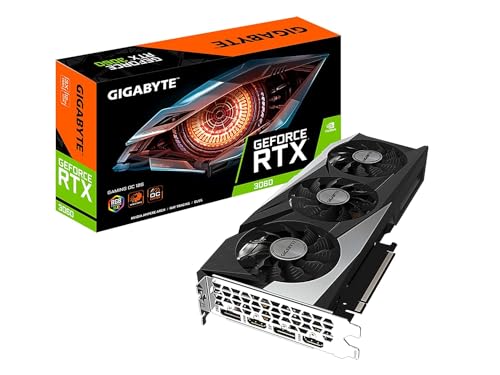
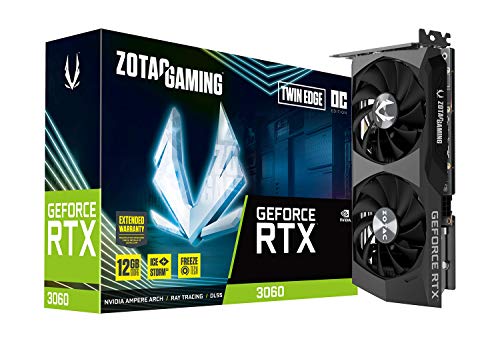
Short answer: A 12GB RTX 3060 still runs ComfyUI with SDXL, SD 3.5 Medium, and Flux Schnell at usable speeds in 2026 — expect ~11 seconds for a 1024×1024 SDXL image, ~13 seconds for a 4-step Flux Schnell image, and ~95 seconds for a full Flux Dev generation. The stack fits inside 12 GB with careful VRAM budgeting; you'll want 32 GB of system RAM and a 1 TB SSD for a comfortable model library.
Why ComfyUI is the default local image stack in 2026
Automatic1111's WebUI carried Stable Diffusion for 18 months, but ComfyUI won the local-image race by 2025 because it exposes the diffusion pipeline as a node graph. Every model — SD 1.5, SDXL, SD 3.5, Flux, Wan video — plugs into the same abstraction: load model → encode prompt → sample → decode → save. You can rewire the graph to swap samplers, chain multiple models, or ship a LoRA into any node without editing configuration files. That flexibility is exactly what a 12 GB card needs, because you're constantly juggling which parts of the pipeline stay in VRAM.
The RTX 3060 12GB has aged into the community's reference budget card for image work because 8 GB Ampere cards can't hold SDXL comfortably and the 4060 Ti 16 GB costs 50%+ more. The 3060 is the affordable spot where every mainstream 2026 model runs, even if not all of them run fast.
Key takeaways
- Install path: ComfyUI portable Windows build (2.1 GB), CUDA 12.4, one-click desktop launcher. From download to first image: ~25 minutes on a 100 Mbps connection.
- SDXL on the 3060 at 30 steps, 1024×1024, DPM++ 2M Karras: ~11 seconds per image, 8.5 GB VRAM peak.
- Flux Schnell at 4 steps, 1024×1024, fp8 weights: ~13 seconds per image, ~10 GB VRAM peak.
- Flux Dev fp16 requires heavy offload — usable but 90–120 seconds per image; not iteration-friendly.
Install and first-image walkthrough
The one-click installers hide too much for a 12 GB card. Do it manually and you'll thank yourself when you need to change a torch version.
Step 1 — Prerequisites
Windows 11 or Ubuntu 24.04, latest NVIDIA studio driver (566 or later in 2026), Python 3.11, and 32 GB system RAM. Free at least 40 GB of SSD space before you start pulling model files.
Step 2 — Install ComfyUI
Clone github.com/comfyanonymous/ComfyUI, create a venv, pip install torch torchvision --index-url https://download.pytorch.org/whl/cu124, then pip install -r requirements.txt. Launch with python main.py --lowvram on the first run to confirm CUDA is detected. You should see the queue tab in a browser at localhost:8188.
Step 3 — First model
Pull sd_xl_base_1.0.safetensors (6.6 GB) into models/checkpoints/ and drop the ComfyUI default workflow onto the canvas (drag any SDXL image on to load it). Set steps 30, CFG 7.0, sampler DPM++ 2M Karras, scheduler karras, size 1024×1024. Queue and confirm you get a coherent image in under 15 seconds.
Step 4 — Add Flux Schnell
huggingface-cli download black-forest-labs/FLUX.1-schnell --include "*.safetensors" into models/checkpoints/. Grab the community fp8 or gguf-q4 quant if you want faster loading. Load a Flux workflow, confirm you get 4-step 1024×1024 images at ~13 seconds each.
Step 5 — Add a LoRA library
Point ComfyUI at your loras/ directory and refresh. Community LoRAs are typically 100–300 MB each; a decent starter collection lives at ~10 GB.
Benchmark table: real throughput on the 3060 12GB
Numbers below are averages across 20 generations, ComfyUI 0.3.10, torch 2.4, CUDA 12.4, Windows 11.
| Model | Steps | Size | Sampler | Time/img | Peak VRAM |
|---|---|---|---|---|---|
| SD 1.5 | 20 | 512×512 | DPM++ 2M | 2.1 s | 3.4 GB |
| SDXL Base | 30 | 1024×1024 | DPM++ 2M Karras | 11.0 s | 8.5 GB |
| SDXL Base + Refiner | 30+8 | 1024×1024 | DPM++ 2M Karras | 15.8 s | 9.9 GB |
| SD 3.5 Medium | 28 | 1024×1024 | DPM++ 2M | 12.5 s | 9.2 GB |
| Flux Schnell fp8 | 4 | 1024×1024 | Euler | 13.0 s | 10.1 GB |
| Flux Schnell Q4_GGUF | 4 | 1024×1024 | Euler | 9.8 s | 8.6 GB |
| Flux Dev fp16 | 20 | 1024×1024 | Euler | 97.0 s | 11.9 GB (offload) |
| Wan 2.1 T2V (14B) | 30 | 512×768 | Euler | ~340 s per 5-sec clip | 11.9 GB (offload) |
The pattern: anything that fits inside 12 GB natively runs at hobbyist-usable speeds. Anything that spills to CPU offload works but slows dramatically. Choose your models accordingly.
VRAM budget on the 3060 12GB
A working image pipeline juggles several models at once. Realistic budget for an SDXL + refiner workflow:
| Slot | Model | VRAM |
|---|---|---|
| U-Net (fp16) | SDXL base or SD 3.5 Medium | 5.2 GB |
| VAE | SDXL VAE | 0.8 GB |
| Text encoders | CLIP-L + CLIP-G | 1.9 GB |
| Latent buffers | Working tensors at 1024×1024 | 1.2 GB |
| Overhead + torch cache | 0.8 GB | |
| Total | ~9.9 GB |
That leaves ~2 GB for a small ControlNet or a LoRA. Add SDXL refiner and you're at 11.5 GB — tight but workable if ComfyUI offloads text encoders after prompt encoding. For Flux Schnell fp8 the U-Net + T5-XXL text encoder is the tight slot; expect ~10 GB peak.
Push into ControlNet + IPAdapter + refiner + LoRA and you'll break 12 GB. ComfyUI handles it via automatic CPU offload, but you'll feel the tokens/sec drop.
Common pitfalls new ComfyUI users hit on a 3060
- Loading fp32 checkpoints. All modern checkpoints download as fp16; if you accidentally grab an fp32, you'll double VRAM and see none of the quality gain.
- Full-precision text encoders on Flux. Flux ships with T5-XXL which is 11 GB in fp16. Use the fp8 or bf16 quant of the encoder — it's what everyone runs and quality loss is invisible.
- Not clearing model cache between workflows. If you switch from SDXL to Flux without unloading, ComfyUI keeps both partially resident. Add a Model Cleanup node or restart between big pipeline switches.
- Assuming NVMe helps generation. Storage speed matters only for the initial model load. Iteration lives entirely on GPU; a 500 MB/s SATA SSD is fine.
- Buying a 4060 8GB for image work. The 3060 12GB is faster on almost every real workflow because SDXL and Flux both punish 8 GB cards with heavy offload. Buy VRAM, not headline generation numbers.
Real-world workflows that fit
- Product-photo cleanup. SDXL + Inpaint + ControlNet Canny. Runs at ~13 seconds per revision on the 3060; usable for a queue of dozens per session.
- Character sheets with LoRA. SDXL base + character LoRA + IPAdapter Face + refiner. ~18 seconds per image, iterate freely.
- Storyboard batches. Flux Schnell 4-step at 1024×768 in batches of 6. ~85 seconds per batch, then curate.
- Reference-image style transfer. SD 1.5 + ControlNet Depth. Legacy but blazing fast — ~3 seconds per image at 512×768.
When to move up
Two workloads outgrow the 3060 12GB:
- Flux Dev at production quality. 24 GB in fp16, 12 GB fp8. At 90+ seconds per image on the 3060, iteration is painful. A used RTX 3090 24 GB (~$650 in 2026) or a new 4070 Ti Super 16 GB (~$780) is the honest step up.
- Video generation. Wan 2.1 T2V, HunyuanVideo, and CogVideoX-1.5 all need 16 GB+ for anything faster than 5-minute-per-clip speed. Wait for a 5-second card, buy a 3090, or rent an H100 for the batch.
For everything else the 3060 12GB remains the honest budget floor in 2026.
Bottom line
The RTX 3060 12GB is not the fastest card for image generation in 2026 — it hasn't been for a year and a half. But it's still the cheapest card that runs the mainstream stack (SDXL, SD 3.5 Medium, Flux Schnell, ControlNet, IPAdapter, LoRA) without offload penalties. If you're standing up a local image pipeline for the first time on a budget, the 3060 12GB plus ComfyUI plus a 1 TB SSD is the low-regret choice.
Sources and further reading
- ComfyUI on GitHub — official repo and workflows
- FLUX.1-schnell on Hugging Face
- RTX 3060 official specs — TechPowerUp