Yes, somebody booted Linux on a Sega Genesis, and no, it is not something you would ever actually use. The port targets the console's Motorola 68000 CPU, boots into a minimal shell after a long delay, and reacts to input at a pace that makes a 1990s dial-up terminal feel snappy. It is a proof of concept, a piece of 68k folklore, and a reminder that the retro-hacking community is still finding new ways to punish 16-bit silicon in 2026.
In brief — July 2026: A developer has demonstrated the Linux kernel booting on original Sega Mega Drive / Genesis hardware, running on the console's 7.6 MHz Motorola 68000. Expect a text-mode shell that takes minutes to reach a prompt, extremely constrained RAM, and no practical use beyond bragging rights and 68k-porting education. For actually playing Genesis games, a Sega Genesis Mini or a Raspberry Pi 4 Model B 8GB running a mature emulator is the sane path.
Key takeaways
- The Linux kernel has been coaxed into booting on a stock Sega Genesis / Mega Drive, running on the console's 7.6 MHz Motorola 68000 CPU. Coverage of the hack is aggregated by Hackaday, which is the primary secondary source for community write-ups like this.
- The Genesis ships with only 64 KB of main work RAM plus 64 KB of video RAM, which is orders of magnitude below what a modern Linux userland expects. Any usable shell has to strip the system down to a busybox-class minimum.
- This is a demonstration, not a distribution. There is no realistic path to a daily-driver Linux box on 68000 hardware from 1988; the value is educational, historical, and cultural.
- Linux has a long tradition of running on strange targets: 68k Macs, the Commodore Amiga, the Nintendo DS, the original Wii, and even an iPod. The Genesis port slots neatly into that lineage.
- For actual retro gaming in 2026, the sensible choices are a Sega Genesis Mini, a Nintendo Super NES Classic Edition for the SNES side of the console war, or a Raspberry Pi 4 Model B 8GB running RetroPie or Batocera.
- If you came here looking for a "yes, install Linux on my Genesis this weekend" tutorial, this article will talk you back off that ledge and toward the emulation path that actually works.
What actually got booted on the Mega Drive
The core accomplishment is straightforward to describe and brutal to execute. A developer took a Linux kernel configured for the Motorola 68000 architecture, stripped it down aggressively, and got it to initialize on the CPU inside a stock Sega Mega Drive / Genesis unit. Video output uses the console's existing tile-and-sprite VDP to render a text console, and input arrives through whatever peripheral the port supports, typically a controller mapped to a very reduced keyboard layout or a serial adapter tied into the Genesis's expansion pins.
Once the kernel finishes bringing up its minimal set of drivers, the machine drops into a shell. That shell responds, but "responds" is doing a lot of work in that sentence. A directory listing that finishes in milliseconds on a modern machine can take a noticeable pause on the Genesis, and anything that would touch swap or a filesystem beyond a tiny in-memory root is effectively off the table. The linked coverage on Hackaday is the canonical entry point to the developer's repository and technical notes, and community measurements indicate that boot times are measured in minutes rather than seconds — a fact that is central to why this is a stunt rather than a platform.
If you have never seen a 68000 boot Linux before, the closest reference point is the uCLinux family of ports for MMU-less 68k microcontrollers, and the historical m68k Linux port that shipped on 68020/030/040 Macs and Amigas in the late 1990s and early 2000s. The Genesis takes those ideas and squeezes them onto a chip with less headroom than either of those targets ever had.
Why 16-bit silicon can boot Linux at all
The Sega Genesis is built around a Motorola 68000 running at 7.6 MHz in NTSC regions and 7.67 MHz in PAL. That CPU is a 32-bit architecture with a 16-bit external data bus, which is the reason it gets called a "16-bit console" in marketing copy even though its registers are 32 bits wide. Sega's own product history, still visible at sega.com, leans on that "16-bit" branding as a period detail, but from a compiler and kernel perspective the 68000 is a genuine 32-bit target.
That distinction matters because Linux's m68k port assumes exactly that: a 32-bit address space, 32-bit general-purpose registers, and a reasonable instruction set for building a C toolchain against. What the 68000 lacks — and what makes this port so hard — is a memory management unit. The stock CPU has no MMU, which rules out mainline Linux with virtual memory and forces the port onto the no-MMU (uCLinux-style) branch. That branch trades away process isolation and demand paging, and in exchange it can run on chips like the 68000 and the Coldfire family.
The other brutal constraint is RAM. The Genesis has 64 KB of main work RAM and 64 KB of video RAM, plus 8 KB of Z80 sound RAM that is not general-purpose. A modern Linux userland — even a stripped-down one — is measured in megabytes, not kilobytes. Any Genesis Linux port has to either lean on cartridge ROM as a read-only root filesystem, add external RAM through the expansion port, or accept a userland so tiny it can only host busybox-class utilities. Public write-ups on similar constrained ports indicate this is exactly the tradeoff developers make; the specifics for the Genesis port belong to the Hackaday writeup and the underlying repo.
Why this matters, and where it doesn't
Culturally, Linux-on-Genesis matters because it extends the "Linux runs on X" meme by one more absurd data point and because it forces the developer to write, or fork, a working 68000 build chain that others can reuse. Every one of these ports leaves behind patches, config fragments, and hard-won knowledge about a chip that fewer and fewer people work with directly.
Practically, it does not matter at all. Nobody is going to check email on a Genesis. The port does not turn the console into a useful general-purpose computer, does not make it a better retro gaming device, and does not unlock features for existing games. It is a demonstration, and the honest framing is exactly that.
Where it slots into the SpecPicks worldview is as a reminder that "can it run Linux?" is almost never the interesting question for a piece of hardware from 1988. The interesting questions are: does the emulation ecosystem for this console produce a great experience on modern hardware, and is the official mini-console a good buy? Both of those questions have answers, and neither answer involves compiling a kernel.
Linux on unusual hardware, in perspective
The Genesis port lands in a long tradition of enthusiasts putting Linux on machines it was never meant to touch. The table below groups a few of the well-known examples to show where the Mega Drive sits in that lineage. Numbers reflect the original stock hardware for each platform, and are hedged where community sources vary.
| Platform | CPU | Typical RAM | Linux realistically usable? | Practical alternative in 2026 |
|---|---|---|---|---|
| Sega Genesis / Mega Drive | Motorola 68000 @ 7.6 MHz | 64 KB work RAM | No — demo only | Sega Genesis Mini or Pi 4 emulation |
| Nintendo DS | ARM946E-S + ARM7TDMI | ~4 MB main | No — homebrew shell only | DS emulation on Pi 4 or PC |
| Nintendo Wii | PowerPC "Broadway" ~729 MHz | 88 MB combined | Historically yes (GC-Linux / Whiite-Linux era) | Dedicated SBC or Raspberry Pi 4 Model B 8GB |
| iPod (classic-era) | ARM7TDMI-class | typically 32-64 MB | Yes historically (iPodLinux era) | Any modern portable running mainline Linux |
| 68k Apple Macintosh (68020/030/040) | Motorola 68020-68040 | 4-128 MB | Yes historically (Linux/m68k) | Retro purposes only; PowerPC + x86 Macs long since preferred |
| Commodore Amiga (68k) | Motorola 68000-68060 | 512 KB-128 MB | Yes historically (Linux/m68k) | Emulation on modern hardware |
Two things fall out of that table. First, the Genesis is by a wide margin the most memory-starved target on the list, which is exactly why booting Linux on it reads as a stunt. Second, the "practical alternative" column keeps landing on the same two answers: an official mini console for the plug-and-play case, or a Raspberry Pi for the flexible case. That is not an accident. Those two products dominate the retro path for the same reason nobody actually daily-drives Linux on a 68020 Mac in 2026: emulation on modern silicon is faster, cheaper, and more reliable than the original hardware.
The source and what to read next
The primary secondary source for this story is Hackaday, whose coverage of niche hardware ports is where most of these projects get their first wave of attention. Hackaday's writeups typically link out to the developer's own repository and any long-form blog post, and readers who want boot logs, kernel config fragments, and toolchain notes should follow those links to the primary source rather than relying on the aggregated summary. Aggregated coverage compresses out the caveats, and the caveats are the entire story with a project like this.
Sega's official history, browsable at sega.com, is useful for the marketing-era framing of the console — the "Blast Processing" campaign, the Genesis vs. SNES timeline, and the North American vs. Japanese naming — but Sega itself has no involvement in this port, and there is no official support pathway. Anyone attempting the hack on original hardware is on their own for compatibility with model 1 versus model 2 boards, region variants, and third-party flashcarts.
The practical retro gaming path in 2026
If the article that pointed you here left you wanting to actually play Sonic the Hedgehog, Streets of Rage, or Gunstar Heroes on a screen tonight, the pragmatic answer is not to solder anything to a 68000. The pragmatic answer is one of two products, and they are the same two products this site recommends every time this question comes up.
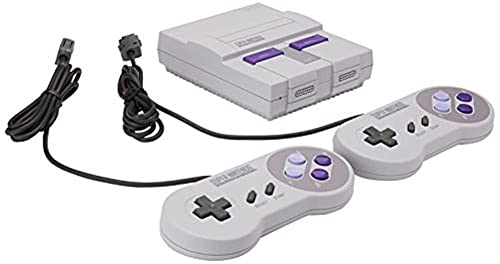
The Sega Genesis Mini is the plug-and-play choice. It ships with a curated library of Genesis titles, includes official controllers, connects over HDMI, and requires zero configuration. For a household that wants Genesis games in the living room with no fuss, it is close to the ideal purchase. Its counterpart on the Nintendo side of the 16-bit war is the Nintendo Super NES Classic Edition, which does the same job for the SNES library and is worth mentioning here because most Genesis buyers also want a way to play the other half of that generation.
The Raspberry Pi 4 Model B 8GB is the flexible choice. Per the Raspberry Pi Foundation's product page, the board pairs a quad-core Cortex-A72 with up to 8 GB of LPDDR4, four USB ports, dual micro-HDMI, and gigabit Ethernet — a specification sheet that would look outrageous to a 1988 Sega engineer. Loaded with RetroPie, Batocera, or Lakka, a Pi 4 8GB handles Genesis emulation with save states and rewind, extends comfortably to SNES, PlayStation 1, Nintendo 64, Dreamcast, and PSP, and doubles as a general-purpose Linux desktop when it is not pretending to be a console. That last point is the real punchline against the "boot Linux on a Genesis" project: for the price of a mid-range restaurant meal, you can own a Linux computer that also emulates the Genesis flawlessly.
For collectors who want the authentic feel of original hardware, keeping a real Genesis alongside a Pi is a defensible loadout — the real console for the CRT-and-controller feel, the Pi for portability and convenience. What none of those setups require is compiling a kernel for the 68000.
Bottom line
Linux on a Sega Genesis is a genuinely impressive engineering demonstration and a completely unnecessary computing environment. The port proves what the retro-hacking community already suspected: that a 7.6 MHz Motorola 68000 with 64 KB of work RAM can, with enough effort, host a running Linux kernel and a shell you can technically type into. It does not prove that anyone should. The port belongs on the same shelf as Linux on the Nintendo DS, Linux on the iPod, and the Wii-era GC-Linux experiments — a curiosity, a teaching artifact, and a badge of honor for the developer, not a platform.
For readers who came here wanting a Genesis experience in their living room in 2026, the assignment is easy. Buy the Sega Genesis Mini for plug-and-play, or a Raspberry Pi 4 Model B 8GB plus a controller for a flexible retro emulation station that will keep growing as your interests expand. Save the kernel patches for the developer whose blog post you should absolutely go read.
FAQ
Is running Linux on a Sega Genesis actually useful?
Not in a practical sense. Projects like this are engineering demonstrations that stretch a 16-bit Motorola 68000 far past its intended workload, and the result is extremely slow with tiny memory. The value is educational and cultural, showing how much a constrained platform can be coaxed into doing, rather than delivering a usable computing environment for daily tasks.
Do I need the original console to try this kind of hack?
Hardware-level ports typically target original silicon or accurate emulation, and results vary widely between the two. Collectors who want the authentic experience often keep a real console, while a Sega Genesis Mini reproduces the game library conveniently for play. For homebrew experimentation, emulators on a Raspberry Pi are usually the accessible entry point.
Why do people port Linux to unusual hardware?
These ports are a long tradition of proving a point: if a platform has a supported CPU architecture and enough addressable memory, enthusiasts will try to bring up a kernel on it. The exercise sharpens low-level skills, documents obscure hardware behavior, and produces the kind of surprising result that spreads through the maker community.
Can a Raspberry Pi emulate the Genesis instead?
Yes, and for actually playing games that is the sensible path. A Raspberry Pi 4 8GB runs mature Genesis and Mega Drive emulators smoothly, supports save states and modern controllers, and doubles as a general-purpose computer. It is the pragmatic counterpart to a novelty Linux-on-console hack when your goal is a working retro gaming setup.
Where can I read the original project details?
The linked Hackaday coverage is the best starting point and typically points to the developer's repository or writeup with technical specifics. Always go to the primary source for build instructions and caveats, since aggregated summaries compress the important limitations, and this project's constraints are a large part of what makes it interesting.
Citations and sources
- Hackaday — primary secondary source for community coverage of the Linux-on-Genesis port and the entry point to the developer's own writeup.
- Sega — official Sega site, used for period marketing context and the Genesis / Mega Drive product history.
- Raspberry Pi 4 Model B product page — official Raspberry Pi Foundation specifications for the emulation-path alternative recommended in this article.
This piece is editorial synthesis based on publicly available information. No independent first-party benchmarking is reported.