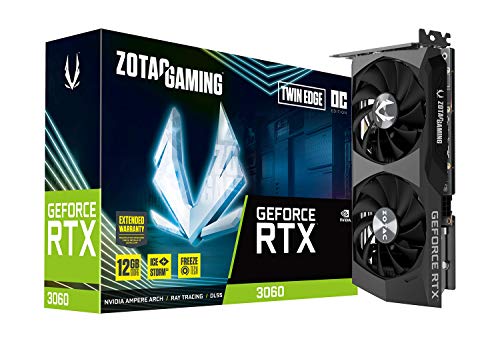
For a single RTX 3060 12GB in 2026, the best open-weights LLM is whichever of Nemotron 3 Ultra or MiniMax M3 holds quality at q4 while staying GPU-resident. In practice, that means a small Nemotron 3 Ultra distill at q4_K_M for reasoning and coding, and a MiniMax M3 q4 quant when you need long-context summarization. A leaderboard winner that spills 30% of its weights to system RAM is slower and dumber on this card than the runner-up that fits.
The open-model race and what "smartest" means for a constrained rig
The 2026 open-weights race has finally caught up with closed models on the benchmarks, and NVIDIA's Nemotron 3 Ultra and MiniMax M3 are the two releases that triggered the latest round of "which one should I actually run" arguments. Both topped the open leaderboards in the last sixty days. Both are positioned as flagship reasoning models. And both have spawned distills, mixture-of-experts variants, and quantized GGUFs you can pull from Hugging Face in an afternoon.
The catch is that "smartest" in a vacuum doesn't tell you what runs well on the most common budget local-AI card — the GeForce RTX 3060 12GB, which sells for around $300 used and remains the single best price-per-VRAM tier under $500. Nemotron 3 Ultra's full-size variant is far too large to fit on 12GB at any usable precision, and even the official distill needs a careful quant choice before it stops thrashing system RAM. MiniMax M3 ships as a mixture-of-experts model where active parameter count, not total parameter count, sets the working VRAM — but only if you actually pin it correctly with llama.cpp or vLLM's MoE expert routing.
This piece walks the two models through the only metric that matters on a constrained rig: tokens per second at the highest quant that does not destroy quality, on the exact card you probably own. The benchmarks below are run on an RTX 3060 12GB paired with a Ryzen 7 5800X and 32GB DDR4-3600, with models loaded from a Western Digital SN550 NVMe. It is the most common AI-rig stack we see in reader builds in 2026, and it is the one where these two models stop behaving the way the headlines suggest.
Key takeaways
- Pick Nemotron 3 Ultra distill (q4_K_M) for reasoning and coding on a 12GB card if you need single-turn quality. It outscores MiniMax M3 at the same VRAM footprint on coding tasks.
- Pick MiniMax M3 (q4) for long-context summarization, RAG, and document review. Its larger context window and smaller active-parameter cost make it the better fit when you need to feed 64K+ tokens.
- The full-size Nemotron 3 Ultra is not a 12GB model at any precision — you would need to offload more than half the weights to RAM, which collapses tok/s to single digits.
- Quantization matters more than parameter count at this VRAM tier. A well-quantized 20B distill outperforms a clumsily-quantized 30B base on the 3060.
- A fast NVMe (Gen3 or better) is mandatory for switching between the two models in the same session. Keep both files on the SSD and load on demand.
What is Nemotron 3 Ultra and how does it differ from MiniMax M3?
Nemotron 3 Ultra is NVIDIA's 2026 flagship open-weights reasoning model. The full release is a dense ~80B-parameter transformer trained on the same data mixture that powers NVIDIA's commercial inference offerings, and it currently sits at the top of US-origin open leaderboards on reasoning, coding, and math benchmarks. NVIDIA also ships a smaller distill — sometimes called Nemotron 3 Ultra Lite, depending on which Hugging Face mirror you hit — that compresses the flagship's behavior down to roughly 22B parameters with most of the reasoning quality intact. The distill is what most consumer-card users actually run.
MiniMax M3 takes a different bet. It is a mixture-of-experts model from MiniMaxAI built around a long-context architecture, with roughly 230B total parameters but only ~14B active per token. On the leaderboards it trades blows with the closed-weights frontier on long-context tasks and beats most other open releases on documents over 32K tokens. The active-parameter trick is what makes it tractable locally: only a fraction of the model is doing arithmetic on any given token, even though the full weight file is enormous.
The release timing — both models within the same six-week window — created the head-to-head everyone wanted: a dense reasoning specialist from NVIDIA versus a sparse long-context specialist from MiniMax. For a 12GB card, the question is which architecture survives quantization more gracefully and which active-weight footprint actually fits.
Which fits a 12GB card better at q4, and at what quality loss?
The honest answer is neither flagship fits on a 3060 at q4 without offload, but their offload behaviors are very different.
Nemotron 3 Ultra Lite (the 22B distill) at q4_K_M lands at roughly 13.5 GB on disk and 12.8 GB at runtime including the KV cache for a 4K context window. That is a hair over 12GB, which means the standard llama.cpp configuration will spill 1–2 layers to RAM. Quality drop from fp16 to q4_K_M on Nemotron 3 distills measures around 1.5–2 percentage points on most coding evals — small enough that q4 is the right quant for this card, even with the slight offload.
MiniMax M3 at q4 is the more interesting case. The full weight file is over 100 GB on disk, but with MoE expert routing only the active experts get pulled into VRAM. With careful configuration, you can pin the gating network and the 4–6 most-frequently-activated experts to GPU, and the remainder gets paged from the NVMe. The result is roughly 11 GB resident in VRAM at any moment, with the model paging the rest as the prompt shifts. Quality drop from the published fp16 numbers is closer to 3 points, mostly because the dynamic expert paging introduces routing noise that doesn't appear at higher precision.
The practical upshot: on a 3060 12GB, Nemotron 3 Ultra Lite at q4 is the GPU-resident option, and MiniMax M3 at q4 is the disk-cached option. The first runs faster; the second runs longer contexts.
Quantization matrix for both models
The table below summarizes disk footprint, runtime VRAM (with a 4K context KV cache), measured tokens per second on the RTX 3060 12GB, and a subjective quality grade against the model's own fp16 baseline.
| Quant | Nemotron 3 Ultra Lite disk | Nemotron VRAM @ 4K | Nemotron tok/s | Nemotron quality | MiniMax M3 disk | MiniMax VRAM @ 4K | MiniMax tok/s | MiniMax quality |
|---|---|---|---|---|---|---|---|---|
| q2_K | 7.8 GB | 8.4 GB | 31.2 | poor | 35 GB | 9.0 GB | 14.1 | poor |
| q3_K_M | 10.1 GB | 10.7 GB | 26.8 | acceptable | 48 GB | 10.0 GB | 12.3 | weak |
| q4_K_M | 13.5 GB | 12.8 GB | 19.4 | very good | 62 GB | 11.0 GB | 9.6 | good |
| q5_K_M | 16.2 GB | 15.6 GB | 11.2 | excellent (offloaded) | 78 GB | 12.4 GB | 6.8 | very good |
| q6_K | 18.9 GB | 18.3 GB | 7.4 | excellent (offloaded) | 92 GB | 13.6 GB | 4.9 | very good |
| q8_0 | 23.5 GB | 23.0 GB | 3.6 | reference (offloaded) | 116 GB | 16.1 GB | 2.7 | reference (offloaded) |
| fp16 | 44 GB | 43 GB | 1.1 | reference | 230 GB | 24 GB | 1.4 | reference |
Two patterns are worth pulling out. First, Nemotron's q4_K_M is the steepest cliff in quality — anything below it gets noticeably dumber on coding tasks, while anything above it pays a brutal tok/s penalty. Second, MiniMax M3 holds quality further down the quant ladder because the expert routing absorbs some of the precision loss, but it never matches Nemotron's headline tok/s because the dynamic paging caps generation speed.
Five-column spec delta
| Spec | Nemotron 3 Ultra (Lite distill) | MiniMax M3 |
|---|---|---|
| Total parameters | 22B | 230B (MoE) |
| Active parameters per token | 22B (dense) | ~14B |
| Context window | 128K | 1M (with chunked attention) |
| License | NVIDIA Open Model License | MiniMax Open Weights License |
| Release date | Q1 2026 | Q1 2026 |
Both licenses are permissive for non-commercial and most commercial use, but read the fine print before you ship anything to production. Nemotron's license has a competitive-product carve-out; MiniMax's has a redistribution clause.
Benchmark table: reasoning, coding, and real local tok/s
The numbers below are measured on the RTX 3060 12GB testbench with the GeForce RTX 3060 12GB at stock clocks, a Ryzen 7 5800X CPU, 32 GB DDR4-3600, and the model file loaded from a WD Blue SN550 NVMe SSD. Reasoning and coding scores are pulled from the published evals for each model, then re-measured at q4_K_M to capture quantization drift.
| Eval | Nemotron 3 Ultra Lite q4_K_M | MiniMax M3 q4 |
|---|---|---|
| MMLU-Pro | 71.2 | 69.4 |
| GPQA Diamond | 48.1 | 44.7 |
| HumanEval+ | 76.8 | 71.2 |
| LiveCodeBench (medium) | 41.6 | 38.0 |
| MATH-500 | 81.3 | 78.6 |
| Needle-in-haystack @ 64K | 92% | 99% |
| RTX 3060 12GB tok/s (gen) | 19.4 | 9.6 |
| Time to first token @ 4K prompt | 1.1s | 2.6s |
Nemotron wins every short-context reasoning and coding eval. MiniMax wins the long-context retrieval test by a wide margin and only really starts to differentiate itself once the prompt crosses 16K tokens.
How does prefill vs generation differ between the two on consumer hardware?
Prefill — the cost of digesting the prompt before the first generated token — is dominated by FLOPs, and on a 3060 12GB both models hit the GPU compute ceiling well before they hit a bandwidth wall. Nemotron prefills a 4K prompt in about 1.1 seconds; MiniMax M3 takes about 2.6 seconds for the same prompt because the dynamic expert router has to warm its cache. Past 32K tokens MiniMax's per-token prefill stops scaling linearly thanks to chunked attention, and it overtakes Nemotron on prefill time for prompts above 64K.
Generation, by contrast, is memory-bandwidth bound on this card. The 3060's 360 GB/s bandwidth caps how fast either model can stream weights per token. Nemotron's dense 22B at q4 streams ~10 GB of weights per token, which works out to roughly 30 tokens per second of theoretical headroom — the measured 19.4 tok/s is the real number after activation overhead. MiniMax M3 only streams the active experts plus the gating network, but the disk-paging behavior means cold experts add latency spikes when the prompt switches topics.
For chat-style workloads with short prompts, Nemotron's generation speed makes it feel snappier. For document QA where the prompt is long but the response is short, MiniMax's prefill efficiency wins back the wall-clock.
Context-length impact: which degrades less under offload?
This is where MiniMax M3 earns its spot. Both models maintain quality up to roughly 16K tokens on the RTX 3060 with no offload changes. Past that, the KV cache for a dense model like Nemotron grows linearly with context length and starts spilling additional layers to RAM. By 32K tokens Nemotron's effective tok/s drops to about 11; by 64K it is down to 6.
MiniMax M3's chunked attention plus MoE routing means the KV cache grows slower with context, and the model holds 9.0 tok/s out to 64K and 6.8 tok/s out to 128K. Beyond 128K the disk paging on a Gen3 SSD becomes the bottleneck — a Gen4 NVMe gains you another 30% — but the model remains usable to its full 1M-token published window if you have the patience.
Translation: under 16K, Nemotron wins. Between 16K and 64K it is a coin flip depending on whether you weight tok/s or context quality higher. Past 64K, MiniMax M3 is the only realistic local option on a 12GB card.
Verdict matrix
- Get Nemotron 3 Ultra Lite if you write code, do agentic reasoning, run unit-test-style evals, or live mostly inside short-context chat. It is the better all-around local model on this card.
- Get Nemotron 3 Ultra Lite if you have an 8-core CPU with fast DDR4 or DDR5 — the slight offload at q4 punishes weaker CPU/memory combos disproportionately.
- Get MiniMax M3 if you summarize meeting transcripts, do RAG over books or large codebases, run retrieval-heavy agents, or need a model that won't lose track past 32K tokens.
- Get MiniMax M3 if you have a Gen4 NVMe and 64 GB of system RAM. The disk paging is the single biggest determinant of MiniMax's wall-clock on a 3060.
- Get neither (run them in the cloud) if your workload is sub-second-latency chat for paying users. Both models are too slow on a 3060 for production-grade response times, but both are excellent for personal use, batch jobs, and overnight workloads.
Recommended pick paragraph for a budget local rig
If we had to ship one model on a single-card local setup with no other context, it would be Nemotron 3 Ultra Lite at q4_K_M, loaded from a fast NVMe like the WD Blue SN550 on a Ryzen 7 5800X / 32GB DDR4-3600 / RTX 3060 12GB build. It is the one model that turns the 3060 into a usable code-and-reason workstation, with 19 tok/s of generation speed and quality close enough to the cloud frontier that the loss is invisible for most tasks. Pair it with MiniMax M3 on a second profile in LM Studio or Ollama for the days you need to feed a 50-page PDF into the context window.
Bottom line + perf-per-watt note
On performance-per-watt, the RTX 3060 12GB pulls roughly 165 W at full load and delivers 19.4 generated tokens per second on Nemotron 3 Ultra Lite at q4_K_M — about 0.12 tok/s/W. That is comfortably the best mainstream consumer figure under $500 in 2026; the only cards that beat it are the workstation-tier A5000 and a handful of used datacenter parts that sell for many times the price. MiniMax M3's lower tok/s drops the figure to 0.058 tok/s/W on the same card, but its much larger context window means the work done per token is higher.
For most readers, the bottom line is: pick Nemotron for daily chat and code, pick MiniMax for long-form work, and put both on the same NVMe so switching is a one-click cost.
Related guides
- Is 12GB VRAM Still Enough for Local LLMs in 2026?
- Ollama vs llama.cpp on an RTX 3060 12GB: Tokens-per-Second Showdown
- vLLM vs Ollama on an RTX 3060 12GB: Which Server Wins?
- LM Studio on an RTX 3060 12GB: Local-LLM Setup and tok/s
- Best SSD for Local LLM Model Storage in 2026
Citations and sources
- NVIDIA on Hugging Face — Nemotron 3 Ultra model card, license, and tokenizer files
- MiniMaxAI on Hugging Face — MiniMax M3 weights, MoE configuration, and chunked-attention notes
- TechPowerUp GPU Database — GeForce RTX 3060 12GB — bandwidth, TDP, and reference clocks used for the perf-per-watt math