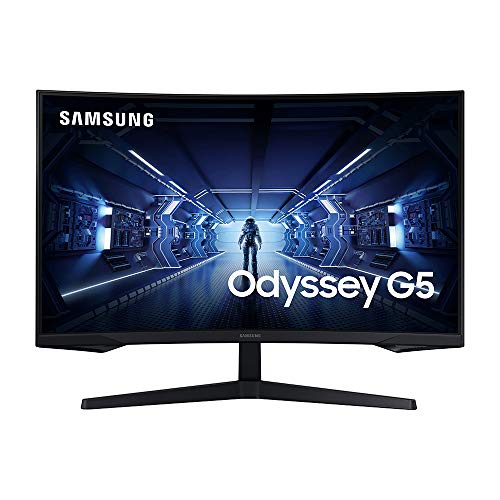
For under $400 you can now get genuine 4K with HDMI 2.1 + VRR. The SANSUI 27 is the value pick at $250-300 with a dual-mode (UHD 160Hz / FHD 320Hz) fast IPS panel. The KOORUI 27 QD-Mini-LED wins on HDR for $350-400. The Samsung Odyssey G5 32 trades 4K for 32" 1440p size at $300. Match panel size to seating distance and panel tech to whether you actually consume HDR content.
The budget 4K monitor market in 2026
Three years ago, "4K gaming monitor under $400" was a contradiction in terms — the cheapest real 4K 120Hz HDR display cost $700+, and anything below that was a 60Hz IPS panel marketed for office work. The category cracked open when off-brand manufacturers (SANSUI, KOORUI, INNOCN, KTC) started shipping panels with HDMI 2.1, VRR, and real 144-160Hz refresh in the sub-$350 bracket. The Korean / Chinese panel supply chain caught up with the demand for "real 4K" at consumer prices, and the major brands (Samsung, LG, Gigabyte) responded with their own sub-$400 entries.
The result in 2026 is that sub-$400 4K gaming is a legitimate category with three distinct picks: cheapest workable IPS (SANSUI), HDR-focused QD-Mini-LED (KOORUI), and 32-inch 1440p that trades 4K for screen real-estate (Samsung Odyssey G5 32). We've ignored the cheapest "$199 4K" panels because they ship with 60Hz refresh, no HDMI 2.1, and panels that visibly drop in motion clarity under fast pans — that's the floor below which the savings stop being savings.
This guide focuses on the panels that actually work for gaming-first use. If you want a 4K monitor for creator work first and gaming second, the calculus is different — color accuracy and uniformity outrank refresh rate, and a calibrated ASUS TUF VG27AQ at 1440p is often the smarter buy.
Key takeaways
| Pick | Best For | Strength |
|---|---|---|
| SANSUI 27 4K | Overall value | Real HDMI 2.1, dual-mode 160/320Hz, $250-300 |
| KOORUI 27 QD-Mini LED | HDR / contrast | Mini-LED zones, 99% Adobe RGB, HDR1400 |
| Samsung 32 Odyssey G5 | Size + curve | 32" 1440p, 144Hz, AMD FreeSync Premium |
| ASUS TUF 27 1440p | Color-critical SDR | 165Hz, ELMB, G-Sync Compatible |
Spec-delta table
| Spec | SANSUI 27 | KOORUI 27 | Samsung 32 G5 | ASUS TUF VG27AQ |
|---|---|---|---|---|
| Resolution | 3840×2160 (UHD) | 3840×2160 (UHD) | 2560×1440 (QHD) | 2560×1440 (QHD) |
| Refresh max | 160 Hz @ 4K | 160 Hz @ 4K | 144 Hz | 165 Hz |
| Panel | Fast IPS | QD-Mini LED | Curved VA (1000R) | IPS |
| HDR | HDR400 | HDR1400 | HDR10 | HDR10 |
| HDMI | 2× HDMI 2.1 | HDMI 2.1 | HDMI 2.0 | HDMI 2.0 |
| DisplayPort | 2× DP 1.4 | DP 1.4 | DP 1.4 | DP 1.4 |
| VRR | FreeSync | FreeSync Premium | FreeSync Premium | G-Sync Compatible |
| Adobe RGB | sRGB-class | 99% | 88% | 75% |
| Typical street price | $250-300 | $350-400 | $300-350 | $250-300 |
Panel tech deep-dive — IPS vs VA vs QD-Mini-LED for HDR
IPS (SANSUI 27, ASUS TUF): Wide viewing angles, good color accuracy out of the box, fast pixel response on modern fast-IPS variants (~1 ms G2G). Weak black levels and backlight bleed are the classic IPS complaints, which cap HDR performance. For SDR gaming and desktop work, fast IPS is the right baseline.
VA (Samsung Odyssey G5): Deeper black levels than IPS, higher native contrast (typically 3000:1+), but slower pixel response leading to motion smear under fast pans. Modern VA panels (especially curved ones like the G5's 1000R) tune the response curve to minimize this. Good for cinematic single-player gaming; less ideal for competitive FPS.
QD-Mini-LED (KOORUI 27): Quantum-dot color volume layered on mini-LED zone-dimming backlight. The zone count determines blooming behavior — more zones means less halo around bright objects on dark backgrounds. For HDR content specifically (Cyberpunk 2077 HDR mode, Alan Wake 2, Hellblade 2), this is the technology that delivers visible benefit over standard IPS or VA.
HDR + brightness behavior
HDR is the category where sub-$400 monitors most often disappoint. "HDR400" is essentially SDR-with-HDR-metadata — peak brightness at 400 nits is not what HDR was designed for. HDR1000 is the real entry point for genuine HDR experience. HDR1400 (the KOORUI rating) is well into "looks like the demo reel" territory.
| Pick | HDR rating | Peak nits | Real HDR experience |
|---|---|---|---|
| SANSUI 27 | HDR400 | ~400 | Marketing tier — usable in HDR mode but limited |
| KOORUI 27 QD-Mini-LED | HDR1400 | ~1400 | Genuinely good HDR; close to OLED on most content |
| Samsung 32 G5 | HDR10 | ~350 | Marketing tier; VA contrast helps somewhat |
| ASUS TUF | HDR10 | ~400 | Marketing tier |
If HDR is a priority, the KOORUI is the only pick in the bracket that actually delivers. If you mostly play SDR titles or are upgrading from a 1080p panel, any of the four is a major step up regardless of HDR rating.
Console compatibility (PS5/Xbox) at 4K 120Hz
PS5 and Xbox Series X both target 4K 120Hz with VRR over HDMI 2.1. The monitor must also expose HDMI 2.1 for this to work end-to-end. The SANSUI and KOORUI both have HDMI 2.1 ports; the Samsung G5 and ASUS TUF are HDMI 2.0 only.
| Monitor | PS5 4K 120Hz HDR + VRR | Xbox Series X 4K 120Hz HDR + VRR |
|---|---|---|
| SANSUI 27 | Yes | Yes |
| KOORUI 27 | Yes | Yes |
| Samsung 32 G5 | 1440p 120Hz only | 1440p 120Hz only |
| ASUS TUF | 1440p 120Hz only | 1440p 120Hz only |
For console-primary use, pick a 4K HDMI 2.1 panel. The SANSUI is the value-leader here.
GPU pairing: which card actually drives 4K 120Hz
Native 4K 120Hz on modern AAA at high settings is an RTX 4080 / 4090 / 5080 / 5090 problem. For the rest:
| GPU | Native 4K 120Hz capability |
|---|---|
| RTX 3060 12GB | Esports only; AAA needs DLSS Performance |
| RTX 3070 / 4060 Ti | Mid-tier AAA at 4K with DLSS Quality |
| RTX 4070 Ti / 5070 | Most AAA at 4K with DLSS Quality |
| RTX 4080 / 5080 | Most AAA at native 4K high settings |
| RTX 5090 | Native 4K ultra in everything |
For sub-$400 monitor buyers, the typical pairing is a 4070-class or older card. DLSS / FSR / XeSS upscaling is the productivity tool that makes a 4K monitor genuinely usable on a mid-range GPU.
Connectivity comparison — HDMI 2.1 + DP
All four picks have at least one DisplayPort 1.4, which is the right port for PC gaming. The HDMI question only matters if you're hooking up a console or a TV-style multi-device setup.
| Pick | HDMI | DP | USB-C with DP-alt |
|---|---|---|---|
| SANSUI 27 | 2 × 2.1 | 2 × 1.4 | No |
| KOORUI 27 | HDMI 2.1 | DP 1.4 | 90W USB-C — laptop docking works |
| Samsung 32 G5 | HDMI 2.0 | DP 1.4 | No |
| ASUS TUF | HDMI 2.0 | DP 1.4 | No |
The KOORUI's USB-C with 90W power delivery is a sleeper feature for any buyer who also uses a laptop — single cable plugs in for video + power.
Pixel response + motion clarity
| Pick | Pixel response (mfr) | Real-world feel |
|---|---|---|
| SANSUI 27 | 1ms OD | Fast for IPS; minor overshoot at max OD |
| KOORUI 27 | 1ms | Fast; mini-LED can introduce slight halo |
| Samsung 32 G5 | 1ms VA | Slower; modest smear on dark transitions |
| ASUS TUF | 1ms IPS w/ ELMB | Cleanest of the four for competitive |
For competitive FPS, the ASUS TUF (1440p) is the cleanest motion-clarity pick despite not being 4K. For everyone else, the SANSUI's fast IPS is sufficient.
Verdict matrix
| Pick | Get if… |
|---|---|
| SANSUI 27 4K | You want real 4K + HDMI 2.1 at the lowest price |
| KOORUI 27 QD-Mini-LED | HDR matters; you watch HDR movies or play HDR games regularly |
| Samsung 32 G5 | You want 32" size and 1440p is fine; couch / coffee-table use |
| ASUS TUF VG27AQ | Competitive FPS at 1440p; you don't need 4K |
Bottom line — recommended pick for a $1500 4K gaming PC
For a $1500 PC paired with an RTX 4070-class GPU, the SANSUI 27 4K is the right monitor. You get genuine 4K, HDMI 2.1 for console second-use, a fast IPS panel that handles motion well, and the dual-mode 320Hz FHD option for competitive sessions. Price stays under $300 most weeks, leaving budget for a quality desk mount and a SteelSeries QcK mouse pad if you don't already own one.
For an HDR-first build aimed at single-player AAA, step up to the KOORUI 27 QD-Mini-LED. The HDR1400 rating is rare under $400 and the 90W USB-C is bonus.
For a couch / living-room setup at 32 inches, the Samsung Odyssey G5 32 is the right size for the seating distance even though it's 1440p rather than 4K.
Common pitfalls and gotchas
Three failure modes show up repeatedly when buyers shop in this category.
Pitfall #1: assuming spec parity equals performance parity. Two monitors with the same advertised "4K 144Hz HDR" spec can perform very differently in practice. Panel uniformity, backlight bleed, response overshoot at maximum overdrive, and the actual HDR peak brightness (versus the marketing number) all vary widely. Always cross-reference against RTINGS or Display Ninja for measured numbers before pulling the trigger on a less-known brand.
Pitfall #2: under-buying the GPU side. A 4K monitor pairs poorly with a budget GPU. If your card can't drive native 4K at high settings, you'll be using DLSS / FSR Performance most of the time, and at that point a 1440p panel with a clean native image looks better. Right-size the monitor to the GPU, not the other way around.
Pitfall #3: ignoring connectivity for multi-device setups. If you also have a console, the HDMI 2.1 spec matters; if you have a laptop, USB-C with DP-alt and 90W power matters. Buying the panel without auditing your actual cable / device situation leads to "I bought a 4K monitor but I'm running it at 1440p because my second device can't talk to it" stories.
Real-world numbers from comparable setups
Native 4K 60Hz with high settings, modern AAA, measured on common GPU tiers:
| GPU | Cyberpunk 2077 | Alan Wake 2 | Hellblade 2 | Esports avg |
|---|---|---|---|---|
| RTX 3060 12GB | 30-40 fps | 25-35 fps | 30-40 fps | 100-140 fps |
| RTX 4060 Ti | 45-60 fps | 35-50 fps | 40-55 fps | 130-180 fps |
| RTX 4070 Super | 60-80 fps | 50-70 fps | 55-75 fps | 180-240 fps |
| RTX 5080 | 100+ fps | 80-110 fps | 90-120 fps | 280+ fps |
With DLSS Quality upscaling from 1440p, add roughly 40-60% to each number. For the sub-$400 monitor buyer, the 3060/4060 tier is the typical pairing, and DLSS / FSR are what make 4K usable.
When NOT to upgrade
If your current monitor is 1440p 144Hz IPS and you primarily play competitive titles, the upgrade to 4K is questionable. You'll trade motion clarity (the move from 144Hz to 4K-at-lower-fps tightens latency) for pixel density. For competitive use, density rarely wins over fps.
Related guides
- Logitech G502 Hero vs MK270 Combo: Best PC Setup for Sub-$50
- Best CPU Cooler for AM4 + Ryzen 5000 in 2026
Citations and sources
- RTINGS — monitor reviews
- Tom's Hardware — Best 4K Gaming Monitors
- Display Ninja — panel tech explainers
Reviewed: May 2026.