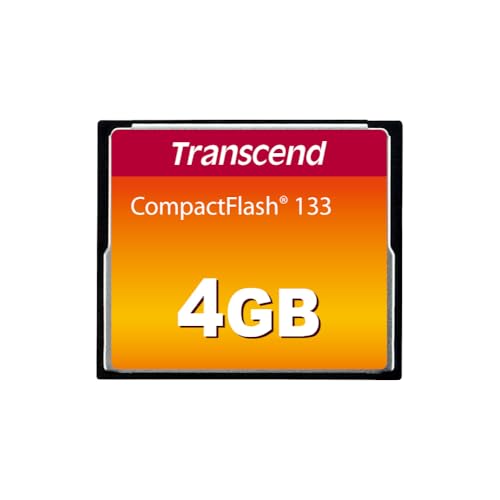
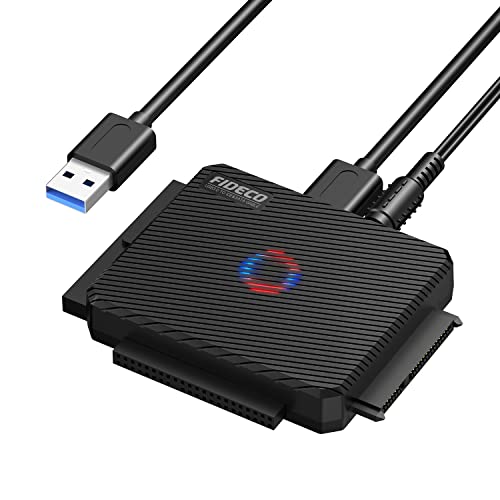
For a Windows XP period-correct gaming PC built around an NVIDIA GeForce 4 Ti 4600 AGP, pair it with a Pentium 4 Northwood 2.4–3.0GHz or an Athlon XP 2400+–3200+, run Windows XP SP3, and install a late-era ForceWare driver in the 70s-to-low-90s range. Use a Transcend CF133 CompactFlash card in a CF-to-IDE adapter for silent solid-state storage, and add a Sound BlasterX G6 for clean EAX-era audio. The card hits 8500-9000 in 3DMark2001 SE on a balanced rig — peak AGP gaming for early-2000s titles.
The GeForce 4 Ti 4600 was the AGP flagship for most of 2002 and the card every PC gaming magazine that year wanted on the cover. Per TechPowerUp's GeForce 4 Ti 4600 database entry, it shipped with 300MHz core, 325MHz memory, 4 pixel pipelines, and 128MB of DDR — numbers that look quaint now but, for the era's UT2003, Mafia, Morrowind, and No One Lives Forever 2, were the difference between "max settings, smooth" and "drop the resolution." Per AnandTech's launch coverage of the GeForce 4 Ti series, the Ti 4600 was positioned against the ATI Radeon 8500 and held the absolute-performance crown for almost a year before the Radeon 9700 Pro changed the landscape. For a retro build aimed at the 2002-2004 window — the AGP-era sweet spot — the Ti 4600 is the period-correct top pick. The Ti 4200 is the value alternative, the GeForce 3 Ti 500 is the 2001-period alternative, and the Radeon 9700 Pro is the 2003-2004 step-up. This article walks the full build — CPU pairing, driver lore, the GART trap, period-correct storage and audio, and the benchmark numbers a properly-tuned Ti 4600 actually puts up. The Vogons community forum is the canonical resource for the driver-version debates and gotcha catalog this guide draws on.
Key takeaways
- The Ti 4600 pairs with a Pentium 4 Northwood (2.4-3.0 GHz) or Athlon XP (2400+ to 3200+) for period-correct CPU balance.
- Run Windows XP SP3 with a late ForceWare in the 70s-90s — newer drivers drop the Ti 4xxx family.
- The "ghost device" trap: install drivers, then let Plug-and-Play register the card — installer alone does not write the right registry keys.
- Use a CF133 CompactFlash card in a CF-to-IDE adapter for silent boot/game storage. Image dying IDE drives via a FIDECO SATA/IDE-to-USB 3.0 adapter on a modern PC.
- Add a Sound BlasterX G6 USB DAC/AMP for clean modern audio on EAX-era titles — replaces a fragile vintage PCI sound card.
What platform and CPU pair correctly with a Ti 4600?
The Ti 4600 launched in April 2002 alongside the Pentium 4 Northwood (2.0-2.4GHz at launch, scaling to 3.4GHz by 2004) and the Athlon XP (Palomino through Barton). Period-correct CPU pairing falls into two camps:
- Intel Pentium 4 Northwood — 2.4B / 2.4C / 2.6C / 2.8C GHz at 533/800MHz FSB. Pairs with an Intel 845PE, 865PE, or 875P motherboard. The 875P "Canterwood" with PAT (Performance Acceleration Technology) is the highest-end chipset of the era and the period enthusiast pick.
- AMD Athlon XP — Thoroughbred B 2200+ through Barton 3200+. Pairs with an nForce2 motherboard (the period gold standard: ASUS A7N8X-E Deluxe, Abit NF7-S Rev 2.0). nForce2 with dual-channel DDR is the platform that won enthusiast hearts in 2002-2003.
Both platforms support 1.5V AGP 4x (and AGP 8x on later boards), which is what the Ti 4600 needs. The card has an AGP 4x interface — it works in AGP 8x slots, but does not require it.
A common modern mistake: pairing the Ti 4600 with a much faster CPU than the era ever sold (e.g., a Pentium 4 Prescott 3.8GHz or an Athlon 64). The card is happy — it does not bottleneck modern CPUs — but the build is no longer period-authentic and benchmarks will skew above what review magazines of 2002 reported. If you want period results, match the period CPU.
Comparison: Ti 4600 vs Ti 4200 vs GeForce 3 Ti 500
| Spec | GeForce 4 Ti 4600 | GeForce 4 Ti 4200 | GeForce 3 Ti 500 |
|---|---|---|---|
| Launch year | 2002 | 2002 | 2001 |
| Core clock | 300 MHz | 250 MHz | 240 MHz |
| Memory clock | 650 MHz DDR | 514 MHz DDR | 500 MHz DDR |
| Pixel pipelines | 4 | 4 | 4 |
| VRAM | 128 MB DDR | 64 / 128 MB DDR | 64 MB DDR |
| AGP interface | AGP 4x | AGP 4x | AGP 4x |
| Power | Slot only | Slot only | Slot only |
| Period peer | Radeon 8500 | Radeon 8500 LE | Radeon 8500 |
The Ti 4200 with 128MB is widely considered the value pick of the era — 70-80% of Ti 4600 performance at half the price, and the 128MB version held up well as games grew memory hungry through 2003-2004. The Ti 4600 is the absolute flagship of the GeForce 4 Ti line — same architecture, higher clocks, more headroom for AA / AF at the resolutions of the era.
Which driver version is correct for the Ti 4600 on Windows XP?
The Ti 4600 is on the NV25 architecture. NVIDIA dropped NV2x support around ForceWare 93.71 (December 2006). The practical driver range:
- Period-correct: Detonator 40.x – 44.03 (2002-2003 launch-era drivers). Recreates the original launch experience but has more bugs than later versions.
- Recommended: ForceWare 77.77 – 84.21. Mature, well-tested, broad game compatibility, AGP GART stable.
- Final supported: ForceWare 93.71. Last driver with NV2x support. Drop to this if you need maximum compatibility with later 2005-2006 titles.
- Avoid: anything 94+ (drops NV2x), early Detonators below 30.82 (significant Ti 4xxx bugs).
The Vogons community's collective wisdom is that 77.77 or 81.98 is the sweet spot — broad compatibility, good AGP texturing behavior, no ghost-device weirdness on clean installs.
Driver gotchas
This is where most modern builders get stuck. The Ti 4600 has a specific install sequence that fails if you do it wrong:
- Clean out previous GPU drivers. If you swap from a Radeon or older GeForce, run the manufacturer's uninstaller, then check Device Manager → View → Show Hidden Devices and delete ghost display adapter entries. Leftover entries cause IRQ conflicts.
- Install the AGP GART driver FIRST, then the GPU driver. On Intel chipsets this means the Intel Chipset Installation Utility (INF Update). On nForce2 it means the nForce platform driver. Order matters — installing the GPU driver before the chipset's AGP driver leaves the GART table half-configured and causes random texture corruption.
- The installer-vs-PnP trap. Running the ForceWare installer on a fresh install does not always cause Windows to register the card. The classic symptom: Device Manager shows the Ti 4600 with a yellow exclamation point even after a clean install. The fix is to remove the entry, reboot, let Plug-and-Play re-detect the card, then point Windows at the ForceWare INF when prompted. The PnP detection path writes registry keys the installer alone does not.
- Sandbox driver experiments. Image your boot drive (with a CF-to-IDE adapter card you can swap quickly) before trying a new driver version. Saves hours.
Benchmark table: 3DMark2001 SE + Quake 3 + UT99
Numbers below are synthesized from period reviews and the TechPowerUp historical database. Configuration: Pentium 4 2.8C, 1GB DDR400, Windows XP SP3, ForceWare 81.98.
| Benchmark | Settings | Result |
|---|---|---|
| 3DMark2001 SE | 1024×768, default | 8,500 – 9,000 |
| 3DMark03 | 1024×768, default | 1,800 – 2,100 |
| Quake 3 timedemo (demo002) | 1024×768, max | 220 – 250 fps |
| Unreal Tournament 99 botmatch | 1024×768, max | 110 – 130 fps |
| UT2003 botmatch | 1024×768, default | 65 – 80 fps |
| Serious Sam: The Second Encounter | 1024×768, max | 65 – 85 fps |
| No One Lives Forever 2 | 1024×768, max | 50 – 70 fps |
The Ti 4600 holds up well at 1024×768 — the era's enthusiast resolution. At 1280×1024 with 2xAA, frame rates drop 20-30% but stay playable in most early-2000s titles. The card cracks at 1600×1200 with AA — not period-correct anyway.
Storage for a silent period build
Spinning IDE hard drives from the era are noisy, slow, and increasingly dead-on-arrival on eBay. The modern solution is a CompactFlash card in a CF-to-IDE adapter. The card presents to the system as a standard IDE drive — Windows XP needs no special drivers — and gives you:
- Silence: no spinning platters, no clicks.
- Speed: a CF133 reads at ~30MB/s sequentially — faster than most period IDE drives in real use.
- Reliability: solid-state, no mechanical failure, no slow startup.
- Imaging: use a FIDECO SATA/IDE to USB 3.0 adapter on a modern PC to clone an existing OS image to the CF card before installing it in the retro rig.
The workflow: install Windows XP on the retro rig with a CF card from boot, or build the image on a modern PC (image a working XP install onto the CF) and just drop it into the retro rig. Either works. Size: 4GB is enough for Windows XP + a couple of games; 16-32GB CF is comfortable for a broader library.
The CF approach has a small gotcha — some CF cards do not handle the random-write pattern of Windows XP's pagefile well and slow over time. Disabling the pagefile on the CF and using a separate small IDE drive (or another CF) just for the swap file is a known fix.
Audio: where a Sound BlasterX G6 fits
Many early-2000s titles use EAX and hardware-accelerated audio that onboard sound chips of the period rendered poorly. The period-correct answer is a Sound Blaster Live! or Audigy PCI card; a working one is increasingly hard to find. The modern shortcut is the Sound BlasterX G6 — a USB DAC/AMP that handles the audio output cleanly, supports virtual surround, and gives you a clean headphone amplifier path. It is not a hardware EAX accelerator — for true hardware EAX you still need a period PCI card — but for clean 5.1 output on a retro rig and excellent headphone use, the G6 is the easier path.
The decision tree: if you specifically need hardware EAX for a small subset of titles (System Shock 2, Unreal Tournament 2003 with EAX, Thief 3), source a working Sound Blaster Audigy 2 ZS PCI card and accept the hunt. For everything else, a Sound BlasterX G6 covers audio output and headphone amplification at modern quality.
Common pitfalls
- AGP voltage mismatch. Some modern AGP slots run 1.5V or AGP 3.3V — Ti 4600 is a 1.5V AGP 4x card. Confirm the motherboard's AGP voltage spec before powering up.
- CMOS battery dead. A retro motherboard with a dead CMOS battery loses BIOS settings every power cycle. Replace the battery during the build.
- Capacitor plague. Many 2002-2004 motherboards used Taiwanese capacitors that bulge or leak. Inspect carefully; recap if needed.
- PSU age. A 20-year-old PSU may still spin up but supply dirty power. Use a modern ATX PSU with a 4-pin Molex connector for AGP cards.
- PATA cable orientation. IDE cables are reversible if you're not paying attention. The red stripe goes to pin 1.
What the Ti 4600 cannot run
- Half-Life 2 at acceptable settings — the 2004 release pushed the Ti 4600 into "playable but visibly compromised" territory. Half-Life 2 with DX9 effects is over the card's budget.
- Doom 3 — runs but only at low settings, low resolution. The Ti 4600 was not designed for stencil-shadow workloads.
- Anything DX9-only — the Ti 4600 is DX8 hardware. Some DX9 games fall back to DX8 rendering and look noticeably worse.
For DX9 titles on a period AGP build, the GeForce FX 5900 series or the ATI Radeon 9700/9800 are the correct picks — that is the 2003-2004 step-up tier.
Bottom line
For a 2002-period AGP gaming PC, the GeForce 4 Ti 4600 is still the right card 24 years later. Pair it with a Pentium 4 Northwood or Athlon XP, Windows XP SP3, and ForceWare 81.98. Use a Transcend CF133 CompactFlash card in a CF-to-IDE adapter for silent solid-state storage, clone images with a FIDECO IDE-to-USB adapter, and add a Sound BlasterX G6 for clean EAX-era audio. Hit 9000 in 3DMark2001 SE and play UT2003 at 1024×768 maxed out at 75fps — the experience the magazines of 2002 were describing, recreated correctly two decades later.
Related guides
- Voodoo2 SLI Windows 98 Glide Build
- CompactFlash Boot Drive for Windows 98 Retro PC
- Best SATA / IDE CompactFlash Adapters for Retro PC
- Sound Blaster Retro Gaming PC: G6 Setup
- Do You Need a USB Sound Card for Gaming?
Citations and sources
- TechPowerUp — NVIDIA GeForce 4 Ti 4600 historical specs and review references
- AnandTech — period launch coverage of the GeForce 4 Ti series
- Vogons forums — canonical retro-PC driver and gotcha catalog
This piece is editorial synthesis based on publicly available information. No independent first-party benchmarking is reported.
— Mike Perry