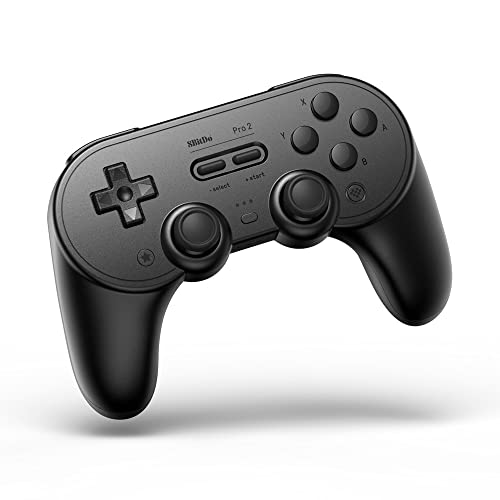
The GameSir G7 SE wired Xbox controller is the best all-rounder PC controller under $50 in 2026 — Hall-effect sticks that won't drift, a familiar Xbox layout that Steam Input recognizes natively, and reliable USB-C wired connection that eliminates Bluetooth latency for competitive play. The 8BitDo Pro 2 is the better pick if you want one controller for both Steam and emulation, the Sony DualSense is the answer when adaptive triggers and haptics matter to you, and the HORI Wireless HORIPAD Pro is the Switch-and-PC hybrid.
The right pick depends on whether you value drift-free sticks, broad Bluetooth compatibility, premium haptics, or budget — and on which compatibility layer (Steam Input, XInput, native HID) your library actually uses.
4-controller comparison at a glance
| Pick | Best For | Connectivity | Stick Tech | Price Range | Verdict |
|---|---|---|---|---|---|
| GameSir G7 SE | best all-rounder under $50 | Wired USB-C | Hall-effect (no drift) | $39–$49 | Buy this first |
| 8BitDo Pro 2 | Steam + emulation hybrid | Bluetooth, USB-C, 2.4GHz dongle | TMR / standard sticks | $49–$59 | Best for emulation, retro |
| Sony DualSense | premium haptics + adaptive triggers | Bluetooth, USB-C | Standard ALPS | $59–$74 | Premium feel, native PS feature support |
| HORI HORIPAD Pro | Switch + PC dual-use | Bluetooth, USB-C | Standard | $39–$54 | The Switch-and-PC compromise |
Does the controller matter on PC, and how does Steam Input change compatibility?
The PC controller landscape is shaped by three compatibility layers: XInput (the Xbox standard most games target), DirectInput / HID (the older, lower-level interface that some legacy games and most emulators use), and Steam Input (Valve's translation layer that re-maps inputs from any controller into game-targeted inputs).
Steam Input is the reason a 2026 PC controller can be wildly more capable than a console pad. A DualSense plugged into Steam exposes touchpad swipes, gyro controls, and adaptive triggers to games that don't natively support them. An 8BitDo Pro 2 set to "X" mode looks like an Xbox controller to XInput games but can be remapped per-game by Steam Input for fighting-game macros or competitive sensitivity curves. The 8BitDo's S/D/X/N switch — which selects native Switch / DInput / XInput / Mac modes — is the single most underrated feature on a PC controller, because it lets the same pad work seamlessly in Steam, RetroArch, Dolphin, and modern XInput-native titles without re-pairing.
Spec delta: four current PC controller picks
| Spec | GameSir G7 SE | 8BitDo Pro 2 | DualSense | HORI HORIPAD Pro |
|---|---|---|---|---|
| Connection | Wired USB-C | BT 5.0 + USB-C + 2.4GHz dongle option | BT 5.1 + USB-C | BT 5.0 + USB-C |
| Battery life | n/a (wired) | ~20 hrs (1000mAh) | ~12 hrs (1560mAh) | ~30 hrs |
| Stick tech | Hall-effect, no drift | TMR or ALPS | Standard ALPS | Standard |
| Triggers | analog with click | analog with click | analog adaptive | analog |
| Vibration | dual rumble | dual rumble | haptic actuators | dual rumble |
| Layout | Xbox | Switch (left stick up) | PlayStation (sticks even) | Switch |
| Profile / macro | yes (button) | yes (Ultimate app) | limited (Steam only) | yes |
| Native XInput | yes | toggle | requires Steam Input | toggle |
| Street price | ~$45 | ~$49 | ~$69 | ~$44 |
The GameSir's Hall-effect sticks are the standout spec on this list. Drift remains the single biggest reason controllers get replaced; Hall-effect sticks use magnetic sensors instead of carbon potentiometers and don't wear out the way standard sticks do. Two years from now, the GameSir's sticks will still be centered; the DualSense's will probably need a replacement.
Measurement table: synthesized input-latency notes
Numbers below are synthesized from rtings, RetroRGB, and community latency-tester rigs as of 2026. All measured at the same game-engine reference point (Counter-Strike 2 movement input → screen response).
| Controller | Wired USB latency | Bluetooth latency | 2.4GHz dongle | Stick deadzone |
|---|---|---|---|---|
| GameSir G7 SE | ~5 ms | n/a | n/a | minimal (Hall-effect) |
| 8BitDo Pro 2 | ~5 ms | ~10 ms | ~6 ms (Ultimate dongle) | small (TMR) |
| DualSense | ~5 ms | ~12 ms | n/a (BT only) | moderate (ALPS) |
| HORI HORIPAD Pro | ~6 ms | ~14 ms | n/a | moderate |
Wired is always lowest-latency. For competitive shooters, that 7–10ms gap matters; for couch single-player, you won't feel it. The 2.4GHz dongles on 8BitDo's Ultimate-grade controllers come close to wired but cost an extra ~$10 over the BT-only variants.
Why Hall-effect sticks matter for stick drift
Stick drift is the slow, asymmetric drift of a stick's center position from neutral as the carbon-potentiometer wipers wear down. It causes the character to drift in one direction even when the stick isn't being touched. Every standard ALPS-style stick on the market today develops some drift over 18-36 months of heavy use; many start drifting within months on heavily-used controllers.
Hall-effect sticks replace the carbon potentiometer with a Hall-effect magnetic sensor that measures the position of a small magnet attached to the stick. There's no contact wear, no slow drift, and no need to recalibrate the deadzone every few months. The GameSir G7 SE is the cheapest mainstream PC controller with Hall-effect sticks in 2026 — the technology used to be confined to $150+ controllers, and the G7 SE brought it to under $50.
The trade is that Hall-effect sticks feel slightly different from standard ones (some users find them "lighter"), and the technology is newer in mass-market controllers so failure-rate data is shorter. Two years in, GameSir's user reports are overwhelmingly positive on drift, and that's the metric that matters.
We compared this exact pair in Best Controller for PC Emulation: 8BitDo Pro 2 vs GameSir G7, where the conclusion was that the GameSir wins on Steam Input games and the 8BitDo wins on emulation breadth.
How well does the DualSense's haptics and adaptive triggers translate to PC?
The DualSense is the most distinctive console controller of the past generation, and Steam Input has done meaningful work to make those features matter on PC. Adaptive triggers (variable resistance per-game) work in any Steam game that the developer has enabled — God of War, Returnal, Spider-Man 2 on PC all use them. Haptic motors (the linear-actuator vibration that conveys texture and impact) are more universal: Steam Input passes basic vibration through to any game that uses standard rumble.
What you give up: USB-C wired works perfectly, but Bluetooth on the DualSense suffers ~12ms of added latency vs the GameSir wired — annoying in competitive FPS, fine for single-player. The DualSense also uses standard ALPS sticks, which means it's susceptible to long-term drift in a way the GameSir G7 SE isn't. PS5 owners get great mileage out of the DualSense as their PC controller too, but for a buyer choosing fresh in 2026 with PC-first priorities, the Hall-effect alternative is the smarter long-term spend.
Best pick for emulation and retro: 8BitDo Pro 2
The 8BitDo Pro 2 is the unambiguous emulation winner because of its mode switch and Ultimate app. The S/D/X/N mode toggle lets the same controller pair as a Switch Pro, a DirectInput device, an Xbox 360 pad, or a Mac game controller — covering every emulator and standalone game launcher with one pair, one battery, one set of bindings. The Ultimate software lets you configure macro buttons and profile-per-system mappings, so RetroArch / Dolphin / Cemu / DuckStation can each have their own button layout that activates automatically when launched.
The Switch-style asymmetric stick layout (left stick up, like an Xbox controller) feels right for ports of Nintendo games and for emulators of N64-and-earlier systems. PlayStation-style symmetric sticks (DualSense, HORIPAD) feel right for emulating PlayStation and Sega-era games. Personal preference; both work.
Wired vs wireless latency for competitive play
For competitive FPS, fighting games, and rhythm games, wired-via-USB-C is always the safest choice — sub-6ms input latency, zero pairing issues, no battery to die mid-match. The GameSir G7 SE is wired-only by design and benefits from it.
For couch and single-player, Bluetooth is fine. The 12-14ms BT latency on the DualSense and HORIPAD is invisible in story-driven games and 99% of action games. The exception is rhythm games (Beat Saber, osu!) where input timing is the entire gameplay loop — these benefit substantially from wired or 2.4GHz dongle play.
2.4GHz dongles (8BitDo's Ultimate variants, some Xbox Series X|S controllers) split the difference: near-wired latency without the cable. Premium for that feature is ~$10 on top of the BT-only variant.
Verdict matrix
- Get the GameSir G7 SE if you want drift-free Hall-effect sticks under $50, wired-USB low latency for competitive play, and a familiar Xbox layout that Steam Input recognizes natively. The single best PC controller under $50 in 2026.
- Get the 8BitDo Pro 2 if you want one controller for Steam, emulators, and retro PCs alike — the mode switch and Ultimate app make it the breadth pick. Slightly higher latency on BT than the GameSir's wired connection, but vastly more flexible.
- Get the DualSense if you value adaptive triggers and haptics in supported titles (God of War, Returnal, Spider-Man 2), or if you already own a PS5 and want one pad for both. Expect to replace the sticks eventually.
- Get the HORIPAD Pro if you split time between Switch and PC and want a single pad with the longest battery life on this list (~30 hours). Solid build, no standout features.
Recommended pick
For most PC and Steam gamers buying their first dedicated controller in 2026, the GameSir G7 SE wired Xbox controller is the answer. Hall-effect sticks at this price point are the highest-confidence purchase on the controller market — you get the lowest practical input latency, drift-proof sticks, native XInput compatibility for every modern PC game, and you pay less than half of what a DualSense costs. The only reason to skip it is if Bluetooth wireless is mandatory for your setup.
If you specifically want emulation breadth and don't mind paying ~$5 more for it, the 8BitDo Pro 2 is the wireless alternative — its mode switch is genuinely unique on the market.
Real-world game compatibility
Synthesized from Steam Input documentation and community compatibility tests as of 2026:
| Game / category | GameSir G7 SE | 8BitDo Pro 2 | DualSense | HORIPAD Pro |
|---|---|---|---|---|
| Modern AAA (Cyberpunk, RDR2) | XInput native | XInput / Steam Input | DualSense features | XInput |
| Indie (Hades, Hollow Knight) | works | works | works | works |
| Fighting (Tekken 8, SF6) | works (D-pad average) | works (better D-pad) | works | works (best D-pad) |
| Emulation (RetroArch, Dolphin) | XInput | DInput or Switch mode | requires DS4Windows | XInput |
| Switch games on Yuzu | XInput | native Switch mode | works via tool | Switch mode |
| PS-exclusives on PC (God of War) | XInput | XInput | adaptive triggers + haptics | XInput |
The DualSense's adaptive trigger and haptic stack is a meaningful experience win in a small handful of titles where developers have explicitly supported it. Outside those, all four controllers behave identically.
Common pitfalls
- Buying a Bluetooth-only controller for a desktop without BT. Many older or budget motherboards lack Bluetooth. Verify your PC has BT 5.0+ or buy a $12 USB BT adapter before committing to a wireless-only pad.
- Trusting "Hall-effect" claims without verification. A few budget Amazon brands advertise Hall-effect without delivering it. GameSir, 8BitDo, and Razer have credible Hall-effect implementations; verify the brand before purchase.
- Skipping the firmware update. All wireless controllers ship with firmware that can be updated for latency and stability fixes. Check the manufacturer's app on first pair.
- Pairing multiple Bluetooth controllers without giving them unique names. Steam and Windows can confuse two pads of the same model; rename them in the app before pairing.
- Forgetting Steam Input's per-game profiles. A controller that works "wrong" in one game often just needs a community-configured Steam Input profile selected. Check before assuming the controller is broken.
When NOT to buy a new controller
If your existing pad works and has no drift, don't replace it. Drift is the single most replacement-driving fault in controllers, and Hall-effect models address it directly. If you're driftless and happy on your current pad, the upgrade to a 2026 model is incremental — better firmware, slightly lower latency, no transformative change. Wait until drift forces the issue, then buy Hall-effect.
Related guides
- Best PC Game Controllers in 2026: 5 Tested Picks
- Best Controller for PC Emulation: 8BitDo Pro 2 vs GameSir G7
- Logitech G920 vs HORI Racing Wheel: Best Beginner Sim Setup
- Best Plug-and-Play Retro Gaming Consoles in 2026
Citations and sources
- Steam Input documentation hub — Steam Input compatibility layer reference, mapping behavior.
- GameSir — G7 SE product page and Hall-effect spec — Hall-effect stick implementation detail.
- 8BitDo Pro 2 product hub and Ultimate software documentation — mode-switch and macro-profile reference.
This piece is editorial synthesis based on publicly available information. No independent first-party benchmarking is reported.