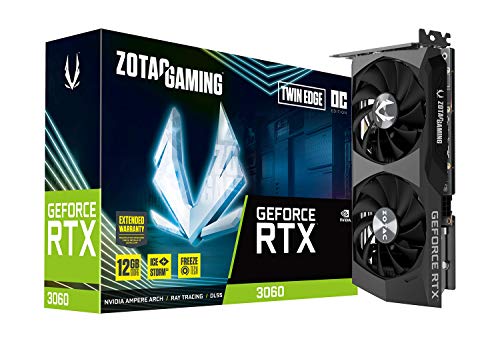
For most Ryzen gaming PCs in 2026, the four highest-leverage budget upgrades — in order — are a 12 GB GPU like the ZOTAC RTX 3060 12GB, a NVMe boot drive like the WD Blue SN550 1TB, a CPU bump within AM4 such as the Ryzen 7 5700X, and a fast SATA SSD like the Crucial BX500 1TB for game library storage. Each of these is a sub-$100 upgrade in 2026 that pays back in measurable fps or load-time gains.
Why an AM4 upgrade guide is still relevant in 2026
AM4 was Ryzen's primary socket from 2017 through the end of 2024. AMD has now moved on to AM5 for its current generation, but the AM4 platform's installed base is enormous: an estimated 100+ million CPUs shipped across five generations, motherboards still in widespread retail, and a healthy used market in every component. A Ryzen owner in 2026 sitting on a Zen+ or first-gen Zen 2 build does not need to throw the platform away. The right targeted upgrades close most of the gap to a brand-new midrange PC at a fraction of the cost.
This synthesis ranks the highest-leverage upgrades for AM4 Ryzen gaming PCs at the sub-$100-per-component tier. The order below reflects measurable impact per dollar; pick from the top and stop when your budget ends.
Key takeaways
- A 12 GB modern GPU is the single biggest gaming upgrade for most AM4 builds.
- An NVMe SSD as the boot drive cuts load times and OS responsiveness more than any RAM upgrade at the same price.
- CPUs scale within AM4 with surprisingly large gains — a 1600 to 5700X jump is generational.
- SATA SSDs as bulk game storage are now cheaper per-TB than spinning rust on small drives.
- 32 GB of DDR4-3200 is the right RAM target; 16 GB is the floor.
Top picks
#1: 12 GB GPU upgrade — RTX 3060 12GB
The single highest-leverage upgrade for almost every AM4 gaming PC in 2026 is the GPU. Per public benchmarks on the Tom's Hardware GPU hierarchy, a used or budget-new ZOTAC RTX 3060 12GB doubles or triples the fps of a GTX 1060 or RX 580 in most modern titles at 1080p high. The 12 GB VRAM ceiling is also a practical floor for modern titles that punish 6 GB and 8 GB cards in their texture pools.
The 3060 12GB plays well with mid-tier AM4 CPUs (3600, 5600, 5700X) and does not bottleneck a 5800X. Its 170 W TGP keeps PSU requirements modest — a 550 W gold unit is the safe call.
#2: NVMe boot drive — WD Blue SN550 1TB
If your current boot drive is a SATA SSD or, worse, a spinning HDD, swap to a 1 TB NVMe like the WD Blue SN550 1TB. Per Tom's Hardware SSD reviews, the SN550's sequential read of ~2400 MB/s is roughly 4x a SATA SSD and 30x a 7200 RPM HDD. The practical effect is shorter game load screens, faster OS boots, faster updates, and a system that simply feels snappier.
The SN550 is gen3 — it is not the fastest NVMe on the market — but for gaming the difference between gen3 and gen4/gen5 is small. Per Tom's Hardware testing, game-load-time deltas between gen3 and gen4 are typically 1-2 seconds, while the delta from SATA to gen3 is 5-15 seconds.
#3: CPU bump within AM4 — Ryzen 7 5700X
If your current CPU is a Zen+ part (1600, 1700, 2600, 2700), the largest gaming bump available on AM4 is moving to a Zen 3 part. The Ryzen 7 5700X — an 8-core, 16-thread chip with a 65 W TDP — is the value pick: cheaper than a 5800X and within 5% of its game-fps performance per the TechPowerUp CPU benchmarks.
The catch is a BIOS update. Many B450 and X470 boards need a BIOS bump to support Zen 3, and some early-revision boards do not support it at all. Check your motherboard's CPU-support list before buying.
#4: SATA SSD for game library — Crucial BX500 1TB
Once the boot drive is fast, the next-best storage upgrade is bulk game storage on a cheap SATA SSD like the Crucial BX500 1TB. It is not as fast as the NVMe boot drive, but it is far faster than a hard drive and at 2026 prices a 1 TB BX500 runs $50-$70. Per Crucial's product page, the BX500 sustains ~540 MB/s reads — three times an HDD and adequate for nearly any game.
The right configuration: boot OS plus your most-played 3-4 titles on the NVMe; the remaining library on the SATA SSD; the spinning drive retired or repurposed for cold storage.
#5: RAM upgrade — 32 GB DDR4-3200
If you are still on 16 GB of DDR4, a 32 GB DDR4-3200 kit is the cheapest meaningful upgrade for modern AAA titles that increasingly assume 16 GB just for the game. Used 32 GB kits run $40-$70 in 2026.
If you are on slow DDR4 (2400 or 2666), reflashing your BIOS and enabling DOCP/XMP to push to 3200 MHz is a free perf bump. Per TechPowerUp's memory benchmarks, Zen 3's infinity fabric scales cleanly to 3200 MHz, then plateaus.
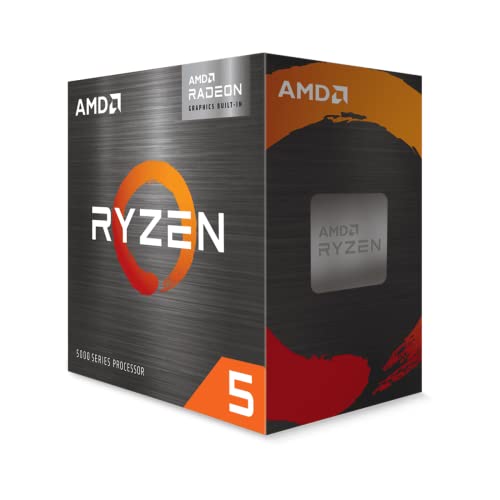
#6: iGPU-capable APU as a fallback — Ryzen 5 5600G
A more situational pick: if you cannot afford a discrete GPU yet but need a working PC, the Ryzen 5 5600G gives you a usable integrated Vega 7 GPU. It is not a gaming GPU on the level of an RTX 3060, but it runs esports titles at 1080p low-medium at 50-90 fps and lets you ship a working PC without a discrete card. The 5600G is the bridge upgrade; a 3060 12GB is the destination.
Spec table: the prioritized upgrade stack
| Upgrade | Approx. cost (2026) | Time to install | Gaming fps gain |
|---|---|---|---|
| RTX 3060 12GB GPU | $200-$280 | 15 min | +50-150% |
| WD Blue SN550 NVMe 1TB | $45-$65 | 10 min | 0% (load times) |
| Ryzen 7 5700X CPU | $80-$120 | 30 min | +10-25% |
| Crucial BX500 1TB SATA | $50-$70 | 10 min | 0% (load times) |
| 32 GB DDR4-3200 kit | $40-$70 | 5 min | +0-15% |
| Ryzen 5 5600G APU | $90-$130 | 30 min | n/a (iGPU enables) |
The pattern: GPU and CPU dollars buy fps; SSD dollars buy load-time and OS responsiveness. Both classes of upgrade matter; if you can only do one, do the GPU.
What NOT to upgrade
- AIO water cooler under $80. A budget AIO is rarely better than a quality $40 tower cooler and often louder.
- RGB everything. Costs add up; visual effect is personal preference; performance contribution is zero.
- Higher-than-3200 RAM on AM4. Diminishing returns above 3200 MHz; many boards struggle above 3600.
- HEDT-tier PSUs. A 550 W gold unit covers any reasonable AM4 + RTX 3060 build with overhead.
Common pitfalls
- Skipping the BIOS update for a Zen 3 CPU. Many B450 boards ship with old BIOSes that won't POST a 5700X.
- Reusing an old 80+ Bronze PSU. A 6+ year old midrange PSU may not deliver clean rails for a modern GPU.
- Mixing RAM kits. AM4 is fussy about mixing RAM; sell the old kit, buy a single matched 32 GB kit.
- Underestimating case airflow. A 5800X plus an RTX 3060 in a poorly-vented case will throttle.
Worked example: a $300 upgrade plan
A common starting configuration: Ryzen 5 2600, GTX 1060 6GB, 16 GB DDR4-2400, 250 GB SATA SSD, 1 TB HDD.
The $300 upgrade that buys the most fps:
- RTX 3060 12GB (used): $230
- WD Blue SN550 1TB NVMe: $55
- Enable XMP/DOCP for the existing RAM kit (push to 2933 if 3200 fails to POST)
Net: 2-3x fps in most modern titles, much faster load times, and a system that is good for another 3-4 years. The CPU upgrade comes in a later round if budget allows.
Worked example: a $500 upgrade plan
The same starting configuration. The $500 plan adds the CPU:
- RTX 3060 12GB (used): $230
- WD Blue SN550 1TB NVMe: $55
- Ryzen 7 5700X: $100
- 32 GB DDR4-3200 kit: $60
- Reuse the old 250 GB SATA SSD and HDD for storage
Net: a credibly modern 1080p high gaming PC for $500 on top of the existing platform. This is the upgrade tier where AM4 makes the most economic sense in 2026.
When to skip AM4 entirely
If your current build is a first-gen Ryzen (1600, 1700) on a cheap A320 board, the upgrade math can favor a full platform swap to AM5 or used DDR5 instead. The threshold is roughly: if your motherboard does not support Zen 3, the cost of a new motherboard plus CPU pushes you into AM5 territory and the long-term path is better there.
Bottom line
For Ryzen owners on B550, X570, or BIOS-updated B450/X470 boards, the four-step upgrade stack above — GPU, NVMe, CPU, RAM — closes most of the gap to a new midrange PC for a fraction of the cost. The 3060 12GB is the keystone; everything else is incremental. Plan the GPU upgrade first and let the rest follow as budget allows.
Related guides
- Ryzen 5 5600G vs Intel i7-9700K for budget gaming in 2026
- GeForce RTX 3060 12GB benchmarks
- AMD Ryzen 7 5700X benchmarks
- DualSense vs 8BitDo Pro 2 for PC gaming in 2026
Citations and sources
- TechPowerUp — CPU and GPU databases
- Tom's Hardware — GPU hierarchy and SSD reviews
- Crucial — BX500 SSD product page
This piece is editorial synthesis based on publicly available information. No independent first-party benchmarking is reported.