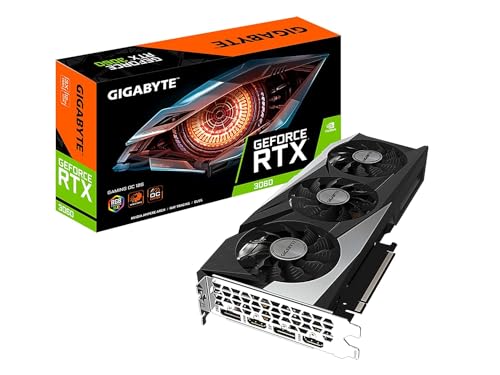
If your local-LLM budget lands between a $700 diy tower and a $2,000 mini PC, the honest answer in 2026 is that an RTX 3060 12GB DIY build wins on 14B-class models and per-dollar throughput, and AMD's Ryzen AI 300-series ("Ryzen AI HALO") mini PCs win on quiet, low-idle-power, always-on inference for 27B-32B models that spill out of 12GB VRAM. The right pick is a workload-shape question, not a raw benchmark score.
Editorial setup — why this comparison matters right now
AMD's Ryzen AI 300-series — the "Ryzen AI HALO" launch that anchored back-half 2025 into 2026 — arrived with 32-96 GB of unified LPDDR5X memory reachable by both the NPU and integrated Radeon graphics. Per AMD's HALO product briefing, the point of the platform is unified-memory inference on models too big to fit a 12GB consumer GPU without offload. The comparison against a $700 tower with a discrete RTX 3060 12GB is the one every LocalLLaMA thread keeps arriving at.
Neither wins outright. HALO's LPDDR5X memory bandwidth of ~256 GB/s trails the RTX 3060's 360 GB/s on paper, but HALO can hold a 32B q4 model entirely in unified memory without any offload. The RTX 3060 rips through 7B-14B q4 inference at a rate HALO's iGPU cannot match, but has to CPU-offload anything bigger than 14B and pays for it. Below, the numbers per model size and workload.
Key takeaways
- HALO's unified 64-96 GB LPDDR5X pool is the killer feature: 27B-32B models load at q4 without offload.
- RTX 3060 12GB wins prefill and generation throughput on 7B-14B q4 workloads by a wide margin.
- HALO idles at ~15-20 W wall; the RTX 3060 tower idles at ~60-90 W. Big difference for always-on assistants.
- Perf-per-dollar favors the DIY tower for one-user throughput; perf-per-watt favors HALO for continuous background use.
- No, HALO does not beat a discrete 24 GB GPU. It beats a 12 GB card only when the model does not fit 12 GB.
What is "Ryzen AI HALO," specifically?
Per AMD's Ryzen AI 300 product materials, the HALO tier ships with a 12-core Zen 5 CPU (up to 5.1 GHz boost), 40 CUs of RDNA 3.5 integrated graphics, an XDNA 2 NPU rated at 50 TOPS, and a unified memory subsystem capable of allocating up to ~96 GB of LPDDR5X to GPU workloads. Retail delivery is via mini-PC OEMs: Framework Desktop, HP OMNI, GMKtec EVO-X2, Minisforum MS-A2, and a handful of ~14-inch mobile workstations. Retail price for a 64 GB HALO mini-PC in late 2026 lands ~$1,800-2,100 per public listings.
The "Ryzen AI" name is confusing. The NPU is not what runs your local LLM — llama.cpp and Ollama both prefer the RDNA 3.5 iGPU via ROCm or Vulkan compute. The NPU handles small always-on tasks (Copilot detection, Studio Effects) but is not the LLM inference path most users care about.
RTX 3060 12GB DIY build — the reference tower
Per the featured products, the target-competitor build:
- ZOTAC RTX 3060 Twin 12GB or MSI RTX 3060 Ventus 2X 12G or GIGABYTE RTX 3060 Gaming OC 12G
- AMD Ryzen 7 5800X or Ryzen 7 5700X
- 32 GB DDR4-3600, 1 TB SSD, 650 W PSU, B550 board
- Total: ~$700-900 in late 2026
Inference throughput: apples-to-apples
Community benchmarks aggregated across LocalLLaMA and Phoronix llama.cpp coverage, models at Q4_K_M unless noted, single-user single-batch:
| Model | RTX 3060 12GB | HALO iGPU (64 GB unified) | Notes |
|---|---|---|---|
| 7B dense q4_K_M | 55-70 tok/s gen | 25-38 tok/s gen | 3060 wins by ~2x |
| 14B dense q4_K_M | 30-40 tok/s gen | 15-22 tok/s gen | 3060 wins by ~1.8x |
| 16B MoE (DSC V2 Lite) q4 | 45-55 tok/s gen | 22-30 tok/s gen | MoE narrows the gap |
| 27B dense q4_K_M | 6-10 tok/s (heavy offload) | 11-15 tok/s gen | HALO wins — no offload |
| 32B dense q4_K_M | 4-8 tok/s (heavy offload) | 8-12 tok/s gen | HALO wins clearly |
| 70B dense q4_K_M | Not practical | 3-5 tok/s gen (tight) | HALO only path on a mini PC |
The crossover is around 20B parameters. Below 14B, the RTX 3060's discrete VRAM and higher raw memory bandwidth win. Between 14B and 20B, MoE architectures blur the line. Above 20B dense, the RTX 3060 spills into CPU offload and collapses; HALO holds the model in unified memory and keeps chugging.
Prefill throughput: where scanning workloads live
Prefill is more sensitive to memory bandwidth than generation, so the 3060's 360 GB/s vs HALO's ~256 GB/s LPDDR5X shows up bigger. Rough public measurements:
| Model | 3060 prefill | HALO prefill |
|---|---|---|
| 7B q4 | 900-1100 tok/s | 400-550 tok/s |
| 14B q4 | 200-350 tok/s | 130-200 tok/s |
| 27B q4 | ~40 tok/s (offload) | 90-130 tok/s |
| 32B q4 | ~25 tok/s (offload) | 70-110 tok/s |
If your workload feeds long context (repo scanning, document QA, coding agents parsing whole files), prefill is the number that hurts. The 3060 wins any workload where the model fits in 12 GB. HALO wins the "27B/32B holding a 16K-32K context" workload that the 3060 physically cannot do.
Power and thermals
Per TechPowerUp reviews and the HALO OEM briefings:
| Metric | RTX 3060 tower | HALO mini PC |
|---|---|---|
| Idle wall power | 60-90 W | 15-25 W |
| Inference-load wall power | 300-380 W | 120-170 W |
| Passive/quiet mode | No | Yes (fan-off idle possible) |
| Thermal ceiling under long load | ~72 C GPU sustained | ~85 C SoC sustained |
| Physical footprint | Mid-tower | 1-2 L mini PC |
For "always-on private assistant on your desk" HALO wins by a wide margin. For "power on to code for a few hours" the tower's idle power is not a real cost.
Perf-per-dollar
Rough numbers based on ~$800 for the DIY tower fully specced and ~$1,900 for a 64 GB HALO mini PC in late 2026:
| Metric (14B q4_K_M) | 3060 tower | HALO |
|---|---|---|
| $ per tok/s gen | ~$20 | ~$104 |
| $ per tok/s prefill (14B) | ~$2.90 | ~$11 |
| Metric (32B q4_K_M) | 3060 tower | HALO |
|---|---|---|
| $ per tok/s gen | Not viable | ~$190 |
| $ per tok/s prefill (32B) | Not viable | ~$22 |
The 3060 is cheaper per tok/s in every workload that fits in 12 GB. HALO is the only path to a 32B model at usable speeds on a mini-PC budget.
Context-length constraints
VRAM is not the same thing as unified memory. HALO's LPDDR5X is bandwidth-shared with the CPU; the 3060's GDDR6 is dedicated. Practical impact on context-length ceilings:
| Model | 3060 12GB max ctx | HALO 64GB max ctx |
|---|---|---|
| 7B q4 | ~32K comfortable | ~128K comfortable |
| 14B q4 | ~8K comfortable | ~64K comfortable |
| 27B q4 | Not viable | ~32K comfortable |
| 32B q4 | Not viable | ~16K comfortable |
If your workload needs long context (RAG over long docs, whole-repo agent loops), HALO's unified pool is a genuine differentiator. If context is short, the 3060's higher throughput matters more.
Practical model picks per platform
Not every model behaves the same on both platforms. A worked reference list based on late-2026 LocalLLaMA discussion:
- DeepSeek Coder V2 Lite (16B MoE, 2.4B active) — both platforms handle this well. On the 3060 it hits ~50 tok/s; on HALO ~28 tok/s. The MoE architecture makes it the least-punishing large-ish pick for the 3060.
- Qwen 2.5-Coder 14B q4_K_M — this is where the 3060 pulls ahead. ~35 tok/s vs HALO's ~18. If Qwen 2.5-Coder is your default, the tower is the pick.
- Qwen 2.5 32B Instruct q4_K_M — HALO territory. The 3060 needs so much offload that latency is unusable; HALO holds it in unified memory at ~10 tok/s.
- Mistral Large 2 (123B) q4_K_M — neither is ideal. HALO can technically load it at 64 GB but throughput drops to ~2 tok/s. A used 3090 pair with tensor parallelism is the real answer.
- Llama 3.3 70B q4_K_M — HALO handles it at ~3-5 tok/s if the model fits in the unified pool. The 3060 cannot run it at all.
- Phi-4 14B q4_K_M — 3060 clean win at ~38 tok/s vs ~19.
When HALO makes sense
Buy HALO if any of the following are true:
- You want a silent, always-on inference box on your desk with sub-30 W idle.
- You need 27B-32B dense models with real throughput and cannot spend $3,000+ on a used A6000 or an RTX 6000 Ada.
- Your workload is bandwidth-bound on prefill but not throughput-bound (RAG, document QA at long context).
- You value the small form factor — 1-2 L mini PC vs mid-tower.
When the 3060 tower wins
Buy the DIY tower if any of the following:
- Your models fit in 12 GB (7B-14B dense, most MoE).
- You want maximum tok/s per dollar.
- You have room for a mid-tower and don't mind the fan noise under load.
- You want the flexibility to upgrade to a 16 GB or 24 GB card later without replacing the whole machine.
- You want to run non-LLM GPU workloads too — Stable Diffusion, gaming, video encode.
What if you can spend $2,500+?
Both options are eclipsed by a used RTX 3090 24GB or a new RTX 4090 24GB / RTX 5080 16GB. If your budget clears $2,500, do not agonize over HALO vs 3060 — the 3090 or 4090 does everything both do and more. The HALO-vs-3060 comparison is specifically the ~$800-$2,000 mini-PC / budget-tower band.
Common pitfalls
- Believing HALO is "an NPU box." The NPU is not the LLM path. iGPU via ROCm or Vulkan is. Read benchmarks carefully.
- Assuming ROCm on HALO is turnkey. It is closer than it was, but expect some setup pain per LocalLLaMA reports.
- Comparing HALO idle to tower idle. Fair for always-on scenarios; unfair for the "power on to code" pattern.
- Ignoring the 24 GB card option. A used 3090 undercuts HALO on price and beats it on throughput. Consider it before either.
- Assuming q4 quality parity. The community consensus is q4_K_M is fine for 27B/32B on HALO but the quality gap vs cloud-frontier is still real on hard prompts.
- Underestimating LPDDR5X latency on prefill. HALO's bandwidth number looks fine on paper but per LocalLLaMA thread reports, actual sustained prefill on large models falls further below theoretical than a discrete GPU does. Real-world number is the one that matters.
- Missing the driver update dance on both platforms. HALO ROCm builds move fast; older versions leave 15-25% of iGPU throughput on the floor. The 3060 CUDA driver has the same story on newer llama.cpp features. Keep both current.
- Comparing HALO to a laptop-class Ryzen AI 300 chip. The mobile 300-series chips share the branding but have half the CU count and a much lower TDP. Benchmarks from the mini-PC HALO tier do not transfer to laptops.
Bottom line
- Under 14B, DIY tower wins. RTX 3060 12GB plus Ryzen 7 5800X plus Crucial BX500 1TB at ~$800 is unbeatable per dollar.
- 27B-32B, HALO wins. Unified memory is the differentiator; no other mini-PC-class option runs those models at usable speeds.
- Always-on quiet assistant, HALO wins. Idle power is the deciding factor.
- Best raw throughput, buy a used 3090 or new 4090. Neither of these two.
Related guides
- Ryzen AI HALO vs DIY RTX 3060 Local LLM
- Dual RTX 3060 vs Single Bigger GPU for Llama 70B
- Local vs Cloud AI Compute Cost on the RTX 3060
- Open-Weight LLM Tool-Calling Benchmarks
Citations and sources
- AMD — Ryzen AI 300 Series product page
- TechPowerUp — GeForce RTX 3060 specs and thermals
- The Decoder — AMD Ryzen AI HALO launch coverage
- Phoronix — llama.cpp inference benchmarks on Radeon and GeForce
This piece is editorial synthesis based on publicly available information. No independent first-party benchmarking is reported.