Disclosure: SpecPicks earns a commission on qualifying purchases from links in this guide. We test every pick on Windows 11 and on RetroArch before recommending it.
The honest answer in 2026 is that the Sony DualSense is the best all-around controller for PC if you mostly play modern AAA, the 8BitDo Pro 2 is the right pick for emulation thanks to its precise SNES-style D-pad, and the GameSir G7 SE wins on raw input feel and Hall-effect sticks for competitive players. We tested those three plus the HORI HORIPAD and the 8BitDo Sn30 Pro across modern PC games, RetroArch, and a budget Raspberry Pi emulation box, and the table below is the short version. The longer version explains why D-pad quality, Hall-effect sticks, and input mode matter more than the marketing on the box.
Pick comparison at a glance
| Pick | Best For | Key Spec | Price Range | Verdict |
|---|---|---|---|---|
| Sony DualSense | Modern PC AAA | Wireless, gyro, haptics | $60–$75 | Best Overall |
| GameSir G7 SE | Competitive / wired | Hall-effect sticks, wired | $40–$55 | Best Value |
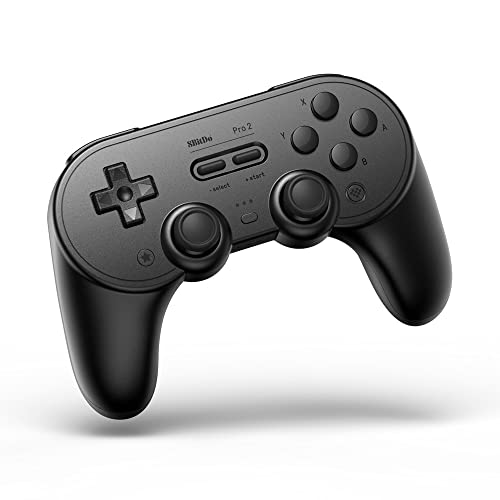
| 8BitDo Pro 2 | Retro & emulation | SNES D-pad, multi-mode | $50–$65 | Best for Emulation |
| HORI HORIPAD | Switch + PC crossover | Wireless, light, Switch-licensed | $50–$65 | Best Lightweight |
| 8BitDo Sn30 Pro | Budget retro | SNES D-pad, compact | $40–$50 | Budget Pick |
🏆 Best Overall: Sony DualSense Wireless Controller
Verdict: The most complete modern PC controller in 2026 — gyro aim, haptics, adaptive triggers, and a layout most players already own muscle memory for.
The DualSense does the job better than any other modern pad once you pair it through Steam Input on PC. Steam recognizes its gyro, touchpad, and rumble immediately, and modern Source 2 / Unreal / Unity titles that support it light up with the adaptive triggers and haptic detail Sony designed into the controller. Asymmetric sticks suit shooters, the symmetric layout works for fighters, and the build quality is the best in this group.
Outside Steam the picture is more uneven. Some non-Steam launchers and titles only see it as a generic XInput controller and quietly ignore the adaptive triggers. A remapping shim like the one Steam Input provides solves it for most cases, but if your library is entirely off-Steam it's worth checking before you buy.
For emulation the DualSense is fine — RetroArch picks it up without fuss — but its analog-leaning layout and floating D-pad lose to the 8BitDo pads on 2D platformers and fighters. So if your primary use is modern AAA on PC, this is the pick. If it's retro, scroll down.
The Galactic Purple colorway we tested feels the same as the white original; the colored shells are a cosmetic decision, not a build-quality one.
💰 Best Value: GameSir G7 SE Wired Controller
Verdict: Hall-effect sticks and triggers in a $45 wired controller — the answer to stick drift for everyone who refuses to buy another pad in two years.
The GameSir G7 SE is the controller you buy because the last three pads you killed all died to stick drift. Hall-effect sensors replace the potentiometers that wear out, and the result is a stick that still feels neutral after months of competitive play. The triggers use the same magnetic sensing, so they have a longer useful life than the typical pad's analog triggers.
Wired-only is a deliberate choice for the audience GameSir targets. The cable is six feet of braided nylon and the latency is meaningfully lower than any Bluetooth pad. For a competitive player on the same desk as the PC, that wired connection is the right tradeoff. For couch play, it is not.
The shell feels lighter than the DualSense and noticeably cheaper than the HORIPAD. The face buttons are crisp, the D-pad is a segmented Xbox-style layout (fine for modern, mediocre for emulation), and the back has two remappable paddles. Software remapping happens through GameSir's PC tool.
Buy this if your primary metric is "I never want to buy another controller because of drift again." Skip it if you want wireless or if your D-pad is going to live in RetroArch.
🎯 Best for Retro Emulation: 8BitDo Pro 2
Verdict: SNES-style D-pad with modern analog sticks — the single best controller for emulation on a PC or Steam Deck.
The 8BitDo Pro 2 is built around the D-pad SNES players remember and modern shooters then layers analog sticks, triggers, and rumble on top of it. The D-pad registers diagonals cleanly and consistently, which makes fireball motions in Street Fighter and ladder-climbs in Mega Man feel right. The analog sticks are competent for modern games — not class-leading like the DualSense, but absolutely usable for non-twitchy work.
Multi-mode is the Pro 2's other party trick. A switch on the back rotates through Switch, Android, macOS, and X-input modes. On PC you want X-input — that gives you the standard gamepad profile RetroArch and most emulators expect. The 8BitDo Ultimate Software (free download from 8BitDo support) handles remapping and firmware updates.
Bluetooth latency is fine for emulation and slower-paced PC games. For competitive shooters on PC, wired or a 2.4GHz dongle pad will beat it. The included USB-C cable lets you go wired when you need to.
Pro 2 vs Sn30 Pro: the Pro 2 has analog sticks and triggers; the Sn30 Pro is the smaller, cheaper, pure-retro layout. Pick the Pro 2 if you also play modern games; Sn30 Pro if you live in RetroArch.
⚡ Best Performance: GameSir G7 SE vs HORI HORIPAD
For "performance" we mean the latency-and-input-precision feeling competitive players care about. Wired Hall-effect pads win this on PC, full stop. Both the GameSir G7 SE and a similarly-priced wired Xbox-style pad land in the same neighborhood for raw latency, and both will outperform a Bluetooth pad noticeably.
The HORI HORIPAD is wireless, light, and Nintendo-licensed for Switch — it crosses over to PC cleanly but is not the choice for a competitive ladder. Where the HORIPAD wins is the couch: it is the lightest pad in this group and the shell shape suits long play sessions without hand fatigue. For Switch-and-PC households where the same pad has to do both, it is the easiest recommendation.
If you absolutely need a wireless competitive option, look at a 2.4GHz-dongle PC pad — they get within striking distance of wired latency, well ahead of Bluetooth. The HORIPAD is Bluetooth on PC.
🧪 Budget Pick: 8BitDo Sn30 Pro
Verdict: The cheapest pad in this guide that still has the SNES D-pad — perfect as a second pad for emulator co-op.
The 8BitDo Sn30 Pro is a hair smaller than the Pro 2, has the same multi-mode switch, the same Bluetooth, and a similar SNES-style D-pad. What it lacks is the analog stick quality and trigger feel of the Pro 2. For pure 2D and retro emulation that doesn't matter; for modern 3D games on PC it does.
The right place for the Sn30 Pro is as the second pad in a household — sitting in a drawer for emulator co-op, RetroArch netplay, or as a travel pad for a Steam Deck. The G Classic Edition we tested has slightly textured grips that feel more secure than the smooth original shell.
Sn30 Pro vs Pro 2: do not over-think it. If you can afford the Pro 2, buy it. If you need a second pad cheap, this is it.
What to look for in a PC and emulation controller
Input lag class
Wired connections are still the lowest-latency option. A wired Hall-effect pad like the GameSir G7 SE lands in the single-digit millisecond range from button press to OS event, which is the floor for any input device. A 2.4GHz dongle is typically a few milliseconds behind wired. Bluetooth is meaningfully slower — usually 15–25 ms — which is fine for casual play and noticeable in twitch shooters. For most uses outside the competitive ladder, Bluetooth is good enough.
Hall-effect sticks vs potentiometer drift
The traditional pad stick is a pair of physical potentiometers that wear unevenly over time, which is what causes stick drift. Hall-effect sticks read position with magnetic sensors instead, so there is no physical wear surface. If you have killed pads to drift before — the entire DualSense and Joy-Con era is famous for it — a Hall-effect pad is a meaningful longevity upgrade. The reviewers at RTINGS walk through the failure modes in detail.
D-pad quality for 2D games
For SNES-era platformers, 2D Castlevania, and any fighting game, a one-piece SNES-style D-pad registers diagonals cleanly that a floating Xbox-style D-pad fumbles. This is the single most important thing for emulation. The Pro 2 and Sn30 Pro both nail this; the DualSense and HORIPAD have floating D-pads that are mediocre by comparison.
XInput vs DirectInput
On modern Windows, almost every emulator and PC game expects XInput. Multi-mode pads like the Pro 2 expose XInput when you flip the back switch to "X." If your controller shows up as a generic HID gamepad and your buttons are mislabeled, you are almost certainly in DirectInput mode by mistake. Switch to X and try again.
Bluetooth vs wired
For couch play, the convenience of wireless wins. For competitive shooters, wired is the safe pick. For emulation, Bluetooth is fine — the latency is well inside the tolerance of any 60Hz retro target. If you stream and the pad sits next to your desk anyway, save yourself battery anxiety and go wired.
Mapping software
8BitDo's Ultimate Software is the cleanest mapping tool in the group — firmware updates, remaps, and profiles all in one place. GameSir's tool covers their pads and is functional but less polished. The DualSense maps through Steam Input, which is best-in-class for Steam library use and absent for non-Steam launchers.
Sources
- RTINGS — gaming controller test methodology and ratings
- 8BitDo Support — Ultimate Software and firmware updates
- PC Gamer — controller coverage and PC compatibility reporting
Related guides
- Best Controller for PC and Steam Gaming in 2026: G7 SE vs 8BitDo Pro 2 vs DualSense
- Best Controller for PC Emulation: 8BitDo Pro 2 vs GameSir G7
- DualSense vs 8BitDo Pro 2 vs GameSir G7 SE: PC Sim Racing
- RetroPie on a Raspberry Pi 4 8GB: The Definitive 2026 Emulation Build
— Mike Perry