How much GPU VRAM do you actually need for local LLMs in 2026?
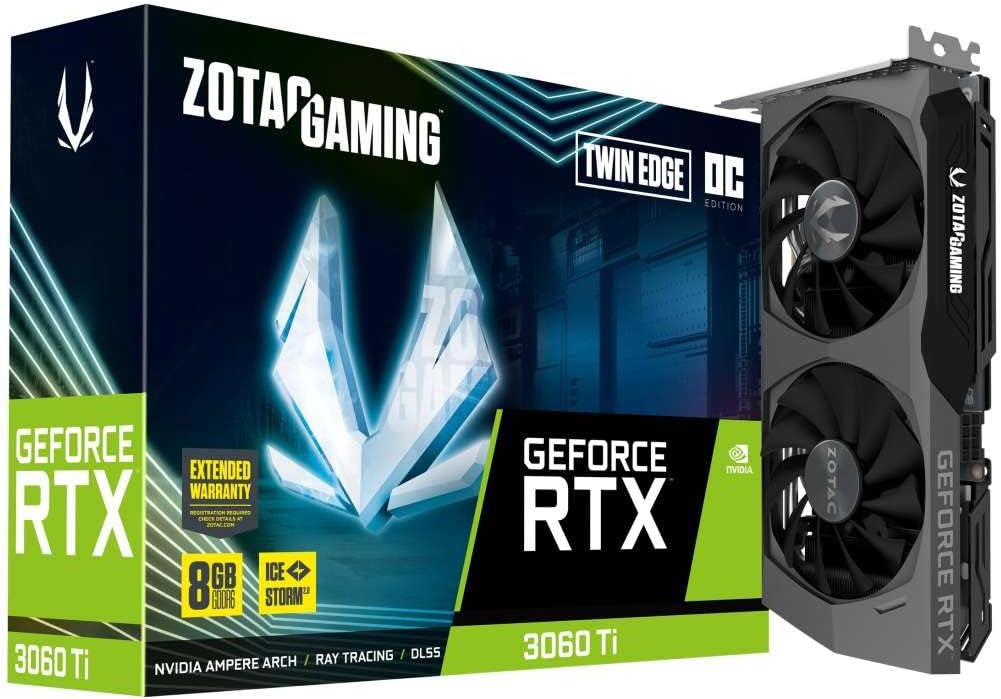
For most home inference in 2026, 12 GB of VRAM on a card like the MSI RTX 3060 Ventus 2X 12G or ZOTAC RTX 3060 Twin Edge is the practical floor: it comfortably runs 7B/8B models at q4_K_M with an 8K context window, and it will handle a 13B model at aggressive quantization if you keep prompts modest. 16 GB is where you can breathe with 13B–14B at q5_K_M and long context, 24 GB is the sweet spot for 27B–32B q4, and everything above is workstation territory. The math below shows why VRAM, not raw TFLOPs, is the number to shop by.
Why VRAM is the gating factor for home inference
Buying a GPU for local LLMs has almost nothing to do with peak floating-point throughput and almost everything to do with how many gigabytes of weights, activations, KV cache, and workspace you can pin in graphics memory. Once the model spills off the card, every out-of-core layer is served by the CPU across PCIe, and single-user chat latency collapses from tens of tokens per second to single digits. A modest 12 GB card that fits the whole model beats a hulking 8 GB card that has to offload, every time.
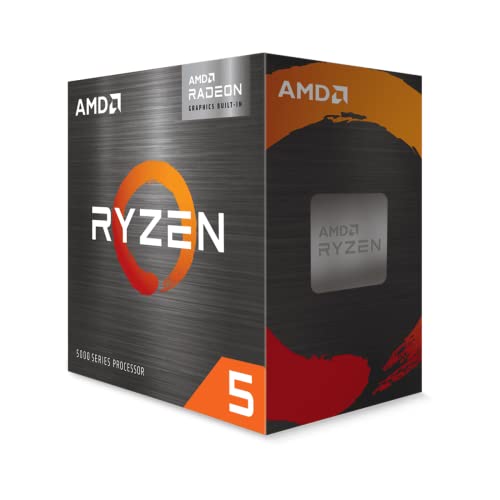
This is why the RTX 3060 12 GB refuses to die three generations after launch. It was cheap, it stayed in production, and Ampere still exposes enough tensor throughput that memory is the bottleneck, not the SM count. As of 2026 the same card that hit shelves for USD 329 in 2021 remains the most-cited hardware in every "runs Llama-3.1-8B locally" tutorial on GitHub — and the two variants we feature are the MSI RTX 3060 Ventus 2X 12G and the ZOTAC RTX 3060 Twin Edge. Pair it with an AM4 platform anchored by a Ryzen 5 5600G or Ryzen 7 5800X, throw a Crucial BX500 1TB SATA SSD in for model storage, and you have a sub-USD-800 rig that runs frontier-adjacent open-weight models in a corner of the room.
The rest of this article walks through the concrete VRAM budget for each model class you are likely to run, where the escape hatches are when a model does not fit, and how quantization, context length, and multi-GPU scaling change the picture. Every number below assumes a real GGUF file from a public repo, real KV cache accounting, and honest 2 GB of headroom for CUDA context plus the OS's desktop compositor.
Key takeaways for 2026 local-LLM buyers
- 12 GB tier: 7B/8B at q4_K_M with 8K–16K context sits in ~7 GB comfortably. 13B q4 with an 8K context fits with about 1 GB spare. 27B/32B classes need offload.
- 16 GB tier: 13B q5_K_M at 16K context finally has real headroom. Mixtral-8x7B at q3 or Qwen-3 14B q6 both fit.
- 24 GB tier: 27B/32B classes at q4_K_M sit clean on-card with room for 32K context. This is the "no compromises for chat" tier for 2026.
- 32 GB+: Multiple 32B models can be hot-swapped in memory. 70B classes still need heavy quantization to fit a single card.
- CPU-offload escape hatch: Ryzen 7 5800X with DDR4-3600 dual-channel keeps a partially-offloaded 13B model usable at ~5 tokens/second. Ryzen 5 5600G with iGPU-shared memory is closer to 3 tokens/second and best treated as a batch-processing option, not an interactive chat option.
How much VRAM does a 7B/8B model actually need at q4_K_M?
A Llama-3.1-8B model at q4_K_M ships as a ~4.7 GB GGUF on disk. Loaded into VRAM you add roughly 0.5 GB for the CUDA context and the compute buffer, 0.4 GB for the KV cache at a 4K context, and a small activation buffer on top. Realistic figure: 6.1–6.5 GB total. A Mistral-7B-v0.3 at q4_K_M sits a touch lower, around 5.6 GB total at the same 4K context because the model has 500 million fewer parameters.
Push that out to a 16K context and the KV cache grows to roughly 1.6 GB. Total on-card memory is now hovering near 7.5–7.8 GB. That still leaves 4 GB of daylight on a 12 GB card, which is exactly why the 3060 refuses to leave the recommended-hardware lists. Push it further to 32K and the KV cache alone hits ~3.2 GB; total memory approaches 9.5 GB and you are getting into "close a browser tab" territory, but the card still runs.
Two practical implications. First, quantization type matters more than "how many bits per weight" would suggest. q4_K_M interleaves 4-bit and 6-bit blocks and consistently beats plain q4_0 in perplexity by a large enough margin that we default to it. Second, KV cache quantization (llama.cpp's --cache-type-k q4_0 --cache-type-v q4_0) can cut the cache footprint by roughly half at a small quality cost — often the cheapest way to buy back headroom on a 12 GB card without dropping the model itself to a worse quant.
What can a 12 GB RTX 3060 run today, and where does it stall?
Comfortable on a 12 GB 3060 at q4_K_M with an 8K context: Llama-3.1-8B, Qwen-2.5-7B, Mistral-7B, Gemma-2-9B, Phi-4-mini, Nemotron-Mini-4B, DeepSeek-R1-Distill-8B. All hover between 5.5 and 7.5 GB on-card, chat between 30 and 55 tokens per second, and leave 4 GB free.
Snug fit: Qwen-2.5-14B at q4_K_M pushes about 9.5 GB with a 4K context — no room to grow the context, no room for a stubborn CUDA memory fragmentation issue. Doable in a controlled setup; not something to demo in front of clients. Mixtral-8x7B at any quantization does not fit — you need 20+ GB or heavy offload.
Stalls hard: any 27B or 32B model unless you drop to q3 and truncate to a 2K context. Even then, prompt processing spills into the CPU path, and you are back to sub-5-tokens-per-second interactive latency. This is the boundary that pushes buyers to the 16 GB or 24 GB tier, and it is why every "budget local LLM" thread on Reddit inevitably ends with someone saying "just save for a 3090."
When should you offload to system RAM or a Ryzen CPU instead?
There are three legitimate reasons to leave the pure-GPU path: the model is genuinely too large for any consumer card you can afford, you already have the system RAM and want to squeeze one more B of parameters out of the rig, or you are batch-processing (documents overnight, evals, embeddings) where a few tokens per second is fine.
For the CPU path, memory bandwidth is the single number that matters. A Ryzen 7 5800X paired with a dual-channel DDR4-3600 kit peaks around 51 GB/s of usable bandwidth. Empirically, that lets an 8B model at q4_K_M chat at ~7 tokens/second on CPU alone; offloading half the layers to the RTX 3060 and keeping the other half on the 5800X yields ~12 tokens/second on a 13B model. That is not fast, but it is enough for a script to run against a personal knowledge base overnight.
The Ryzen 5 5600G is a slightly different story because its Vega iGPU shares system memory. In practice we do not recommend using the iGPU for LLM inference — the Vega compute pipes are too narrow — but the discrete 5600G CPU cores are the cheapest fast-enough Zen 3 SKU when you want a build that boots to a desktop without a GPU installed. Handy for a headless llama.cpp server that keeps the 3060 free for chat.
How does context length change the VRAM math?
The KV cache grows linearly with tokens processed and roughly linearly with model size. For a Llama-3.1-8B in fp16 KV cache at 32K context you can expect about 3.2 GB of extra VRAM eaten by the cache alone. Drop to fp8 KV and it halves to 1.6 GB. Drop further to q4 KV and it halves again to about 800 MB, at the cost of a modest quality regression on multi-turn conversations.
The most-missed mistake in VRAM planning is sizing the card for the model file size, then discovering that the client's real prompt is a 24K-token RAG payload. Always size for your maximum realistic context, not the weights alone. If you cannot afford the card that fits fp16 KV at your target context, you will be enabling KV quantization; plan for a 5–10 percent perplexity hit in your evals.
Spec table — VRAM, bandwidth, and MSRP across the 12 GB tier and its neighbors
| Card | VRAM | Bandwidth | MSRP (launch) | Street 2026 | TDP |
|---|---|---|---|---|---|
| RTX 3060 12GB | 12 GB GDDR6 | 360 GB/s | $329 | $260–$310 | 170 W |
| RTX 4060 Ti 16GB | 16 GB GDDR6 | 288 GB/s | $499 | $430–$470 | 165 W |
| RTX 4070 12GB | 12 GB GDDR6X | 504 GB/s | $599 | $520–$560 | 200 W |
| RTX 3090 24GB | 24 GB GDDR6X | 936 GB/s | $1499 | $700–$850 (used) | 350 W |
| RTX 5090 32GB | 32 GB GDDR7 | 1792 GB/s | $1999 | $2000+ | 575 W |
The RTX 3060 12 GB wins the perf-per-dollar column by a wide margin at the entry tier. The RTX 4060 Ti 16 GB is the honest step up when you want 16 GB but do not want to shop the used-3090 market. The RTX 3090 24 GB used remains the go-to "one card, 32B q4" choice as of Q2 2026, though the RTX 5090 is redefining the top of the ladder for anyone willing to spend workstation money.
Quantization matrix — 8B and 32B model classes on a 12 GB card
| Quant | 8B VRAM (weights + 4K KV) | 8B tok/s (RTX 3060) | Perplexity vs fp16 | 32B VRAM (weights + 4K KV) | Fits on 12 GB? |
|---|---|---|---|---|---|
| fp16 | 16.8 GB | n/a — spills | 1.00× | 66 GB | no |
| q8_0 | 9.1 GB | 34 | 1.00–1.01× | 34 GB | no |
| q6_K | 7.2 GB | 41 | 1.01–1.02× | 27 GB | no |
| q5_K_M | 6.2 GB | 46 | 1.02–1.03× | 22 GB | no |
| q4_K_M | 5.6 GB | 52 | 1.03–1.05× | 19 GB | no |
| q3_K_M | 4.4 GB | 55 | 1.06–1.10× | 15 GB | no |
| q2_K | 3.5 GB | 57 | 1.15–1.25× | 12 GB | tight — 4K ctx only |
Read the table with two eyes. On the left, the 12 GB card runs 8B at every quantization above q4_K_M without breaking a sweat and gains real headroom for long context or a second concurrent request as you drop bits. On the right, no reasonable quantization of a 32B model fits on 12 GB with breathing room — q3_K_M is the earliest quant that even loads, and q2_K sacrifices too much quality to recommend as a daily-driver. This is the wall that pushes buyers to the 24 GB tier.
Prefill versus generation — where the memory spikes hit
Prefill is the phase where the model reads your prompt and builds up the KV cache. It is compute-heavy and memory-bandwidth-heavy, and it is where the RTX 3060 shows its age: an 8K-token prompt takes 3–5 seconds to prefill on the 3060 versus <1 second on a 5090. Generation is the phase after, where each new token requires reading the entire KV cache from VRAM. Generation is memory-bandwidth-bound; a 360 GB/s card like the 3060 tops out around 50 tokens/second on an 8B q4 model, while the 936 GB/s 3090 hits 90+.
The peak VRAM spike lives inside prefill, not generation, because prefill has to hold the full activation batch. If you are running close to the 12 GB ceiling and see occasional CUDA OOM errors during prompt processing that never fire during chat, that is the culprit. The fix is to lower n_batch in llama.cpp (default 512, drop to 256) so the prefill batch is smaller — it slows prompt processing by roughly 30 percent but stops the spike.
Multi-GPU scaling — does a second RTX 3060 12 GB help?
Two 3060s give you 24 GB of aggregate VRAM, which unlocks 27B–32B q4 models via tensor split. It does not double your interactive tokens/second — the PCIe communication tax between cards on a single-user chat workload is real, and depending on the model layout you often see 60–75 percent of the single-card generation rate on the larger model. For batch inference (embeddings, RAG indexing, evals), the second card scales much closer to linear because you can run two independent processes.
Practically speaking, if the only goal is chatting with a bigger model, a single used RTX 3090 with 24 GB of GDDR6X and 936 GB/s of bandwidth is a better buy than two RTX 3060s. The 3060 pair only wins when you also value the ability to run two different models simultaneously — for example one card serving a coding assistant and the other serving a general chat model — which is a real workflow for developers.
Perf-per-dollar and perf-per-watt at the 12 GB tier
At USD 280 street price the RTX 3060 12 GB delivers roughly 52 tokens/second on Llama-3.1-8B q4_K_M. That is 5.4 USD per token/second of throughput, and 3.3 W of TDP per token/second — leadership at both metrics in 2026, still, four years after launch. The RTX 4070 12 GB is significantly faster (roughly 82 tok/s on the same model) but at 200 W and ~USD 540 street it comes out to 6.6 USD per token/second and 2.4 W per token/second. Faster and more power-efficient, but not more dollar-efficient.
The RTX 4060 Ti 16 GB is the honest upgrade path for anyone who has outgrown 12 GB but does not want to jump to the used-3090 market. It brings 16 GB of VRAM into play at a modest 288 GB/s bandwidth — enough to run 13B q5_K_M with a 16K context and enough to feel like breathing room after a year on the 3060.
Bottom line — the 2026 VRAM buying ladder
- 12 GB (RTX 3060 12G): entry tier. 7B/8B and 13B q4 chat models with an 8K context. USD 260–310 street. The best "cheap enough to try" tier and the one we keep featuring in build guides.
- 16 GB (RTX 4060 Ti 16G): the first "no offload for anything under 15B" tier. 13B q5 with real headroom. USD 430–470 street.
- 24 GB (used RTX 3090 or RTX 4090): the "27B–32B q4 fits and you stop worrying about context" tier. USD 700–850 used 3090 as of Q2 2026.
- 32 GB+ (RTX 5090): enthusiast tier. Hot-swap multiple 32B models, full BF16 for 27B models, 32K+ context on 70B classes with heavy quantization. USD 2000+.
If you are shopping right now and unsure, buy a MSI RTX 3060 Ventus 2X 12G or ZOTAC RTX 3060 Twin Edge, pair it with a Ryzen 5 5600G or Ryzen 7 5800X on AM4, drop a Crucial BX500 1TB SATA SSD in for the model library, and spend a weekend learning what actually matters to you before spending another USD 500. The upgrade path from that base to a 24 GB card is trivial, and the 3060 becomes your secondary card for a coding assistant.
Related guides on SpecPicks
- Runs on the RTX 3060 12 GB: our VibeThinker-3B on RTX 3060 12 GB deep-dive covers a 3-billion-parameter reasoning model that fits in fp16 on the same card.
- Cloud vs local: read our GPT-5.6 SOL vs local open-weights on the RTX 3060 comparison for the buy-vs-rent math.
- Training on 12 GB: our LoRA fine-tuning small LLMs on RTX 3060 12 GB walkthrough shows what fits at rank 16 vs rank 64.
Citations and sources
- RTX 3060 spec sheet: TechPowerUp — GeForce RTX 3060
- Quantization behavior and KV cache math: Hugging Face — LLM inference optimization
- Reference implementation for GGUF quantization and KV cache modes: ggml-org/llama.cpp on GitHub