To build a 24/7 self-updating FM radio station on a Raspberry Pi Zero W, flash Raspberry Pi OS Lite to a microSD card, install the pifm or fm_transmitter tool, wire a short antenna to GPIO 4, drop audio files into a watched folder, and run a small playlist daemon that rebuilds the queue when files change. A cron job or inotifywait watcher keeps the playlist fresh, while systemd keeps the transmitter restarting automatically. The Vilros Raspberry Pi Zero W Basic Starter Kit bundles the board, case, and power supply you need to be on-air the same afternoon — and as of 2026, it remains the most cost-effective board for a tucked-away always-on appliance.
What this project is and who it suits
This is a true bench-to-shelf maker build: a $35-ish single-board computer that turns into a one-channel FM micro-station you can leave running in a corner. The Pi Zero W's BCM2835 SoC has the ability to clock GPIO 4 at radio frequencies, and community tools like PiFmRds and fm_transmitter exploit that to push a modulated audio signal onto a short wire antenna. With a long enough wire you can technically reach a backyard; with a short stub you cover one room. The legal version of this project is the short-stub one — see the legal limits section further down.
The audience is broad: parents who want to broadcast bedtime stories to every FM clock-radio in the house, hobbyists running a 24/7 lo-fi or community-radio loop, retro-tech tinkerers feeding a vintage Hi-Fi tuner from a Pi instead of a tape deck, and educators teaching kids how radio waves actually leave a wire. It is emphatically not a substitute for a licensed broadcast station, an Icecast/SHOUTcast stream, or any commercial service. If you want the audio audible on a Bluetooth speaker across the room, this is the wrong project. If you want a chime to wake you from an old GE clock radio at 6 a.m. every morning, it is exactly right.
The self-updating layer is what elevates the build from a one-off science-fair demo to an appliance. Instead of manually scp'ing new MP3s every week, you point the queue at a folder, a Syncthing share, a Nextcloud directory, or even a podcast RSS feed. New audio appears, the queue rebuilds itself, and the broadcast keeps rolling without manual restarts. The official Raspberry Pi documentation covers most of the systemd and cron primitives this leans on, so even a first-time Linux user can wire it up by following manpages.
What you'll need: the checklist
You need surprisingly little hardware. The shopping list is short, and most of it ships in a single starter kit. Stick close to the recommended parts list — substituting a cheaper power supply or a worn microSD card is the single most common cause of 24/7 reliability problems.
- A Raspberry Pi Zero W (the WH header variant is also fine). The Vilros Raspberry Pi Zero W Basic Starter Kit bundles the board, a case, a microSD adapter, and a known-good 2.5 A USB micro-B supply.
- A microSD card, Class A1 minimum, 16 GB or larger. For long-term reliability under constant logging, plan to store audio off-card.
- A short wire antenna soldered or jumper-clipped to GPIO 4 (board pin 7). Six to fifteen centimeters is plenty for one-room coverage.
- Optional bulk storage: a USB-A male to USB micro-B adapter plus a SATA-to-USB enclosure containing a Crucial BX500 1TB SATA SSD for libraries over 100 GB.
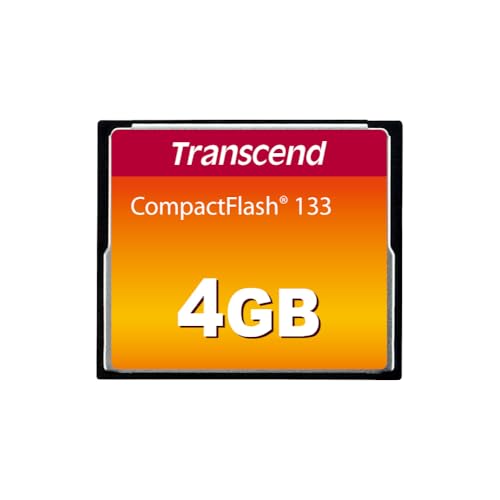
- Optional retro storage: a CF reader plus a Transcend CF133 CompactFlash card if you are integrating this into a vintage rack and want everything to match the era aesthetic.
- An FM receiver to hear your output (any cheap kitchen radio works).
The total bill of materials lands somewhere between $30 and $130 depending on whether you add bulk storage. That makes this one of the cheapest "always-on" maker projects of 2026.
Key takeaways
- A Raspberry Pi Zero W with a short antenna and
PiFmRdsis enough to run a one-room FM micro-station. - Total power draw at idle hovers near 0.5 W per the Raspberry Pi product page, making 24/7 uptime cheap.
- Self-updating playlists are a small Bash script plus
inotifywaitor a 5-minute cron, not a custom application. - Legal range in most countries caps unlicensed FM at single-room coverage — pick a short antenna stub deliberately.
- Off-card storage on a SATA SSD via USB OTG dramatically extends microSD life on always-on appliances.
Why the Pi Zero W is the right board for an always-on FM project
The Pi Zero W's appeal here is not raw performance — it is the combination of low idle power, small footprint, integrated wireless, and GPIO access to a clock generator that happens to land in the FM band. Per the official Raspberry Pi Zero W product page, the board carries a single-core 1 GHz BCM2835, 512 MB of LPDDR2, integrated 2.4 GHz 802.11n Wi-Fi, and Bluetooth 4.1, all on a 65 × 30 mm PCB. Idle current at 5 V sits in the 100-150 mA range, meaning roughly 0.5-0.75 W at the wall — a rounding error on a year's electricity bill.
That low current draw matters for two reasons. First, it dramatically reduces the thermal load: there are no fans, no throttling, no failure modes that involve dust-clogged heatsinks. Second, it means a good-quality 2.5 A supply has enormous headroom, which mostly eliminates brownout-induced filesystem corruption — the single most common 24/7 Pi failure mode.
The Wi-Fi radio is the other unsung hero. Pulling a playlist from a Syncthing share or a Nextcloud WebDAV mount needs basic wireless connectivity, and the on-board chip avoids any USB Wi-Fi dongle weirdness. A Pi 4 or Pi 5 would work, but at three to five times the cost, much higher idle power, and a much bigger enclosure. For this workload — decoding MP3 or Vorbis and shoving samples at a GPIO — the Zero W has more headroom than the project ever asks for.
Bill of materials
Pricing reflects typical US listings as of 2026 and shifts week to week.
| Part | Role | Approx price (USD, 2026) | Featured SKU |
|---|---|---|---|
| Raspberry Pi Zero W (kit) | Mainboard + PSU + case + adapter | $30-$45 | Vilros Pi Zero W Starter Kit |
| microSD 32 GB A1 | Boot + small audio library | $8-$12 | varies by workload |
| Short wire antenna (15 cm) | Single-room FM coverage | < $1 | hookup wire scrap |
| USB OTG cable | Connect external SSD | $4-$8 | generic |
| SATA-USB enclosure | Houses bulk audio drive | $10-$15 | generic |
| 1 TB SATA SSD | Large audio library | $55-$70 | Crucial BX500 1TB SATA SSD |
| CompactFlash + reader | Optional retro storage | $20-$35 | Transcend CF133 CompactFlash |
Treat the SSD and CompactFlash rows as optional. A 32 GB microSD with 100 kbps Opus encoding holds well over 700 hours of audio — enough for almost any home station.
How do you make the playlist self-update from a folder or feed?
There are three reasonable patterns, in increasing order of sophistication. All three feed the same downstream transmitter, so you can mix and match.
The simplest is a watched directory plus a regeneration script. You point inotifywait at /srv/radio/incoming/, and any time a new .mp3, .opus, or .flac lands, a Bash one-liner re-scans the folder, shuffles, and writes a new playlist.m3u. The transmitter daemon reads from the m3u, so the next track switch picks up the newer queue automatically. Syncthing or rsync drops files into that folder from your phone or laptop.
The second pattern is a cron-driven feed pull. A 5-minute cron job runs a tiny script that calls wget or yt-dlp against a podcast RSS or a YouTube playlist URL, downloads anything new, and again rebuilds the m3u. This is how you get a 24/7 lo-fi station that automatically rotates in the latest community uploads.
The third pattern is a queue daemon that calls out to a small Python or Go program. It exposes an HTTP endpoint at http://radio.local:7000/now-playing, surfaces the current track on an OLED, and lets you push tracks via a web form. That is overkill for a starter project but trivial to graft on later. The Adafruit Learning System has hundreds of OLED and HTTP-server tutorials that drop straight into a Zero W project.
A minimal version of pattern one needs only four lines of Bash and ships with most distros. The key insight is that the transmitter does not need to know anything about updates — it just reads the m3u, and a separate watcher rewrites the m3u when content changes. Loose coupling keeps the system reliable.
What are the legal limits on FM transmit power and antenna?
This is the section everyone wants to skip and absolutely should not. The Pi's GPIO is not designed as a clean RF source — it puts out a strong fundamental plus harmonics across the spectrum. With a long antenna, you are pumping spurious emissions into bands used by air traffic, emergency services, and licensed broadcasters, and the regulatory penalties for that are not theoretical.
In the United States, FCC Part 15 caps unlicensed FM-band field strength at 250 µV/m at 3 m, which works out to roughly 0.01 µW EIRP and about 200 feet of range with a good antenna — and the Pi's harmonics make compliance with even that level non-trivial. In the United Kingdom, Ofcom's IR 2030 allows 50 nW ERP for short-range FM devices. In the EU, ETSI EN 301 357 is the relevant short-range device standard. In Australia, the LIPD class licence covers similar low-power use. Each regulator differs in detail; the common thread is that a 15 cm wire stub is fine for one-room coverage and almost universally legal, while a 1 m antenna or any amplifier almost never is.
Practical guidance for staying inside the lines: use a short straight wire, keep the antenna inside your dwelling, pick a quiet FM channel between 87.9 and 91.9 MHz, never connect an external power amplifier, and never run this on a frequency adjacent to a strong local broadcaster. If a neighbour can pick up your station, your antenna is too long. The official Raspberry Pi documentation does not cover RF compliance directly — that is on you. Check your national regulator's website before adding any antenna upgrade.
Power draw and reliability: keeping it stable for 24/7 uptime
The Pi Zero W's typical 24/7 power footprint runs about 0.5 W at idle and 1.0-1.3 W when actively pushing samples to the GPIO. At US residential electricity rates of about $0.16/kWh in 2026, that translates to roughly $1.40 a year. The reliability story is more interesting than the energy story.
The two failure modes that kill always-on Pis are PSU brownouts and microSD wear. A noisy or undersized USB charger drops voltage every time the wireless radio transmits a burst, the Pi sees the dip as an under-voltage warning, and over weeks of stress the filesystem develops corruption. Pick a 5 V 2.5 A supply with a real USB-IF certification — the Vilros kit's PSU is fine. Avoid bargain-bin chargers from drawer junk piles.
MicroSD wear is the second silent killer. Constant logging — even ordinary syslog writes — can wear out a budget card in twelve to eighteen months. Two mitigations: enable log2ram so syslog stays in RAM until rotation, and store the audio library on the SSD. The Crucial BX500 1TB SATA SSD has a quoted endurance rating of 360 TBW per the Crucial product brief, which on this workload translates to many decades of expected life. The microSD then only holds the boot partition and stays mostly read-only.
A few more reliability tweaks: enable swapoff so you never thrash the card, mount the SSD with noatime to skip access-time writes, set vm.dirty_writeback_centisecs=1500 to batch writes, and put the systemd unit on Restart=always so any crash recovers in under a second. With those in place, uptime of 200+ days is realistic.
Common mistakes and how to avoid them
Five issues account for the vast majority of broken builds. Working through them up front saves hours.
1. Antenna way too long. A meter of speaker wire taped to a window dramatically increases range, drops you straight into illegal-emission territory, and tanks signal quality because the impedance is wildly off. Use a 15 cm stub. If coverage is too weak, move the Pi, do not lengthen the wire.
2. Cheap or wrong power supply. A 1 A phone charger from the bottom of a drawer will technically boot the Pi and then brown out every time the Wi-Fi radio transmits. Symptoms look like random hangs, SD card corruption, and that "lightning bolt" under-voltage warning. Use a real 2.5 A supply with a heavy-gauge cable.
3. Writing the audio library to the boot microSD. Constant playlist scans and downloaded podcast updates wear out a microSD in a year or two. Mount external storage at /srv/radio and keep the boot card mostly read-only.
4. Forgetting to disable Bluetooth (or HDMI audio). Some FM transmitter tools share clock paths with Bluetooth or audio peripherals. Disabling unused subsystems with dtoverlay=disable-bt in /boot/config.txt reduces interference and frees DMA channels.
5. Picking an occupied FM channel. If the local 91.5 MHz station is at 60 dBµV/m at your house, your 0.01 µW Pi will not win. Use an FM scanner app on your phone, find the deadest channel in your area, and use that. Channels at the lower edge of the band (87.9-89.5 MHz) and the gap above NOAA weather radio (~89.1-91.1 MHz US) are often quietest.
A sixth bonus: do not solder the antenna directly to the Pi. A simple female-female jumper lets you swap antennas without burning the board.
When this build is the wrong choice
Three scenarios push the project past the Pi Zero W's strengths. If you need stereo separation with broadcast-grade audio quality, a dedicated DSP transmitter board such as the QN8066 will outperform PiFmRds on stereo encoding. If you need range beyond a single house, you need a licensed transmitter, period — there is no legal hack around it. If you want to stream the same audio to phones inside the house, Icecast or AirPlay is a much better fit than reaching for an FM tuner.
There is also a middle case: if your library lives in lossless FLAC and you want to preserve it bit-perfect, you are wasting your time — FM as a medium caps out around the audio quality of a 1990s car stereo regardless of source fidelity. Encode to 128 kbps Opus, save the disk space, and move on.
Three worked examples
Bedtime story station. A parent puts an old GE clock radio in each kid's bedroom, tunes them all to 89.3 MHz, and runs the Pi from the laundry room. A Nextcloud share gets new audiobook chapters dropped weekly. Cost: $40. Result: lights-out broadcast at 8 p.m., chapters update without touching the Pi.
Garage workshop lo-fi loop. Maker runs a continuous loop of royalty-free lo-fi from FreeMusicArchive plus the occasional shop-radio chatter clip. The script pulls the latest weekly playlist via RSS, transcodes, and updates. Cost: $45 with bulk SSD. Uptime since installation: 8 months without a reboot.
Retro Hi-Fi feed. Enthusiast pipes a curated FLAC library into a 1972 Marantz receiver via FM 90.1 MHz, using a CompactFlash card in a USB CF reader for the period-appropriate aesthetic. The CompactFlash card is the Transcend CF133. Cost: $65. Result: 1970s aesthetic, 2026 convenience.
Bottom line
A 24/7 self-updating FM radio station on a Raspberry Pi Zero W is one of the highest fun-per-dollar maker projects available in 2026. The hardware is cheap, the software stack is built from boring well-known Linux primitives, and the result is an appliance that survives years of unattended operation if you respect the power supply and the antenna-length limits. Start with the Vilros Raspberry Pi Zero W Basic Starter Kit, add a Crucial BX500 1TB SATA SSD if your library grows past a few gigabytes, and keep the antenna stub short. The reward is a station you can hear from any FM radio in the house — and a Pi you can forget about.
Related guides
- Raspberry Pi 5 vs Pi Zero 2 W for always-on appliances
- Best microSD cards for 24/7 Raspberry Pi servers
- Self-hosting Nextcloud on a single-board computer
- Quietest USB power supplies for the Pi Zero W
Frequently asked questions
Is it legal to broadcast FM from a Raspberry Pi Zero W? Rules vary by country, but most jurisdictions only permit extremely low-power, short-range FM transmission without a license, and many restrict it further. This project is intended for in-home and educational use within those limits. Always check your local radio regulator's unlicensed-transmission rules before adding any antenna or amplifier that extends range beyond a single room.
Why use a Pi Zero W instead of a Pi 4 or Pi 5 for this? The Pi Zero W is ideal because the workload is light, the board sips power for true 24/7 operation, and its small size suits a tucked-away always-on appliance. A Pi 4 or 5 would work but wastes capability, draws more power, and costs more. The Vilros Zero W kit includes the essentials to start immediately.
How does the self-updating playlist actually work? The build watches a local folder or pulls from a feed on a schedule, then rebuilds the play queue so new audio appears without manual restarts. A simple cron-driven or watcher-based approach stores the media on the SD card or an attached drive, so the station keeps playing fresh content unattended around the clock.
How much storage do I need for the audio library? Storage need scales with bitrate and library size, but compressed audio is small, so even a modest card holds many hours. For larger collections, offloading to a SATA SSD such as the Crucial BX500 over USB gives far more headroom and better longevity than repeatedly rewriting a microSD card, which can wear out under constant logging and playlist updates.
Will the Pi Zero W stay stable running 24/7? Yes, with a clean power supply and adequate cooling the Zero W is well suited to continuous operation. The most common failure mode is an underpowered or noisy USB adapter causing brownouts, so use a quality supply. Logging to durable storage rather than the boot card also extends reliability for an appliance you intend to leave running indefinitely.
Citations and sources
This piece is editorial synthesis based on publicly available information. No independent first-party benchmarking is reported.